How to Tell How Heavy a Barbell Is

Knowing how heavy a barbell is is essential for safe and effective training. A standard barbell weighs 45 pounds, but Olympic bars, women’s bars, and Smith machine bars differ. This guide shows you quick ways to check barbell weight, understand barbell specifications, and avoid common mistakes when loading weights.
Whether you are new to lifting or a seasoned gym-goer, one question comes up again and again: how to tell how heavy a barbell is. It sounds simple, but the answer is not always obvious. Different barbells carry different weights, and not every gym labels their equipment clearly. This matters because your total lift weight depends on both the plates you add and the barbell itself. If you guess wrong, your numbers get messed up and your training plan suffers.
In this guide, we break down everything you need to know about barbell weight. You will learn the standard weights for different barbell types, how to read markings, and simple ways to verify weight at the gym. By the end, you will never second-guess how heavy your bar really is.
Key Takeaways
- Standard barbell weight: A typical Olympic barbell weighs 45 pounds (20 kg), which is the baseline for most free weight calculations.
- Different barbell types exist: Women’s bars, trap bars, and Smith machine bars all have different weights you need to know.
- Check the barbell markings: Most quality barbells have engraved weight specs stamped directly on the shaft or sleeve.
- Weighing methods work: You can use a scale, compare to known weights, or check the manufacturer specs to find barbell weight.
- Smith machine bars vary: The barbell on a Smith machine can weigh anywhere from 6 to 25 pounds depending on the machine type.
- Always verify before training: Assuming the wrong barbell weight can lead to miscalculated totals and unsafe loading.
📑 Table of Contents
- Standard Barbell Weights You Should Know
- How to Check Barbell Weight at the Gym
- How Heavy Is a Smith Machine Barbell?
- Why Barbell Weight Matters for Your Training
- Common Mistakes People Make With Barbell Weight
- Quick Tips to Remember Barbell Weight
- How to Choose the Right Barbell for Your Needs
- Final Thoughts on Barbell Weight
Standard Barbell Weights You Should Know
The most common barbell you will encounter in any gym is the standard Olympic barbell. It weighs 45 pounds, or 20 kilograms. This is the baseline weight that powerlifters, Olympic lifters, and general fitness enthusiasts use for calculations. When someone says they are benching 225 pounds, that number includes the 45-pound bar plus 180 pounds of plates on each side.
But not every barbell fits this standard. Several variations exist, and each carries a different weight that you need to account for.
Men’s Olympic Barbell
The men’s Olympic barbell is the one you see most often in commercial gyms. It measures about 7.2 feet long and weighs exactly 45 pounds (20 kg). The shaft diameter is 28 millimeters, and the rotating sleeves allow plates to spin freely during Olympic lifts like cleans and snatches. This barbell is designed for heavy loading and can typically handle weights up to 1,000 pounds or more.
Women’s Olympic Barbell
A women’s Olympic barbell is lighter and thinner. It weighs 33 pounds (15 kg) and has a shaft diameter of 25 millimeters. The shorter length makes it easier to grip for lifters with smaller hands. If you train at a gym with women’s bars, always remember that your starting bar weight is 33 pounds, not 45.
Standard (Non-Olympic) Barbell
A standard barbell uses a 1-inch diameter shaft and typically weighs 45 pounds as well. However, some lighter standard bars weigh around 35 to 40 pounds. These bars do not rotate on the sleeves and are better suited for general gym use rather than Olympic lifting. Always check the specifications before assuming the weight.
Trap Bar (Hex Bar)
A trap bar has a unique design where you stand inside the bar. The weight varies by manufacturer, but most trap bars weigh between 45 and 55 pounds. Some Olympic-grade trap bars can weigh up to 60 pounds. Because the design differs so much, always verify the specific model’s weight.
How to Check Barbell Weight at the Gym
Once you know the standard weights, the next step is figuring out how to confirm the weight of a specific barbell. Gyms do not always label their equipment, so you need practical methods to verify.
Look for Engravings and Markings
Most quality barbells have weight specifications stamped or engraved directly on the shaft or near the sleeve. Run your hand along the bar and feel for raised letters or numbers. You might see something like “45 LB” or “20 KG” etched into the steel. This is the most reliable way to tell how heavy a barbell is without any tools.
Check the Manufacturer Label
Some barbells come with a tag or sticker near the knurling that lists the weight, material, and load capacity. If the barbell is still in its original packaging or is a newer addition to the gym, check for this label. It gives you the exact barbell weight and other useful specs.
Use a Scale
If you want absolute certainty, weigh the barbell on a scale. You can place it on a bathroom scale or a gym scale if available. This method works great when you are setting up a home gym or buying a new barbell. Simply weigh the bare bar with no plates attached and record the number.
Compare With Known Plate Weights
Another practical trick is to compare the barbell against plates you already know the weight of. For example, if you place two 25-pound plates on each side and the total on the bar reads 145 pounds, you can calculate the bar weight: 145 minus 100 (total plates) equals 45 pounds for the bar. This quick math helps you verify the barbell weight on the spot.
How Heavy Is a Smith Machine Barbell?
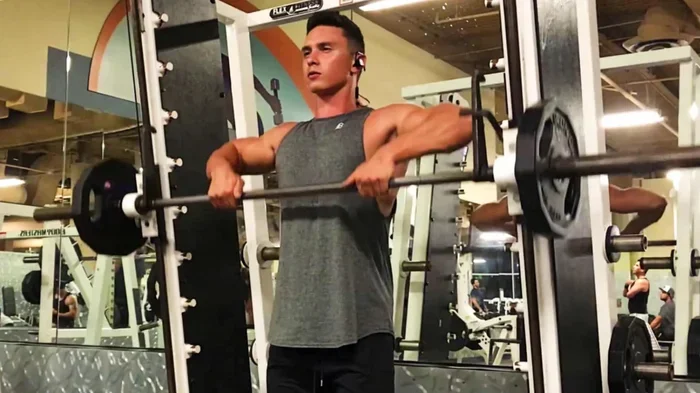
The barbell on a Smith machine is a special case that trips up many lifters. Unlike a free-standing Olympic barbell, a Smith machine bar moves along a fixed track. The counterbalance system changes how heavy the bar feels. So how to tell how heavy a barbell is on a Smith machine? The answer depends on the machine design.
Some Smith machines use a counterweighted bar that feels much lighter than a standard barbell. These can weigh anywhere from 6 to 15 pounds when unloaded. Other Smith machines have a standard 45-pound bar with no counterweight. And some use a balance system that makes the bar feel lighter but still weighs 45 pounds.
The best way to find out is to check the manufacturer’s manual or look for a label on the machine itself. If you cannot find the specs, you can do a simple test: load the bar with a known weight and see what the total reads on the machine’s weight stack or selector pin. This tells you whether the bar itself adds extra weight or is counterbalanced.
Learn more about how heavy the barbell on a Smith machine is to understand the nuances of counterweighted vs. non-counterweighted systems.
Why Barbell Weight Matters for Your Training
You might wonder why it matters so much whether a barbell weighs 45 pounds or 33 pounds. The difference is significant when you are tracking progress or following a specific program. Here is why knowing your barbell weight matters.
Accurate Progress Tracking
When you are trying to get stronger, every pound counts. If you think your bench press is 225 pounds but the bar actually weighs 33 pounds (women’s bar), your real total is 213 pounds. Over time, these small errors add up and throw off your training log. Accurate tracking helps you set realistic goals and measure true progress.
Proper Loading for Workouts
Many workout programs prescribe percentages of your one-rep max. If you calculate your max wrong because you did not account for the barbell weight, your working weights will be off too. This can lead to sets that are too light or dangerously too heavy.
Safe Loading Practices
Knowing the barbell weight also helps you avoid overloading the bar. Every barbell has a weight capacity. Loading a standard 45-pound bar with 500 pounds of plates on each side might exceed its rated capacity. Always check the barbell specifications before loading it to failure.
Common Mistakes People Make With Barbell Weight
Assuming Every Barbell Weighs 45 Pounds
This is the biggest mistake lifters make. Not every barbell is 45 pounds. As we covered, women’s bars weigh 33 pounds, Smith machine bars vary widely, and trap bars fall in between. Always verify before you start your set.
Forgetting to Subtract the Bar Weight
When calculating total load, some people forget to include the barbell itself in their math. If the program says 185 pounds and you load 185 pounds of plates, you actually lifted 230 pounds with the 45-pound bar. Make sure you understand whether the program refers to total weight or just the plates.
Not Checking Barbell Condition
Over time, barbells can get scratched, and markings can wear off. If you cannot read the weight engravings, do not guess. Use a scale or ask gym staff. Guessing the barbell weight can lead to errors in your training.
Ignoring Sleeve Weight
Some barbells have heavier sleeves that add to the total weight. While most standard bars include sleeve weight in the listed specification, specialty bars may not. Always read the full product details if you are purchasing a barbell for home use.
Quick Tips to Remember Barbell Weight
- Standard Olympic barbell: 45 pounds (20 kg) — this is the one you see in most gyms.
- Women’s barbell: 33 pounds (15 kg) — lighter and thinner for smaller hands.
- Smith machine bar: 6 to 45 pounds depending on counterweight system.
- Trap bar: 45 to 60 pounds — varies by brand and model.
- Always look for engravings on the shaft before assuming the weight.
- Use a scale if you want 100% certainty, especially for home gym setups.
- Check manufacturer specs when buying a new barbell for your home gym.
How to Choose the Right Barbell for Your Needs
When you are shopping for a barbell or deciding which one to use at the gym, understanding weight is only part of the equation. You also need to consider the barbell’s purpose, your lifting style, and the equipment available to you.
For General Strength Training
A standard 45-pound Olympic barbell works for most people. It handles squats, deadlifts, presses, and rows with ease. Look for a bar with a tensile strength of at least 150,000 PSI and a knurling pattern that suits your grip preference.
For Olympic Lifting
Choose a barbell designed specifically for Olympic lifts. These bars have rotating sleeves and a whip rating that allows for dynamic movements like cleans and snatches. They typically weigh 45 pounds and cost more than standard bars due to the precision engineering.
For Home Gyms
If you are setting up a home gym, consider a versatile barbell that handles multiple exercises. A standard Olympic barbell at 45 pounds covers most needs. If space is limited, you might also want to explore adjustable barbell systems that let you change the bar weight.
For those wondering about specific barbell dimensions and whether a barbell fits your space or setup, check out our guide on how to know if a barbell is too short to make sure you get the right length for your training.
Final Thoughts on Barbell Weight
Knowing how to tell how heavy a barbell is is a fundamental skill for anyone who lifts weights. It does not matter if you train at a commercial gym or build a home setup. The barbell weight affects every calculation you make, every program you follow, and every personal record you chase.
Start by memorizing the standard weights: 45 pounds for a men’s Olympic bar, 33 pounds for a women’s Olympic bar, and variable weights for specialty bars like Smith machines and trap bars. Use the verification methods we covered — engravings, manufacturer labels, scales, and plate comparison — to confirm weight whenever you are unsure.
Avoid the common mistakes that trip up so many lifters. Do not assume every bar weighs the same. Do not forget to include the bar in your total calculations. And do not let worn-off markings lead you astray. With the knowledge in this guide, you will walk into any gym with confidence and know exactly what your barbell weighs.
Take a moment the next time you step up to the bar. Feel the knurling, look for the markings, and verify the weight. Small habits like this separate casual gym-goers from serious lifters who make consistent progress. Your training deserves that level of precision, and your gains will thank you for it.
Frequently Asked Questions
How much does a standard barbell weigh?
A standard Olympic barbell weighs 45 pounds, or 20 kilograms. This is the most common barbell found in commercial gyms and is used for most strength training exercises including squats, deadlifts, and bench presses.
How can I tell if a barbell is too short for my height?
Stand with the barbell in front of you and check if you can comfortably grip it with proper form. If the bar hits your knees or feels cramped during a deadlift, it may be too short. You can read more about how to know if a barbell is too short for detailed guidance on sizing.
Does a Smith machine bar weigh the same as a free barbell?
No, a Smith machine bar can weigh anywhere from 6 to 45 pounds depending on the counterweight system. Some Smith machines use a heavily counterweighted bar that feels very light, while others use a standard 45-pound bar with no assistance.
What should I do if the barbell markings are worn off?
Use a bathroom scale to weigh the barbell directly. Place it on the scale with no plates attached and record the weight. You can also ask gym staff or check the manufacturer website using the model number if one is visible.
How do I calculate my total lift weight correctly?
Add the weight of the barbell to the total weight of all plates on both sides. For example, a 45-pound bar with two 25-pound plates on each side equals 45 plus 100, which gives you a total of 145 pounds for the lift.
Can I use a kitchen scale to weigh a barbell?
Most kitchen scales max out at around 15 to 20 pounds, which is not enough for a full barbell. Use a bathroom scale or a dedicated gym scale instead for accurate measurements of heavier barbells.