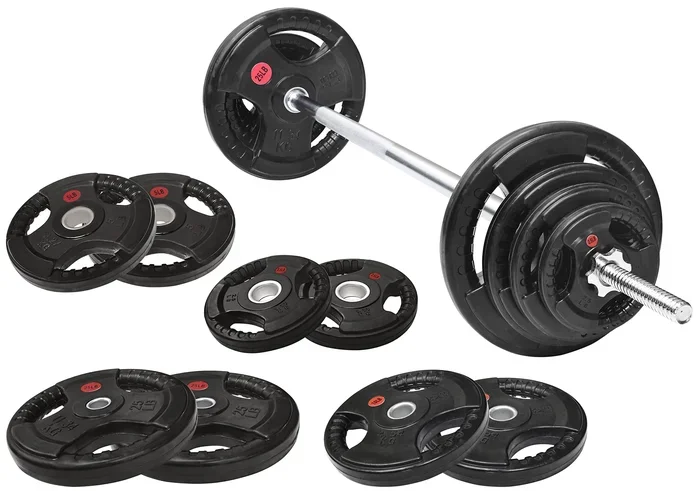
Should I Get a 6ft or 7ft Barbell

Choosing between a 6ft and 7ft barbell depends on your training style, available space, and fitness goals. A 6ft barbell is compact, ideal for small areas and beginners, while a 7ft barbell offers more versatility for powerlifting and Olympic lifts. This guide helps you decide which length fits your needs best.
Choosing the right barbell can feel confusing. You see two main sizes on the rack — 6ft and 7ft. Both look similar. Both lift heavy weights. But they serve very different purposes. So should I get a 6ft or 7ft barbell? That is the question we are going to answer today.
The length of your barbell changes everything. It affects your exercises, your setup, and even your safety. A bar that is too long for your space can feel awkward. A bar that is too short might limit your exercises. Let us break down the real differences so you can make a confident choice.
Key Takeaways
- 6ft barbell: Best for small spaces, beginners, and isolation exercises like curls and shoulder presses.
- 7ft barbell: The standard for powerlifting, Olympic lifts, and full-body compound movements.
- Barbell weight matters: Both sizes typically weigh around 20 lbs (9 kg) for standard bars.
- Sleeve length differs: A 7ft barbell has longer sleeves, which affects plate loading and balance.
- Home gym fit: Measure your space before buying — a 7ft barbell needs more room to move safely.
- Budget consideration: Prices are similar, but 7ft bars may cost slightly more due to extra material.
- Try before you buy: If possible, test both lengths at a local gym to see which feels right for you.
📑 Table of Contents
- What Is the Difference Between a 6ft and 7ft Barbell?
- When Should You Choose a 6ft Barbell?
- When Should You Choose a 7ft Barbell?
- Barbell Length and Exercise Compatibility
- How to Choose the Right Barbell for Your Goals
- Common Mistakes When Choosing Barbell Length
- Expert Insights: What Coaches Recommend
- Final Verdict: Should I Get A 6ft Or 7ft Barbell?
What Is the Difference Between a 6ft and 7ft Barbell?
The most obvious difference is length. A 6ft barbell measures approximately 183 cm, while a 7ft barbell measures about 213 cm. That extra foot makes a big difference in how you train. Here is a closer look at what sets them apart.
Standard Barbell Dimensions
Most standard barbells share similar specs beyond length. The diameter is usually 28 mm to 29 mm. The weight sits around 20 lbs (9 kg). Both sizes use standard 1-inch or 2-inch sleeves for loading plates. The main variation is the shaft length and sleeve size.
A 6ft barbell has a shorter shaft and shorter sleeves. This makes it great for exercises where space is limited. A 7ft barbell has a longer shaft and longer sleeves. This gives you more room to load heavier plates and perform full-range movements.
Weight Capacity Comparison
Both barbell lengths can handle significant weight. A quality 6ft barbell often supports 500 to 700 lbs. A 7ft barbell typically supports 700 to 1000 lbs. The difference comes from the shaft thickness and material quality, not just length. Always check the manufacturer specifications before buying.
When Should You Choose a 6ft Barbell?
The 6ft barbell is a fantastic option for many lifters. It is not just a “smaller” version of the 7ft bar. It has its own unique advantages that make it the better choice in certain situations.
Small Home Gyms and Apartments
If you train in a small room or apartment, a 6ft barbell is a game-changer. A 7ft barbell needs about 8 to 10 feet of clearance for safe bench pressing and squatting. A 6ft barbell works comfortably in about 6 to 8 feet of space. This alone makes it the practical choice for many home lifters.
Think about your workout area. Can you lie on a bench and fully extend the bar without hitting the wall or ceiling? If not, go with the 6ft barbell. Safety always comes first.
Beginner Lifters
Starting out? A 6ft barbell gives you everything you need. You do not need a full 7ft Olympic barbell right away. Beginners benefit from the shorter length because it is easier to control. The bar feels more manageable during exercises like barbell curls, shoulder presses, and tricep extensions.
Many people also ask: do I need a barbell if I have dumbbells? The answer is no. A 6ft barbell pairs perfectly with dumbbells for a balanced home gym setup. It covers the exercises you cannot do with dumbbells alone.
Isolation and Accessory Work
The 6ft barbell shines during isolation exercises. Barbell curls, skull crushers, and lateral raises all work well on a shorter bar. The compact length keeps the plates closer to your body, which improves balance during these targeted movements.
If your training focuses on building specific muscle groups rather than heavy compound lifts, a 6ft barbell might be all you need.
When Should You Choose a 7ft Barbell?
The 7ft barbell is the standard in most commercial gyms and competitive powerlifting. It is the barbell you see in the Olympics and in serious strength training programs. Here is when it makes the most sense to invest in a 7ft barbell.
Powerlifting and Heavy Compound Lifts
If your goal is to build maximum strength, the 7ft barbell is the way to go. Exercises like the bench press, squat, and deadlift benefit from the longer bar. The extra length allows you to load heavier plates while maintaining proper balance and leverage.
A 7ft barbell also gives you the correct sleeve rotation for Olympic-style lifts. If you are into clean and jerks or snatches, you need the full 7ft shaft to execute these movements properly.
Full-Body Strength Training
Training for overall strength? A 7ft barbell covers all your bases. From squats to overhead presses to bent-over rows, the longer bar handles every compound movement with ease. It is the most versatile option for serious lifters.
Many people also wonder how many times a week they should lift. A 7ft barbell supports a wide range of training frequencies, from 3-day full-body routines to 5-day split programs. It adapts to whatever schedule works for you.
Competitive and Serious Training
Planning to compete in powerlifting or Olympic weightlifting? You need a 7ft barbell that meets competition standards. The whip, sleeve rotation, and knurling pattern on a 7ft bar are specifically designed for high-level performance. Training on the right equipment prepares you for the real thing.
Barbell Length and Exercise Compatibility
Not all exercises work equally well with both barbell lengths. Here is a breakdown of how each exercise pairs with your barbell choice.
Exercises Best Performed with a 6ft Barbell
- Barbell curls — the shorter bar keeps plates close and stable
- Seated overhead press — easier to handle in tight spaces
- Barbell hip thrusts — fits well on standard benches
- Tricep pushdowns (standing) — compact and controlled
- Barbell rows (supported) — works great with less clearance
Exercises Best Performed with a 7ft Barbell
- Bench press — the standard length for proper grip spacing
- Back squats — allows full plate loading and balance
- Deadlifts — the longer shaft suits proper stance width
- Overhead press (standing) — full range of motion without restriction
- Olympic lifts — requires the full 7ft shaft for proper technique
How to Choose the Right Barbell for Your Goals
Still not sure which barbell to pick? Let us walk through a simple decision process. Your training goals and environment should guide your choice.
Step 1: Measure Your Space
Grab a tape measure. How long is your workout area? If you have less than 8 feet of horizontal space, a 6ft barbell is the safer bet. If you have a dedicated garage gym or home gym with plenty of room, a 7ft barbell will fit comfortably.
Step 2: Define Your Training Goals
Are you training for general fitness and muscle building? A 6ft barbell covers most needs. Are you training for strength sports or competitive lifting? Invest in a 7ft barbell. Your goals directly determine which barbell length serves you best.
Step 3: Consider Your Budget
Both sizes fall in a similar price range. A quality standard barbell costs between $100 and $300. Olympic barbells in either length run $200 to $500. The price difference between a 6ft and 7ft barbell of the same quality is usually minimal. Do not let price be your deciding factor.
Step 4: Think About Portability and Storage
A 6ft barbell is easier to store and move around. If you travel or plan to reconfigure your gym space often, the shorter barbell wins on convenience. A 7ft barbell is a permanent fixture — once you set it up, it stays put.
Common Mistakes When Choosing Barbell Length
Avoid these common pitfalls that trip up many lifters when picking a barbell.
- Assuming bigger is always better. A 7ft barbell is not automatically superior. It depends on your needs and space.
- Ignoring sleeve length. Longer sleeves on a 7ft barbell hold more plates but also add to the overall width. Make sure your bench and racks accommodate this.
- Skipping the knurling check. The knurling pattern affects grip comfort. Test both barbells if you can before purchasing.
- Forgetting about barbell weight. A 7ft barbell can feel heavier to lift off the rack even though the actual weight is the same. Factor this into your early workouts.
- Buying without a return policy. Always check the return policy. If the barbell does not feel right, you want the option to exchange it.
Expert Insights: What Coaches Recommend
Most strength coaches agree on one thing: there is no single “best” barbell length. The right barbell is the one that matches your training environment and goals. Many coaches recommend starting with a 6ft barbell for home setups and upgrading to a 7ft barbell as your training progresses.
If you are currently deciding between equipment, you might also consider whether you need a barbell at all. Some lifters build excellent physiques using just dumbbells. The barbell shoulder press is one of the best compound movements, and you can perform it standing or sitting depending on your preference and goals.
For those who also enjoy cardio equipment, the choice between a rowing machine and exercise bike follows a similar logic — it depends on your space, goals, and preferences. The same mindset applies to choosing barbell length.
Final Verdict: Should I Get A 6ft Or 7ft Barbell?
The answer comes down to three factors: your space, your goals, and your experience level. If you are a beginner training in a small area, the 6ft barbell is the smart choice. If you are an intermediate or advanced lifter with a dedicated home gym and serious strength goals, the 7ft barbell is the better investment.
Both barbells are excellent tools. Neither is wrong. The best barbell is the one you will actually use consistently. So measure your space, define your goals, and make the choice that fits your life. You will be glad you did.
Frequently Asked Questions
Can I use a 6ft barbell for squats?
Yes, you can use a 6ft barbell for squats. However, the shorter length limits how much weight you can load and may feel tighter during heavy sets. For serious squatting and powerlifting, a 7ft barbell is the better choice.
Is a 7ft barbell the same as an Olympic barbell?
A 7ft barbell is typically the standard Olympic barbell length. Olympic barbells are 7ft long and designed for competitive weightlifting and powerlifting with specific sleeve rotation and whip characteristics.
How much does a 6ft barbell weigh?
A standard 6ft barbell weighs approximately 20 lbs (9 kg). Olympic 6ft barbells may weigh slightly more, around 15 to 20 kg, depending on the manufacturer and material quality.
Can I do deadlifts with a 6ft barbell?
Yes, you can perform deadlifts with a 6ft barbell. The shorter length works well for conventional deadlifts. However, sumo deadlifts and heavy pulls may benefit more from the longer 7ft barbell for better balance and plate loading.
What is the difference between a standard and Olympic barbell?
A standard barbell has a 1-inch diameter sleeve that fits 1-inch plates. An Olympic barbell has a 2-inch diameter sleeve designed for Olympic weight plates. Both 6ft and 7ft barbells come in standard and Olympic versions.
Should I buy a 6ft or 7ft barbell for a home gym?
For most home gyms, a 6ft barbell is the practical choice. It fits in smaller spaces, handles the most common exercises, and is easier to store. Choose a 7ft barbell only if you have the space and plan to train for advanced strength goals.