Both the StairMaster and elliptical are excellent cardio machines for weight loss, but they excel in different areas. The StairMaster provides a high-intensity, muscle-building workout that torches calories and targets the lower body, while the elliptical offers a low-impact, full-body session that’s easier on the joints. The “better” choice depends entirely on your personal fitness level, joint health, and preferences. Consistency with either machine, combined with a healthy diet, will lead to successful weight loss.
Key Takeaways
- Calorie Burn: The StairMaster typically burns more calories per minute due to its high-intensity, resistance-based climbing motion, but the elliptical can match or exceed it with vigorous upper-body engagement and high incline settings.
- Muscle Engagement: The StairMaster is superior for building strength and muscle in the glutes, hamstrings, and quads. The elliptical provides a more balanced, full-body workout engaging both upper and lower body muscles.
- Joint Impact: The elliptical is a low-impact machine, making it ideal for those with knee, hip, or back issues. The StairMaster is high-impact, placing more stress on joints but also building bone density.
- Sustainability & Enjoyment: The best machine for weight loss is the one you will use consistently. Many find the rhythmic motion of the elliptical more sustainable for long-term adherence, while others thrive on the challenge of the StairMaster.
- Weight Loss is Holistic: No single machine guarantees weight loss. Success is determined by a consistent calorie deficit achieved through a combination of regular exercise (from either machine) and a nutritious diet.
- Personal Factors Rule: Your current fitness level, any pre-existing injuries, and your personal workout preferences are the most important factors in choosing between a StairMaster or elliptical for weight loss.
📑 Table of Contents
- The Eternal Gym Debate: StairMaster or Elliptical for Weight Loss?
- Understanding the Weight Loss Equation: It’s Not Just About the Machine
- StairMaster Deep Dive: The Power of Vertical Ascent
- Elliptical Deep Dive: The Full-Body, Low-Impact Workhorse
- Head-to-Head: Comparing the Key Metrics for Weight Loss
- How to Maximize Weight Loss on Either Machine: It’s All in the Approach
- The Verdict: Which One Should YOU Choose?
The Eternal Gym Debate: StairMaster or Elliptical for Weight Loss?
So you’ve decided to commit to weight loss and you’re standing in front of the cardio section, faced with two formidable machines: the towering, step-climbing StairMaster and the gliding, foot-path-patterned elliptical trainer. It’s a classic fitness dilemma. Both promise fat torching, cardiovascular improvement, and a leaner physique. But when it comes to the singular goal of shedding pounds, which one truly pulls ahead? Is it the burn of endless stair climbing or the smooth, full-body rhythm of the elliptical? The answer, as you might expect, isn’t a simple “this one.” It’s a nuanced look at physiology, mechanics, and—most importantly—your own body and preferences. Let’s break down the science, the sweat, and the strategy to determine whether the Stairmaster or elliptical deserves a spot in your weight loss arsenal.
Understanding the Weight Loss Equation: It’s Not Just About the Machine
Before we dive into machine specifics, we must establish the fundamental rule of weight loss: a calorie deficit. You must burn more calories than you consume. Both the StairMaster and elliptical are tools to help you create that deficit through increased energy expenditure. Their effectiveness hinges on three primary factors: the number of calories burned during the session, the metabolic after-effects of the workout (EPOC, or Excess Post-exercise Oxygen Consumption), and the workout’s ability to build or preserve lean muscle mass, which boosts your resting metabolism.

Visual guide about What Is Better for Weight Loss Stairmaster or Elliptical
Image source: cdn.autonomous.ai
The Role of Intensity and Muscle
Generally, higher-intensity workouts that recruit more large muscle groups will burn more calories per minute and create a greater EPOC effect. This is where resistance and incline come into play. A workout that feels “harder” often leads to greater metabolic disruption, meaning your body continues to burn extra calories for hours after you’ve finished. Both machines can be adjusted for intensity, but they do so in mechanically different ways, leading to different physiological stresses and benefits.
StairMaster Deep Dive: The Power of Vertical Ascent
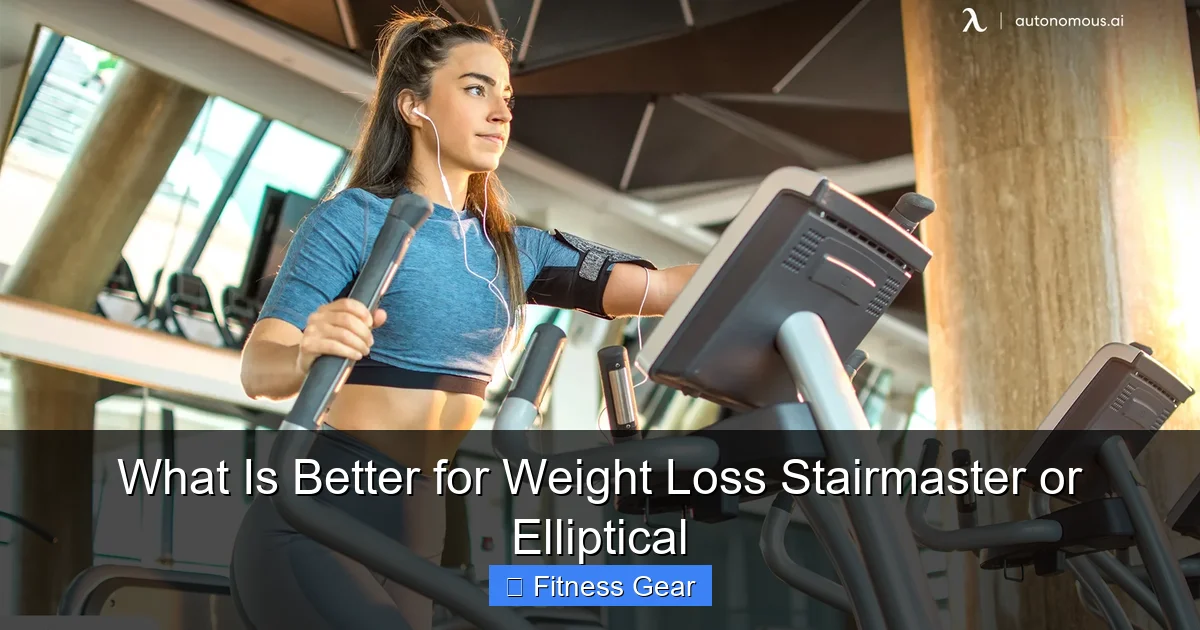
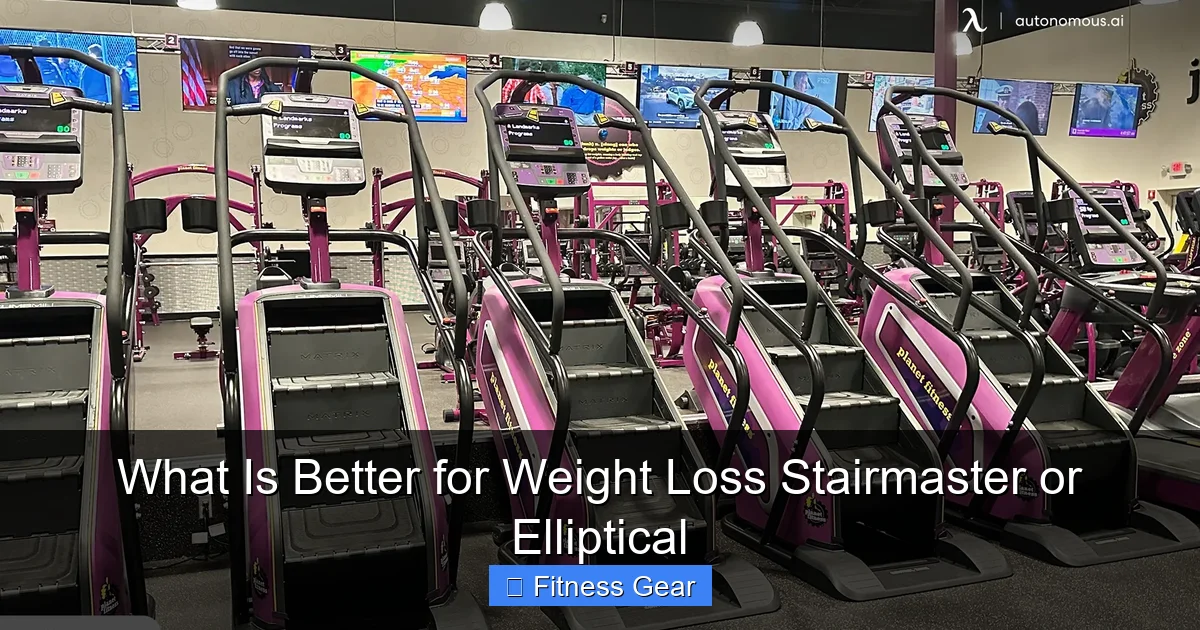
The StairMaster is a powerhouse of a machine. It simulates the act of climbing stairs, but without the impact of actual stair descent. You stand upright, gripping handles, and push your body weight against a moving staircase or individual pedals that descend. It’s a pure, unadulterated lower-body strength and endurance exercise.
Visual guide about What Is Better for Weight Loss Stairmaster or Elliptical
Image source: cdn.autonomous.ai
Calorie Torching and Glute & Leg Building
Because you are essentially lifting your entire body weight against gravity with each step, the StairMaster is incredibly demanding. It heavily recruits the largest muscles in your body: the gluteus maximus, hamstrings, and quadriceps. This high level of muscle engagement does two critical things for weight loss. First, it burns a tremendous number of calories *during* the workout. A 185-pound person can burn approximately 330-450 calories in a vigorous 30-minute session. Second, building and strengthening these large muscle groups increases your basal metabolic rate (BMR). More muscle at rest means you burn more calories 24/7, which is a huge long-term advantage for weight management.
Impact and Considerations
The StairMaster is a weight-bearing, high-impact exercise. While it’s easier on the knees than running on concrete (since you’re not pounding the ground), it still places significant stress on the ankle, knee, and hip joints with each step. This makes it less ideal for individuals with acute joint pain, severe arthritis, or certain lower-body injuries. However, for healthy individuals, this impact is also what stimulates bone density improvement. The motion is also relatively repetitive, which can be monotonous for some and may lead to overuse injuries if form breaks down or volume is excessive. Proper form is key: avoid leaning heavily on the handrails; engage your core and press through your whole foot.
Elliptical Deep Dive: The Full-Body, Low-Impact Workhorse
The elliptical trainer features two pedals that move in an oval (elliptical) path, mimicking a gait cycle between walking and running but without the foot leaving the pedal. Most modern ellipticals also have moving arm handles, allowing you to actively push and pull with your upper body.
Visual guide about What Is Better for Weight Loss Stairmaster or Elliptical
Image source: cdn.autonomous.ai
Low-Impact, High-Engagement Cardio
The defining feature of the elliptical is its near-zero impact nature. Your feet never leave the pedals, creating a smooth, floating motion that is incredibly gentle on the knees, hips, and back. This makes it a premier choice for people recovering from injuries, those with chronic joint pain, or anyone seeking a sustainable, long-term cardio option. The ability to engage the arms transforms it from a lower-body exercise into a true full-body workout. By actively using the handles, you incorporate your chest, back, shoulders, and arms, significantly increasing the total muscle mass involved and, consequently, the calorie burn. A 185-pound person can burn 300-400+ calories in 30 minutes on an elliptical, especially when using high resistance and pushing with the arms.
Customization and the “Feel-Good” Factor
Ellipticals offer immense customization. You can adjust resistance (how hard it is to push/pull), incline (which changes the pedal angle to target different leg muscles), and stride length. This variability helps combat boredom and allows you to continually challenge your body in new ways. The smooth, rhythmic motion is often described as more meditative and less punishing than the StairMaster’s climb, which can lead to longer, more enjoyable sessions—a critical factor for adherence. The main drawback is that because it’s low-impact and often involves some momentum, it may not build as much raw lower-body strength or bone density as the StairMaster, and it’s easier to “cheat” by letting the machine’s momentum do some of the work if you disengage your upper body.
Head-to-Head: Comparing the Key Metrics for Weight Loss
Let’s line up these machines on the critical factors that influence fat loss.
Calorie Burn: The Numbers Game
On paper, for a given perceived effort level, the StairMaster usually comes out ahead in raw calorie expenditure per minute because of its sheer lower-body intensity. However, the elliptical has a secret weapon: the upper body. If you are diligently engaging your arms against resistance, you can close the calorie-burn gap significantly. Furthermore, because the elliptical is often more comfortable, people tend to use it for longer durations (45-60 minutes vs. 20-30 minutes on the StairMaster), which can result in a greater total calorie burn per session. The winner here is situational: short, maximum effort on the StairMaster vs. longer, sustained full-body effort on the elliptical.
Muscle Building vs. Muscle Preservation
This is a clear victory for the StairMaster. The resistance-based climbing is essentially a leg press in motion. It provides a potent stimulus for hypertrophy (muscle growth) and strength in the posterior chain (glutes, hamstrings). Preserving or building this muscle is invaluable for weight loss, as it elevates your metabolism. The elliptical, particularly at low resistance, is more of an endurance and cardiovascular tool. It tones muscles but doesn’t provide the same overload for significant strength gains. For pure body recomposition (losing fat while gaining muscle), the StairMaster has an edge.
Joint Health and Long-Term Sustainability
This category belongs to the elliptical. Its low-impact nature is its superpower for sustainability. If you have knee problems, a history of shin splints, or are carrying excess weight that stresses joints, the elliptical is the safe, smart choice. You can exercise frequently without accumulating joint damage. The StairMaster, while not as bad as running, is still a repetitive stress activity. Overuse can lead to tendinitis or exacerbate existing conditions. For a 50-year-old with mild arthritis or someone 50 pounds overweight, the elliptical is not just better—it’s the only responsible option.
How to Maximize Weight Loss on Either Machine: It’s All in the Approach
Simply strolling on either machine while scrolling through your phone will yield minimal results. To truly leverage these tools for fat loss, you need a strategy.
For the StairMaster: Embrace the Burn with Intervals
Don’t just climb at a steady pace. Use High-Intensity Interval Training (HIIT). Try a protocol like: 2 minutes at a challenging but sustainable pace (active recovery), followed by 30-60 seconds of all-out climbing at the highest speed/resistance you can maintain (sprint interval). Repeat for 20-25 minutes. This maximizes calorie burn during and after the workout (EPOC). Focus on powerful pushes through your heels to maximize glute engagement. Keep your core tight and minimize handrail reliance.
For the Elliptical: Drive with Your Arms and Incline
The biggest mistake on the elliptical is letting the arms dangle. Actively push and pull the handles in sync with your legs, as if you’re cross-country skiing. This instantly increases intensity and total-body engagement. Next, play with the incline. A high incline (10+ on most machines) shifts the work to your glutes and hamstrings, mimicking a stair climb and boosting calorie burn. Combine this with HIIT: 1 minute of max effort (high resistance, high incline, full arm drive), 90 seconds of easy recovery. Aim for 30-45 minutes of this.
The Verdict: Which One Should YOU Choose?
So, after all this analysis, what’s the final word on what is better for weight loss, Stairmaster or elliptical? There is no universal champion. The best machine is the one that aligns with your personal triad: 1) Your Physical Reality, 2) Your Enjoyment, and 3) Your Ability to be Consistent.
Choose the StairMaster if: You are injury-free, have no major joint issues, and want to build significant lower-body strength and power alongside your cardio. You enjoy intense, shorter workouts and don’t mind the burn. You want the highest possible calorie burn per minute and a major metabolic boost from building muscle.
Choose the Elliptical if: You have any concerns about joint impact (knees, hips, back), are recovering from an injury, are significantly overweight, or simply prefer a smoother, more comfortable motion. You want a full-body workout in one machine and can commit to longer sessions. Sustainability and the ability to exercise frequently without pain are your top priorities.
For many, a hybrid approach is perfect. Use the StairMaster 1-2 times a week for intense, strength-focused sessions, and use the elliptical on other days for active recovery, longer steady-state cardio, or when your joints need a break. The ultimate weight loss machine isn’t in the gym—it’s the combination of consistent effort, progressive overload (making workouts harder over time), and a calorie-controlled diet. Pick the tool that helps you execute that plan most effectively and enjoyably.
Frequently Asked Questions
Which machine burns more belly fat?
Neither machine specifically targets belly fat, as spot reduction is a myth. Fat loss occurs systemically across the body. The machine that helps you create the largest overall calorie deficit through high-intensity or longer-duration workouts will contribute to losing fat from your midsection along with the rest of your body.
Is the StairMaster bad for your knees?
For people with healthy knees and proper form, the StairMaster is generally considered lower impact than running. However, it is a weight-bearing, repetitive motion that can aggravate pre-existing knee conditions like severe arthritis or meniscus tears. If you have knee pain, consult a doctor and prioritize the low-impact elliptical.
How often should I use each machine for weight loss?
Aim for 3-5 cardio sessions per week for weight loss. You can use the same machine each time or mix them. If using only the StairMaster, limit it to 2-3 times per week due to its high intensity and joint load, and supplement with other activities. The elliptical can be used more frequently, even daily, due to its low impact.
Can I lose weight on the elliptical without using the arms?
Yes, you can still lose weight by only using your legs on the elliptical, as it remains an effective cardiovascular exercise that burns calories. However, you will burn significantly fewer calories per minute and engage less total muscle mass. To maximize weight loss efficiency, always incorporate the arm handles into your workout.
Should I do both the StairMaster and elliptical in the same workout?
It’s generally not recommended to do two long, intense cardio sessions back-to-back due to time constraints and potential overtraining. A better strategy is to alternate days or use one for your primary cardio and the other for a short, 10-15 minute warm-up or cool-down. Focus on quality and intensity on one primary machine per session.
What’s a good beginner workout on each machine?
StairMaster Beginner: 5 min easy warm-up. Then, 10 rounds of: 1 min at a moderate pace (RPE 6/10), 1 min at a very slow recovery pace. Cool down 5 min. Total: 25 minutes.
Elliptical Beginner: 5 min easy warm-up with no resistance. Then, 20 minutes at a steady, comfortable pace where you can talk but not sing (RPE 5-6/10), actively using your arms. Cool down 5 min. Total: 30 minutes.