How to Clean a Natural Rubber Yoga Mat
Cleaning a natural rubber yoga mat is simple when you use the right techniques and gentle ingredients. This guide walks you through everything you need to know about deep cleaning your natural rubber yoga mat at home, from daily wipe-downs to full sanitizing routines. You will learn safe cleaning solutions, step-by-step methods, and common mistakes to avoid so your mat stays fresh, sticky, and long-lasting.
Your yoga mat is one of the most personal tools in your practice. It supports your joints, grips your feet, and absorbs your sweat during every session. But here is something many yogis overlook — a natural rubber yoga mat needs regular cleaning to stay safe and effective.
Over time, dirt, oils, and bacteria build up on the surface. This can make your mat slippery, smelly, and even unhealthy. The good news is that cleaning a natural rubber yoga mat does not require expensive products or complicated steps. With a few simple household items and a little consistency, you can keep your mat fresh for years.
In this guide, we will cover everything from daily maintenance to deep cleaning methods. You will learn what products are safe, what to avoid, and how to tackle tough odors. Whether you are a beginner or a seasoned practitioner, this guide will help you care for your mat the right way.
Key Takeaways
- Daily care matters: Wipe your mat after every session to prevent buildup and extend its life.
- Use gentle, natural cleaners: Avoid harsh chemicals that can degrade natural rubber.
- Baking soda and vinegar are your best friends: These household items work wonders for deep cleaning.
- Never machine wash a natural rubber mat: It can ruin the material and compromise grip.
- Dry your mat properly: Air drying prevents mold and mildew growth.
- Regular deep cleaning keeps you safe: A clean mat reduces bacteria and odor.
📑 Table of Contents
- Why Cleaning Your Natural Rubber Yoga Mat Matters
- What You Need to Clean a Natural Rubber Yoga Mat
- Step-by-Step Guide to Cleaning Your Natural Rubber Yoga Mat
- How to Remove Odors from a Natural Rubber Yoga Mat
- How Often Should You Clean Your Natural Rubber Yoga Mat
- Common Mistakes to Avoid When Cleaning a Natural Rubber Yoga Mat
- Expert Tips for Long-Lasting Mat Care
- Final Thoughts
Why Cleaning Your Natural Rubber Yoga Mat Matters
Natural rubber is a porous material. It absorbs sweat, skin cells, and dust every time you practice. Unlike synthetic mats, natural rubber mats are more eco-friendly but also require more careful yoga mat maintenance. Here is why staying on top of cleaning is so important.
Health and Hygiene
When you practice yoga, your body releases sweat and oils. These substances settle into the mat surface and create a breeding ground for bacteria. If you do not clean your mat regularly, you risk skin irritation, breakouts, and even infections. A deep clean yoga mat routine helps eliminate germs and keeps your practice safe.
Performance and Grip
A dirty mat loses its grip. When sweat and grime build up, the surface becomes slick. This can cause slipping during poses, which increases the risk of injury. Keeping your mat clean ensures it maintains its natural sticky texture and provides the support you need.
Longevity of Your Mat
Natural rubber mats are an investment. A high-quality mat can last several years with proper care. Neglecting cleaning, however, can cause the rubber to break down faster. Regular rubber yoga mat care preserves the material and saves you money in the long run.
What You Need to Clean a Natural Rubber Yoga Mat
Before you start, gather your supplies. The best part about cleaning a natural rubber mat is that you do not need harsh or expensive chemicals. Most of what you need is already in your kitchen.
Gentle Cleaning Ingredients
- Warm water — the base for most cleaning solutions
- Mild dish soap — a few drops go a long way
- White vinegar — a natural disinfectant that is safe for rubber
- Baking soda — great for removing stubborn stains and odors
- Essential oils — tea tree or lavender oil adds a pleasant scent and antibacterial properties
These ingredients are all non-toxic and eco-friendly. They will not damage the natural rubber or leave behind harmful residues. For those who prefer store-bought options, look for natural yoga mat cleaners that are free from synthetic fragrances and chemicals.
What to Avoid
- Bleach and harsh disinfectants
- Alcohol-based cleaners
- Machine washing or soaking the mat
- Direct sunlight during drying
- Abrasive scrubbing tools
These can degrade the rubber, cause cracking, and strip away the mat’s natural grip. Always stick to gentle methods when you clean a natural rubber yoga mat.
Step-by-Step Guide to Cleaning Your Natural Rubber Yoga Mat
Now that you have your supplies ready, let us walk through the cleaning process. There are three main methods you can use depending on how dirty your mat is.
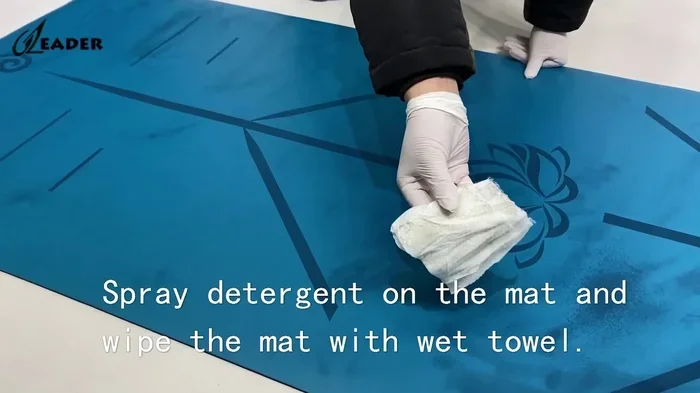
Method 1: Quick Daily Wipe-Down
This method takes less than two minutes and should be done after every practice session.
- Spray a light mist of water over the mat surface.
- Add one or two drops of mild dish soap to a soft cloth.
- Wipe the entire mat gently in circular motions.
- Use a damp cloth to remove any soap residue.
- Hang the mat to air dry in a shaded area.
This simple routine prevents sweat and oil from building up. It keeps your mat fresh between deeper cleanings.
Method 2: Deep Clean with Baking Soda
For a more thorough cleaning, baking soda works wonderfully. If you want a detailed walkthrough, you can also check out our guide on how to clean a yoga mat with baking soda for additional tips.
- Mix two tablespoons of baking soda with one cup of warm water.
- Stir until the baking soda fully dissolves.
- Apply the solution to the mat using a soft spray bottle or cloth.
- Let it sit for 10 to 15 minutes.
- Gently scrub the surface with a soft brush or cloth.
- Rinse thoroughly with clean water.
- Hang the mat to dry completely before rolling it up.
Baking soda is excellent for lifting stains and absorbing odors. It is gentle enough for daily use and does not harm the rubber material.
Method 3: Vinegar and Water Solution
Vinegar is a powerful natural disinfectant. It kills bacteria and eliminates odors without leaving a strong smell once it dries. For more details on using vinegar safely, our article on can I use vinegar to clean my yoga mat covers this topic in depth.
- Mix equal parts white vinegar and warm water.
- Pour the solution into a spray bottle.
- Spray the mat evenly, covering the entire surface.
- Let it sit for 5 to 10 minutes.
- Wipe down with a damp cloth.
- Rinse with plain water if needed.
- Air dry completely in a well-ventilated area.
The vinegar smell fades quickly once the mat dries. This method is especially useful for yoga mat odor removal and sanitizing after heavy use.
How to Remove Odors from a Natural Rubber Yoga Mat
Odors are one of the most common complaints about rubber yoga mats. Sweat and moisture get trapped in the porous surface, leading to a persistent smell. Here are some effective ways to tackle this issue.
Use Essential Oils
Add a few drops of tea tree oil or lavender oil to your cleaning solution. Tea tree oil has natural antibacterial properties that fight odor-causing bacteria. Lavender oil provides a calming scent that makes your mat smell fresh.
Baking Soda Overnight Treatment
For stubborn odors, sprinkle dry baking soda generously over the mat. Let it sit overnight. The baking soda absorbs moisture and neutralizes smells. Shake or vacuum it off in the morning.
If you are dealing with persistent rubber smells, our guide on how to get rubber smell out of yoga mat has additional strategies that can help.
Sunlight and Air Flow
Never dry your mat in direct sunlight. UV rays can crack and degrade natural rubber. Instead, lay the mat in a shaded, well-ventilated area. A gentle breeze helps moisture evaporate without damaging the material.
How Often Should You Clean Your Natural Rubber Yoga Mat
The frequency of cleaning depends on how often you practice. Here is a simple schedule to follow for optimal yoga mat hygiene.
| Usage Level | Quick Wipe-Down | Deep Clean |
|---|---|---|
| Daily practice (5+ times per week) | After every session | Once a week |
| Moderate practice (2-4 times per week) | After every session | Every two weeks |
| Occasional use (once a week or less) | Before and after each use | Once a month |
Following this schedule keeps your mat in top condition. It also prevents bacteria buildup before it becomes a problem. Remember that sweat, humidity, and body oils all affect how quickly your mat gets dirty, so adjust as needed.
Common Mistakes to Avoid When Cleaning a Natural Rubber Yoga Mat
Even with good intentions, some cleaning habits can actually harm your mat. Here are the most common mistakes to watch out for.
Using Too Much Water
Natural rubber absorbs water. Soaking the mat or using excessive water can cause it to swell, warp, or develop mold. Always use minimal moisture and dry your mat thoroughly.
Skipping the Rinse
Soap residue left on the mat makes it slippery and can irritate your skin during the next practice. Always rinse your mat after cleaning and wipe it with a damp cloth.
Using Harsh Chemicals
Bleach, ammonia, and alcohol-based cleaners break down natural rubber over time. They strip the mat of its natural oils and grip. Stick to gentle, natural alternatives for the best results.
Rolling a Wet Mat
Never roll up your mat while it is still damp. Trapped moisture leads to mold and mildew. Always wait until the mat is completely dry before storing it.
Expert Tips for Long-Lasting Mat Care
Taking care of your natural rubber yoga mat goes beyond cleaning. Here are some expert-backed tips to keep your mat in excellent condition for years.
- Use a yoga towel during hot sessions. It absorbs excess sweat and protects your mat from heavy moisture.
- Store your mat unrolled. Rolling it up for long periods can cause creases and reduce the mat’s natural flatness.
- Wash your hands before practice. This reduces the amount of oil and dirt that transfers to the mat.
- Rotate between two mats if possible. Giving each mat time to dry fully between uses extends its lifespan.
- Reapply a natural rubber conditioner occasionally. This keeps the surface supple and maintains its grip.
These small habits make a big difference. They keep your mat hygienic, grippy, and comfortable every time you step on it.
Final Thoughts
Cleaning a natural rubber yoga mat is an essential part of your yoga journey. A clean mat supports better hygiene, better grip, and a longer-lasting practice. With the simple methods shared in this guide, you can keep your mat fresh, safe, and performing at its best.
Make cleaning a regular habit. A few minutes of care after each session saves you from deep cleaning headaches later. Your mat will thank you with better traction, fewer odors, and a longer lifespan. Start today, and enjoy a cleaner, healthier practice every time you step on your mat.
Frequently Asked Questions
Can I use Clorox wipes to clean my natural rubber yoga mat?
It is best to avoid Clorox wipes on natural rubber. The harsh chemicals can break down the rubber material and strip away its natural grip. Stick to gentle, natural cleaners like vinegar, baking soda, or mild soap for safe and effective cleaning.
How do I deep clean a natural rubber yoga mat at home?
You can deep clean your mat using a baking soda and water solution or a vinegar and water mixture. Apply the solution, let it sit for 10 to 15 minutes, gently scrub with a soft cloth, rinse thoroughly, and air dry completely before storing.
Is it safe to wash a natural rubber yoga mat in the washing machine?
No, washing a natural rubber mat in the washing machine is not recommended. The agitation and heat can damage the rubber, cause warping, and ruin the mat’s grip. Always hand clean your mat using gentle methods.
How often should I replace my natural rubber yoga mat?
A well-maintained natural rubber yoga mat can last several years. Replace it when you notice persistent odors that do not go away, visible wear and tear, loss of grip, or thinning of the material. Regular cleaning helps extend its life significantly.
What is the best natural cleaner for a rubber yoga mat?
A mixture of white vinegar and warm water is one of the best natural cleaners. Baking soda is also excellent for removing stains and odors. Both are non-toxic, eco-friendly, and safe for natural rubber surfaces.
Why does my natural rubber yoga mat smell even after cleaning?
Natural rubber has a distinct smell that can linger, especially when the mat is new or exposed to moisture. If the smell persists after cleaning, try an overnight baking soda treatment, ensure the mat is completely dry before storing, and store it in a well-ventilated area away from humidity.