How to Tell If Treadmill Belt Is Tight
Knowing how to tell if your treadmill belt is tight is one of the most important treadmill maintenance skills you can learn. A tight treadmill belt ensures safe, efficient workouts and prevents costly damage. This guide walks you through simple tests, clear signs, and easy fixes so you can keep your belt in perfect shape.
Your treadmill belt is the heart of your workout. It takes every step, every sprint, and every incline you throw at it. But here is the thing most people overlook — belt tension matters just as much as the motor or the cushioning. A tight treadmill belt keeps your runs smooth, your joints safe, and your machine lasting for years.
So how do you actually know if your belt is tight enough? And what happens when it is too loose or too tight? In this guide, we will walk you through every sign, test, and fix you need. Whether you are a casual walker or a dedicated runner, understanding your treadmill belt tension will save you time, money, and frustration.
Let us get into it. No jargon. No confusing manuals. Just straightforward, practical advice you can use today.
Key Takeaways
- Lift Test: You can check belt tightness by lifting the center of the belt — it should raise about 3 to 5 inches.
- Slipping Means Loose: If the belt slips or slides under your feet, it is likely too loose and needs tightening.
- Over-Tightening Causes Damage: A belt that is too tight strains the motor and rollers, shortening your treadmill’s lifespan.
- Alignment Matters: A belt that moves to one side often signals tension issues or a need for adjustment.
- Regular Checks Help: Testing your belt tension every few weeks catches problems before they become expensive repairs.
- Lubrication Works Hand-in-Hand: A well-lubricated belt glides better and helps you maintain proper tension more easily.
- Replace When Worn: Even with perfect tension, a frayed or worn belt needs replacement for safety.
📑 Table of Contents
- Why Treadmill Belt Tightness Matters
- The Lift Test: Your Go-To Belt Tightness Check
- Visual and Physical Signs of Incorrect Belt Tension
- How to Adjust Your Treadmill Belt Tension
- Common Mistakes to Avoid When Checking Belt Tightness
- When to Replace Your Treadmill Belt Instead of Adjusting It
- Quick Tips for Maintaining Proper Belt Tension Long-Term
- Final Thoughts
Why Treadmill Belt Tightness Matters
You might wonder why belt tightness deserves so much attention. The answer is simple. Your treadmill belt sits on a deck and rolls over rollers and bearings. When the tension is off, everything else suffers. A loose treadmill belt slips, wastes energy, and can even cause injuries. An overly tight belt strains the motor, wears out parts faster, and makes your machine work harder than it needs to.
Think of it like a bicycle chain. Too loose and it falls off. Too tight and it grinds everything down. The sweet spot is where everything moves freely but with control. That is exactly what we are aiming for with your treadmill belt.
Regular treadmill maintenance includes checking belt tension. Most people only think about their belt when something goes wrong. By then, a small issue can turn into a costly repair. A quick tension check every few weeks keeps your machine in top shape and your workouts uninterrupted.
How a Properly Tensioned Belt Feels
A well-tensioned belt feels smooth under your feet. You should not feel any grabbing, slipping, or dragging. When you stand on the belt and walk, it moves with you naturally. The treadmill belt tracking stays centered, and the belt does not drift to either side.
If you notice any of these feelings, your tension might be off:
- A slight dragging sensation when walking
- The belt feels like it is “sticking” in spots
- You hear squeaking or grinding noises
- The belt shifts left or right as you run
The Lift Test: Your Go-To Belt Tightness Check
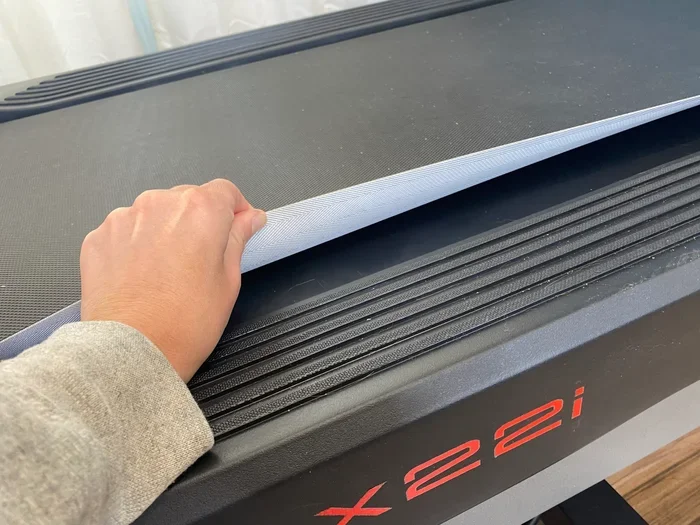
The easiest and most reliable way to tell if treadmill belt is tight is the lift test. This simple method takes less than a minute and gives you an instant answer. Here is exactly how to do it.
Step-by-Step: Performing the Lift Test
- Unplug your treadmill. Safety first. Always disconnect the power before touching the belt.
- Find the center of the belt. Stand at the front of the treadmill and locate the midpoint of the running surface.
- Lift the belt upward. Grab the belt with both hands and pull it gently away from the deck.
- Measure the lift. The belt should raise about 3 to 5 inches (roughly 8 to 13 centimeters) from the deck.
If the belt lifts less than 2 inches, it is too tight. If it lifts more than 5 inches, it is too loose. The 3-to-5-inch range is the sweet spot for most home treadmills. This range allows the belt to glide smoothly without putting unnecessary strain on the motor.
Quick Tip: If your treadmill came with a user manual, check for the manufacturer’s recommended lift measurement. Some brands specify slightly different ranges based on belt size and motor power.
What If Your Belt Is Too Loose?
A loose belt is the most common problem treadmill owners face. You will usually notice it during your workout. The belt might slip under your feet, especially when you increase speed or incline. You might also see the belt drifting to one side, which is a clear sign of uneven tension.
When a belt is loose, it does not grip the rollers properly. This means your feet are doing extra work, and the motor is burning energy without delivering power efficiently. Over time, a loose belt causes premature wear on the deck and the belt itself. It can also lead to treadmill belt slipping, which is not just annoying — it is dangerous.
To fix a loose belt, you will need to tighten the rear roller bolts. Most treadmills have adjustment bolts on the back of the frame. Turn them clockwise in small increments — a quarter turn at a time. After each adjustment, run the lift test again to check your progress.
For more detailed guidance on fixing belt slipping issues, check out our guide on how to fix a slipping belt on a treadmill.
What If Your Belt Is Too Tight?
Over-tightening is a mistake many people make. They assume tighter is always better. But a belt that is too tight creates a whole set of problems. The motor has to work harder, which increases heat buildup and energy consumption. The rollers and bearings wear out faster. And the belt itself experiences more friction, which can cause premature cracking and fraying.
Signs your belt might be too tight include:
- The belt feels stiff and hard to move by hand
- The motor sounds strained during use
- You notice excessive heat coming from the motor area
- The belt stops moving smoothly at lower speeds
If you suspect your belt is too tight, loosen the rear adjustment bolts slightly. Again, small increments are key. A quarter turn counterclockwise at a time. Test the lift after each adjustment until you reach the 3-to-5-inch range.
Visual and Physical Signs of Incorrect Belt Tension
The lift test is your primary tool, but there are other signs your belt tension is off. Paying attention to these signals helps you catch problems early.
Belt Slipping During Workouts
If your feet slide on the belt when you step onto it, the tension is likely too low. Belt slipping happens when the belt cannot grip the rollers properly. This is especially noticeable when you start walking or running from a standstill. You might also feel the belt lose traction when you increase your pace quickly.
Belt slipping is not just uncomfortable — it is a safety hazard. You could lose your footing mid-stride, leading to a fall or injury. If you experience frequent slipping, stop using the treadmill and check your tension right away.
Belt Drifting to One Side
A belt that slowly moves to the left or right side of the deck signals a tension problem. Often, one side is tighter than the other. This belt misalignment causes uneven wear on the belt and the deck surface.
For a deeper look at why belts drift and how to fix it, read our article on why does treadmill belt move to one side.
Unusual Noises
Your treadmill should run quietly. If you hear squealing, grinding, or squeaking, the belt tension could be the culprit. A loose belt often makes a high-pitched squeal as it slips over the rollers. A tight belt might produce a grinding sound because the extra tension creates friction between moving parts.
Do not ignore these sounds. They are your treadmill’s way of telling you something needs attention.
Visible Wear Patterns
Over time, incorrect tension creates visible wear on your belt. A loose belt might show fraying or stretching along the edges. A tight belt often shows cracking or surface wear in the center. Regularly inspect your belt for these patterns. They tell you not only about your current tension but also about long-term damage that may already be done.
How to Adjust Your Treadmill Belt Tension
Once you have identified that your belt tension is off, the next step is adjustment. Most home treadmills use a simple bolt system at the rear of the frame. Here is a general walkthrough that applies to most models.
Tools You Will Need
- An adjustable wrench or hex key (usually 4mm or 5mm)
- A Phillips or flat-head screwdriver (depending on your model)
- A measuring tape or ruler
- A clean cloth for cleaning the belt and deck
Adjustment Steps
- Unplug the treadmill. Always disconnect power before working on any part of the machine.
- Lift the belt gently. Find the rear roller bolts on each side of the frame.
- Turn the bolts equally. For a loose belt, turn both bolts clockwise by a quarter turn. For a tight belt, turn them counterclockwise.
- Run the lift test again. Check that the belt lifts 3 to 5 inches from the deck.
- Test the treadmill. Plug it in and walk on the belt at a slow speed. Listen for any unusual sounds and check for smooth movement.
Always adjust both sides equally. Turning one side more than the other creates uneven tension, which leads to belt drift and uneven wear. If your treadmill has a treadmill belt tensioner system, refer to your user manual for model-specific instructions.
For Proform treadmill owners specifically, we have a dedicated guide on how to tighten the belt on a Proform treadmill with step-by-step instructions tailored to that brand.
Common Mistakes to Avoid When Checking Belt Tightness
Even with the best intentions, treadmill owners make mistakes when checking and adjusting belt tension. Here are the most common ones and how to avoid them.
Skipping the Unplugging Step
This cannot be stressed enough. Always unplug your treadmill before touching the belt. Even at low speed, a powered treadmill can cause serious injury. Make it a habit to unplug first, every single time.
Over-Tightening After a Loose Belt
When a belt has been loose for a while, the natural reaction is to crank it tight. But over-correcting creates new problems. Go slowly. Make small adjustments and test frequently. Your goal is the middle ground, not maximum tightness.
Ignoring the Deck and Rollers
Sometimes the problem is not the belt itself. A worn deck or damaged roller can cause the same symptoms as incorrect tension. If you have adjusted your belt properly but still experience slipping or drifting, inspect the deck surface and the rollers for wear or damage.
Forgetting to Lubricate
Belt tension and lubrication go hand in hand. A dry belt creates extra friction, which can make even a properly tensioned belt feel stiff. Regular lubrication reduces friction and helps the belt glide smoothly. Learn more about what to use for lubrication in our guide on what can you use to lubricate a treadmill belt.
Not Checking Belt Condition
Tension checks are important, but they do not replace a visual inspection of the belt itself. Look for cracks, fraying, stretching, or thinning. A belt that is physically worn out will not perform well no matter how perfectly you adjust the tension. On average, a treadmill belt lasts between 1,500 and 3,000 miles depending on usage and maintenance. For more details, see our article on how many miles a treadmill belt lasts.
When to Replace Your Treadmill Belt Instead of Adjusting It
Sometimes tightening is not the answer. If your belt is worn, stretched beyond recovery, or damaged, no amount of tension adjustment will fix the problem. Here are the signs that it is time for a replacement.
- The belt has visible cracks or cuts along the surface
- The edges of the belt are fraying or separating
- The belt feels thin or spongy under your feet
- Even after proper adjustment, the belt still slips consistently
- The deck shows deep scratches or grooves from belt wear
Replacing a treadmill belt is a manageable DIY project for most models. You will need to order the correct belt size for your specific treadmill make and model. After removing the old belt, clean the deck surface thoroughly, apply lubricant, and install the new belt following the manufacturer’s guidelines.
Before buying a replacement, consider whether your current treadmill is worth the investment. If your machine is older and has other issues, it might be time to explore new options. Check out our guide on what is the best home treadmill to buy for helpful recommendations.
Quick Tips for Maintaining Proper Belt Tension Long-Term
Keeping your belt tension right does not have to be a chore. A few simple habits make a huge difference over time.
- Check tension every 2 to 4 weeks. Regular checks catch small issues before they grow.
- Lubricate the deck every 3 to 6 months. This reduces friction and extends belt life.
- Keep the belt clean. Wipe down the surface after each workout to remove dust and sweat.
- Do not overload the treadmill. Respect the weight limit specified by the manufacturer.
- Store your treadmill properly. If you have a folding model, follow proper folding and storage guidelines to avoid stressing the belt.
These small habits add up. A well-maintained belt means smoother workouts, fewer repairs, and a treadmill that lasts for years. For more maintenance tips, explore our article on how to adjust the belt on a Nordictrack treadmill for brand-specific guidance.
Final Thoughts
Learning how to tell if your treadmill belt is tight is one of the simplest yet most valuable skills for any treadmill owner. The lift test takes less than a minute, and it can save you from slipping injuries, motor strain, and expensive repairs. A properly tensioned belt makes every workout better — smoother, safer, and more efficient.
Make it a routine. Check your treadmill belt tension regularly. Listen to your machine. Address small problems before they become big ones. Your treadmill will reward you with reliable performance mile after mile.
Now that you know the signs, the tests, and the fixes, you are fully equipped to keep your treadmill belt in perfect condition. Get under that treadmill, do the lift test, and enjoy the confidence of knowing your machine is running right.
Frequently Asked Questions
How tight should a treadmill belt be?
A treadmill belt should lift about 3 to 5 inches from the deck when you pull it up at the center. This is the standard range for most home treadmills. If it lifts less than 2 inches, it is too tight. If it lifts more than 5 inches, it is too loose. Always check your user manual for the manufacturer’s specific recommendation.
What happens if my treadmill belt is too loose?
A loose belt slips during use, which reduces your workout efficiency and creates a safety hazard. You may feel your feet sliding, hear squealing noises, or notice the belt drifting to one side. Over time, a loose belt causes uneven wear on the deck and can lead to premature belt failure.
Can I over-tighten my treadmill belt?
Yes, over-tightening is a real problem. It puts extra strain on the motor and rollers, increases friction, and causes the belt to wear out faster. An overly tight belt can also make the treadmill louder and cause the motor to overheat during use.
How often should I check my treadmill belt tension?
You should check your belt tension every 2 to 4 weeks, especially if you use your treadmill frequently. Regular checks help you catch small issues early before they turn into costly repairs or safety problems.
Do I need to lubricate my treadmill belt when adjusting tension?
Yes, lubrication and tension work together. A dry belt creates extra friction that can make even a properly tensioned belt feel stiff. Always lubricate the deck surface when you adjust or replace your belt to ensure smooth, quiet operation.
How long does a treadmill belt last with proper tension?
With regular tension checks and proper maintenance, a treadmill belt typically lasts between 1,500 and 3,000 miles. Keeping the belt clean, lubricated, and correctly tensioned is the best way to maximize its lifespan and keep your workouts safe.