Can You Do Nhs Couch to 5k on Treadmill
Can You Do Nhs Couch To 5k On Treadmill is an essential topic that provides valuable insights and practical knowledge for anyone interested in learning more about this subject.
Key Takeaways
- Understanding Can You Do Nhs Couch To 5k On Treadmill: Provides essential knowledge for making informed decisions
- Practical applications: Can be applied in various real-world scenarios
- Key benefits: Offers significant advantages when properly implemented
- Important considerations: Requires attention to specific details and best practices
- Future implications: Continues to evolve and impact related fields
📑 Table of Contents
- Can You Do NHS Couch to 5k on Treadmill? Absolutely!
- Understanding the NHS Couch to 5k Philosophy
- Why the Treadmill is a Perfect (and Often Better) Tool for C25K
- How to Adapt the NHS Couch to 5k Plan for Your Treadmill
- Overcoming Treadmill-Specific Challenges
- Practical Tips for Treadmill C25K Success
- The Final Stretch: Transitioning Outdoors and Beyond
- Conclusion: Your Treadmill is Your Launchpad
- Data Table: Treadmill vs. Outdoor Running for C25K Beginners
Can You Do NHS Couch to 5k on Treadmill? Absolutely!
So, you’ve decided to take the plunge and start the famous NHS Couch to 5k (C25K) program. Fantastic! That first step is the hardest. But then reality hits. You look outside at the rain, the wind, or the sheer intimidation of pounding the pavement as a complete beginner. You wonder, Can you do NHS Couch to 5k on a treadmill instead? The short, brilliant answer is a resounding yes. The NHS Couch to 5k plan is a brilliantly flexible framework for building running stamina, and it translates perfectly to the steady, predictable belt of a treadmill. In fact, for many people starting their running journey, the treadmill isn’t just a backup plan—it’s the secret weapon for success. This guide will walk you through everything you need to know to go from your couch to confidently completing 5k, all within the comfort (and climate control) of your home or gym.
Think of the C25K program not as a set of outdoor rules, but as a progressive schedule of time and effort. It’s about teaching your body and mind to run for longer and longer periods. Whether that happens on a park path, a track, or a treadmill belt is secondary to the consistent work you put in. We’ll explore how to adapt the workouts, set up your machine correctly, overcome the unique challenges of “dreadmill” running, and use it to build unshakeable confidence. By the end, you’ll see your treadmill not as a boring last resort, but as your personal, weatherproof running coach.
Understanding the NHS Couch to 5k Philosophy
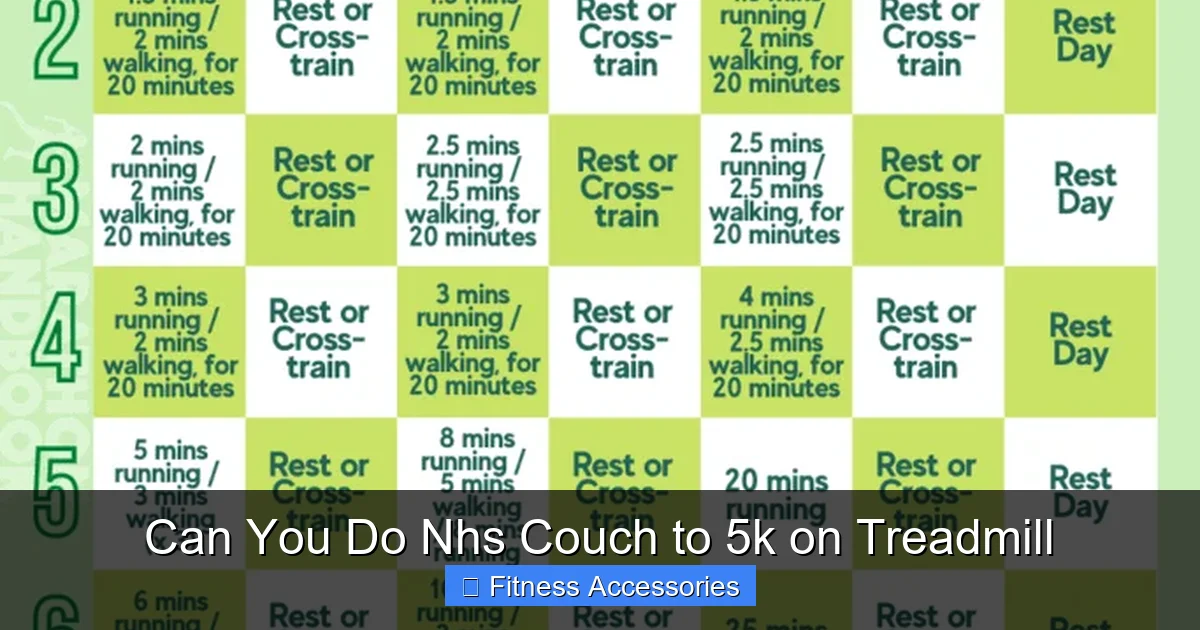
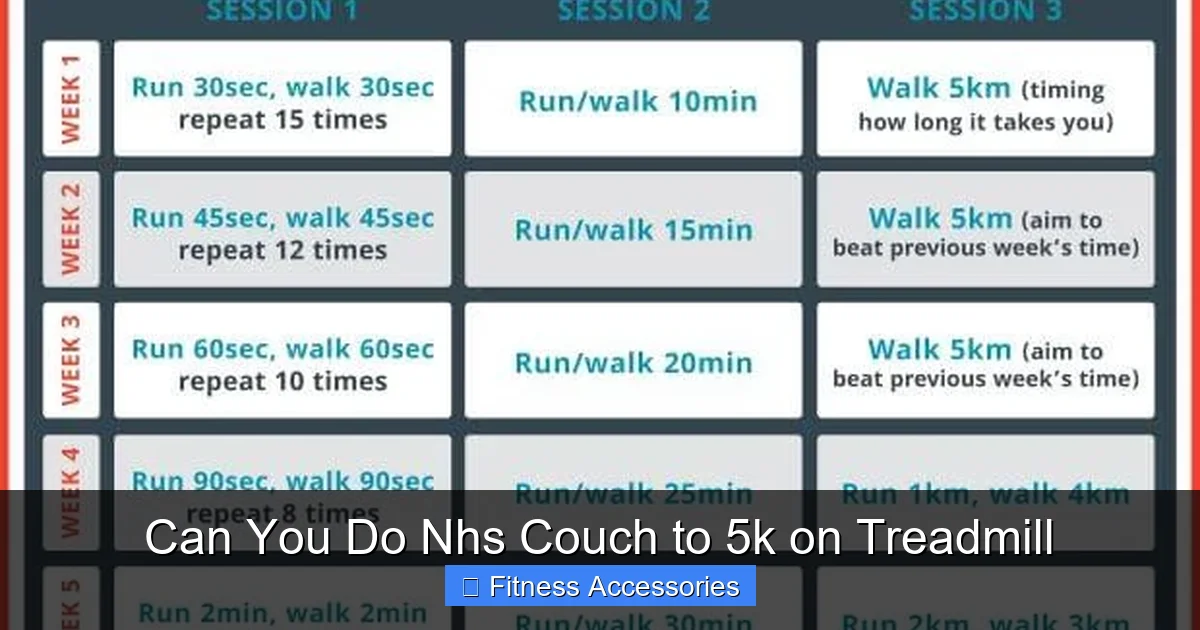
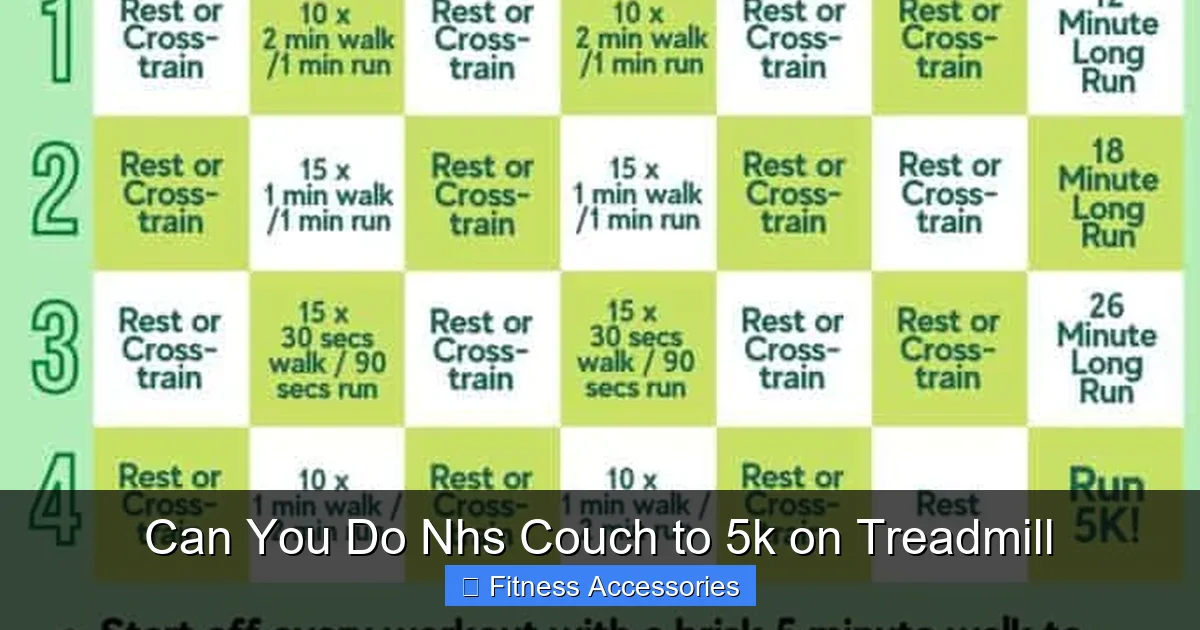
Before we talk treadmills, let’s get crystal clear on what the Couch to 5k program actually is. It’s not a “couch to 5k in nine weeks” guarantee; it’s a guideline. The core principle is a gradual, run/walk method that builds your aerobic base without causing injury or burnout. The standard plan has three runs per week, each with a mix of brisk walking and gentle jogging, slowly increasing the running intervals over nine weeks.
Visual guide about Can You Do Nhs Couch to 5k on Treadmill
Image source: runnerclick.com
The Magic of Run/Walk Intervals
The genius of C25K is that it doesn’t ask you to run for 30 minutes straight on day one. It starts with 60-second jogs interspersed with 90-second walks. This allows your heart, lungs, muscles, and joints to adapt progressively. The program’s success hinges on time on your feet, not speed or distance. Your goal each session is to complete the allocated time, not to race. This mindset is crucial when transferring to a treadmill, where it’s easy to get fixated on speed. On the C25K plan, duration is king.
What the Program Actually Measures
The C25K app or podcast (from NHS) gives you audio cues: “Now run for 90 seconds… now walk for two minutes.” It’s timing you, not measuring miles. Your “5k” is a milestone you aim for at the very end (Week 9, Run 3), where you run for a solid 30 minutes. A 5k is roughly 3.1 miles. For a beginner, that 30-minute continuous run will likely cover about that distance, but the program’s real victory is the endurance to run for 30 minutes, regardless of the exact mileage. This is why the treadmill is a perfect fit—you can precisely control the time and focus solely on the audio cues.
Why the Treadmill is a Perfect (and Often Better) Tool for C25K
Let’s smash the myth that “real runners” only run outside. For a beginner, the treadmill offers unique advantages that can make your C25K journey smoother, safer, and more successful.

Visual guide about Can You Do Nhs Couch to 5k on Treadmill
Image source: lovelifebefit.com
Controlled Environment = Consistent Training
Outside, your pace is dictated by hills, wind, traffic lights, and your own fluctuating energy. On a treadmill, you set a speed and it stays there. This is huge for a beginner. You can focus on holding a comfortable, sustainable jogging pace for your 60 or 90 seconds without the fear of hills sapping your energy or having to slow down for a crossing. It removes variables, letting you concentrate on form, breathing, and simply completing the time. You’re training your cardiovascular system and muscular endurance in a very controlled, repeatable way.
Safety and Joint Impact
The treadmill’s surface is designed to absorb shock. Compared to concrete or even asphalt, it’s significantly gentler on your knees, ankles, and hips. For someone carrying a few extra pounds or with sensitive joints (a common situation for those new to running), this reduced impact is a game-changer. It lowers the risk of overuse injuries like shin splints or knee pain, allowing you to stick to the three-times-a-week schedule consistently—and consistency is the single most important factor in C25K success.
No Weather, No Excuses
Let’s be honest. “It’s raining” or “It’s dark and scary outside” are the top two reasons people skip a C25K run. The treadmill obliterates these excuses. You can run in your pajamas if you want (though we’d recommend proper kit!). You can run at 6 AM in total safety. This reliability means you’re far more likely to complete all 27 runs of the program, which is the proven path to success. For the unmotivated days, just committing to five minutes on the belt often turns into a full session.
How to Adapt the NHS Couch to 5k Plan for Your Treadmill
So you’re convinced. How do you actually do it? Adapting is simple, but you need a strategy. The key is to translate the “run” and “walk” intervals into treadmill settings.
Visual guide about Can You Do Nhs Couch to 5k on Treadmill
Image source: marathonhandbook.com
Step 1: Find Your “Walk” and “Jog” Speeds
This is your most important setup. Don’t just guess! Start with a warm-up walk at a comfortable pace (e.g., 2.5-3.0 mph for most). Then, increase the speed until you feel you are jogging—you could talk in short phrases, but it’s definitely work. This is your starting jogging speed. For many beginners, this is between 3.5 and 4.5 mph. Your walking speed should be a brisk, recovery walk (3.0-3.5 mph). Write these two numbers down. For the entire first few weeks, you will only ever use these two speeds. No speeding up!
Step 2: Program Your Intervals
Most modern treadmills have an interval program. You can program your walk and jog speeds and the durations. For example, for Week 1: 60s jog at 4.0 mph, 90s walk at 3.2 mph. Repeat 8 times. If your treadmill doesn’t have this feature, don’t panic. You’ll manually adjust the speed at each cue. Have your phone with the C25K app/podcast, and when you hear “run,” hit the speed up button to your jog pace. When you hear “walk,” hit it down to your walk pace. It becomes second nature quickly.
Step 3: The Incline Question – Should You Use It?
For pure C25K beginners, start with 0% incline. The goal is to build endurance at a flat, manageable effort. Adding incline too soon is a fast track to calf or shin pain. Once you complete Week 6 and are running for 20+ minutes continuously, you can start experimenting. Add a 1% incline for your “run” intervals to simulate outdoor effort and build a little more strength. But remember: the priority is completing the time. If 1% feels too hard, drop back to 0%.
Overcoming Treadmill-Specific Challenges
Running on a moving belt feels different. It’s common to hit mental and physical walls specific to the treadmill. Anticipating these is half the battle.
The “Dreadmill” Mental Battle
Staring at a wall or a TV screen while running can feel monotonous and endless. Your mind will wander to how much time is left. Combat this aggressively:
- Location, Location: Position the treadmill to face a window, a TV, or a lively room. A blank wall is your enemy.
- Entertainment is Key: Create a high-energy playlist, listen to an audiobook, or watch a gripping TV show. The C25K podcasts are great because they time you, but pairing them with a visual can help time fly.
- Focus Outward: Instead of watching the distance counter (which moves slowly), use a towel to cover the console. Focus only on your breathing and the next interval. Tell yourself, “Just get through this next 60 seconds.”
The “I Feel So Slow” Phenomenon
Treadmill pacing can feel deceptive. At 4.0 mph, you’re covering a mile in 15 minutes—a very respectable, sustainable jog for a beginner. But it can *feel* like you’re crawling because you’re not moving through space. Do not compare your treadmill speed to outdoor speeds yet. Your body is doing the work. Trust the process. Your outdoor pace will naturally improve as your fitness grows. For now, the only metric that matters is completing the run/walk intervals as prescribed.
Form and the “Handrail Habit”
It’s tempting to lean on the handrails for support. Resist this. Holding on alters your natural running gait, reduces the work your core does, and can lead to shoulder and back tension. Use the rails only for balance when starting or stopping. Aim to run with a light, natural arm swing. If you need to hold on for safety at first, use the smallest possible pressure. Your goal is to run hands-free as soon as you feel stable.
Practical Tips for Treadmill C25K Success
Let’s get tactical. Here’s a collection of hard-won tips to make your treadmill C25K journey as smooth as possible.
Create a Dedicated Setup
Have your water bottle, towel, and headphones ready to go before your run. Fumbling around mid-interval breaks your rhythm. Wear proper running shoes—even on a treadmill. The cushioning is good, but your feet and joints still need support. Place a small fan in front of you if the room is warm; treadmill running generates a lot of heat.
Use a Treadmill Desk or Stand (If Possible)
This is a pro tip for the walking intervals. If you have a high desk or a sturdy surface, you can often walk at 3.0-3.5 mph while working, reading, or on a call during your “walk” periods. This makes the 90-minute total session (for later weeks) feel incredibly productive and kills boredom.
Track Progress Beyond the Belt
While the treadmill console shows time, distance, and calories, the real win is consistency. Use a simple notebook or app to log:
- Date and Week/Day of C25K
- Your chosen jog and walk speeds
- How you felt (e.g., “easy,” “pushed on last interval,” “heavy legs”)
- Any niggles or aches
Seeing this log fill up is a huge motivator. You’ll see your jogging speed naturally creep up over the weeks, a clear sign of improving fitness.
The Final Stretch: Transitioning Outdoors and Beyond
Completing the C25K program on a treadmill is a monumental achievement. You’ve built the cardiovascular endurance to run for 30 minutes. But what’s next? And what about that eventual goal of running a real, live 5k parkrun?
Your First Outdoor Run
When you feel ready (maybe after Week 7 or 8), try one run outside. The experience will shock you. It will feel harder, and you’ll likely run slower at first. This is normal. You’re dealing with wind, uneven surfaces, and mental stimulation. Don’t be discouraged. Your first outdoor 30-minute run is about survival and experience, not pace. Use your C25K fitness as a base. You might need to walk more than you think. That’s okay. The goal is to enjoy it.
Building a Balanced Running Habit
After C25K, you have choices. You can keep running 5k three times a week on your treadmill, slowly increasing your distance or playing with speed (like a gentle “couch to 10k” plan). You can adopt a schedule that mixes treadmill runs (for consistency and speed work) with one weekly outdoor run (for race-specific practice and variation). The treadmill becomes a tool in your fitness toolbox, not a cage. Many seasoned runners use the treadmill for hard interval sessions in a controlled environment and save the outdoors for easy, exploratory runs.
Conclusion: Your Treadmill is Your Launchpad
So, can you do NHS Couch to 5k on a treadmill? Not only can you, you absolutely should if it’s the most accessible, comfortable, and consistent way for you to move. The treadmill erases the barriers of weather, time, and intimidating new environments. It gives you unparalleled control to build your fitness at your own pace, on your own terms. The Couch to 5k program is about one thing: building a habit of running. The tool you use to build that habit is secondary.
Embrace the treadmill as your personal running coach. Find your speeds, stick to the run/walk cues, fight the mental boredom with entertainment, and celebrate every single run you complete. That feeling when you finish Week 9, Run 3—having run for 30 solid minutes—will be just as sweet whether you did it looking at a park or a wall. You’ve earned it. You’ve gone from your couch to a runner. Now, lace up those shoes, set your speeds, and press start. Your 5k journey begins right there on that belt.
Note: Always consult with your doctor before starting any new exercise program, especially if you have pre-existing health conditions. Listen to your body, and if you experience sharp or persistent pain, stop and seek professional advice.
Data Table: Treadmill vs. Outdoor Running for C25K Beginners
| Factor | Treadmill | Outdoor Running | Winner for C25K Beginner |
|---|---|---|---|
| Impact on Joints | Cushioned deck absorbs shock. Lower impact. | Hard surfaces (concrete/asphalt) increase impact. | Treadmill (Reduces injury risk) |
| Environmental Control | No weather, no darkness, no traffic. | Subject to rain, wind, heat, darkness, traffic. | Treadmill (No missed sessions) |
| Pacing Consistency | Exact, set speed. No hills or stops. | Varies with terrain, wind, traffic lights. | Treadmill (Builds steady effort) |
| Mental Engagement | Can be monotonous. Requires distraction. | Constantly changing scenery. More engaging. | Outdoor (For mental health) |
| Skill Transfer | Less balance/proprioception work. | Develops balance, agility, natural gait. | Outdoor (For race readiness) |
| Logistics | Requires access to machine. Can be at home. | Free. Can be done anywhere. No equipment. | Outdoor (Accessibility) |
| Beginner Verdict | Ideal for building base fitness safely & consistently. | Goal for later, once base fitness is established. | Use Treadmill to Start, Mix in Outdoor Later |
Frequently Asked Questions
Is the NHS Couch to 5k programme suitable for a treadmill?
Yes, the NHS Couch to 5k programme is perfectly suitable for a treadmill. The plan is based on time and interval training (walk/run repeats), not on specific terrain or distance markers, so you can easily follow the scheduled run and walk minutes at your own pace on the machine.
How do I adapt the NHS Couch to 5k runs for a treadmill?
To adapt, simply follow the audio cues from the official NHS podcast or app for your run and walk intervals. Set the treadmill speed for your “run” pace to a comfortable jog and your “walk” pace to a brisk walk or slow jog. The key is matching the programme’s timing, not trying to hit a specific speed or incline.
Can I complete the full 9-week NHS Couch to 5k plan on a treadmill?
Absolutely, you can complete the entire 9-week NHS Couch to 5k plan on a treadmill. Many people use the treadmill for convenience, safety, or to control their environment. The progressive increase in running time is the core of the plan, which translates directly to treadmill use.
What are the benefits of doing Couch to 5k on a treadmill?
The main benefits include a controlled environment free from weather, traffic, or uneven surfaces. You can precisely manage your speed and incline, and the cushioned deck often reduces joint impact. This makes it an excellent, low-risk way to build fitness consistently as a beginner.
Should I use an incline on the treadmill for Couch to 5k?
For beginners following the NHS plan, it’s best to start with a flat, 1% incline at most. The primary goal is to build cardiovascular endurance and running stamina through the timed intervals. Adding significant incline too soon increases injury risk and makes the runs disproportionately harder than the programme intends.
Is running on a treadmill easier than outdoors for Couch to 5k?
It can feel easier because the belt assists your leg turnover and there’s no wind resistance. However, this can mean you might burn slightly fewer calories outdoors for the same perceived effort. The consistency of a treadmill often helps beginners stick to the scheduled run times without unexpected stops, which is a huge psychological benefit for completing the plan.