14 Cup Equals How Many Tablespoons in Your Kitchen
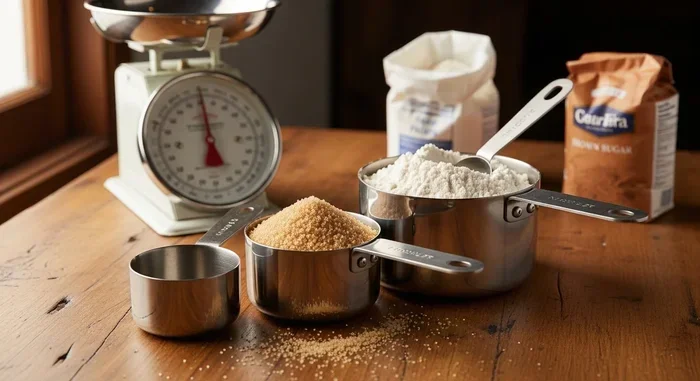
1/4 cup equals 4 tablespoons in standard US cooking measurements. This simple conversion is essential for accurate baking, cooking, and recipe scaling. Our guide covers liquid and dry ingredient conversions, measurement tips, and common kitchen math mistakes to avoid.
Key Takeaways
- Basic Conversion: 1/4 cup always equals 4 tablespoons in US standard measurements.
- Easy Math: Every 1/4 cup equals 4 tbsp, so half of that is 2 tbsp for 1/8 cup.
- Liquid vs Dry: The conversion stays the same whether you measure liquids or dry ingredients.
- Metric Equivalent: 1/4 cup is approximately 59 milliliters in metric measurements.
- Common Mistakes: Using the wrong size spoon or packing dry ingredients incorrectly leads to errors.
- Scaling Recipes: Knowing this conversion helps you double or halve any recipe with ease.
📑 Table of Contents
- 1/4 Cup Equals How Many Tablespoons? The Simple Answer
- Understanding Tablespoons and Cups
- Liquid vs Dry Ingredients: Does It Change the Conversion?
- Quick Conversion Cheat Sheet for Your Kitchen
- How to Scale Recipes Using the 1/4 Cup Conversion
- Cooking and Fitness: An Unexpected Connection
- Tools That Make Kitchen Measurement Easier
- Key Takeaways
- Final Thoughts
1/4 Cup Equals How Many Tablespoons? The Simple Answer
Here is the quick answer you need. 1/4 cup equals 4 tablespoons. That is it. No guesswork. No complicated math. Just a clean, simple conversion that every home cook should know by heart.
Whether you are baking cookies, making a sauce, or scaling a recipe down, this conversion comes up constantly. The problem is most people do not remember it off the top of their head. They end up Googling it mid-recipe with flour-covered hands. That is exactly why we created this guide.
Knowing your basic kitchen conversions saves time and prevents costly mistakes. A tablespoon is a small but mighty unit of measurement. Four of them make up exactly one quarter cup. Once you lock this into your memory, cooking becomes smoother and more enjoyable.
Think of it this way. A standard US cup holds 16 tablespoons. So when you need just a quarter of that, you simply divide 16 by 4. The answer is 4 tablespoons. This same logic works for many other common fractions too.
Understanding Tablespoons and Cups
Before diving deeper, let us clear up what these units actually mean. A tablespoon is a volume measurement used in cooking and baking. In the US, one tablespoon equals about 15 milliliters. A cup is simply a larger unit of the same volume.
Here is a quick breakdown of common cup-to-tablespoon conversions:
- 1/8 cup = 2 tablespoons
- 1/4 cup = 4 tablespoons
- 1/3 cup = 5 tablespoons plus 1 teaspoon
- 1/2 cup = 8 tablespoons
- 3/4 cup = 12 tablespoons
- 1 cup = 16 tablespoons
These numbers never change. They are fixed in the US standard system. Once you memorize a few key ones, the rest become easy to figure out.
Why Does This Conversion Matter?
Accuracy in the kitchen is not just about perfectionism. It is about results. Too much or too little of an ingredient can completely change the texture, taste, and structure of a dish. Baking is especially sensitive because it is a science. The ratio of flour to liquid to leavening matters a lot.
When a recipe calls for 1/4 cup of oil and you only have a tablespoon measure, you now know to add exactly 4 tablespoons. No more eyeballing. No more hoping for the best. Consistent measurements lead to consistent dishes every single time.
Liquid vs Dry Ingredients: Does It Change the Conversion?
This is one of the most common questions people ask. The short answer is no. 1/4 cup equals 4 tablespoons whether you are measuring water, flour, sugar, or butter. The volume conversion stays the same.
However, how you measure does matter. Liquid ingredients should be measured in a clear liquid measuring cup placed on a flat surface. Dry ingredients should be spooned into a dry measuring cup and leveled off with a straight edge.
Here are some quick tips for accurate measuring:
- Always use the right type of measuring cup for the ingredient.
- Level off dry ingredients with a knife or spatula.
- Do not pack brown sugar unless the recipe specifically says to.
- Read liquid measurements at eye level for accuracy.
- Use standard measuring spoons that match your cup measurements.
Common Measuring Mistakes to Avoid
Even experienced cooks make measurement errors. One of the biggest mistakes is using a dinner spoon instead of a proper tablespoon. Dinner spoons vary in size and will throw off your recipe. Always use actual measuring spoons from your kitchen drawer set.
Another mistake is confusing weight with volume. A tablespoon of flour weighs less than a tablespoon of honey. But the volume remains the same. When a recipe says 1/4 cup, it means 4 tablespoons of volume regardless of what ingredient you are using.
Quick Conversion Cheat Sheet for Your Kitchen
Print this out or save it to your phone. Having a kitchen conversion chart on hand makes cooking so much easier.
- 1 teaspoon = 1/3 tablespoon
- 1 tablespoon = 3 teaspoons
- 2 tablespoons = 1/8 cup
- 4 tablespoons = 1/4 cup
- 5 tablespoons + 1 teaspoon = 1/3 cup
- 8 tablespoons = 1/2 cup
- 12 tablespoons = 3/4 cup
- 16 tablespoons = 1 cup
Keep this measurement chart somewhere visible in your kitchen. You will find yourself referencing it more than you expect. It becomes second nature after just a few uses.
Metric Equivalents for International Cooks
If you follow recipes from different countries, metric conversions are helpful too. One US cup equals approximately 240 milliliters. So 1/4 cup is roughly 59 milliliters. And 1 tablespoon equals about 15 milliliters.
Many countries use the metric system exclusively. If you are converting a metric recipe to US measurements, these numbers help bridge the gap. A kitchen scale is also a great investment for precision cooking.
How to Scale Recipes Using the 1/4 Cup Conversion
One of the most practical uses of this conversion is recipe scaling. Say you want to cut a recipe in half. If the original calls for 1/4 cup of an ingredient, you now need 2 tablespoons. Cut it in half again and you need just 1 tablespoon.
Doubling a recipe works the same way. If a sauce needs 1/4 cup of vinegar per serving and you are feeding twice as many people, you simply double it to 8 tablespoons, which is 1/2 cup. The math is straightforward once you know your base conversions.
Scaling recipes is a skill that improves with practice. Start with simple dishes and work your way up to more complex ones. Over time, you will be able to adjust recipes on the fly without even thinking about the math.
Cooking and Fitness: An Unexpected Connection
You might wonder what kitchen measurements have to do with fitness. More than you think. Cooking at home is a form of physical activity. Preparing meals involves standing, chopping, stirring, and moving around your kitchen. These small movements add up throughout the day.
Some people track their daily steps and calorie burn from household activities. For instance, walking around the kitchen while cooking can contribute to your daily step count. If you are curious about how many steps you take during a typical hour of household activity, you might find the data similar to a leisurely walk. Activities like cooking at home burn more calories than people realize.
For those who track their calorie burn from various activities, kitchen work counts too. While it is not as intense as a workout, it still keeps you moving. Some fitness enthusiasts even combine cooking with exercise routines. A quick session of jump rope before meal prep can boost your heart rate and burn extra calories. In fact, a vigorous jump rope session can burn significant calories in a short amount of time. Many people ask how long they need to jump rope to match a certain calorie burn, and the answer depends on intensity and body weight.
The point is this. An active lifestyle includes all movement, not just formal workouts. Whether you are measuring out 4 tablespoons of olive oil or tracking your steps from a morning walk, every bit of activity contributes to your overall health.
Tools That Make Kitchen Measurement Easier
You do not need fancy equipment to measure accurately. A basic set of measuring cups and spoons handles most recipes just fine. But if you want to level up your kitchen game, a few tools can help.
Digital kitchen scales are excellent for precision. They remove the guesswork from measuring entirely. Instead of converting cups to tablespoons, you simply weigh your ingredients in grams. Many professional bakers prefer this method for its accuracy.
Measuring spoons with clear markings are another worthwhile investment. Look for sets that include 1/4 teaspoon, 1/2 teaspoon, 1 teaspoon, and 1 tablespoon sizes. Having the right tools makes the conversion process faster and more reliable.
Here are some other helpful kitchen tools:
- Liquid measuring cups with spouts for pouring
- Dry measuring cups that stack for easy storage
- A set of nested measuring spoons
- A kitchen scale for metric and US measurements
- Spatulas for leveling off dry ingredients
Key Takeaways
- Basic Conversion: 1/4 cup always equals 4 tablespoons in US standard measurements.
- Easy Math: Every 1/4 cup equals 4 tbsp, so half of that is 2 tbsp for 1/8 cup.
- Liquid vs Dry: The conversion stays the same whether you measure liquids or dry ingredients.
- Metric Equivalent: 1/4 cup is approximately 59 milliliters in metric measurements.
- Common Mistakes: Using the wrong size spoon or packing dry ingredients incorrectly leads to errors.
- Scaling Recipes: Knowing this conversion helps you double or halve any recipe with ease.
Final Thoughts
The answer to 1/4 cup equals how many tablespoons is simple and unforgettable. Four tablespoons. Write it on your fridge. Memorize it. Use it every day. This one conversion will serve you well in countless recipes and cooking situations.
Great cooking starts with great measurements. When you know your basic conversions, you can focus on the fun part of cooking, which is creating delicious food. No more stopping mid-recipe to figure out how many tablespoons are in a quarter cup. You already know the answer.
So next time you are in the kitchen and a recipe calls for 1/4 cup, grab your tablespoon measure and add four scoops. You will get it right every single time. Happy cooking!
Frequently Asked Questions
Does 1/4 cup always equal 4 tablespoons?
Yes, in the US standard measurement system, 1/4 cup always equals 4 tablespoons. This conversion is fixed and does not change based on the ingredient type. Whether you are measuring flour, water, oil, or sugar, the volume remains the same.
What if my tablespoon is not standard size?
Always use proper measuring spoons from a kitchen set. Dinner spoons and random spoons from your drawer vary in size and will give inaccurate measurements. A standard US tablespoon holds exactly 15 milliliters.
How many teaspoons are in 1/4 cup?
There are 12 teaspoons in 1/4 cup. Since 1 tablespoon equals 3 teaspoons and 1/4 cup equals 4 tablespoons, you multiply 4 by 3 to get 12 teaspoons. This is another useful conversion to remember in the kitchen.
Is the 1/4 cup conversion different in the UK or other countries?
The US cup is slightly different from the imperial cup used in the UK. A US cup is about 240 milliliters while an imperial cup is about 284 milliliters. So the tablespoon equivalent may vary slightly depending on which measurement system you are using. Most modern recipes use US standard measurements.
Can I use a kitchen scale instead of measuring spoons?
Absolutely. A kitchen scale measures weight rather than volume, which can be even more accurate. However, you would need to know the weight equivalent of 1/4 cup for each specific ingredient since different ingredients have different weights per volume.
How do I halve a recipe that calls for 1/4 cup?
Simply use 2 tablespoons instead of 4. Halving 1/4 cup is straightforward because 4 tablespoons divided by 2 equals 2 tablespoons. This makes recipe scaling quick and easy when you are cooking for fewer people.