Why Does My Back Hurt After Barbell Squats
Back pain after barbell squats is incredibly common and usually fixable. Whether it’s poor form, weak core muscles, or too much weight, the barbell squat back pain you feel has a clear cause and solution. This guide breaks down every reason your back might hurt and gives you actionable steps to squat pain-free starting today.
You just finished a heavy set of barbell squats. You feel accomplished. Then you stand up, take a few steps, and there it is — a dull ache or sharp pain in your back. You’re not alone. Thousands of lifters experience this every single week. The good news? It’s almost always something you can fix.
Why does my back hurt after barbell squats? The answer comes down to a few key factors: how you set up the bar, how strong your core is, your squat technique, and how fast you’re progressing in weight. Each of these plays a major role in whether your back stays healthy or starts screaming for relief.
In this article, we’re going deep into every possible reason your back hurts after squats. We’ll cover form breakdowns, muscle imbalances, common mistakes, and practical fixes you can use right now. Whether you’re a beginner or a seasoned lifter, this guide will help you understand what’s going wrong and how to correct it.
Key Takeaways
- Wrong bar placement is the #1 cause: Placing the bar too high or too low on your back shifts stress to your spine and muscles.
- Weak core muscles fail to protect your back: Without proper core engagement, your lower back absorbs forces it wasn’t built to handle alone.
- Squat depth matters more than you think: Going too deep or not deep enough can both trigger back pain depending on your anatomy.
- Progressive overload should be gradual: Jumping up in weight too fast is one of the fastest ways to strain your back during squats.
- Warm-ups and mobility work prevent pain: A proper warm-up prepares your spine, hips, and knees for the heavy load of barbell squats.
- Similar exercises like kettlebell swings can cause the same type of back pain: Understanding the root cause helps you fix it across all movements.
📑 Table of Contents
- Why Barbell Squats Can Cause Back Pain
- Common Reasons Your Back Hurts After Squats
- How to Fix Back Pain After Barbell Squats
- Barbell Squat Form Checklist
- Similar Exercises That Can Also Cause Back Pain
- When to See a Doctor or Physical Therapist
- Prevention Strategies for Long-Term Back Health
- Quick Tips to Remember
- Expert Insight: What Coaches Say About Squat-Related Back Pain
- Key Takeaways
Why Barbell Squats Can Cause Back Pain
The barbell squat is one of the most effective exercises for building lower body strength. But it also places significant demands on your entire body, especially your spine and back muscles. When something goes wrong in the movement pattern, your back often pays the price first.
Understanding why your back hurts starts with understanding how the squat works. The barbell squat engages your quads, glutes, hamstrings, and core. Your back muscles — especially the erector spinae along your spine — act as stabilizers. They keep your torso upright and your spine in a safe, neutral position throughout the movement.
When these stabilizers are weak, overworked, or placed under poor mechanics, they strain. That strain shows up as pain. Sometimes it’s a dull ache. Other times it’s a sharp, pinpoint sensation. Either way, your body is telling you something needs to change.
The Role of Your Erector Spinae Muscles
Your erector spinae runs along both sides of your spine. During a squat, these muscles work hard to keep your back from rounding forward. If they fatigue too quickly or if you’re loading them improperly, they tighten up and hurt. Think of them as the support beams of a building. If the building leans too far in one direction, the beams take all the stress.
Common Reasons Your Back Hurts After Squats
Several factors can lead to back pain after barbell squats. Let’s break down the most common culprits so you can identify what’s affecting you specifically.
1. Poor Bar Placement on Your Back
Where you place the bar on your upper back makes a huge difference. Too high on your neck, and you compress your cervical spine. Too low on your lower back, and you shift the center of gravity forward, forcing your lower back to bear excessive load.
The sweet spot is on the upper traps, just below the base of your neck. This creates a solid shelf for the bar to rest on and keeps your torso angle balanced. If you’re unsure where your bar sits, film yourself from the side during your next set. Look for a straight, neutral spine.
2. Rounding Your Lower Back Under Load
This is the most dangerous and common form error. When your lower back rounds — also called spinal flexion under load — the pressure on your intervertebral discs increases dramatically. Over time, this can lead to disc herniation or chronic pain.
Rounding often happens when you’re fatigued or when the weight is too heavy. Your body naturally tries to compensate by shifting the load. The fix? Reduce the weight and focus on maintaining a braced, neutral spine throughout every rep.
3. Weak Core Muscles
Your core is your body’s natural weight belt. It includes your abs, obliques, and deep stabilizing muscles like the transverse abdominis. When these muscles are weak, your back muscles have to do all the work. They weren’t designed to stabilize heavy loads on their own.
If you notice your back hurts more on the last few reps of a set, weak core endurance is likely the issue. Your core fatigues, and then your back picks up the slack. Adding core-strengthening exercises like planks, dead bugs, and Pallof presses can make a dramatic difference.
4. Going Too Deep Without Proper Mobility
Deep squats are great for building strength and mobility. But going below parallel without the hip and ankle mobility to support it forces your lower back to compensate. Your pelvis tucks under, your spine rounds, and pain follows.
Not everyone needs to squat to full depth. Work within your current range of motion and gradually improve your mobility over time. Forcing depth before your body is ready is one of the fastest paths to lower back pain after squats.
5. Too Much Weight Too Soon
Progressive overload is a key principle of strength training. But there’s a fine line between challenging yourself and overwhelming your body. Jumping up in weight too quickly gives your muscles and connective tissues no time to adapt.
Your back muscles especially need time to strengthen alongside your legs. If your legs are ready for heavier weight but your back isn’t, your back will hurt. Follow the rule of increasing weight by no more than 5-10% per week.
How to Fix Back Pain After Barbell Squats
Now that you know the common causes, let’s talk solutions. These actionable fixes address the root issues behind most squat-related back pain.
Fix Your Squat Setup
Start with your stance. Feet should be shoulder-width apart or slightly wider. Your toes should point slightly outward. From there, focus on these setup cues:
- Unrack the bar with your upper back tight and shoulders pulled back.
- Take a breath into your belly before you descend — this is called bracing.
- Keep your chest up and your eyes forward throughout the movement.
- Drive through your heels as you stand back up.
Small adjustments in your setup can eliminate a lot of back pain. If you’re struggling with your form, consider working with a coach or filming your sets regularly.
Strengthen Your Core and Back Muscles
A strong core protects your spine during heavy lifts. Add these exercises to your routine 2-3 times per week:
- Planks: Hold for 30-60 seconds. Focus on keeping your body in a straight line.
- Dead Bugs: 3 sets of 10 reps per side. Great for teaching core bracing.
- Back Extensions: Use a hyperextension bench for 3 sets of 12 reps.
- Farmer’s Walks: Hold heavy dumbbells at your sides and walk for 30-40 seconds.
These exercises build the endurance and strength your back needs to handle the demands of heavy squats without pain.
Improve Your Mobility
Tight hips and ankles are hidden causes of back pain during squats. When your joints can’t move through their full range, your spine picks up the slack. Try these mobility drills before every squat session:
- Hip Flexor Stretch: Hold for 30 seconds per side. Tight hip flexors pull your pelvis into an anterior tilt, which rounds your lower back.
- Ankle Mobility Drill: Stand facing a wall and try to touch your knee to the wall while keeping your heel on the ground.
- Cat-Cow Stretch: This warms up your entire spine and improves flexibility.
Spending just 10 minutes on mobility work before lifting can significantly reduce your risk of back pain.
Barbell Squat Form Checklist
Use this checklist every time you squat to make sure your form stays dialed in. If you’re dealing with back pain from squats, check off each point before you load the bar up heavy.
- Bar positioned on the upper traps, not the lower back
- Feet shoulder-width apart, toes slightly out
- Chest lifted and eyes looking forward
- Core braced with a deep breath before descent
- Knees tracking over toes
- Back stays in a neutral, slightly arched position
- Descent is controlled, not rushed
- Ascent drives through the heels and midfoot
If you check all these boxes and still feel pain, it may be worth consulting a physical therapist or sports medicine professional. Sometimes underlying issues like disc problems or muscle imbalances need professional attention.
Similar Exercises That Can Also Cause Back Pain
Back pain isn’t unique to barbell squats. Other compound movements can trigger similar issues if your form or preparation isn’t on point. For example, barbell squats can also cause shoulder pain when the bar placement or mobility is off. Similarly, kettlebell swings can hurt your back when the hip hinge pattern is performed incorrectly, placing excessive stress on the lumbar region.
Understanding that back pain from exercise often shares common root causes helps you fix the issue across all your movements. Whether it’s squats, swings, or deadlifts, the principles of proper form, core strength, and gradual progression apply universally.
For more on how similar exercises affect your lower back, check out our guide on why kettlebell swings hurt the lower back. The underlying mechanics are very similar to what happens during heavy barbell squats.
When to See a Doctor or Physical Therapist
Most back pain after squats is muscular and resolves with rest and corrective work. But some signs point to something more serious. You should see a professional if you experience:
- Pain that radiates down your legs
- Numbness or tingling in your lower body
- Pain that gets worse over several days instead of better
- Difficulty standing up straight or walking
- Pain that started suddenly during a heavy lift
These symptoms could indicate a disc issue, nerve compression, or a more serious injury. Don’t ignore them. Early intervention leads to faster recovery and prevents long-term damage.
Prevention Strategies for Long-Term Back Health
Preventing barbell squat back pain is always better than treating it after it happens. Here’s a simple framework you can follow to keep your back healthy for years of training:
- Warm up properly: Spend 5-10 minutes on dynamic stretches and light sets before working with heavy weights.
- Progress gradually: Add no more than 5-10% weight per week to give your muscles and connective tissues time to adapt.
- Train your core regularly: Treat your core as a priority, not an afterthought. It’s your spine’s best defense under heavy loads.
- Listen to your body: Soreness is normal. Sharp or persistent pain is not. Respect the difference.
- Prioritize sleep and recovery: Your muscles repair and strengthen during rest. Skipping recovery leads to overuse injuries.
- Stay consistent with mobility work: Even 5 minutes of stretching before each session adds up over weeks and months.
Following these strategies consistently will dramatically reduce your chances of experiencing back pain after your squat sessions. Think of it as building a foundation. The stronger your foundation, the heavier you can build.
Quick Tips to Remember
- Always brace your core before descending into the squat.
- Film your squats periodically to check your form.
- Don’t skip your warm-up — even on busy days.
- If your back hurts, reduce the weight and focus on form first.
- Strengthen your posterior chain with Romanian deadlifts and back extensions.
- Rest is part of training, not a sign of weakness.
Expert Insight: What Coaches Say About Squat-Related Back Pain
Experienced strength coaches agree on one thing: most back pain from squats comes down to three things — poor bracing, weak core endurance, and ego-driven weight increases. The fix isn’t complicated, but it does require patience and discipline.
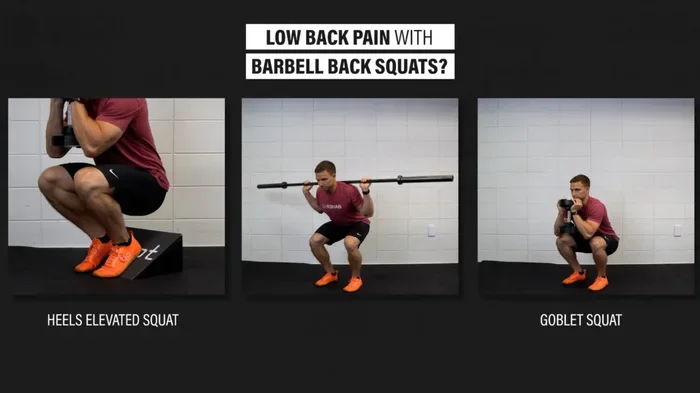
Coaches often tell their athletes to “earn the right to go heavy.” That means mastering bodyweight squats, goblet squats, and light barbell squats before loading up the plates. Your back muscles need time to develop the endurance and strength to support heavy loads. Rushing that process is the fastest route to injury.
One common mistake lifters make is copying the form they see in videos without understanding the individual mechanics of their own body. Everyone’s skeleton is slightly different. Your femur length, torso length, and hip socket depth all affect your optimal squat stance. Work with what your body gives you, not what a fitness influencer does on social media.
Key Takeaways
- Bar placement matters enormously: A barbell squat back pain often starts with the bar sitting in the wrong spot on your upper back.
- Core strength is your best defense: A weak core forces your back muscles to overcompensate under heavy loads.
- Form breakdowns happen when you’re fatigued: Always prioritize technique over weight, especially as you approach the end of a set.
- Mobility work prevents compensation patterns: Tight hips and ankles shift stress to your lower back during squats.
- Progressive overload should be slow and steady: Your back muscles need time to catch up with your leg strength gains.
- Similar exercises like kettlebell swings can cause comparable pain: Understanding the shared root causes helps you fix multiple issues at once.
Back pain after barbell squats doesn’t have to be a permanent part of your training. In most cases, it’s a sign that something in your setup, technique, or progression needs adjusting. Fix the root cause, give your body time to adapt, and you’ll be squatting heavy without discomfort in no time.
The most important thing you can do today is to audit your form, strengthen your core, and progress your weights at a sustainable pace. Your back will thank you for it every training day from now on. Start with the fixes in this article, stay consistent, and trust the process. Pain-free squats are absolutely within your reach.
Frequently Asked Questions
Why does my upper back hurt after barbell squats?
Upper back pain after squats usually comes from the bar resting too low on your back or from poor thoracic spine mobility. When your upper back is stiff, it forces your lower back to compensate, creating a chain reaction of discomfort. Focus on improving thoracic extension and adjusting your bar placement higher on the upper traps.
How long does back pain last after barbell squats?
M muscular soreness typically fades within 24-72 hours. If your pain persists beyond a few days or gets worse, it’s likely not normal soreness and needs attention. Rest, apply ice or heat, and reassess your form before returning to heavy squats.
Can bad shoes cause back pain during squats?
Yes, absolutely. Shoes with too much cushioning or a thick sole reduce your stability and force your back to compensate for the unstable base. Flat, hard-soled shoes like Converse or dedicated lifting shoes give you a solid foundation and help keep your spine aligned during heavy sets.
Should I stop squatting if my back hurts?
Not necessarily. If the pain is mild and muscular, you can continue with lighter weights and corrected form. However, if you feel sharp pain, numbness, or tingling, stop immediately and consult a professional. Continuing through sharp pain can turn a minor issue into a serious injury.
How can I tell if my back pain is muscular or a disc issue?
Muscular pain feels like a dull ache or tightness, usually across the middle or lower back. Disc-related pain often radiates down your legs and may come with numbness or tingling. If you’re unsure, see a physical therapist for a proper assessment.
Are belt squats or front squats easier on the back?
Yes, both can be easier on the lower back. Front squats keep your torso more upright, reducing the shear force on your spine. Belt squats remove the bar from your back entirely, eliminating spinal compression. These are great alternatives if you’re recovering from back pain but still want to train your legs.
=== CONCLUSION ===
Back pain after barbell squats is one of the most common complaints among weightlifters, but it’s also one of the most fixable. Whether the culprit is poor bar placement, a weak core, or rushing your weight progression, the solutions are clear and actionable. Start by identifying what’s causing your pain, make the adjustments outlined in this guide, and give your body the time it needs to adapt.
Remember that every lifter’s body is different. What works for someone else might not work for you, and that’s perfectly fine. The key is to stay patient, stay consistent, and always prioritize your long-term health over a one-rep max. Your back is the foundation of every movement you make in and out of the gym. Take care of it, and it will take care of you.