Which Is Better Elliptical or Rowing Machine 2

The debate between the elliptical and the rowing machine is one of the most common questions in home fitness. Both machines deliver excellent cardio workouts, but they target your body in very different ways. This guide breaks down the differences so you can choose the best option for your goals.
The question of which is better elliptical or rowing machine 2 comes up constantly in fitness circles. People want to know which machine will help them reach their goals faster. Whether you are looking to lose weight, build endurance, or protect your joints, the answer matters a lot.
Both the elliptical machine and the rowing machine are popular pieces of home gym equipment. They each bring unique benefits to the table. But they are not the same. Understanding how they differ can save you time, money, and frustration.
In this article, we compare every major factor. We look at muscle engagement, calorie burn, joint impact, and more. By the end, you will know exactly which machine fits your needs best. Let us dive into the details of the elliptical vs rowing machine debate.
Key Takeaways
- Ellipticals are great for low impact cardio: They put minimal stress on your joints, making them ideal for people with knee or hip issues.
- Rowing machines offer a full body workout: They engage up to 86% of your muscles, including legs, back, arms, and core.
- Calorie burn depends on intensity: Both machines can burn a high number of calories, but rowing tends to burn slightly more per session.
- Space and budget matter: Rowing machines are generally more compact and affordable than elliptical trainers.
- Your fitness goals should guide the choice: Pick the elliptical for joint-friendly cardio or the rowing machine for total body conditioning.
📑 Table of Contents
- Understanding the Elliptical Machine
- Understanding the Rowing Machine
- Elliptical vs Rowing Machine: Head-to-Head Comparison
- Which Machine Is Better for Weight Loss?
- Which Machine Is Better for Cardio and Heart Health?
- Common Mistakes to Avoid
- Expert Insights on Choosing the Right Machine
- Final Verdict: Which Is Better for You?
Understanding the Elliptical Machine
The elliptical trainer is a stationary cardio machine. It mimics the motion of running without the impact. Your feet stay on the pedals, so there is no jarring on your joints. This makes it a favorite among people who want low impact exercise.
How the Elliptical Works
When you use an elliptical, you push and pull the pedals in an elliptical path. Your legs move in a smooth, continuous motion. Most models also include moving handlebars. This lets you work your upper body at the same time. The result is a full body workout that feels easy on the body.
Ellipticals come with adjustable resistance levels. You can increase the difficulty to challenge yourself more. Some models also let you move the pedals in reverse. This targets different muscle groups, especially the calves and hamstrings.
Benefits of the Elliptical
- Joint-friendly cardio: The smooth motion reduces stress on your knees, hips, and ankles.
- Adjustable intensity: You can go from a gentle pace to a challenging workout.
- Upper and lower body engagement: The handlebars work your arms, chest, and back.
- Easy to use: Most people feel comfortable on an elliptical within minutes.
- Great for recovery days: The low impact nature makes it safe for active rest.
If you want a solid cardio session without beating up your body, the elliptical is a strong choice. It is one of the best options for people who are recovering from injuries or dealing with chronic joint pain.
Understanding the Rowing Machine
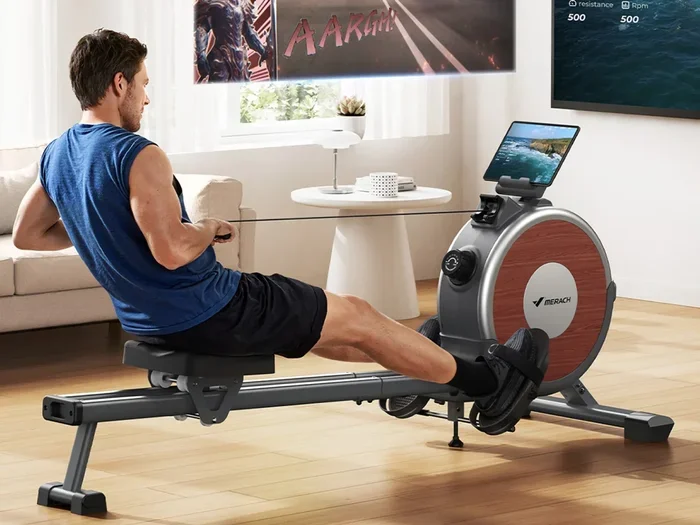
The rowing machine simulates the motion of rowing a boat. It is a full body exercise machine that works almost every major muscle group. Unlike the elliptical, rowing involves a pushing and pulling motion that engages your entire body.
How the Rowing Machine Works
Rowing involves four distinct phases. The catch is the starting position where your knees are bent and your arms are extended. The drive is where you push off with your legs and pull with your arms. The recovery is the phase where you slide back to the starting position. The finish is where your legs are extended and your arms are pulled in.
This sequence works your legs, core, back, and arms in one fluid motion. The resistance comes from air, magnetic, water, or hydraulic systems. Air rowers are the most popular because they mimic the feel of actual rowing on water.
Benefits of the Rowing Machine
- Engages up to 86% of your muscles: Rowing works more muscle groups than almost any other cardio machine.
- Excellent calorie burn: A vigorous rowing session can torch a high number of calories in a short time.
- Improves posture: The pulling motion strengthens your back muscles and encourages better alignment.
- Low impact: Like the elliptical, rowing is gentle on your joints.
- Builds endurance and strength: Rowing combines cardio and resistance training in one movement.
Rowing is a fantastic option for people who want maximum results in minimum time. It is especially effective for those who want to combine cardio workout benefits with muscle building.
Elliptical vs Rowing Machine: Head-to-Head Comparison
Now let us get to the heart of the elliptical or rowing machine debate. We will compare them across the most important categories so you can see which one wins for your goals.
Muscle Engagement
The elliptical primarily targets your legs. Your quads, hamstrings, and glutes do most of the work. The handlebars add some upper body involvement, but the arms play a secondary role. Overall, the elliptical focuses on lower body conditioning.
The rowing machine, on the other hand, is a true full body workout. It engages your legs during the drive phase, your core stabilizes the movement, and your arms and back pull during the finish. Which gives a better workout rowing machine or elliptical? For overall muscle engagement, the rowing machine is the clear winner.
Here is a quick comparison of the major muscle groups each machine targets:
- Elliptical: Quads, hamstrings, glutes, calves, and some chest and back muscles through the handlebars.
- Rowing Machine: Quads, hamstrings, glutes, calves, core, back, biceps, shoulders, and triceps.
Calorie Burn
Both machines can help you burn a significant number of calories. The exact number depends on your weight, intensity level, and workout duration. A 155-pound person can burn roughly 300 to 400 calories in 30 minutes on either machine at a moderate pace.
However, rowing tends to burn slightly more calories at higher intensities. This is because it engages more muscle groups. The more muscles you work, the more energy your body needs. If calorie burn is your top priority, rowing gives you a slight edge.
Joint Impact and Accessibility
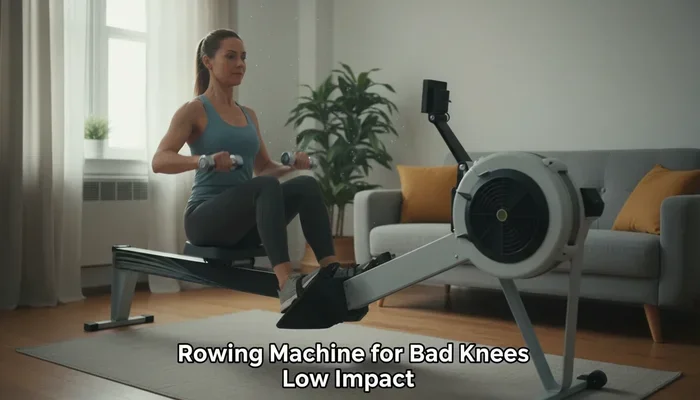
Both the elliptical and the rowing machine are low impact options. They are much gentler on your joints than running on a treadmill. This makes both machines suitable for people with knee problems, arthritis, or other joint issues.
That said, rowing requires proper form to avoid lower back strain. If you have existing back problems, you should learn the correct technique before jumping into intense rowing sessions. The elliptical is generally easier to use right out of the box.
Space and Storage
Rowing machines are typically more compact than ellipticals. Many rowing machines can be stored upright against a wall. Ellipticals, on the other hand, tend to be larger and heavier. If you have limited space in your home, a rowing machine might be the better fit.
Noise Level
Magnetic and water rowers operate very quietly. Air rowers can be a bit louder because of the fan mechanism. Ellipticals are generally quiet as well, though some models can produce a slight whirring sound from the flywheel.
If noise is a concern, especially in an apartment, look for a magnetic rowing machine or a low-profile elliptical.
Pricing
Rowing machines are usually more affordable than ellipticals. You can find a quality rowing machine for under $500. Ellipticals tend to start around $500 and can go well above $2000 for high-end models. Budget is often a deciding factor for home gym buyers.
| Feature | Elliptical | Rowing Machine |
|---|---|---|
| Primary Muscles Worked | Lower body | Full body |
| Calorie Burn (30 min, moderate) | 300-400 cal | 300-450 cal |
| Joint Impact | Very low | Low |
| Space Required | Large | Compact |
| Typical Price Range | $500-$2000+ | $200-$1500 |
| Learning Curve | Easy | Moderate |
| Noise Level | Low | Low to Moderate |
As you can see, each machine has its strengths. The elliptical wins for ease of use and joint safety. The rowing machine wins for muscle engagement and space efficiency.
Which Machine Is Better for Weight Loss?
Many people ask which is better elliptical or rowing machine 2 when their goal is weight loss. The truth is, both machines can help you shed pounds effectively. The key is consistency and intensity.
Rowing burns more calories per minute at higher intensities because it works more muscles. A rowing machine HIIT workout can torch calories fast and keep your metabolism elevated for hours after the session ends.
Ellipticals are also effective for weight loss, especially if you struggle with joint pain that prevents you from using a treadmill. You can increase the resistance and incline on most ellipticals to boost the challenge and burn more calories.
Here are some quick tips for maximizing weight loss on either machine:
- Use interval training: Alternate between high intensity bursts and recovery periods.
- Increase resistance gradually: Push yourself harder as your fitness improves.
- Aim for at least 150 minutes per week: The American Heart Association recommends this for effective weight management.
- Track your calories: Use a heart rate monitor or the machine’s built-in display to stay on target.
Both machines are excellent tools for weight loss. Choose the one you enjoy more, because consistency is what drives real results.
Which Machine Is Better for Cardio and Heart Health?
Both the elliptical and the rowing machine are excellent for cardiovascular health. They raise your heart rate and improve your endurance over time. Regular cardio exercise on either machine can lower blood pressure, improve circulation, and reduce the risk of heart disease.
Rowing has a slight advantage here because it engages more muscle groups. This means your heart has to work harder to pump blood throughout your body. Over time, this strengthens your cardiovascular system more effectively.
However, the elliptical is also a proven cardio workout machine. Studies show that using an elliptical for 30 minutes a day can significantly improve heart health. The best machine is the one you will use consistently.
If you are new to cardio exercise, start with the elliptical. It is easier on your body and lets you build a foundation of fitness. Once you feel comfortable, you can add rowing sessions to your routine for variety and greater muscle engagement.
Common Mistakes to Avoid
Whether you choose the elliptical or the rowing machine, there are common mistakes that can reduce your results or lead to injury. Here are the ones to watch out for:
- Relying too much on the machine’s momentum: On the elliptical, do not let the pedals carry your legs. Keep your muscles actively engaged throughout the movement.
- Skipping the warm-up: Jumping into a high intensity session cold can strain your muscles and joints. Always start with 5 to 10 minutes of light movement.
- Poor rowing form: Rounding your back or pulling with your arms too early can cause lower back pain. Focus on driving through your legs first, then pulling with your arms.
- Slouching on the elliptical: Do not lean on the handlebars for support. Stand up tall and engage your core to get the most out of your workout.
- Doing the same workout every day: Your body adapts quickly. Change up your resistance, pace, and duration to keep challenging yourself.
Avoiding these mistakes will help you get safer and more effective workouts from either machine. Proper form is the foundation of any good exercise routine.
Expert Insights on Choosing the Right Machine
Fitness experts generally agree that the best machine is the one you will actually use. Consistency beats perfection every time. If you love the feel of rowing, choose the rowing machine. If the elliptical feels more natural, go with that.
Many trainers recommend having access to both machines if possible. This allows you to vary your workouts and target different muscle groups throughout the week. Which is a better workout elliptical or rowing machine? The honest answer is both, used together.
For people with specific health concerns, the choice becomes more important. If you have knee issues, the elliptical is the safer option. If you want to build a stronger back and core, the rowing machine is the better pick.
Experts also suggest that beginners start with shorter sessions of 15 to 20 minutes. Gradually increase the duration and intensity as your fitness level improves. This approach reduces the risk of injury and helps you build a sustainable habit.
Final Verdict: Which Is Better for You?
The elliptical vs rowing machine comparison does not have a single winner. Both machines are excellent pieces of home gym equipment that deliver real results. The right choice depends on your personal goals, physical condition, and preferences.
Choose the elliptical if you want a joint-friendly, easy-to-use machine for steady-state cardio. Choose the rowing machine if you want a full body workout that builds strength and burns calories at the same time. And if you can afford both, even better.
The most important thing is to start moving. Whatever machine you pick, the act of showing up and working out is what drives progress. So pick the one that excites you, and make it a regular part of your routine.
For more detailed comparisons, check out our guide on which is a better workout elliptical or rowing machine 2 and our article on which is better an elliptical or a rowing machine 2 for deeper insights into this popular fitness debate.
Remember, the best workout is the one you actually do. So choose the machine that fits your life, your goals, and your body, and get moving today.
Frequently Asked Questions
Is the elliptical or rowing machine better for beginners?
The elliptical is generally easier for beginners because it requires less technique. You can step on and start moving right away. Rowing does require learning proper form, but the basics are simple to pick up within a few sessions.
Can I lose belly fat using an elliptical or rowing machine?
Spot reduction is not possible, but both machines burn calories that contribute to overall fat loss. Rowing tends to burn more calories per minute, which can help you create the calorie deficit needed to lose fat, including belly fat, over time.
Which machine is easier on the knees?
Both machines are low impact and gentle on the knees. The elliptical is often considered slightly easier because your feet never leave the pedals. Rowing is also knee-friendly as long as you use proper form and do not lock your knees at the finish position.
How long should I work out on an elliptical or rowing machine?
For general health, aim for at least 150 minutes of moderate cardio per week. That works out to about 30 minutes a day, five days a week. You can split this between both machines for a well-rounded routine.
Is a rowing machine good for people with back problems?
Rowing can strengthen your back muscles, but it requires proper form to avoid strain. If you have existing back problems, consult a doctor before starting a rowing routine. Start with low resistance and focus on technique to protect your spine.
Can I build muscle with an elliptical or rowing machine?
Neither machine replaces a strength training routine, but the rowing machine comes closer to building muscle. It engages your legs, back, arms, and core with every stroke. The elliptical mainly tones your lower body and does not provide significant muscle-building resistance.