Where Is the Best Place to Buy a Treadmill
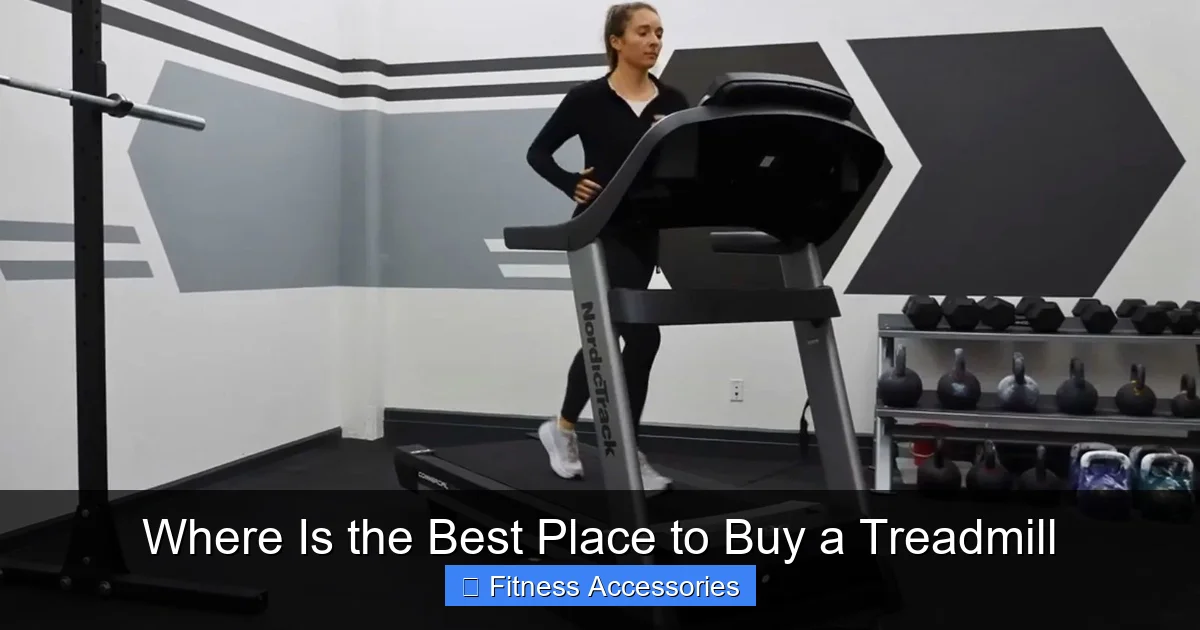
Finding the best place to buy a treadmill isn’t about a single store—it’s about matching your specific needs with the right retailer. Your ideal purchase depends on your budget, desired features, need for expert advice, and tolerance for assembly and delivery logistics. Prioritize total cost of ownership, including delivery, setup, and warranties, not just the sticker price. Always test a model in person if possible, as feel and noise are impossible to judge online.
Key Takeaways
- Define Your “Why” First: Your fitness goals (walking, running, incline training) and available space dictate the treadmill type and features you need, which directly impacts where you should shop.
- Total Cost is King: The “best place” minimizes the all-in cost, including delivery, assembly, extended warranties, and potential floor protection mats, not just the base price.
- Expertise vs. Convenience Trade-off: Specialty fitness stores offer unparalleled knowledge and demos, while big-box and online retailers win on price and convenience—know which you value more.
- In-Person Demos Are Non-Negotiable for Quality: You must feel the deck cushioning, hear the motor, and test the console stability. A 10-minute walk at a store can prevent years of regret.
- Read the Fine Print on Logistics: The best price means nothing if delivery takes 6 weeks, assembly costs $200 extra, or the return policy requires you to disassemble and box the 300-lb machine yourself.
- Timing and Negotiation Matter: Buying during holiday sales (New Year’s, Prime Day, Black Friday) or at the end of a model year can yield significant savings, and local dealers may price-match.
📑 Table of Contents
- Your Treadmill Journey Starts With You, Not a Store
- Type 1: The Big-Box Retailers (Walmart, Target, Dick’s Sporting Goods)
- Type 2: The Specialty Fitness Retailers (Local & National Chains)
- Type 3: The Online-Only Titans (Amazon, Brand Websites like NordicTrack, Peloton)
- The Silent Budget Busters: Hidden Costs You Must Factor In
- The Unbeatable Argument: Why You Must Test Drive (And How To Do It Right)
- The Decision Framework: Your Personalized “Best Place” Checklist
- Conclusion: Your Best Place Awaits—Do the Work
Your Treadmill Journey Starts With You, Not a Store
So, you’ve decided to bring the gym home. Welcome to the exciting, and sometimes overwhelming, world of treadmill shopping. The first question that pops up is usually, “Where is the best place to buy a treadmill?” It’s a smart question, but the honest answer might surprise you: there is no single “best” store for everyone. The perfect purchasing destination for a marathon trainer living in a spacious suburban home is completely different from the ideal spot for a apartment dweller wanting a compact walking pad for quick lunchtime jogs.
Think of it like buying a car. You wouldn’t ask, “Where’s the best place to buy a vehicle?” without specifying if you need a heavy-duty truck, a zippy sports car, or a fuel-efficient commuter. The “best place” for a luxury sedan is a dealership with a concierge service, while the best place for a reliable used sedan might be a certified pre-owned program or a private seller with a pristine service history. Your treadmill is no different. The “best place to buy a treadmill” is the one that aligns perfectly with your unique combination of budget, space, fitness goals, and desired service level. Let’s break down how to find your match.
Type 1: The Big-Box Retailers (Walmart, Target, Dick’s Sporting Goods)
These are the giants you know. They dominate the landscape with their massive floor space, recognizable brands, and promises of low prices. For many first-time buyers, this is the default starting point. But are they truly the best place to buy a treadmill? Let’s look under the hood.
Visual guide about Where Is the Best Place to Buy a Treadmill
Image source: metarficial.com
The Allure of the One-Stop Shop
The primary draw is undeniable: convenience and perceived value. You can stroll into a store, see a few models (often 3-5), and walk out with a purchase the same day. Prices are prominently displayed, and you can often use store credit cards for financing. Brands here are typically mid-range, names like ProForm, NordicTrack (often sold through Dick’s), and Sunny Health & Fitness. They cater to the budget-conscious and casual exerciser.
Practical Example: A quick scan at a local Target might show a compact, foldable treadmill for $400-$600, perfect for a small apartment. Dick’s Sporting Goods will have a wider selection, including models with touchscreens and iFit integration starting around $1,000.
The Hidden Costs and Limitations
Here’s where the “best place” title gets complicated. The sticker price is just the beginning.
- Assembly & Delivery: “Free delivery” often means curbside. Getting it inside, up stairs, and assembled is usually an extra $100-$300. These retailers contract third-party services, and the quality can be hit-or-miss.
- Expertise: Sales associates are generalists. They can tell you the price and basic specs (motor horsepower, belt size) but rarely have deep, hands-on experience with the mechanics or can provide nuanced advice on which deck cushioning is best for your knees.
- Selection Depth: You’re seeing a filtered, entry-to-mid-level assortment. You won’t find commercial-grade durability or the highest-end home models from brands like TechnoGym or Life Fitness.
- Post-Purchase Support: Warranty claims often involve mailing parts and DIY repairs, or scheduling a third-party technician at your expense.
Best for: Buyers on a tight budget, those needing a simple walking treadmill, people who value immediate availability and don’t mind handling assembly logistics themselves. It’s a good place, but often not the best place for a serious, long-term investment.
Type 2: The Specialty Fitness Retailers (Local & National Chains)
This is where the pros shop. Stores dedicated solely to fitness equipment—both local boutiques and national chains like Fitness Superstore or Play It Again Sports (for used/refurbished)—represent a different philosophy. They view treadmills not as appliances, but as precision fitness tools.
The Unmatched Value of Expertise
This is their superpower. The salesperson is likely a fitness enthusiast, a former personal trainer, or a long-time equipment specialist. They’ve put miles on the machines they sell. They can ask the right questions: “What’s your typical stride length?” “Do you have knee or back issues?” “Will this fit through your 30-inch doorway?” They can demonstrate the difference between a direct-drive motor and a belt-drive, explain deck cushioning systems (like NordicTrack’s FlexSelect or Sole’s CushionFlex), and let you truly feel the difference.
Practical Tip: Go in wearing workout clothes. Seriously. Ask for a 10-minute demo. Run, walk, and use the incline. Does the belt feel smooth? Is the console wobbly? How loud is the motor at 6 mph? This sensory data is priceless and impossible to get from a spec sheet.
Service as a Product
Here, the sale is the beginning of the relationship. These retailers typically offer white-glove delivery: bringing it in, assembling it, leveling it, removing your old equipment, and sometimes even hauling away the packaging. They have in-house service technicians for warranty work. The price you pay often includes a premium for this peace of mind.
Negotiation is on the Table: Unlike big-box stores with fixed pricing, specialty stores often have some wiggle room, especially on floor models or at the end of a quarter. They might throw in a mat, a heart rate monitor, or a free maintenance package.
Best for: Serious runners, those with specific physical needs, buyers who value long-term support and a hassle-free setup, and anyone who wants to be absolutely sure they’re buying the right machine. The expertise here makes a strong case for being the best place to buy a treadmill for a major, decade-long purchase.
Type 3: The Online-Only Titans (Amazon, Brand Websites like NordicTrack, Peloton)
The digital frontier has revolutionized treadmill shopping. The convenience of browsing specs, reading hundreds of reviews, and having a 300-lb box delivered to your door is revolutionary. But it comes with its own set of crucial considerations.

Visual guide about Where Is the Best Place to Buy a Treadmill
Image source: images.procreate.art
The Power of Information and Price
Online platforms offer the deepest selection by far. You can compare every model from a brand like Sole or Horizon, read detailed professional reviews, and see real-user photos and long-term feedback. Prices are often the most competitive because overhead is lower. Flash sales, coupon codes, and open-box deals are frequent.
The Brand-Direct Advantage: Buying from a manufacturer’s website (e.g., NordicTrack.com, Peloton.com) often includes their full ecosystem—seamless app integration, exclusive content subscriptions, and the most current models. Financing is usually straightforward through the brand itself.
The High-Stakes Gamble of the “Blind Buy”
The critical downside is the complete lack of physical interaction. You are buying a machine based on trust in reviews and brand reputation. This is a massive risk for a large, heavy piece of equipment you’ll use daily.
- The Assembly Question: Does “ships in two boxes” mean “requires 4 hours and two people with an Allen wrench”? You must read the assembly descriptions and reviews carefully. Some brands offer “professional assembly” as an expensive add-on ($200-$400).
- The Return Nightmare: Returning a treadmill online is the stuff of nightmares. It’s not like returning a shirt. You must disassemble it back into boxes (often not provided), palletize it, and arrange freight pickup—a process that can cost $500+ and is rarely worth the hassle. Always, always check the return policy in microscopic detail before clicking “buy.”
- Delivery Realities: “Free shipping” is standard. “White-glove delivery” is usually an expensive upgrade. Ensure you know exactly where the truck will stop (curb, garage, living room?).
Best for: Tech-savvy buyers who are comfortable with DIY projects, have done exhaustive research, live in a home with easy ground-floor access and wide doorways, and are confident in the model they’ve chosen. It can be the best place to buy a treadmill for price and selection, but only if you mitigate the risks through thorough homework.
The Silent Budget Busters: Hidden Costs You Must Factor In
We’ve touched on this, but it deserves its own spotlight. The “best price” is a mirage if you haven’t accounted for everything that comes after the checkout. Let’s itemize the real cost of treadmill ownership.
The Logistics Line Item
Your treadmill’s journey from warehouse to your living room is the first hidden cost center.
- Delivery: Basic curbside is often free. Inside delivery? $100-$250. Up stairs? Another $50-$150 per flight. Long carry (from street to back of house)? $100+.
- Assembly: This is the big one. Professional assembly averages $150-$300. If you DIY, budget for tools and 3-6 hours of your time (and possibly a friend’s help—pizza and beer are a cost!).
- Floor Protection: A quality, thick treadmill mat is not optional. It protects your floor, reduces vibration/noise, and stabilizes the machine. Budget $50-$150.
The Ownership Line Items
Now you’re running. What else?
- Extended Warranty: The manufacturer’s standard warranty (usually 1 year parts/labor) is often insufficient for a complex machine. A 3-5 year extended warranty from a reputable provider (sometimes offered through the retailer) can be a wise $200-$500 investment for peace of mind.
- Membership Subscriptions: Many modern treadmills (NordicTrack, Peloton, Bowflex) require a monthly subscription ($30-$45) to unlock their interactive content and full feature set. This adds $360-$540 annually to your cost of ownership.
- Maintenance: belts need occasional alignment, decks need lubrication (if not self-lubricating), and motors need cleaning. Budget $50-$100 annually for cleaning kits and potential minor part replacements.
The Smart Play: When comparing two retailers, add $300-$500 for delivery/assembly and $300-$600 for a good extended warranty to the sticker price. The “cheaper” online deal often becomes more expensive than the “higher-priced” specialty store deal that includes white-glove service and a better warranty package. This total cost analysis is the single most important step in finding the true best place to buy a treadmill.
The Unbeatable Argument: Why You Must Test Drive (And How To Do It Right)
Let’s be brutally clear: you cannot buy a treadmill without trying it first. Specs lie. Pictures deceive. The only way to know if a treadmill is right for you is to run, walk, and incline on it. This single fact elevates physical retailers in the “best place” debate.
What to Actually Test (It’s More Than Just Walking)
Don’t just hop on and take a few steps. You’re conducting a diagnostic. Wear athletic shoes.
- The Deck Cushioning: This is your joint health. Run at a moderate pace (6 mph). Does it feel like running on a cloud (too soft, can cause fatigue), a track (firm and responsive), or a sidewalk (harsh)? Your knees and shins will tell you. Different brands have different philosophies—Sole and Life Fitness are known for a more “road-like” feel, while NordicTrack’s FlexSelect aims for softness.
- The Motor Sound and Smoothness: Listen. Is it a steady hum or a whining strain? At top speed and max incline, does the motor sound like it’s working hard, or does it maintain a consistent tone? A strained motor is a red flag for longevity.
- The Belt Stability: Does the belt shift side-to-side as you run? A high-quality deck stays centered. Give it a good, steady run for 3-5 minutes to see.
- The Console and Interface: Is the display easy to read while moving? Are the buttons/touchscreen responsive? Can you quickly change speed/incline without breaking stride? If it has a fan, is it positioned well? If it has speakers, is the sound clear?
- The Overall Sturdiness: Hold the handlebars and really push into them as you run. Does the entire frame flex, creak, or feel unstable? A solid steel frame should feel immovable.
How to Test If You Can’t Find a Store
If no local specialty store carries your target brand, get creative.
- Visit a high-end gym or hotel that uses commercial models from brands like Precor or Life Fitness. The feel of their residential-grade counterparts is often similar.
- Check if the brand has a “showroom locator” on their website. Some direct-to-consumer brands have pop-up demo events in major cities.
- Consider a short-term rental from a local fitness equipment rental company to truly live with a model for a week. This is the ultimate test, albeit a costly one ($100-$300/week).
If you absolutely cannot test the exact model, choose a retailer with a ironclad, no-questions-asked, in-home return policy (like some specialty stores offer) and be prepared to pay for return shipping if it doesn’t work out. This safety net is worth its weight in gold and can make an online retailer the “best place” for the risk-averse who still want a specific model.
The Decision Framework: Your Personalized “Best Place” Checklist
Now, let’s synthesize everything into a simple decision tree. Grab a notepad and answer these questions. Your answers will point you to your optimal purchasing channel.
Question 1: What is Your Absolute Maximum Budget (All-In)?
Under $1,000 All-In: Your best bet is big-box retailers (Target, Walmart) or online marketplaces (Amazon) for basic, foldable models. Focus on core durability (motor, frame) over tech. Factor in $150-$250 for assembly and a mat. DIY assembly is almost required here.
$1,000 – $2,500 All-In: This is the competitive sweet spot. Your best place could be a specialty retailer (for expertise and bundled service) or a major online sale (for price). Here, the total cost analysis is critical. A $1,800 model at a specialty store with free white-glove delivery and a 3-year warranty may be a better value than a $1,500 model online plus $400 in assembly and a $300 warranty.
$2,500+ All-In: You are in serious investment territory. Specialty fitness retailers are overwhelmingly your best place to buy a treadmill. The expertise required to differentiate between a $2,500 Sole and a $3,500 Life Fitness is immense. The service and warranty support for a machine at this price point are non-negotiable. Negotiation is expected.
Question 2: How Critical is Hands-On Guidance?
“I know exactly what I want (model and specs).”: Online (brand site or Amazon) is likely your best place, provided you’ve verified the return policy and are comfortable with logistics.
“I have a general idea but need help narrowing it down.”: A specialty retailer is your best ally. Their guidance can save you from a $1,000 mistake.
“I have specific physical needs (rehab, arthritis, training for a marathon).”: Do not pass go. Go directly to a specialty retailer or a physical therapy-recommended store. This is not a DIY purchase.
Question 3: What is Your Tolerance for Assembly & Problem-Solving?
“I love a project and have tools/help.”: Online or big-box with self-assembly is viable.
“I want it done right and don’t want to think about it.”: Pay the premium at a specialty retailer for white-glove service. The peace of mind is worth every penny.
Question 4: How Important is the Latest Tech & Content?
If live classes, scenic routes, and competitive leaderboards are your primary motivators, your best place is inherently the brand’s official website (Peloton, NordicTrack, Bowflex) or a major authorized online retailer. The ecosystem is locked to the brand. However, you must still factor in delivery/assembly costs and read the return policy with a magnifying glass.
Conclusion: Your Best Place Awaits—Do the Work
The quest for the best place to buy a treadmill ultimately circles back to you. It’s a process of self-assessment followed by strategic research. The specialty store offers a premium experience for a premium price. The big-box store offers convenience and entry-level value. The online world offers unparalleled selection and potential savings, but with significant risk.
Our final, actionable advice: Start your search online to understand the market, models, and price ranges. Then, take your top 2-3 contenders to a physical location—preferably a specialty fitness retailer—for a test run. Use their expertise. Get a written quote that includes all costs (machine, delivery, assembly, warranty). Then, and only then, compare that all-in number to the best online deal you can find for the same model. That comparison is the only way to truly identify your personal best place to buy a treadmill.
Invest the time now. A treadmill is a long-term commitment to your health. Making the right choice at the right price from the right seller will keep you running (or walking) happily for years to come. Happy hunting!
Frequently Asked Questions
What is the absolute best time of year to buy a treadmill?
The best times are during major retail holidays when fitness resolutions are top of mind: New Year’s (January), Memorial Day, Labor Day, and Black Friday/Cyber Monday. Also, watch for new model releases (usually late summer/fall); retailers often discount outgoing models to clear inventory.
Should I buy a used treadmill from a private seller?
Buying used can offer tremendous value but carries high risk. Only consider it if you are mechanically inclined for inspection. Check the motor, deck for wear, belt alignment, and electronic console functions. A used commercial-grade treadmill (from a gym closing) can be a gem if the price is right and you can arrange professional moving.
How important is the warranty, really?
Extremely important. Treadmills have many moving parts. A good warranty covers labor and parts for the motor, deck, and electronics for at least 2-5 years. A 90-day labor warranty is a warning sign. The best warranties are in-home service, not “mail-in.” This is often where specialty retailers provide the most value.
Is financing a treadmill a good idea?
It can be, if it’s 0% APR for a promotional period (often 12-36 months through retailers or brand credit cards). Only finance what you can pay off within the promotional window to avoid high retroactive interest. Avoid long-term financing with high interest; the treadmill will depreciate faster than you pay it off.
What’s the deal with folding treadmills? Are they worth it?
Folding treadmills are great for space-saving but often sacrifice stability and cushioning. The folding mechanism is a potential point of failure. If space is your primary constraint, a high-quality folding model (like some from NordicTrack or Sole) is fine for walking/light jogging. For serious running, a non-folding, solid-frame treadmill is superior.
What should I do if my new treadmill arrives damaged or isn’t working?
Document everything with photos/videos immediately. Contact the retailer’s customer service first, not the carrier. Refer to your sales agreement. Reputable retailers, especially specialty stores, will coordinate a repair or replacement. If you bought from a major online marketplace, their customer service is usually very good about resolving issues quickly to avoid negative reviews.