What to Do If Jump Rope Is Too Long
Got a jump rope that’s dragging on the floor? No worries! This guide shows you simple ways to shorten, adjust, or replace a rope that’s too long, letting you jump safely and efficiently. Follow our step‑by‑step tips and get back to smooth, rhythmic workouts in minutes.
Key Takeaways
- Measure correctly: Knowing your ideal rope length prevents wasted time and effort.
- Adjust the handles: Most ropes have removable or sliding handles for a quick fix.
- Trim safely: Cutting and re‑tying the rope can be done at home with the right tools.
- Use accessories: Knots, clips, and weight adjustments help fine‑tune length.
- Choose the right rope: Selecting a rope designed for your height avoids future problems.
- Maintain regularly: Keep tension consistent to stop the rope from stretching.
- Know when to replace: Worn‑out or permanently stretched ropes should be retired.
📑 Table of Contents
- Introduction: When a Jump Rope Feels Like a Whip
- 1. How to Measure the Perfect Rope Length
- 2. Adjusting the Handles – The First Easy Fix
- 3. Trimming the Rope – Cutting It Down to Size
- 4. Using Knots, Clips, and Accessories to Fine‑Tune Length
- 5. Choosing the Right Rope for Your Height and Skill
- 6. Maintaining Your Rope to Prevent Length Issues
- Conclusion: Jump Confidently with the Right Length
Introduction: When a Jump Rope Feels Like a Whip
Imagine you’re ready for a high‑intensity cardio session, you grab your favorite jump rope, and—whoops!—the rope slaps the floor, trips you, and ruins the flow. A rope that’s too long isn’t just an annoyance; it can cause missed jumps, tangled loops, and even bruises. The good news is that fixing a long rope is usually a matter of a few minutes and a couple of simple tools.
In this article we’ll answer the question that’s on every beginner’s mind: what to do if jump rope is too long. We’ll walk you through measuring the perfect length, adjusting handles, trimming the cable, and even choosing a better rope for the future. By the end you’ll have a rope that swings just right, letting you focus on speed, rhythm, and fun.
1. How to Measure the Perfect Rope Length
Why measurement matters
Getting the length right is the foundation of a smooth jump. A rope that’s even a few inches too long can create a “slap‑back” effect, where the rope hits the ground before your feet clear it. That messes with timing and can lead to injury.
Visual guide about What to Do If Jump Rope Is Too Long
Image source: i.ytimg.com
Step‑by‑step measuring guide
- Step 1: Stand on the rope’s midpoint. Place one foot in the center of the rope. The rope should rest evenly on both sides of you.
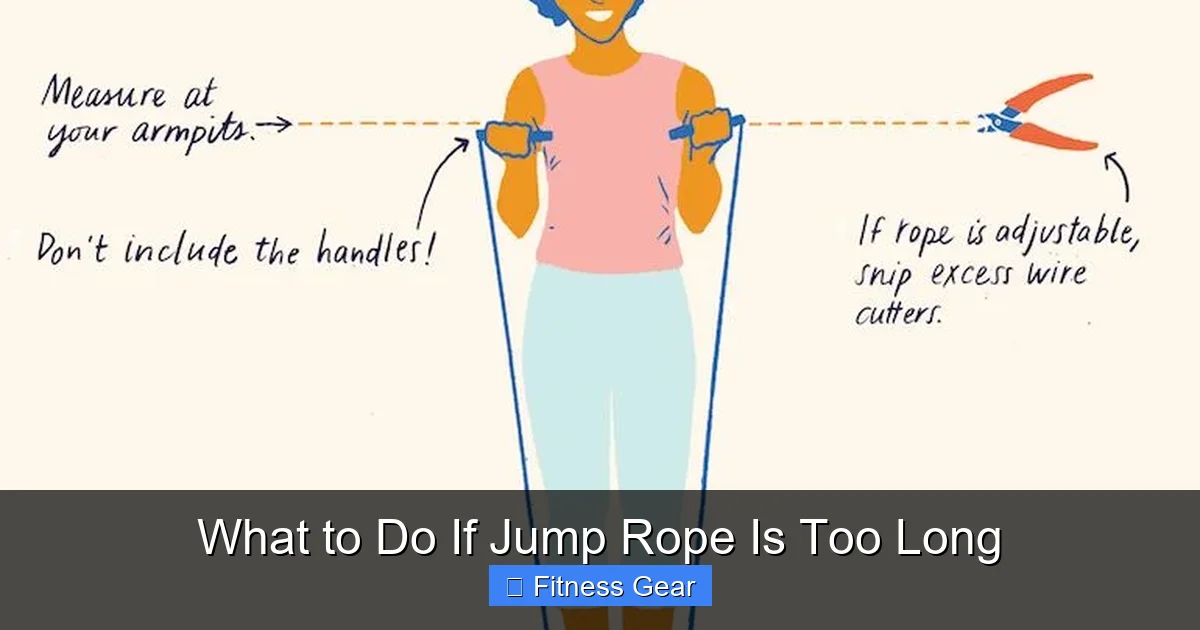
- Step 2: Pull the handles straight up. Hold each handle and lift them straight overhead. The handles should reach close to your armpits if you’re an average‑height adult.
- Step 3: Adjust for skill level. Beginners often prefer a slightly longer rope (handles reaching the chest) for easier clearance, while advanced jumpers like a tighter fit (handles at the armpits).
Quick tip
Write down the ideal length in centimeters or inches. Most ropes are sold in standard lengths (9 ft, 10 ft, 12 ft, etc.), so you’ll know exactly which size to buy or cut.
2. Adjusting the Handles – The First Easy Fix
Most modern ropes have removable or sliding handles
Before you reach for scissors, check if your rope’s handles can be moved. Many speed ropes, weighted ropes, and even basic PVC ropes feature a collar that slides up or down the cable.
Visual guide about What to Do If Jump Rope Is Too Long
Image source: i.pinimg.com
How to slide the handles
- Loosen the screw or clip that holds the handle in place (usually a small Allen‑key screw).
- Slide the handle up to the desired position. Aim for the measurement you recorded earlier.
- Tighten the screw securely. Test the rope by swinging it a few times.
Removing and re‑attaching handles
If the handles are removable, simply detach them, cut the excess rope, then re‑thread the cable through the handle’s hole. Most handles have a small metal eyelet that makes this process straightforward.
When sliding won’t work
Some cheap ropes have fixed handles that can’t move. In that case you’ll need to trim the rope or replace it altogether (see Section 4).
3. Trimming the Rope – Cutting It Down to Size
Tools you’ll need
- Sharp scissors or wire cutters (for steel‑core ropes)
- A heat source (lighter or hair dryer) for synthetic ropes
- Electrical tape or heat‑shrink tubing
- A permanent marker
Step‑by‑step trimming process
- Mark the cut point. Measure from the handle to the ideal length and make a small mark with the marker.
- Cut the rope. Use scissors for PVC or nylon ropes. For steel‑core ropes, use wire cutters and cut as close to the mark as possible.
- Seal the ends. For synthetic ropes, melt the cut end gently with a lighter to prevent fraying. Then wrap the sealed tip with a tiny piece of electrical tape.
- Re‑attach the handle. Slide the handle back onto the shortened rope and secure it.
- Test the rope. Swing it a few times to ensure the length feels right and the handle stays in place.
Safety note
Always wear gloves when cutting steel‑core ropes. The metal can be sharp, and the ends may splinter.
Visual guide about What to Do If Jump Rope Is Too Long
Image source: liftmanual.com
4. Using Knots, Clips, and Accessories to Fine‑Tune Length
Knots for quick, temporary fixes
If you’re at the gym and can’t cut the rope, a simple knot near the handle can shorten it instantly. Tie a firm overhand knot, then slide the handle up to the knot. This method works best with soft, flexible ropes.
Clips and cable ties
Small plastic cable ties (zip ties) can lock the rope at a specific point. After measuring, loop the tie around the rope and pull the handle up to the tie. Trim any excess tie for a clean look.
Adding weight to shorten swing
Some jump ropes come with weighted sleeves that slide onto the rope. Adding a little extra weight near the handles can reduce the effective length by pulling the rope tighter, which is handy for advanced speed work.
5. Choosing the Right Rope for Your Height and Skill
Rope materials and their impact on length
- PVC or nylon ropes: Light, easy to cut, and ideal for beginners.
- Steel‑core speed ropes: Heavy, durable, and perfect for high‑speed double‑unders, but require precise length.
- Weighted ropes: Provide extra resistance; length is less critical because the weight helps maintain tension.
Height‑based recommendations
| Height | Recommended Rope Length |
|---|---|
| Under 5’0” (152 cm) | 7 ft – 8 ft (2.1 m – 2.4 m) |
| 5’0” – 5’5” (152‑165 cm) | 8 ft – 9 ft (2.4 m – 2.7 m) |
| 5’6” – 5’10” (167‑178 cm) | 9 ft – 10 ft (2.7 m – 3.0 m) |
| 5’11” – 6’2” (180‑188 cm) | 10 ft – 11 ft (3.0 m – 3.3 m) |
| Over 6’2” (188 cm) | 11 ft – 12 ft (3.3 m – 3.6 m) |
Features to look for
When buying a new rope, choose one with adjustable handles or a detachable cable. This gives you flexibility as you grow or as your skill improves.
6. Maintaining Your Rope to Prevent Length Issues
Regular tension checks
Rope tension can change with temperature, humidity, and repeated use. Every few weeks, give your rope a quick tension test by pulling the handles apart. If it feels loose, tighten the handles or re‑adjust the knot.
Cleaning and storage
- Wipe down the rope after sweaty workouts to prevent corrosion (especially steel‑core).
- Store the rope coiled loosely, not tightly wound, to avoid permanent stretching.
- Avoid exposing the rope to direct sunlight for long periods; UV can weaken PVC.
When to replace
If the rope shows signs of fraying, permanent stretch, or the cable won’t hold a knot, it’s time to retire it. A fresh rope ensures consistent performance and reduces the risk of tripping.
Conclusion: Jump Confidently with the Right Length
Finding out what to do if jump rope is too long doesn’t have to be a headache. Start by measuring, adjust the handles, trim if needed, and use simple accessories for fine‑tuning. Picking a rope that matches your height and skill level will save you time and keep your workouts flowing.
Remember, a correctly sized rope feels like an extension of your body, not a hindrance. With these tips, you’ll be able to jump, double‑under, and freestyle with confidence—no more tangled feet, no more missed reps. So grab your rope, make the adjustments, and get back to the rhythm that makes cardio fun!
Frequently Asked Questions
How can I tell if my rope is too long before I start jumping?
Stand on the rope’s midpoint and lift the handles straight up. If the handles reach above your armpits, the rope is likely too long for most workouts.
Can I use any scissors to cut a jump rope?
For PVC or nylon ropes, regular sharp scissors work fine. For steel‑core ropes, you’ll need wire cutters to make a clean cut without fraying.
Is it safe to melt the ends of a synthetic rope?
Yes, gently heating the cut end with a lighter or hair dryer seals the fibers and prevents fraying. Just be careful not to over‑heat and burn the rope.
Do weighted ropes need to be shortened?
Weighted ropes are less sensitive to length because the added mass keeps tension tight. However, if the rope drags on the floor, a small knot or clip can still help.
What if my rope’s handles are fixed and can’t slide?
In that case, trimming the rope and re‑threading the handles is the best solution. If the handles cannot be re‑attached, consider replacing the rope with an adjustable model.
How often should I replace my jump rope?
Replace the rope when you notice permanent stretch, fraying, or loss of grip. For regular users, this is typically every 6‑12 months, depending on intensity and material.