What Is Better Elliptical or Rowing Machine 2
Both the elliptical and rowing machine are fantastic home gym options, but each shines in different areas. The elliptical is ideal for low-impact joint-friendly cardio, while the rowing machine delivers a full-body workout that torches calories and builds muscle. By the end of this guide, you will know exactly which machine fits your goals best.
Choosing between an elliptical and a rowing machine can feel overwhelming. Both machines sit in the cardio equipment category, and both promise great workouts. But they deliver very different experiences. One focuses on smooth, low-impact movement. The other pulls you into a full-body sweat session that builds strength and endurance at the same time.
If you are setting up a home gym or just looking to switch up your routine, this comparison will help you decide. We break down everything you need to know about the elliptical vs rowing machine debate. You will learn how each machine works, which muscles they target, how many calories they burn, and which one aligns with your personal fitness goals.
Key Takeaways
- Elliptical machines are gentler on your joints and perfect for steady-state cardio sessions.
- Rowing machines engage over 80% of your muscles, making them a powerful full-body workout tool.
- Calorie burn on a rowing machine tends to be higher, but both machines deliver excellent results when used consistently.
- Your choice should depend on your fitness goals, joint health, and available space at home.
- Proper form matters more than the machine type — using either incorrectly can lead to injury.
- Both machines offer adjustable resistance, so they grow with your fitness level over time.
📑 Table of Contents
What Is an Elliptical Machine?
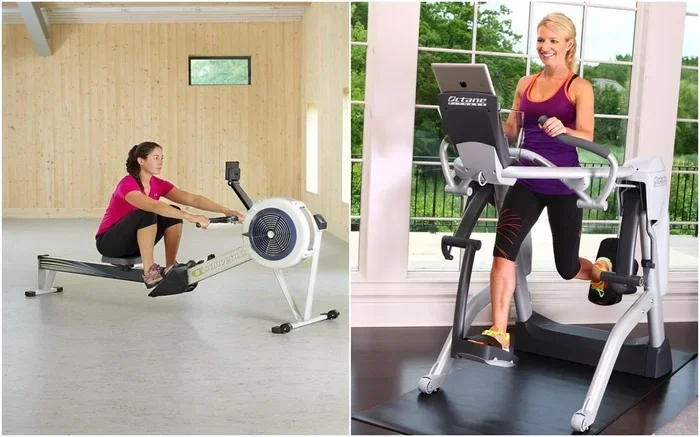
An elliptical trainer is a stationary cardio machine that mimics running or walking without the impact on your joints. You stand on foot pedals and push them in an elliptical motion. Your arms also move with handlebars, which adds an upper body element to the workout.
Most ellipticals let you adjust the resistance and incline. Some models even allow you to pedal in reverse, which targets different muscle groups. This versatility makes the elliptical a popular choice for people of all fitness levels.
Who Should Use an Elliptical?
The elliptical is a great choice if you want low impact exercise that still raises your heart rate. People recovering from injuries often turn to ellipticals because the smooth motion reduces stress on the knees and ankles. Older adults and beginners also find ellipticals approachable and easy to use.
- Gentle on joints, especially knees and hips
- Good for steady-state cardio sessions
- Engages both upper and lower body
- Easy to use with minimal learning curve
- Works well for warm-ups and cool-downs
What Is a Rowing Machine?
A rowing machine simulates the motion of rowing a boat. You sit on a sliding seat, grab a handle, and pull against resistance while pushing with your legs. The movement flows through your entire body — legs, core, back, arms, and shoulders all work together.
Rowing machines come in several types, including air resistance, magnetic, water, and hydraulic models. Each type offers a slightly different feel. Air rowers are the most popular because they provide smooth, natural resistance that increases as you pull harder. If you want to learn more about choosing the right type, check out what is the best rowing machine air or magnetic.
Who Should Use a Rowing Machine?
The rowing machine is perfect for people who want a full body workout in less time. It is excellent for building endurance, improving cardiovascular health, and strengthening muscles simultaneously. Athletes and fitness enthusiasts who enjoy dynamic, engaging workouts tend to love rowing machines.
- Engages over 80% of your body’s muscles
- Excellent for building muscular endurance
- Provides a powerful cardiovascular workout
- Burns a high number of calories per session
- Improves posture and core strength
Elliptical vs Rowing Machine: Head-to-Head Comparison
Let us put both machines side by side. This comparison table highlights the key differences between the two popular pieces of home gym equipment.
| Feature | Elliptical | Rowing Machine |
|---|---|---|
| Primary Muscles Worked | Legs, glutes, some arms | Legs, core, back, arms, shoulders |
| Impact Level | Very low impact | Low impact |
| Calorie Burn (30 min, avg) | 250-350 calories | 300-450 calories |
| Cardiovascular Benefit | High | Very High |
| Strength Building | Minimal | Moderate to High |
| Space Required | Medium | Medium to Large |
| Learning Curve | Very Easy | Moderate |
| Noise Level | Very Quiet | Moderate (air rowers can be loud) |
As you can see, both machines offer excellent benefits. The rowing machine wins on muscle engagement and calorie burn, while the elliptical wins on ease of use and joint friendliness. If you want to explore more about which machine gives a better overall workout, read our detailed guide on which gives a better workout rowing machine or elliptical.
Which Machine Burns More Calories?
When it comes to calorie burn, the rowing machine generally comes out ahead. A 155-pound person can burn approximately 300 to 450 calories in 30 minutes on a rowing machine at moderate intensity. The same person burns about 250 to 350 calories on an elliptical for the same duration.
However, the exact number depends on several factors:
- Intensity level — Pushing yourself harder on either machine increases calorie burn significantly.
- Body weight — Heavier individuals burn more calories during the same activity.
- Duration — Longer sessions naturally burn more calories.
- Resistance settings — Higher resistance on both machines demands more effort.
- Consistency — Regular workouts over time lead to better overall results.
The rowing machine burns more calories partly because it involves more muscle groups. When more muscles work together, your body needs more energy, which means more calories burned. For people focused on weight loss, the rowing machine has a slight edge.
Which Is Better for Your Fitness Goals?
The best machine for you depends entirely on what you want to achieve. Let us look at different fitness goals and which machine suits each one.
Goal: Weight Loss
If your primary goal is shedding pounds, the rowing machine is the better choice. It burns more calories per minute and builds lean muscle, which boosts your metabolism even at rest. That said, consistency matters most. The best machine is the one you will actually use regularly.
Goal: Joint Health and Rehabilitation
For people with knee, hip, or ankle issues, the elliptical is the clear winner. Its smooth, gliding motion eliminates the jarring impact that comes with running or even walking on hard surfaces. Physical therapists often recommend ellipticals for patients recovering from joint surgery or chronic pain.
Goal: Building Overall Fitness
If you want to improve your overall fitness — including strength, endurance, and cardiovascular health — the rowing machine offers more bang for your buck. It trains your body as a coordinated unit, which translates to better performance in sports and daily life. You can learn more about rowing machine benefits in our article on what does a rowing machine do for your body.
Goal: Easy Home Use
The elliptical is simpler to hop on and start using right away. There is no need to learn proper pulling technique or manage a sliding seat. For beginners or casual users, the elliptical offers a straightforward cardio session with minimal setup.
Expert Tips for Choosing the Right Machine
Still not sure which machine to buy? Here are some expert tips that can help you make the final decision.
Try Before You Buy
Visit a local gym and test both machines. Spend 10 minutes on the elliptical and 10 minutes on the rower. Notice which one feels more natural and enjoyable. You are far more likely to stick with a machine you actually like.
Consider Your Space
Rowing machines generally require more floor space, especially when the seat is sliding back and forth. Ellipticals have a smaller footprint but are often taller. Measure your available space carefully before making a purchase.
Think About Noise
If you live in an apartment or have close neighbors, consider noise levels. Magnetic ellipticals and magnetic rowing machines are very quiet. Air rowers, on the other hand, can be quite loud because of the spinning fan. For a quiet home workout setup, magnetic models are the way to go.
Set a Budget
Both machines come in a wide range of prices. Budget-friendly models under $500 offer basic features, while premium machines above $1,500 include advanced consoles, Bluetooth connectivity, and smoother resistance systems. Decide how much you are willing to invest before you start shopping.
Prioritize Proper Form
No matter which machine you choose, using proper form is essential. On the elliptical, stand tall, grip the handlebars lightly, and avoid locking your knees. On the rowing machine, follow the drive sequence: legs push, torso leans back, then arms pull. Poor form on either machine can lead to strain or injury. For guidance on proper technique, check out what is the proper form for a rowing machine.
Final Verdict
So, what is better elliptical or rowing machine? The honest answer is that both machines are excellent, and the right choice depends on your personal needs and goals.
Choose the elliptical if you want a low-impact, easy-to-use machine that is gentle on your joints and perfect for steady cardio sessions. Choose the rowing machine if you want a full-body workout that burns more calories, builds muscle, and takes your cardiovascular fitness to the next level.
Many fitness enthusiasts actually own both machines and alternate between them. This approach keeps workouts interesting and ensures you get the benefits of both low-impact cardio and full-body strength training. Whatever you choose, the most important step is simply to start moving. Consistency beats perfection every time.
For more comparisons of popular cardio machines, explore our other articles like what is a better workout elliptical or rowing machine to deepen your understanding of these two fantastic pieces of equipment.
Frequently Asked Questions
Can I lose belly fat using an elliptical or rowing machine?
Spot reduction is a myth, but both machines help you burn overall body fat through consistent cardio workouts. The rowing machine burns more calories per minute, which can accelerate fat loss when combined with a healthy diet. Pair either machine with strength training for the best body composition results.
Is the rowing machine safe for beginners?
Yes, the rowing machine is safe for beginners as long as you learn proper form first. Start with low resistance and focus on the leg-drive, torso lean, and arm pull sequence. Consider watching instructional videos or asking a trainer for a quick form check before jumping into intense sessions.
How often should I use these machines for weight loss?
Aim for at least 150 minutes of moderate cardio per week, which breaks down to about 30 minutes five days a week. You can split this time between the elliptical and rowing machine for variety. Adding interval training on either machine can boost your calorie burn even further.
Which machine takes up less space at home?
Ellipticals generally have a smaller floor footprint, but they are taller and may not fit under low ceilings. Rowing machines are longer but can often be stored upright against a wall. Measure your available space and check the dimensions of each machine before buying.
Can I build muscle on an elliptical?
The elliptical is primarily a cardio machine and does not build significant muscle. It does engage your legs and glutes, but the resistance is not high enough for serious strength training. For muscle building, the rowing machine is a better option because it provides meaningful resistance through your entire body.
What is a good workout duration on either machine?
For general fitness, 20 to 30 minutes per session is a solid starting point. As your endurance improves, you can gradually increase to 45 or even 60 minutes. Listen to your body and adjust the intensity and duration based on how you feel each day.