What Is an Exercise Bike with Moving Arms Called
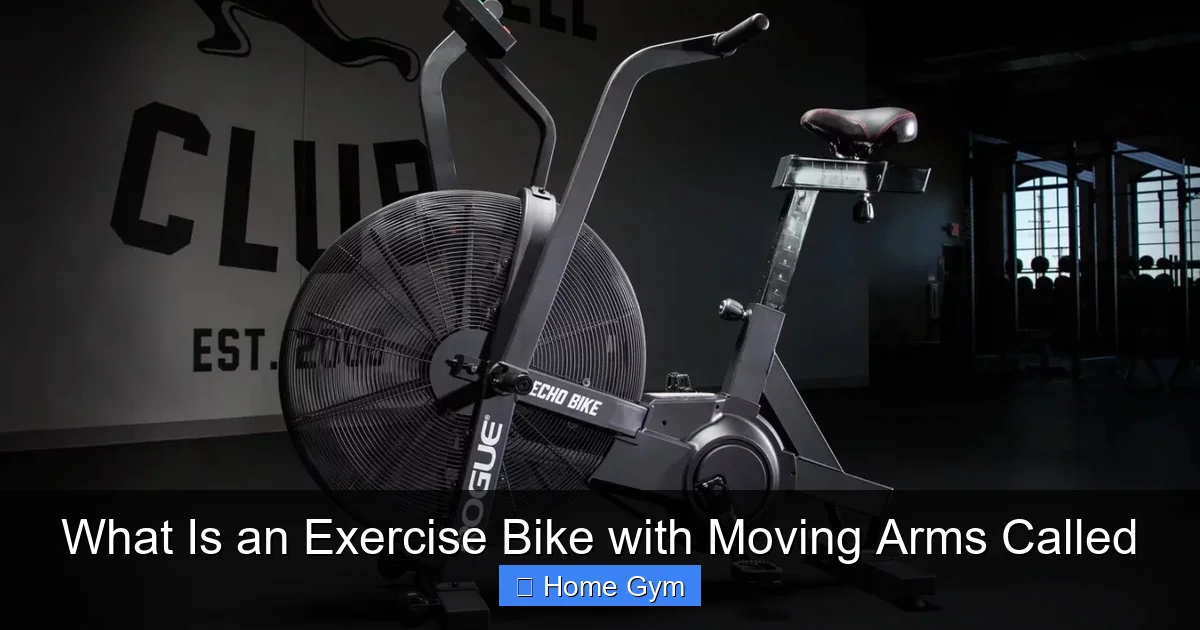
An exercise bike with moving arms is most commonly called a recumbent cross trainer or an upper body ergometer (UBE). It combines the seated, low-impact pedaling of a recumbent bike with a simultaneous pushing and pulling motion for the arms and upper body. This dual-action design delivers a true full-body, low-impact cardiovascular and strength training workout in one efficient session, making it ideal for rehabilitation, calorie burn, and building functional fitness without joint stress.
Key Takeaways
- Official Names: The machine is formally known as a recumbent cross trainer or an upper body ergometer (UBE). You may also see it called a “dual-action recumbent bike” or “recumbent bike with arm levers.”
- Full-Body Engagement: It uniquely provides a simultaneous lower-body (legs) and upper-body (arms, shoulders, back, chest) workout, maximizing calorie expenditure and muscular endurance.
- Ultra-Low Impact: The seated, recumbent position and smooth, elliptical arm motion eliminate pounding, making it perfect for those with joint issues, arthritis, or in physical rehabilitation.
- Cardio + Strength Synergy: It bridges the gap between pure cardio machines and strength equipment, improving heart health while building muscular stamina and tone in the core and upper body.
- Not Just a Stationary Bike: Unlike a standard recumbent bike, the moving arms significantly increase workout intensity, engagement, and functional fitness benefits, though the leg motion remains pedal-based.
- Versatile User Base: Suitable for a wide range of users, from seniors and rehab patients to fitness enthusiasts and athletes seeking active recovery or cross-training.
- Space and Budget Consideration: These machines are typically larger and more expensive than standard recumbent bikes due to the added arm mechanism and frame reinforcement.
📑 Table of Contents
- Introduction: More Than Just a Bike
- What Is It Officially Called?
- The Core Benefits: Why This Hybrid Design Wins
- Muscles Engaged: Your Full-Body Blueprint
- Recumbent Cross Trainer vs. Other Home Gym Equipment
- Who Is This Machine Perfect For? (The Ideal User Profile)
- Buying Your Recumbent Cross Trainer: A Practical Guide
- Conclusion: Your Full-Body, Low-Impact Powerhouse Awaits
Introduction: More Than Just a Bike
You’re in the gym or browsing online for home gym equipment, and you see it: a bike you sit on, but instead of just handlebars, it has long levers or arms that move in a smooth, elliptical pattern as you pedal. Your first thought might be, “What is that thing?” It looks like a bike and an elliptical had a baby. You’re not wrong! This unique hybrid machine has a specific name and a powerful purpose. It’s designed to get your entire body moving in a coordinated, low-impact way. If you’re looking for a way to boost your heart rate, burn serious calories, and build strength without the joint-jarring impact of running or jumping, this machine could be your new best friend. Let’s dive deep into exactly what an exercise bike with moving arms is called, how it works, and why it might be the missing piece in your fitness puzzle.
What Is It Officially Called?
The machine you’re describing has a few technical names, but they all point to the same brilliant concept. The most accurate and widely accepted terms are recumbent cross trainer and upper body ergometer (UBE). “Recumbent” refers to the seated, reclined position that is easy on the back and hips. “Cross trainer” indicates it trains multiple movement patterns and muscle groups across the body. “Ergometer” is a technical term for a device that measures work (like calories or watts), and “upper body” specifies the active arm component. You might also see it marketed as a “dual-action recumbent bike” or simply a “recumbent bike with moving arms.” Don’t confuse it with an upright elliptical with a seat; while functionally similar, the pedal path and overall design philosophy differ slightly, with the recumbent cross trainer being pedal-focused with an added upper-body drive system.

Visual guide about What Is an Exercise Bike with Moving Arms Called
Image source: cheaperks.com
The Anatomy of a Recumbent Cross Trainer
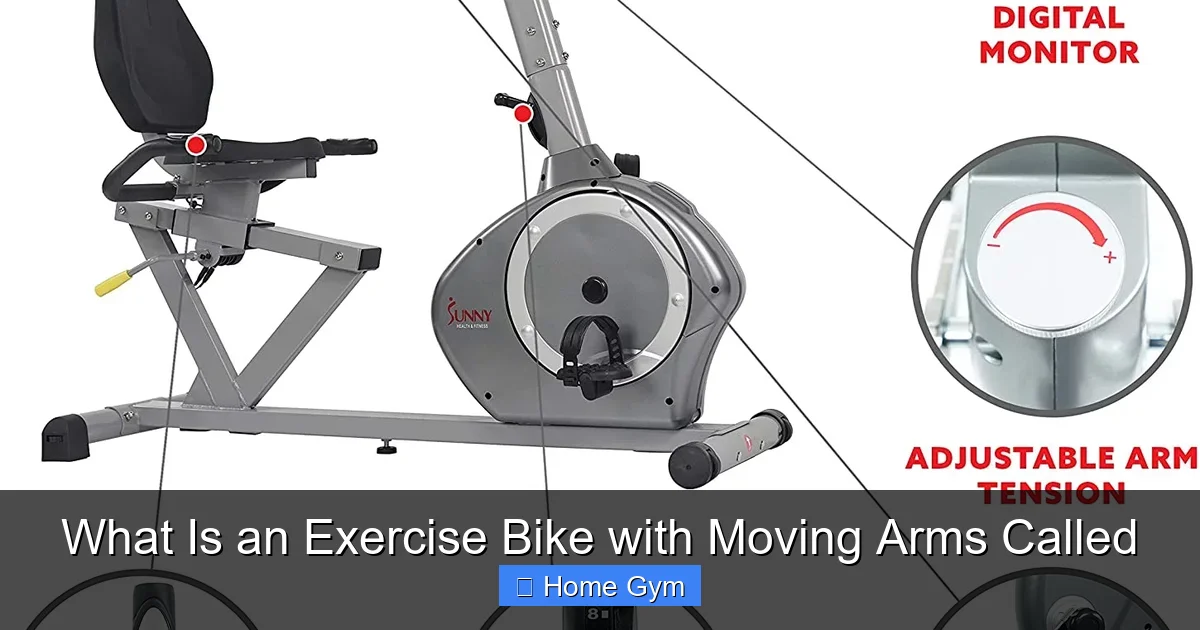
To understand its name, it helps to break down its parts. A standard recumbent bike has a seat, a backrest, pedals, and a stationary console/handlebar set. A recumbent cross trainer adds two crucial elements: independent, movable arm levers and a reinforced drivetrain. These long levers are connected via cables, chains, or a direct linkage to the pedal crank system. When you push the left arm lever forward, it engages the drivetrain to assist the left pedal in its downward stroke. When you pull the right arm lever back, it assists the right pedal. This creates a smooth, coordinated push-pull motion that feels natural, like climbing or paddling, while you pedal. The console typically tracks metrics for both arms and legs: RPMs, resistance level, time, distance, heart rate, and estimated calories burned for the entire body.
The Core Benefits: Why This Hybrid Design Wins
So why choose this over a regular bike or a standalone upper-body machine? The magic is in the synergy. By involving both large muscle groups of the upper and lower body simultaneously, you create a metabolic furnace. Your heart has to work much harder to pump blood to all those active muscles, significantly elevating your heart rate for superior cardiovascular conditioning. This is often called concurrent training. You’re not just doing cardio; you’re also performing a form of resistance training for your arms, shoulders, and back. The result is improved muscular endurance, better posture from strengthening the pulling muscles of the back, and a higher calorie burn per minute compared to using a recumbent bike with only your legs. A 30-minute session on a recumbent cross trainer can easily match or exceed the calorie burn of a 45-minute session on a standard recumbent bike, all while being gentle on the joints.
Visual guide about What Is an Exercise Bike with Moving Arms Called
Image source: cheaperks.com
A Sanctuary for Low-Impact, High-Result Workouts
The seated, recumbent position is inherently low-impact. Your spine is supported, there’s no weight on your knees or ankles, and the pedal motion is circular and smooth. Adding the arm movement doesn’t introduce any impact; it simply adds a fluid, resistance-based motion. This makes it a gold-standard choice for physical rehabilitation after injury or surgery, for managing chronic conditions like arthritis or osteoporosis, and for older adults who need to maintain strength and cardio fitness without risk of falls. It allows someone with limited lower-body mobility to still achieve a powerful, full-body workout. The joint-friendly nature also means you can use it more frequently for active recovery days.
Muscles Engaged: Your Full-Body Blueprint
Let’s map the muscles. On the lower body, you get the classic cycling engagement: quadriceps (front of thighs) during the pedal push, hamstrings (back of thighs) and glutes (buttocks) during the pull-up phase, and calves throughout. The recumbent position places slightly less strain on the hip flexors compared to an upright bike. On the upper body, the movement is a compound push-pull. The pushing phase (arms extending forward) primarily engages the chest (pectorals), front shoulders (anterior deltoids), and triceps. The pulling phase (arms drawing back) powerfully activates the back muscles—particularly the latissimus dorsi (“lats”), rhomboids, and posterior deltoids—as well as the biceps. Your core muscles (abdominals and obliques) are constantly engaged isometrically to stabilize your torso against the rotational force of the opposing arm and leg movements. You are quite literally working from your fingertips to your toes in a coordinated, functional pattern.
Visual guide about What Is an Exercise Bike with Moving Arms Called
Image source: cheaperks.com
Functional Fitness and Real-World Strength
The arm-leg coordination required mimics real-world activities. Think about paddling a kayak, rowing a boat, using a rowing machine, or even the natural arm swing during a brisk walk. Training these opposing muscle groups in a reciprocal pattern improves neuromuscular coordination and builds functional strength that translates to daily life. It strengthens the muscles responsible for pulling and pushing in a stable, seated position, which is crucial for maintaining independence as we age. This contrasts with isolation exercises on machines that work one muscle group at a time. The recumbent cross trainer teaches your body to work as a single, efficient unit.
Recumbent Cross Trainer vs. Other Home Gym Equipment
How does it stack up against your other options? It’s crucial to understand the differences to choose the right tool for your goals.
vs. Standard Recumbent Bike
The standard recumbent bike is a lower-body-only cardio machine. It’s excellent for leg strength, cardiovascular health, and is very user-friendly. However, it offers zero upper-body engagement. The recumbent cross trainer takes that same comfortable, low-impact base and supercharges it with an upper-body workout. If your goal is maximum calorie burn and full-body toning in a limited time, the cross trainer is superior. If you have specific upper-body limitations or simply want a pure leg workout, the standard bike may suffice and is often less expensive.
vs. Upright Elliptical
A traditional elliptical has you standing, with moving arms and legs in a continuous, gliding motion. It’s also a full-body, low-impact machine. The key differences are position and motion. The recumbent cross trainer is seated, which removes all balance requirements and drastically reduces spinal loading, making it safer for those with balance issues or severe back pain. The pedal motion is more like a bicycle (circular), while an elliptical is more like a striding motion. The arm motion on a cross trainer is often more focused on a strong push-pull against resistance, whereas elliptical arms can sometimes feel like they’re just along for the ride.
vs. Rowing Machine
A rower (ergometer) is the king of full-body, low-impact cardio and strength. It powerfully engages the legs, core, and back in a sequential drive. However, the rowing motion is complex and technical. Proper form is essential to avoid lower back strain, and it requires significant core and hip mobility. The recumbent cross trainer’s motion is more intuitive and supported. The seat back provides constant spinal support, eliminating the risk of rounding the back. For beginners, those with core instability, or anyone who finds the rowing catch (start position) uncomfortable, the recumbent cross trainer is a more accessible and safer full-body option.
Who Is This Machine Perfect For? (The Ideal User Profile)
This isn’t a one-size-fits-all, but it fits a remarkably wide size range. The ideal user is someone who wants or needs:
- Maximum Efficiency: Busy professionals or parents who have 30 minutes for a workout and want to engage as many muscles as possible in that time.
- Joint Protection: Individuals with knee, hip, ankle, or back problems who have been advised to avoid high-impact activities but still need a vigorous workout.
- Rehabilitation Goals: Patients recovering from surgery (like knee or shoulder replacements) or injury, under the guidance of a physical therapist. The supported seat and adjustable resistance allow for graded, safe strengthening.
- Senior Fitness: Older adults seeking to maintain cardiovascular health, muscular endurance, and functional independence. The seated design prevents falls and the arm motion helps maintain upper-body strength for daily tasks like carrying groceries.
- Active Recovery: Athletes and fitness buffs needing a low-impact way to promote blood flow and burn calories on rest days without taxing sore muscles or joints.
- Weight Loss Journey: Anyone focused on burning calories. The full-body engagement significantly increases energy expenditure compared to a leg-only bike.
It may be less ideal for someone seeking pure, maximal strength gains (heavy weightlifting), competitive training for a specific sport like cycling or rowing (where specificity is key), or those with extremely limited space and budget, as these machines are larger investments.
Buying Your Recumbent Cross Trainer: A Practical Guide
If you’re convinced and ready to shop, here’s what to look for to make a smart purchase for your home gym.
Resistance System and Smoothness
The feel of the machine is paramount. Look for a magnetic resistance system if your budget allows. It’s quieter, smoother, and requires no maintenance (no friction pads wearing down). Air or fan resistance is also very smooth and provides a natural, infinite resistance curve that gets harder the faster you go. Avoid cheap friction pad systems, which can be noisy, jerky, and require periodic pad replacement. The motion of both the pedals and the arm levers should be incredibly smooth and quiet with no sticking or wobbling.
Adjustability is Non-Negotiable
You must be able to customize the fit. Look for:
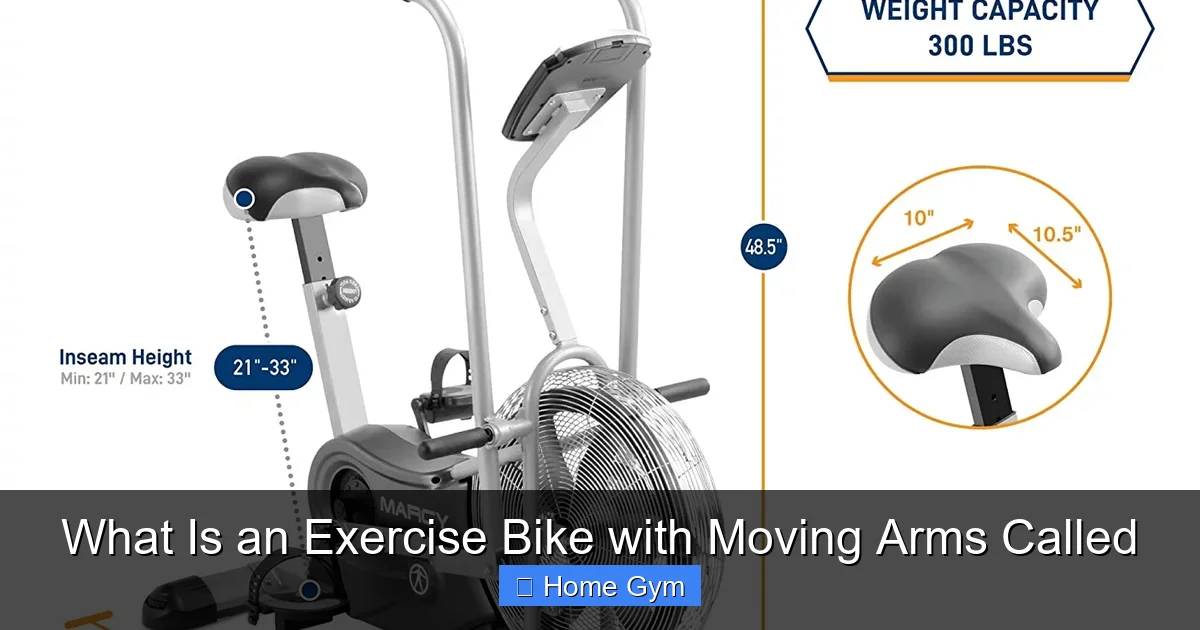
- Seat Adjustment: The seat should slide forward and back on a rail to accommodate different leg lengths. A quick-release lever is convenient.
- Arm Lever Length/Position: Can the arm levers be moved closer or further from the seat? This is critical for users with different arm lengths and torso lengths to ensure a comfortable, full range of motion without overreaching.
- Backrest Angle: Some models allow the backrest to recline slightly for extra comfort, which is a great feature for those with chronic back pain.
Console and Programmability
What data matters to you? At minimum, you want clear display of speed, RPMs (for both arms and legs on some models), time, distance, heart rate (via chest strap or handlebar sensors), and calories. More advanced consoles offer pre-set workout programs that automatically adjust resistance to mimic intervals, hills, or heart rate targets. Consider if you want Bluetooth/ANT+ connectivity to sync with fitness apps like Zwift, Apple Health, or Fitbit to track your progress over time.
Build Quality, Weight Capacity, and Footprint
Check the weight capacity—a robust machine will have a capacity of at least 300 lbs. Read reviews for comments on sturdiness and wobble. The footprint (length x width) is crucial for home use. These machines are longer than standard recumbent bikes due to the arm levers. Measure your space carefully and leave room for getting on and off. A smaller “compact” model might exist, but don’t expect it to be tiny.
Top Brands to Research
While the market is smaller than for standard bikes, reputable brands in the cardio space produce reliable models. Look to Schwinn (their 270 Recumbent Cross Trainer is a popular, well-reviewed model), Nautilus, ProForm, and Exerpeutic (often a more budget-friendly option). Commercial-grade brands like Life Fitness and Precor also make exceptional, durable UBE models found in gyms, but they come with a very high price tag. Reading detailed professional and consumer reviews on sites like Garage Gym Reviews, TreadmillReviewGuru, and Amazon is essential before buying.
Conclusion: Your Full-Body, Low-Impact Powerhouse Awaits
So, to circle back to the original question: What is an exercise bike with moving arms called? It’s a recumbent cross trainer or an upper body ergometer. But more importantly, it’s a versatile, accessible, and highly effective piece of fitness equipment that defies simple categorization. It’s not just a bike; it’s a full-body strength and cardio trainer. It’s not just an arm machine; it’s a joint-friendly calorie burner. By understanding its unique design and benefits, you can decide if this hybrid powerhouse aligns with your fitness goals, health needs, and lifestyle. Whether you’re 25 or 75, rehabbing an injury or training for a triathlon, the recumbent cross trainer offers a unique pathway to building endurance, strength, and overall health with minimal wear and tear on your body. It might just be the smartest, most sustainable addition you can make to your home gym.
Frequently Asked Questions
What is the primary difference between a recumbent cross trainer and a standard recumbent bike?
The primary difference is the addition of movable arm levers that provide an upper-body workout. A standard recumbent bike only engages the legs. The cross trainer’s arm motion increases calorie burn, builds upper-body endurance, and creates a true full-body workout while maintaining the same comfortable, low-impact seated position.
Can I lose weight effectively on a recumbent cross trainer?
Absolutely. Because it engages both large muscle groups of the upper and lower body simultaneously, it can produce a very high calorie burn in a moderate amount of time. When combined with a healthy diet, consistent use is a highly effective tool for weight loss and body composition improvement.
Is a recumbent cross trainer good for seniors or people with arthritis?
Yes, it is often an excellent choice. The seated, recumbent design provides back support and eliminates balance concerns. The motion is completely low-impact, smooth, and joint-friendly. The adjustable resistance allows users to start at a very easy level and gradually build strength without pain, making it ideal for managing arthritis symptoms and maintaining mobility.
How much space does a recumbent cross trainer typically require?
They require more floor space than a standard recumbent bike due to the length of the arm levers. Always check the manufacturer’s listed footprint (length x width). On average, you should plan for a space of approximately 5-6 feet in length and 2-3 feet in width, plus additional room for safely mounting and dismounting.
Do I need to use the arm levers, or can I just pedal?
You can choose to pedal without moving the arms if you need to, but you lose the primary benefit of the machine. The arms are designed to move freely with the pedals; you don’t need to “pump” them vigorously. Even a light, natural push-pull motion engages the upper body and increases the workout’s effectiveness. For seated users, the arm levers are always there to be used or rested upon.
Are recumbent cross trainers more expensive than regular recumbent bikes?
Generally, yes. The added mechanical complexity of the arm-drive system, a reinforced frame, and a more advanced console contribute to a higher price point. You can expect to pay significantly more for a quality recumbent cross trainer than for a basic recumbent bike with similar build quality and resistance system.