What Is a Better Workout Treadmill or Rowing Machine

Looking for the ultimate cardio companion? A treadmill and a rowing machine each bring unique benefits, from calorie burn to joint impact. Read on to see which machine matches your fitness goals, space, and budget.
Key Takeaways
- Understanding What Is A Better Workout Treadmill Or Rowing Machine: Provides essential knowledge
📑 Table of Contents
- Introduction: The Cardio Dilemma
- 1. Calorie Burn: Who Burns More?
- 2. Joint Impact: Protecting Your Knees and Hips
- 3. Muscle Activation: Full‑Body vs. Lower‑Body Focus
- 4. Space, Cost, and Convenience
- 5. Learning Curve and Technique
- 6. Which Machine Wins for Specific Goals?
- Conclusion: Your Personal Cardio Companion
Introduction: The Cardio Dilemma
When you walk into a gym or scan a home‑fitness catalog, two machines dominate the cardio aisle: the treadmill and the rowing machine. Both promise a solid sweat session, but they feel worlds apart. One mimics the simple act of walking or running, while the other reproduces the fluid motion of a boat gliding across water.
Choosing the “better” workout isn’t about picking a winner in a boxing ring. It’s about matching a machine’s strengths to your personal goals, body, and lifestyle. In this guide we’ll break down every major factor—calorie burn, joint impact, muscle activation, cost, space, and more—so you can decide which cardio companion fits you best.
1. Calorie Burn: Who Burns More?
Understanding METs
Calories burned are often measured in METs (Metabolic Equivalent of Task). One MET equals the energy you use at rest. The higher the MET, the more calories you torch per minute.

Visual guide about What Is a Better Workout Treadmill or Rowing Machine
Image source: rowingcrazy.com
- Running (treadmill): 6 mph (10 km/h) ≈ 9.8 METs.
- Rowing (moderate effort): 5–6 METs.
- Rowing (vigorous effort): 8–12 METs, depending on speed and resistance.
At a moderate pace, a rower can out‑burn a jogger. However, sprinting on a treadmill can quickly surpass rowing’s calorie count.
Practical Example
Imagine a 155‑lb (70 kg) person:
- Running 5 mph for 30 minutes burns ~ 300 calories.
- Rowing at a moderate 4:30 / 500 m pace for 30 minutes burns ~ 340 calories.
- Increasing rowing intensity to a 2:00 / 500 m sprint for 30 minutes pushes the burn to ~ 450 calories.
So, the “better” calorie burner depends on how hard you push each machine.
2. Joint Impact: Protecting Your Knees and Hips
Treadmill Impact
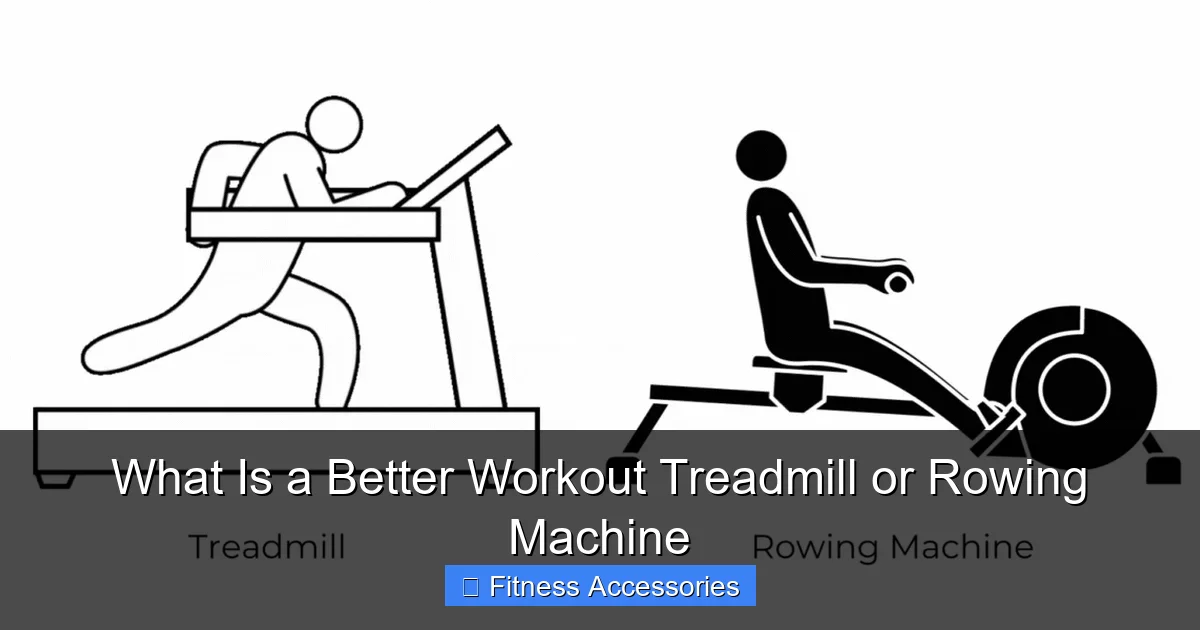
Running, even on a cushioned treadmill, creates a force of 2–3 times your body weight with each footstrike. Over time, this can aggravate knees, hips, or lower back, especially if you have prior injuries.
Visual guide about What Is a Better Workout Treadmill or Rowing Machine
Image source: homegymunlimited.com
Rowing’s Low‑Impact Nature
Rowing is a seated, fluid motion. The only impact comes from the foot‑strap and the occasional heel‑pop. For people with joint concerns, arthritis, or recovering from injury, rowing offers a cardio workout without pounding the joints.
Tip: Mix It Up
If you love high‑intensity cardio but worry about impact, try a “cardio hybrid” week: two treadmill sessions, two rowing sessions, and one low‑impact activity like cycling or swimming. This balances stress on joints while keeping calorie burn high.
3. Muscle Activation: Full‑Body vs. Lower‑Body Focus
What Treadmills Target
Running primarily works the quadriceps, hamstrings, glutes, calves, and hip flexors. Core muscles engage for stability, but the upper body remains largely passive.

Visual guide about What Is a Better Workout Treadmill or Rowing Machine
Image source: treadmillreviews.com
What Rowers Target
Rowing is a true full‑body exercise. The drive phase fires:
- Legs: Quads, hamstrings, glutes.
- Core: Rectus abdominis, obliques, lower back.
- Upper body: Lats, rhomboids, biceps, forearms, shoulders.
The recovery phase (the “return”) also trains muscular endurance and coordination.
Practical Tip
If you’re looking to build a balanced physique, incorporate rowing at least twice a week. Pair it with treadmill intervals for leg‑dominant power days, and you’ll hit every major muscle group.
4. Space, Cost, and Convenience
Footprint Comparison
- Treadmill: Typically 60–70 inches long, 30–40 inches wide. Requires a stable floor.
- Rowing Machine: Most fold vertically, occupying ~30 inches by 24 inches when stored.
Price Points
Entry‑level treadmills start around $400, while high‑end models can exceed $2,000. Rowers range from $300 for basic magnetic models to $1,500+ for premium water‑rowers.
Convenience Factors
- Noise: Motorized treadmills can be louder; rowing machines (especially water or magnetic) are relatively quiet.
- Setup: Treadmills often need assembly and a level surface. Rowers are usually plug‑and‑play.
- Maintenance: Treadmills need belt replacement; rowing machines need occasional chain lubrication or water‑tank cleaning.
Tip for Small Apartments
If floor space is at a premium, a fold‑able rowing machine is the smarter choice. Store it upright in a closet after each session and you’ll never feel cramped.
5. Learning Curve and Technique
Why Treadmills Feel Easy
Walking and running are natural motions for most people. You step, you go. Even beginners can hop on and start a basic workout without instruction.
Rowing’s Technique Nuances
Rowing requires a coordinated “catch‑drive‑finish‑recovery” sequence. Poor form leads to back strain or inefficient power output.
- Catch: Lean forward, shins vertical, arms extended.
- Drive: Push with legs, hinge hips, pull with arms.
- Finish: Legs straight, lean slightly back, pull handle to chest.
- Recovery: Extend arms, hinge hips forward, slide seat toward heels.
Most gyms offer a quick tutorial, and many online videos break the motion down in under five minutes.
Tips to Master Rowing Quickly
- Start with a “pause” drill: pause at the catch and finish to feel each phase.
- Keep the back flat; avoid rounding.
- Focus on leg power first—let the arms finish the pull.
- Use a moderate resistance until you’re comfortable.
6. Which Machine Wins for Specific Goals?
Weight Loss
Both machines can create a calorie deficit. If you love high‑intensity intervals, a treadmill sprint‑interval (30 sec on, 30 sec off) can be extremely effective. Rowing intervals (e.g., 500 m hard, 2 min easy) also torch calories while preserving muscle mass.
Joint Health & Rehabilitation
Rowing’s low‑impact nature makes it the go‑to choice for those with knee or hip issues. It still raises heart rate without the pounding.
Sport‑Specific Training
- Runners: Treadmill for stride work, hill simulation, and pacing.
- Cyclists & Rowers: Rowing machine to develop leg power and upper‑body endurance.
- Cross‑Fit Athletes: Both are used for WODs; versatility is key.
Home Gym Versatility
If you have a limited budget and need a single piece of equipment, a rowing machine gives you cardio, strength, and core work in one. If you prefer to specialize in running or need to train for a race, the treadmill is indispensable.
Conclusion: Your Personal Cardio Companion
There is no universal “better” machine. The treadmill shines for runners, high‑speed interval lovers, and those who crave a familiar motion. The rowing machine excels for full‑body conditioning, joint‑friendly cardio, and space‑conscious homes.
Ask yourself three simple questions:
- What are my primary fitness goals? (Weight loss, endurance, strength, joint health?)
- How much space and budget do I have?
- Am I willing to learn a new technique?
Answering honestly will point you to the machine that feels less like a chore and more like a habit. Whichever you choose, consistency beats perfection. So strap on those shoes or sit on that seat, set a realistic schedule, and enjoy the ride—whether it’s on a moving belt or across imagined water.
Frequently Asked Questions
Which burns more calories, a treadmill or a rowing machine?
Both can burn similar calories, but it depends on intensity. A fast treadmill run often exceeds a moderate rowing session, while vigorous rowing can out‑burn a steady jog.
Is rowing easier on the knees than running?
Yes. Rowing is low‑impact, so it puts far less stress on knees, hips, and ankles compared to the repetitive footstrike of running.
Do I need a lot of space for a rowing machine?
Most rowers fold vertically and fit into a 30‑inch by 24‑inch footprint when stored, making them ideal for small apartments.
Can I use a treadmill for strength training?
While treadmills primarily provide cardio, you can add incline walking, sprint intervals, or even bodyweight moves like lunges to incorporate strength elements.
How long does it take to learn proper rowing technique?
With a short tutorial and a few practice sessions, most beginners feel comfortable after 2–3 workouts. Consistent focus on the catch‑drive‑finish‑recovery sequence speeds up mastery.
Which machine is better for a beginner?
Beginners often find treadmills more intuitive because walking and running are natural motions. However, with a quick video guide, rowing can also become comfortable fast.