What Causes Hip Pain from Heavy Barbell Squats Hamstrings

Heavy barbell squats can strain the hip and hamstring region, leading to sharp or dull pain that hampers performance. Understanding the anatomy, common faults, and corrective strategies helps you lift heavier without the ache.
Key Takeaways
- Root cause often lies in hip mobility: limited flexion or external rotation forces the hamstrings to over‑compensate.
- Improper bar placement shifts load: a high‑bar squat can overload the hamstrings if the torso leans too far forward.
- Weak glutes and core are culprits: they fail to stabilize, pulling stress onto the hip‑hamstring complex.
- Training volume matters: excessive sets or frequency without adequate recovery spikes injury risk.
- Corrective drills work: mobility work, glute activation, and technique tweaks can eliminate pain.
- Equipment choice counts: proper shoes, belt, and rack height support safe hip mechanics.
- Listen to your body: early warning signs deserve immediate attention to prevent chronic issues.
📑 Table of Contents
- Introduction: Why Hip Pain Shows Up During Heavy Squats
- 1. Anatomy 101: How the Hip and Hamstrings Work Together
- 2. Common Causes of Hip Pain From Heavy Barbell Squats
- 3. How to Diagnose the Source of Your Hip Pain
- 4. Corrective Strategies to Eliminate Hip Pain
- 5. Equipment and Gear That Can Help
- Conclusion: Squat Strong, Squat Pain‑Free
Introduction: Why Hip Pain Shows Up During Heavy Squats
If you’ve ever loaded the barbell, dropped into a deep squat, and felt a sudden twinge in your hip or the back of your thigh, you’re not alone. Many lifters experience hip pain that seems to radiate into the hamstrings, especially when the weight gets heavy. The problem isn’t always a “bad hamstring” – it’s often a combination of mobility limits, technique flaws, and muscular imbalances that force the hip joint to work harder than it should.
In this article we’ll break down the anatomy of the hip‑hamstring connection, pinpoint the most common mistakes that cause pain, and give you a toolbox of fixes you can start using today. By the end, you’ll know exactly how to squat heavier without the nagging ache that holds you back.
1. Anatomy 101: How the Hip and Hamstrings Work Together
Hip joint basics
The hip is a ball‑and‑socket joint that allows three primary movements: flexion, extension, and rotation. The socket (acetabulum) is deep, giving the joint excellent stability, but that stability also means you need good mobility to move through a full squat depth.

Visual guide about What Causes Hip Pain from Heavy Barbell Squats Hamstrings
Image source: inspireusafoundation.org
Hamstring role in squatting
The hamstrings cross both the hip and knee. When you sit back into a squat, they act as hip extensors, helping you rise from the bottom. If the hip can’t extend properly, the hamstrings are forced to stretch more, creating tension and, eventually, pain.
Key players
- Gluteus maximus: primary hip extensor; weak glutes shift load to hamstrings.
- Hip flexors (psoas‑iliacus): tightness limits hip flexion, forcing the torso forward.
- Adductors: help stabilize the thigh; tight adductors can pull the femur inward, straining the hamstrings.
- Core muscles: keep the spine neutral; a weak core leads to excessive lumbar flexion, aggravating the hip.
2. Common Causes of Hip Pain From Heavy Barbell Squats
2.1 Limited Hip Flexion Mobility
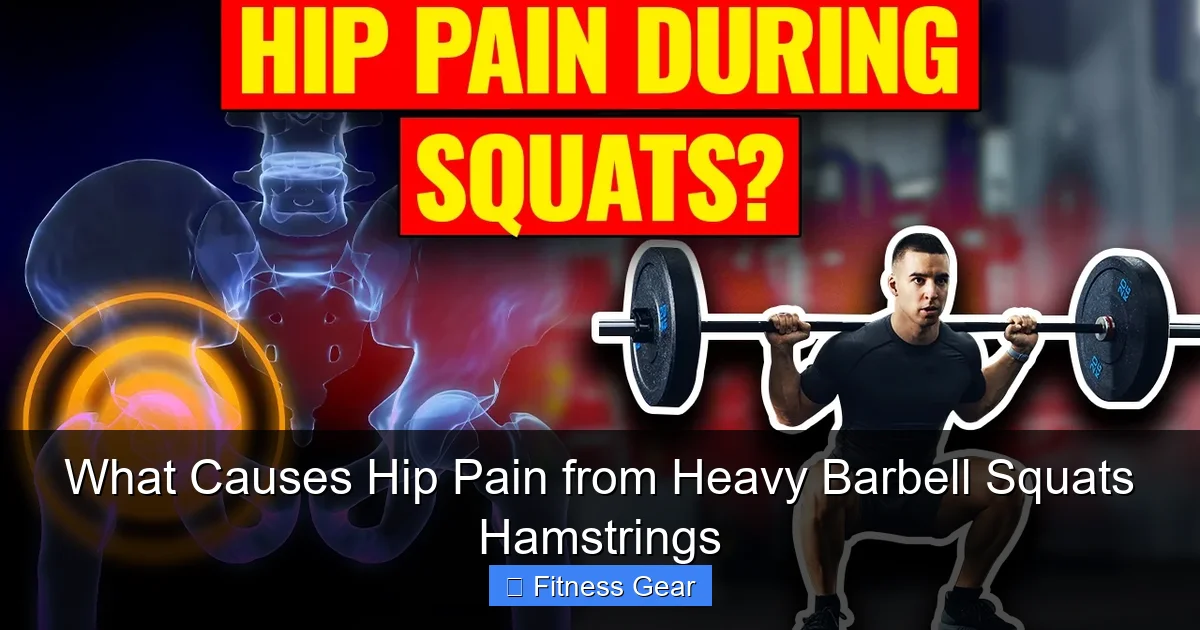
When the hip can’t flex enough, you compensate by pushing the torso forward. That forward lean increases the stretch on the hamstrings, especially at the bottom of the squat. Over time the connective tissue gets irritated, leading to pain.
Visual guide about What Causes Hip Pain from Heavy Barbell Squats Hamstrings
Image source: kustomkitgymequipment.com
2.2 Poor Bar Placement & Torso Angle
A high‑bar squat (bar resting on the traps) demands a more upright torso. If you lack the core stability to keep that upright position, the hips tilt forward, again over‑loading the hamstrings.
2.3 Weak Glute Activation
Glutes are the powerhouse for hip extension. If they fire late or weakly, the hamstrings try to pick up the slack. This “hamstring over‑use” is a classic recipe for pain.
2.4 Over‑training and Insufficient Recovery
Heavy squats three times a week without proper rest can cause micro‑tears in the hamstring tendons. The body needs time to repair; otherwise, inflammation builds and pain spikes.
2.5 Inadequate Warm‑up
Jumping straight into 3‑plate squats without mobilizing the hips and activating the glutes leaves the hamstrings to absorb the shock. A proper warm‑up primes the muscles and reduces strain.
3. How to Diagnose the Source of Your Hip Pain
3.1 Self‑Assessment Checklist
- Do you feel the pain during the descent, at the bottom, or on the ascent?
- Is the discomfort sharp (possible tendon strain) or dull/aching (muscle overload)?
- Does the pain improve when you squat with a lighter load or change bar position?
- Can you reproduce the pain with a single‑leg Romanian deadlift?
3.2 Simple Mobility Test
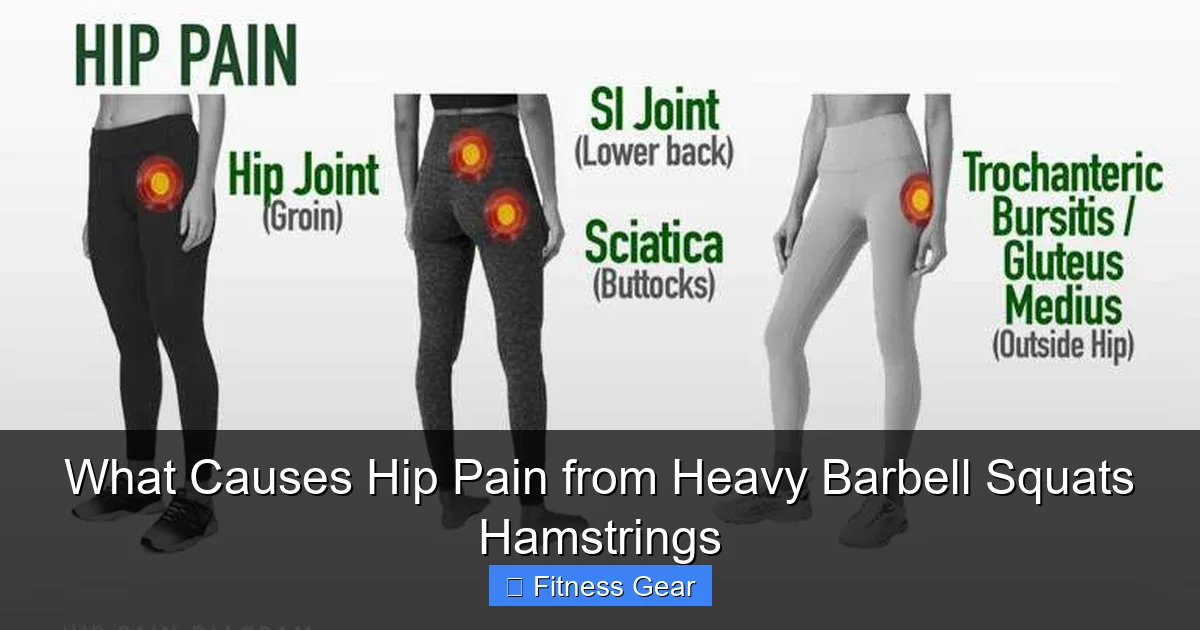
Perform a “90/90” hip rotation test. Sit on the floor, knees bent, feet flat. Try to bring one knee forward (hip flexion) and the other out to the side (external rotation). Limited range indicates a mobility issue that likely contributes to squat pain.
Visual guide about What Causes Hip Pain from Heavy Barbell Squats Hamstrings
Image source: emedmultispecialtygroup.com
3.3 Professional Evaluation
If the pain persists after a week of self‑care, see a physical therapist or sports chiropractor. They can assess joint alignment, muscle length, and nerve involvement to rule out serious injuries.
4. Corrective Strategies to Eliminate Hip Pain
4.1 Mobility Drills
- Hip Flexor Stretch: Kneeling lunge, push hips forward for 30 seconds each side.
- 90/90 Hip Rotations: 2 sets of 10 reps per side, focusing on smooth movement.
- World’s Greatest Stretch: Combines hip flexor, adductor, and thoracic rotation.
4.2 Glute Activation Routine
Do these before every heavy squat session:
- Band‑ed clamshells – 3 sets of 15 reps each side.
- Glute bridges with a pause – 3 sets of 12 reps.
- Single‑leg hip thrusts – 2 sets of 8 reps per leg.
4.3 Technique Tweaks
- Bar Placement: Experiment with a low‑bar position (just below the spine of the scapula). This shifts the center of gravity slightly backward, reducing forward torso lean.
- Stance Width: A slightly wider stance can relieve pressure on the hip joint and allow a more natural hip‑extension path.
- Depth Control: Aim for a depth where the hip crease is just below the knee. Going deeper than your mobility allows forces the hamstrings to stretch excessively.
4.4 Programming Adjustments
Balance heavy squat days with lighter, technique‑focused sessions. Example weekly layout:
- Monday – Heavy back squat (5 sets × 5 reps, 85 % 1RM).
- Wednesday – Speed squats (8 sets × 2 reps, 55 % 1RM, focus on explosive drive).
- Friday – Light technique day (3 sets × 8 reps, 60 % 1RM, include mobility work).
4.5 Recovery Essentials
- Foam roll the hamstrings and glutes post‑workout (2 minutes each).
- Cold‑contrast showers to reduce inflammation.
- Adequate protein (1.6‑2.2 g/kg body weight) and sleep (7‑9 hours) to support tissue repair.
5. Equipment and Gear That Can Help
5.1 Proper Footwear
Choose a flat, stable shoe (e.g., weightlifting shoes or minimalist sneakers). A raised heel can improve ankle dorsiflexion but may increase hip flexor strain if you’re already tight.
5.2 Lifting Belt
A belt provides intra‑abdominal pressure, supporting the spine and allowing you to keep a more upright torso, which reduces hip forward lean.
5.3 Resistance Bands
Use loops around the knees during warm‑up squats to cue external rotation and activate the glutes.
5.4 Adjustable Squat Rack
Set the bar height so you can step under it comfortably. A too‑low bar forces you to lift the hips higher, changing the hip angle and potentially aggravating the hamstrings.
Conclusion: Squat Strong, Squat Pain‑Free
Hip pain that radiates into the hamstrings during heavy barbell squats is rarely a mysterious injury. More often, it’s a sign that something in your mobility, technique, or muscle balance needs attention. By understanding how the hip and hamstrings interact, testing for common faults, and applying targeted mobility, activation, and programming tweaks, you can eliminate the ache and keep adding weight to the bar.
Remember, the goal isn’t just to lift heavier—it’s to lift smarter. Keep your hips happy, your glutes firing, and your core tight, and the hamstrings will thank you with stronger, cleaner squats.
Frequently Asked Questions
Why does my hip hurt only when I squat heavy, but not with lighter weights?
Heavy loads increase the demand on hip extension. If your glutes or hip mobility are weak, the hamstrings must compensate, causing pain that isn’t noticeable at lighter weights.
Can tight hamstrings cause hip pain during squats?
Yes. Tight hamstrings limit hip flexion, forcing the pelvis to tilt forward. This changes the squat mechanics and can create strain at the hip joint.
Is a low‑bar squat better for preventing hip pain?
For many lifters, a low‑bar position shifts the center of gravity slightly backward, reducing forward torso lean and decreasing stress on the hamstrings. Try it and see which feels more natural.
How many days of rest do I need after a painful squat session?
Typically 48‑72 hours of light activity or active recovery is enough. If pain persists beyond three days, consider a full rest day and consult a professional.
Should I stop squatting altogether if I feel hip pain?
Not necessarily. Reduce the load, focus on mobility and activation work, and perform the squat with perfect form. If pain continues, stop and get a clinical evaluation.
Can I use a foam roller to fix hip pain from squats?
Foam rolling the glutes, piriformis, and hamstrings can release tension and improve blood flow, but it should complement, not replace, targeted stretching and strengthening.