The Ultimate Guide to Cooking a Perfect Tomahawk Steak
Discover everything you need to know about cooking a tomahawk steak like a pro. This guide covers selecting the perfect cut, essential tools, a detailed step-by-step cooking method, and common mistakes to avoid. Whether you are a beginner or a seasoned griller, you will find practical tips to achieve a restaurant-quality result every time.
Few things in the kitchen excite people the way a tomahawk steak does. That massive bone-in ribeye with the long, frenched handle looks like something out of a high-end steakhouse, and it truly is a showstopper. Whether you are planning a special dinner for two or hosting a backyard gathering, this cut turns any meal into an event.
Cooking a tomahawk steak at home might seem intimidating, but it is surprisingly straightforward once you understand the basics. This guide walks you through everything from selecting the right cut at the butcher counter to pulling it off the heat at the perfect moment. By the end, you will feel confident enough to tackle this impressive cut on your own.
The beauty of a bone-in ribeye lies in its simplicity. You need quality beef, a little patience, and basic kitchen tools. No fancy equipment required. Let us dive into what makes this cut so special and how you can cook it to absolute perfection.
Key Takeaways
- Choose well-marbled bone-in ribeye: Look for thick cuts with a long frenched bone for the best tomahawk steak experience.
- Dry-aging enhances flavor: Aged beef develops deeper, richer taste and a more tender texture.
- Use the reverse sear method: This technique gives you a perfect crust and even doneness from edge to edge.
- Rest your steak properly: Letting the meat rest after cooking keeps all those juicy flavors locked in.
- Invest in a good meat thermometer: Internal temperature is the single most important factor for cooking steak to perfection.
- Season simply but effectively: Quality salt, fresh pepper, and garlic go a long way with a premium cut.
- Pair with the right sides: Rich sides like roasted garlic butter and bold red wines complement the tomahawk chop beautifully.
📑 Table of Contents
What Is a Tomahawk Steak?
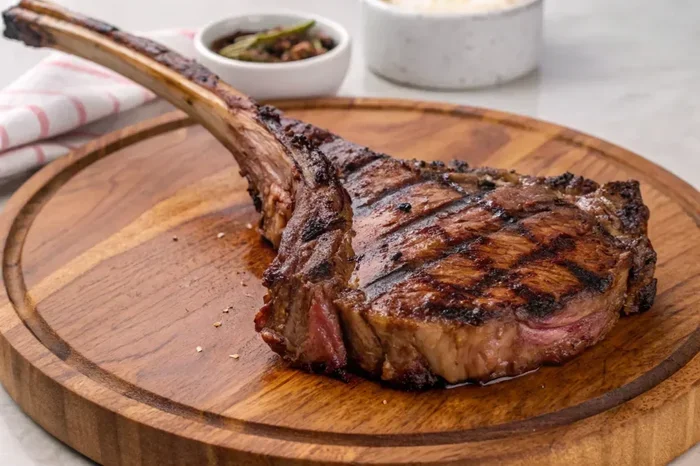
A tomahawk steak is essentially a bone-in ribeye with the rib bone left long and trimmed to look like a handle. Butchers call it a bone-in ribeye or a tomahawk chop, and it has become one of the most popular cuts for special occasions. The long bone, which is typically 5 to 8 inches long, gives the steak its signature tomahawk axe appearance.
What sets this cut apart from a regular ribeye is the bone and the sheer size. Most tomahawk steaks weigh between 30 and 45 ounces, making them perfect for sharing. The bone also adds flavor during cooking, as the marrow inside slowly renders and infuses the meat with richness.
Why the Bone Matters
The bone does more than just look impressive. It acts as a natural insulator during cooking, which means the meat near the bone cooks at a slightly different rate than the rest of the steak. This creates a beautiful contrast of textures and temperatures. Some steak lovers swear that the bone adds a subtle, deeper flavor that you cannot get from a boneless cut.
When shopping for a tomahawk steak, look for cuts with a thick beef fat cap and generous marbling throughout the meat. Marbling refers to the thin streaks of intramuscular fat that run through the muscle. More marbling means more flavor and a more tender eating experience. This is why many people choose tomahawk steak cuts that are dry-aged or wet-aged for at least a few weeks before purchase.
How to Choose the Perfect Tomahawk Steak
Picking the right tomahawk steak at the store or butcher shop makes a huge difference in your final result. Not all cuts are created equal, and knowing what to look for will save you from a disappointing meal.
Look for Quality Marbling
Marbling is the white flecks of fat distributed throughout the red meat. A well-marbled tomahawk steak will have fat evenly spread across the muscle. This fat melts during cooking, basting the meat from the inside out. The result is a juicy, flavorful steak that practically melts in your mouth.
Avoid cuts that look too lean. While a lean steak can still taste good, it lacks the rich, buttery quality that makes a tomahawk chop truly special. If you see thick lines of fat running through the meat, that is a great sign.
Check the Thickness
A proper tomahawk steak should be at least 2 inches thick, ideally closer to 3 inches. Thicker cuts give you more room for error when cooking and allow for a better crust to form on the outside without overcooking the inside. Thin cuts of this expensive cut just do not work the same way.
Ask About the Aging Process
When you buy a tomahawk steak, ask your butcher whether it has been dry-aged or wet-aged. Dry-aged beef loses moisture over time, concentrating the flavor and tenderizing the meat naturally. Wet-aged beef is sealed in vacuum packaging and ages in its own juices. Both methods work well, but dry-aged tomahawk steak has a more intense, nutty flavor profile that many steak enthusiasts prefer.
Essential Tools and Ingredients
You do not need a lot of fancy equipment to cook a great tomahawk steak. In fact, the simpler your setup, the better the focus stays on the meat itself. Here is what you will need.
Tools You Need
- Cast iron skillet or heavy oven-safe pan: This is the best tool for getting a deep, even crust on your thick-cut steak. Cast iron holds heat incredibly well, which is essential for a reverse sear.
- Meat thermometer: This is non-negotiable. A digital instant-read thermometer takes the guesswork out of cooking and ensures your tomahawk steak hits the exact internal temperature you want.
- Tongs: You will use tongs to flip and move the steak without piercing the meat, which keeps the juices locked inside.
- Wire rack: Placing the steak on a wire rack over a baking sheet allows air to circulate around the meat during the low-heat phase of reverse searing.
- Sharp steak knife: A good blade makes slicing the finished steak clean and effortless.
Ingredients for the Perfect Seasoning
Keep your seasoning simple and let the quality of the beef shine. You will need:
- Kosher salt: Coarse salt draws moisture out of the surface, which then gets reabsorbed and seasons the meat deeply.
- Freshly cracked black pepper: Adds a gentle heat and aromatic flavor that complements the richness of the beef.
- Garlic cloves (optional): A few smashed cloves tossed in the pan during searing add a wonderful aroma.
- Fresh thyme or rosemary: A couple of sprigs in the pan during the final sear add a subtle herbal note.
- Butter (optional): A knob of unsalted butter basted over the steak during the last moments of cooking adds incredible richness.
Step-by-Step Cooking Guide
Now for the fun part. Cooking a tomahawk steak is a process, not a rush job. Give yourself at least an hour, and enjoy every step of it.
Step 1: Prep the Steak
Take your tomahawk steak out of the refrigerator at least 45 minutes before cooking. Letting it come closer to room temperature ensures more even cooking throughout the thick cut. Pat the meat dry with paper towels. Moisture on the surface is the enemy of a good crust, so remove as much as possible.
Generously season all sides with kosher salt and freshly cracked black pepper. If you have time, you can salt the steak a few hours ahead and let it rest uncovered in the fridge. This technique, often called dry brining, draws out moisture, which then gets reabsorbed and seasons the meat while also helping create an incredible crust.
Step 2: Low and Slow (The Reverse Sear)
Preheat your oven to 250°F. Place the seasoned tomahawk steak on a wire rack set over a baking sheet. Insert a meat thermometer into the thickest part of the steak, away from the bone.
Put the steak in the oven and cook until the internal temperature reaches about 110°F to 115°F for medium-rare. This low-temperature phase gently brings the steak up to temperature from edge to edge, avoiding the gray band that often forms when you go straight to high heat. For a thicker tomahawk steak, this step can take 30 to 45 minutes.
Step 3: Sear for the Perfect Crust
While the steak is in the oven, place a cast iron skillet on the stove over high heat. Let it get ripping hot. You will know it is ready when you can feel the heat radiating a few inches above the surface. Add a high-smoke-point oil, like avocado oil or grapeseed oil, to the pan.
Carefully remove the steak from the oven and place it in the hot skillet. You should hear a loud, satisfying sizzle. Sear each side for about 1 to 2 minutes until a deep, golden-brown crust forms. If you want extra flavor, add smashed garlic cloves, fresh thyme, and a knob of butter to the pan during the last 30 seconds. Tilt the pan slightly and spoon the melted butter over the steak repeatedly.
Step 4: Rest the Steak
This is the step most people skip, and it makes all the difference. Transfer the cooked tomahawk steak to a cutting board and let it rest for at least 10 minutes. During resting, the juices inside the meat redistribute evenly. If you cut into it right away, those juices will run all over the board instead of staying in the steak.
After resting, the internal temperature will rise by about 5 degrees. So if you pulled the steak at 115°F before resting, it will settle around 120°F, which is a perfect medium-rare.
Step 5: Slice and Serve
When you are ready to serve, use a sharp steak knife to cut against the grain. Slice thick pieces, about half an inch each, being careful to avoid the bone. Serve immediately while the steak is still warm and juicy.
Common Mistakes to Avoid
Even experienced home cooks make mistakes when cooking a tomahawk steak. Here are the most common ones and how to avoid them.
- Skipping the reverse sear: Going straight to a screaming hot pan with a 3-inch-thick steak almost guarantees a burnt outside and a raw inside. The reverse sear method solves this problem completely.
- Not using a meat thermometer: Guessing doneness by time alone is unreliable. Every steak, oven, and pan is different. A thermometer takes the guesswork out entirely.
- Cooking from cold: A fridge-cold steak will cook unevenly. Always let it temper on the counter for at least 30 to 45 minutes before cooking.
- Over-seasoning or using the wrong salt: Table salt is too fine and can make the steak taste overly salty. Stick with kosher salt for even distribution and controlled flavor.
- Cutting too soon after cooking: Cutting into the steak immediately after pulling it off the heat releases all those precious juices. Patience pays off here.
- Using a non-stick pan for searing: Non-stick pans cannot handle the high heat needed for a proper crust. Cast iron or stainless steel are your best friends for searing.
Serving and Pairing Your Tomahawk Steak
A perfectly cooked tomahawk steak deserves equally thoughtful sides and pairings. Since this cut is rich and bold, you want accompaniments that complement without competing.
Best Side Dishes
- Roasted garlic butter mashed potatoes: Creamy, buttery, and rich. The garlic adds a subtle sweetness that pairs beautifully with the beef fat cap and marbling of the steak.
- Grilled asparagus or broccolini: A simple charred green vegetable adds freshness and balances the richness of the red meat.
- Crispy roasted potatoes: Tossed in olive oil, salt, and rosemary, roasted until golden. A classic pairing that never disappoints.
- Simple mixed green salad: A light, acidic salad cuts through the richness of the thick-cut steak and cleanses the palate between bites.
Wine Pairings
A bold red wine is the natural companion for a tomahawk steak. Look for a Cabernet Sauvignon, Malbec, or a rich Syrah. The tannins in red wine pair exceptionally well with the protein and fat in beef, creating a harmonious dining experience. If you prefer white, a full-bodied Chardonnay can also work, though red is the classic choice.
Expert Tips for the Best Results
Here are a few extra tips from experienced cooks and steak enthusiasts that will elevate your tomahawk steak game.
Let the bone do the work. During the reverse sear, the bone insulates the meat closest to it, creating a slightly different texture and flavor. Many people love the meat right next to the bone because it is incredibly tender and rich from the marrow.
Do not be afraid of the fat cap. The beef fat cap on a tomahawk steak renders during cooking, adding moisture and flavor. Render it by placing the steak fat-side down in the hot pan during the final sear. This creates a crispy, savory layer that is absolutely delicious.
Experiment with wood-fired cooking. If you have access to a grill or a fire pit, cooking a tomahawk steak over indirect heat with hardwood like oak or hickory adds a beautiful smoky flavor that takes this cut to the next level. This method is a favorite among BBQ enthusiasts who love the combination of thick-cut beef and wood smoke.
Save the bone for stock. After you have enjoyed your steak, do not throw away the bone. Simmer it with vegetables and herbs to create a rich, flavorful bone broth. It is a great way to get every last bit of value from your premium cut.
Conclusion
Cooking a perfect tomahawk steak at home is one of the most rewarding things you can do in the kitchen. It combines the simplicity of good ingredients with the satisfaction of mastering a technique that feels truly impressive. From selecting a well-marbled, bone-in ribeye to mastering the reverse sear and resting the meat properly, every step matters.
Remember that practice makes perfect. Your first tomahawk steak might not be flawless, and that is completely okay. Each time you cook it, you will learn something new about heat control, timing, and your own preferences. The beauty of this cut is that it rewards patience and attention to detail.
So grab a quality tomahawk steak, fire up your cast iron skillet, and enjoy the process. This is not just a meal, it is an experience. A thick, juicy, perfectly cooked bone-in ribeye with a long bone handle is the kind of dish that brings people together and creates memories worth repeating.
Frequently Asked Questions
What is the difference between a tomahawk steak and a regular ribeye?
A tomahawk steak is a bone-in ribeye with the rib bone left long and trimmed to resemble a handle, usually 5 to 8 inches. A regular ribeye is either boneless or has a short, meat-trimmed bone. The tomahawk cut is larger, typically weighing 30 to 45 ounces, and is often chosen for its dramatic presentation and the added flavor the bone provides during cooking.
How thick should a tomahawk steak be for the best results?
Look for a tomahawk steak that is at least 2 inches thick, with 3 inches being ideal. Thicker cuts allow for more even cooking and a better crust without overcooking the interior. A thick tomahawk steak also gives you more room for error when using the reverse sear method.
Can I cook a tomahawk steak on a grill instead of in a skillet?
Absolutely. Grilling a tomahawk steak is a fantastic option, especially if you use indirect heat for the low-and-slow phase and direct heat for the final sear. Many people prefer the smoky flavor that a charcoal grill adds to a thick-cut bone-in ribeye. Just make sure your grill grates are clean and well-oiled to prevent sticking.
What is the best internal temperature for a tomahawk steak?
For medium-rare, pull your tomahawk steak off the heat when the internal temperature reaches 110°F to 115°F. After resting for 10 minutes, the temperature will rise to about 120°F to 125°F, which is the sweet spot for a juicy, tender steak. Use a reliable instant-read meat thermometer for the most accurate results every time.
Should I dry-age my tomahawk steak at home?
Dry-aging at home is possible but requires a dedicated space with controlled temperature and humidity, usually a wine fridge or a dedicated aging setup. For most home cooks, buying a professionally dry-aged tomahawk steak from a reputable butcher or specialty meat supplier is the easiest and safest way to enjoy the concentrated, nutty flavor that dry-aging produces.
How long should I rest a tomahawk steak after cooking?
Rest your cooked tomahawk steak for at least 10 minutes on a cutting board before slicing. This resting period allows the juices inside the meat to redistribute evenly, resulting in a more tender and flavorful bite. If you cut too soon, the juices will escape onto the board instead of staying in the steak where they belong.