Is a Stationary Bike Better Than a Real Bike

The “better” choice between a stationary bike and a real bike isn’t universal—it depends entirely on your personal goals, lifestyle, and preferences. Stationary bikes offer unmatched convenience, controlled environments, and joint-friendly workouts, perfect for consistent cardio regardless of weather or time. Real bikes provide adventure, functional strength, commuting utility, and mental refreshment through outdoor engagement. Your ideal pick hinges on whether you prioritize structured, accessible exercise or dynamic, multi-purpose outdoor activity.
Key Takeaways
- Convenience & Consistency: A stationary bike wins for effortless, weather-proof, 24/7 workouts that fit into any schedule, eliminating travel time and external barriers.
- Health & Fitness Parity: Both offer excellent cardiovascular conditioning; real bikes engage more stabilizer muscles and balance, while stationary bikes are superior for controlled, low-impact rehab or high-intensity intervals.
- Real-World Utility vs. Pure Focus: A real bike is a tool for transportation and exploration, while a stationary bike is a dedicated fitness machine that minimizes distractions.
- Mental & Environmental Impact: Outdoor cycling boosts mood with sunlight, nature, and variable scenery; stationary cycling can be mentally taxing but is often paired with entertainment to combat monotony.
- Cost & Space Analysis: Stationary bikes have a higher upfront cost but no ongoing expenses; real bikes require lower initial investment but incur maintenance, gear, and potential travel costs. Space needs differ significantly.
- Safety & Risk Profile: Stationary biking carries virtually no traffic or accident risk; real biking involves exposure to vehicles, road hazards, and requires heightened situational awareness and safety gear.
- The Hybrid Truth: Many cyclists use both, leveraging a stationary bike for base training, winter months, or rehab, and a real bike for skill-building, fun, and commuting—they are complementary, not mutually exclusive.
📑 Table of Contents
- Introduction: The Great Cycling Debate
- Health & Fitness Benefits: A Close Race with Different Strengths
- Practical Considerations: Convenience, Weather, and Time
- Mental & Environmental Factors: Mind, Mood, and Scenery
- Cost Analysis: Upfront Investment vs. Long-Term Value
- Safety & Risk: Controlled Environment vs. Shared Space
- Making the Choice: It’s Not Either/Or, It’s And/Or
- Conclusion: Your Bike, Your Rules
Introduction: The Great Cycling Debate
So, you’re thinking about cycling for fitness. Maybe you want to lose weight, build endurance, or just move your body in a joyful way. You’ve got two primary paths in front of you: the steadfast, always-there stationary bike in your living room or the thrilling, wind-in-your-hair experience of a real bike on an open road or trail. The question “Is a stationary bike better than a real bike?” is one of the most common in fitness circles, and the honest answer is… it depends. There is no single “best” option for everyone. Instead, the superior choice is the one that aligns perfectly with your life, your goals, and your personal definition of a good time.
This isn’t about declaring a winner. This is about equipping you with a complete, unbiased comparison so you can make an informed decision. We’ll dive deep into the nitty-gritty of health benefits, practical logistics, mental well-being, financial outlay, and safety. By the end, you’ll know exactly which wheel—or both—is right for your journey. Let’s pedal into the details.
Health & Fitness Benefits: A Close Race with Different Strengths
At the core of this debate is the fundamental promise of cycling: it’s a phenomenal, low-impact form of cardiovascular exercise. Both modalities will get your heart pumping, burn calories, and strengthen your legs. But the nuance lies in the specifics of how they condition your body.
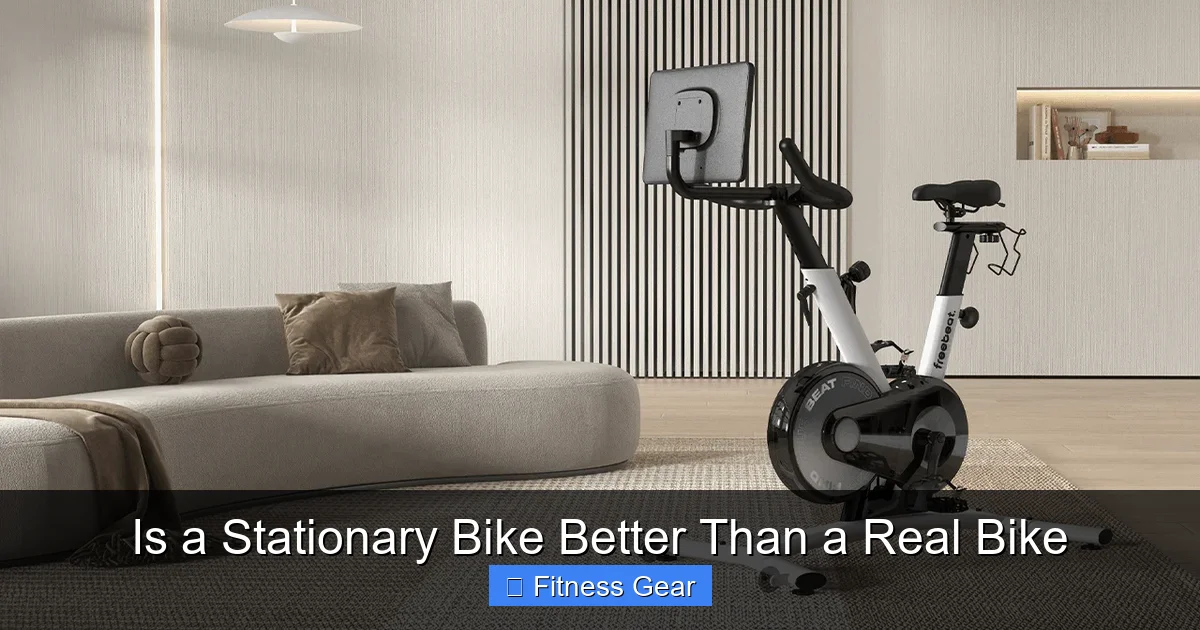
Visual guide about Is a Stationary Bike Better Than a Real Bike
Image source: freebeatfit.com
Cardiovascular Conditioning & Calorie Burn
From a pure cardio perspective, both are exceptional. Studies consistently show that moderate to vigorous cycling improves heart health, lowers blood pressure, and increases lung capacity. The calorie burn is highly comparable when you match the perceived exertion or heart rate zone. A 155-pound person can burn approximately 260-315 calories in 30 minutes of moderate cycling on either a stationary or real bike. The key variable is intensity. A stationary bike allows for incredibly precise, sustained high-intensity interval training (HIIT) with no interruptions. You can sprint all-out for 30 seconds, recover, and repeat with perfect consistency, something much harder to guarantee on a winding outdoor road with stop signs and traffic.
Muscle Engagement & Functional Strength
Here’s where the paths diverge. Riding a real bike is a functional activity. You’re not just pushing pedals; you’re stabilizing your core to balance, engaging your glutes, hamstrings, and calves to power up hills, and using your upper body (arms, shoulders, back) to steer, brake, and absorb shocks. You develop proprioception—your body’s awareness of its position in space—and practical, real-world strength. A stationary bike, especially a recumbent model, provides a more isolated leg workout. You can focus purely on the pedal stroke without worrying about balance. This makes it fantastic for beginners, those rehabbing injuries, or anyone wanting to target leg muscles with minimal risk. However, it under-develops the stabilizer muscles and core engagement required for outdoor cycling.
Joint Impact & Rehabilitation
Both are low-impact, which is a huge win over running. But the stationary bike, particularly the recumbent style, is often the gold standard for joint-friendly rehab. The supported back position and predictable motion eliminate the jarring impacts of bumps and potholes. For someone with knee osteoarthritis, hip issues, or recovering from surgery, a physical therapist will almost always prescribe a stationary bike first. The controlled range of motion allows for gradual strengthening without aggravating sensitive tissues. A real bike’s uneven terrain and need for constant micro-adjustments can introduce unpredictable stresses.
Practical Considerations: Convenience, Weather, and Time
This is where the stationary bike often claims a decisive victory for sheer practicality. Life is busy, and weather is fickle. The real world throws curveballs.

Visual guide about Is a Stationary Bike Better Than a Real Bike
Image source: cdn.shopify.com
The Unbeatable Convenience Factor
Picture this: It’s 6 AM. It’s dark, cold, and drizzling. Your motivation is zero. Your real bike is in the garage, a damp, chilly obstacle course away. Your stationary bike? It’s right there in the bedroom or basement. No changing into cold-weather gear. No fumbling with lights and helmets. No pre-ride nutrition logistics. Just five minutes from bed to saddle. This frictionless access is the single biggest reason people stick with stationary biking. It removes all excuses. Rain, snow, scorching heat, air pollution alerts—none of it matters. You can watch the news, a podcast, or a Netflix show while you pedal. For parents of young children, the ability to squeeze in a 20-minute session while a child naps is priceless.
Time Efficiency & Multi-Tasking
With a stationary bike, your workout time is only workout time. There’s no travel to a bike path, no locking up, no showering at the gym (if you’re at home). A 30-minute session is exactly 30 minutes of pedaling. Outdoor riding often involves 15-30 minutes of additional time for preparation and transit. Furthermore, you can multi-task safely indoors: read a book, take a call (on speaker), or even work on a laptop with a desk bike attachment. On the road, your full attention must be on traffic, navigation, and safety.
The Real Bike’s Practical Perk: Commuting & Errands
Here’s where the real bike flips the script. If you live within 5-10 miles of work, the grocery store, or a friend’s house, a real bike becomes a mode of transportation. That 30-minute commute is also your workout. You save money on gas or transit fares, reduce your carbon footprint, and solve two problems with one solution. This utility is something a stationary bike can never replicate. It integrates fitness into the fabric of your daily life, making it sustainable in a very different way.
Mental & Environmental Factors: Mind, Mood, and Scenery
Exercise is not just physical; it’s profoundly mental. The environment you exercise in drastically shapes your experience and long-term adherence.

Visual guide about Is a Stationary Bike Better Than a Real Bike
Image source: exercisebike.net
The Outdoor Advantage: Vitamin D, Nature, and Flow
There is a magic to outdoor cycling that science is beginning to quantify. Exposure to sunlight boosts Vitamin D and serotonin, directly combating seasonal affective disorder and improving mood. The concept of “forest bathing” or Shinrin-yoku suggests that spending time in nature lowers cortisol (the stress hormone), reduces blood pressure, and improves focus. The constantly changing scenery—a park, a river, a city street—stimulates the brain in ways a blank wall or TV screen cannot. This variability prevents boredom and can induce a state of “flow,” where you’re fully immersed and time flies by. The sense of adventure, discovery, and accomplishment from completing a new route is a powerful psychological reward.
The Indoor Challenge: Boredom, Entertainment, and Control
Let’s be honest: staring at a wall or a dashboard while pedaling can be mind-numbing. This is the stationary bike’s biggest weakness. However, modern technology has provided powerful antidotes. With a tablet or smartphone, you can ride virtual routes on apps like Zwift, Rouvy, or Kinomap, which sync your effort to on-screen terrain and let you ride with (or against) people worldwide. You can queue up an entire season of a TV show. The environment is also perfectly controlled. No sudden dogs, no cars running red lights, no headwinds that make you feel weak. You can dial in the exact resistance and cadence you need for a precise training session. This control is a major plus for disciplined, goal-oriented training.
Cost Analysis: Upfront Investment vs. Long-Term Value
Money talks. Let’s break down the financial realities of both choices, because the sticker price is only part of the story.
The Stationary Bike: High Initial Cost, Near-Zero Recurring Fees
A quality upright or recumbent stationary bike from a reputable brand (like Schwinn, Sole, or NordicTrack) will typically cost between $500 and $2,000+. A high-end smart bike with integrated resistance and connectivity (like a Peloton Bike+ or Wahoo Kickr Bike) can exceed $2,500. This is a significant upfront investment. However, once it’s in your home, the ongoing costs are minimal. No membership is strictly required (though some offer premium content subscriptions). No tires to replace, no chains to lube, no flats to fix. Your only “cost” is electricity and the space it occupies. If you use it consistently for years, the cost-per-workout plummets.
The Real Bike: Lower Entry, Ongoing Expenses
You can get a perfectly serviceable new hybrid or fitness bike for $400-$800. A used bike can be even cheaper. The barrier to entry is lower. But ownership comes with a parade of recurring costs: regular tune-ups ($50-$100+), tires, tubes, chains, cassette wear, brake pads, and specialized clothing (shorts, jerseys, jackets, shoes). If you want to ride in the rain or at night, you need lights and fenders. A good helmet is non-negotiable ($50-$200). Then there are the potential costs of cycling-specific travel (bike racks, ferry fees, event registrations). Over 5 years, these “small” costs can easily surpass the initial outlay of a stationary bike.
Safety & Risk: Controlled Environment vs. Shared Space
This is a non-negotiable factor for many, especially those with families or in areas with poor cycling infrastructure.
Stationary Bike: The Sanctuary of Safety
On a stationary bike, your only risks are the typical ones of exercise: overexertion, poor form leading to strain, or a very rare mechanical failure. There are zero cars, zero unpredictable pedestrians, zero road debris, and zero risk of a fall at speed. You can push your limits with a heart-pounding, leg-burning interval without a shred of anxiety about traffic. This psychological safety is immense. It allows for pure, uninhibited effort, which is crucial for effective HIIT and strength-building sessions. For those with anxiety, in busy urban areas, or with children they don’t want to leave, this is a monumental advantage.
Real Bike: The Inherent Risks of the Road
Outdoor cycling, by definition, involves sharing space with motor vehicles, which is its greatest hazard. Even in bike lanes, you face “dooring” risks, right-hooks, and distracted drivers. Road hazards—gravel, potholes, wet leaves, railroad tracks—can cause a crash in an instant. This requires constant vigilance, defensive riding skills, and high-quality safety gear (helmet, lights, reflective clothing). The risk, while statistically low per mile for experienced riders in good infrastructure, is real and non-zero. It demands a mental overhead that can detract from the pure joy of riding for some. However, learning these skills and navigating safely is part of the appeal and empowerment for many cyclists.
Making the Choice: It’s Not Either/Or, It’s And/Or
After this deep dive, you might still be torn. That’s because the most strategic answer for many people is to embrace both. They serve different purposes in a holistic fitness and lifestyle ecosystem.
Ask Yourself These Diagnostic Questions
To decide, get brutally honest with yourself. What is your primary goal? Is it weight loss, cardiovascular health, training for a charity ride, or just daily movement? What is your daily reality? Do you have 30 minutes of reliable, weather-free time? Do you have safe bike routes nearby? What do you genuinely enjoy? Do you crave solitude and a podcast, or do you need sunlight and changing views to stay motivated? What is your budget for initial purchase and 5-year upkeep? What is your risk tolerance? Are you comfortable navigating traffic?
The Hybrid Approach: The Best of Both Worlds
Consider this scenario: You buy a quality stationary bike for your home gym. You use it for 80% of your workouts—your morning HIIT sessions, your lunchtime recovery spin, your winter training when roads are icy. Then, on Saturday mornings, when the weather is beautiful and you have 3 hours free, you take your real bike out for a long, exploratory ride. You get the consistent, focused training indoors and the adventure, functional strength, and mental reset outdoors. The stationary bike keeps you on track during the week; the real bike rewards you with freedom on the weekend. This is the perfect synergy for countless cyclists, from beginners to seasoned racers.
Conclusion: Your Bike, Your Rules
So, is a stationary bike better than a real bike? The only correct answer is: it’s better for certain things. The stationary bike is the undisputed champion of convenience, controlled training, safety, and all-weather accessibility. It’s the tool for building a rock-solid, consistent cardio habit with minimal friction. The real bike is the champion of adventure, functional movement, practical utility, and profound mental connection to your environment. It’s a vehicle for exploration as much as exercise.
Your task is not to pick a side in a false dichotomy. Your task is to audit your life. Look at your calendar, your local map, your budget, and your honest feelings about exercise. If you have a safe route and love the outdoors, a real bike might be all you need. If you have a chaotic schedule, young kids, or live in a challenging climate, a stationary bike might be your lifeline to fitness. And if you’re fortunate enough to have the space and means, combining both is arguably the ultimate fitness strategy. The best bike is the one you will actually ride, consistently and joyfully. Now, go make your choice and start pedaling.
Frequently Asked Questions
Can you lose weight on a stationary bike as effectively as a real bike?
Yes, absolutely. Weight loss is driven by calorie deficit, and both bikes can burn similar calories when matched for time and intensity. The stationary bike’s advantage is in its ability to facilitate very consistent, high-intensity workouts without interruption, which can be highly effective for boosting metabolism. The real bike’s advantage is that it often feels less like a chore, leading to longer, more frequent rides for some people.
Is a stationary bike safer than outdoor cycling?
In terms of acute trauma risk from traffic accidents or road hazards, a stationary bike is unequivocally safer. You are in a controlled environment with zero risk of collision. However, outdoor cycling carries a low but real risk of injury from crashes. For overall safety profile, especially for beginners, those in high-traffic areas, or individuals with balance concerns, the stationary bike is the much safer option.
Which is better for a complete beginner to fitness?
A stationary bike is generally the better starting point. It has a lower learning curve—you just sit and pedal. There’s no need to learn shifting, balancing, or traffic navigation. The controlled environment allows a beginner to focus solely on building cardiovascular endurance and proper form without intimidation or risk. It’s the perfect gateway to building a fitness habit before potentially transitioning outdoors.
Does outdoor cycling provide a better overall body workout?
Yes, outdoor cycling typically provides a more comprehensive workout. It engages the core and upper body (arms, shoulders, back) for stability, steering, and handling. It also challenges balance and proprioception. You work against variable wind resistance and have to navigate turns and changes in terrain, recruiting more stabilizer muscles. A stationary bike offers a more isolated, predictable lower-body workout.
Can I use a stationary bike to train for a real-world cycling event or race?
Yes, you can build a tremendous aerobic base and leg strength on a stationary bike, and it’s a cornerstone of training for many pro cyclists during winter or for recovery. However, you cannot fully replicate the specific demands of outdoor cycling: handling skills, descending techniques, group riding dynamics, and the unique muscular fatigue from variable terrain. For best results, use the stationary bike for base miles and intervals, but supplement with outdoor rides to practice those real-world skills.
Are stationary bikes noisy and do they take up a lot of space?
Noise varies by model. Basic friction-resistance bikes can be noisy, but modern magnetic or electromagnetic resistance systems are very quiet—often nearly silent. Space is a major consideration. A typical upright stationary bike requires about 2-3 feet by 4 feet of floor space. Recumbent bikes are longer but often more stable. They are permanent fixtures. A real bike, when not in use, can be hung on a wall rack or stored in a closet, freeing up floor space entirely. If space is extremely limited, a fold-up stationary bike or a real bike with a wall mount is the solution.