Is a Spin Bike Different to an Exercise Bike
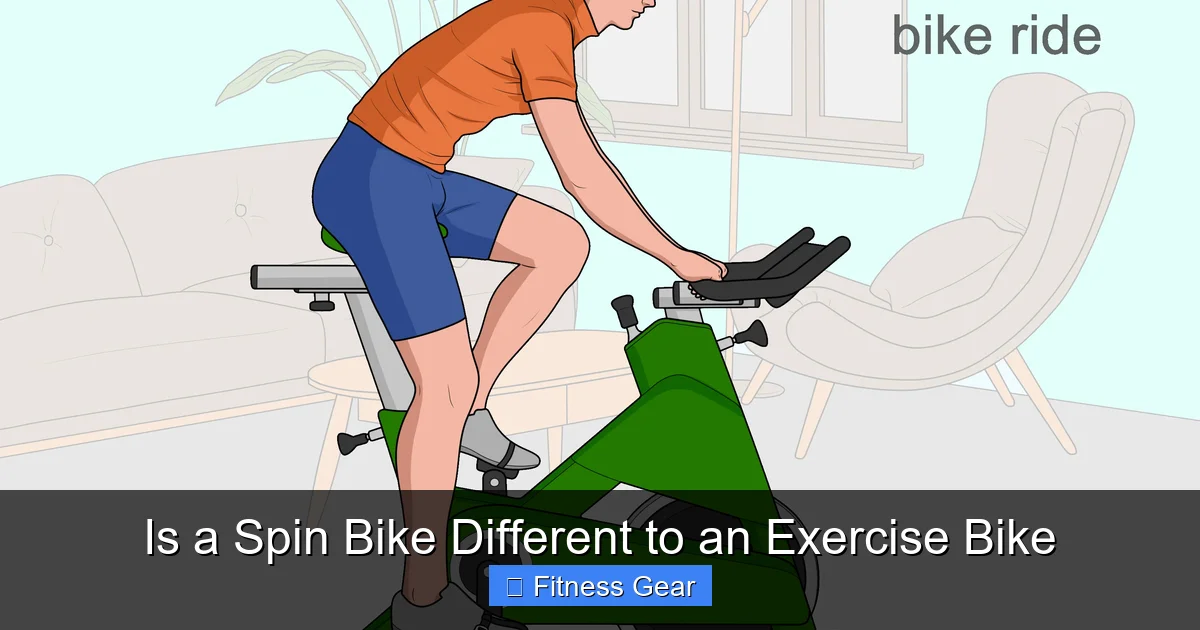
Yes, a spin bike is a specialized type of exercise bike, but not all exercise bikes are spin bikes. The core difference lies in their design and intended use: spin bikes mimic the feel and aggressive workout of a real road bike with a heavy flywheel and direct-drive resistance, while the broader “exercise bike” category includes upright and recumbent models designed for lower-impact, general fitness. Your choice depends on your fitness goals, joint health, and preferred workout style.
You’re standing in the fitness equipment aisle, or scrolling online, and you see two terms that seem interchangeable: “spin bike” and “exercise bike.” They both have a seat, pedals, and handlebars, right? So what’s the real difference, and more importantly, which one is right for you? The confusion is totally understandable, as marketing often blurs the lines. But beneath the surface, these machines are engineered for very different experiences, workouts, and body types. Think of it like this: all sports cars are cars, but you wouldn’t use a Ferrari to haul lumber. In the world of indoor cycling, a “spin bike” is the high-performance sports car, while the broader “exercise bike” category includes everything from reliable sedans to comfortable SUVs. Let’s pop the hood and see exactly what sets them apart, so you can make a choice that you’ll actually enjoy and stick with.
Key Takeaways
- Spin bikes are a subset: All spin bikes are exercise bikes, but they are a high-performance, cycling-specific subset designed for intense, standing/riding workouts.
- Flywheel and feel are key: Spin bikes use a heavy, perimeter-weighted flywheel (30-50+ lbs) for a realistic “road bike” feel and momentum. Standard exercise bikes often use lighter, magnetically braked flywheels for a smoother, less aggressive pedal stroke.
- Riding position differs: Spin bikes require a forward-leaning, aggressive cycling position similar to a road bike. Upright exercise bikes have a more vertical, chair-like seat, and recumbent bikes offer back support with a reclined position.
- Resistance is manual vs. programmed: Classic spin bikes use a manual knob or lever for friction-based resistance, giving the rider total control. Many modern exercise bikes use electronic, programmable magnetic resistance for automated workouts.
- Intensity and impact: Spin classes and workouts are high-intensity, often incorporating standing climbs and sprints, which is higher impact on joints. Standard upright/recumbent exercise bikes are generally lower-impact, better for rehabilitation or beginners.
- Price and durability: Commercial-grade spin bikes are built for heavy, daily use and are often more expensive. Consumer-grade exercise bikes offer a wider range of prices and durability levels for casual home use.
- Choose based on goals: Pick a spin bike for serious cycling training, calorie torching, and a competitive class vibe. Choose an upright/recumbent exercise bike for gentle cardio, physical therapy, multitasking (reading, TV), or if you have back/knee concerns.
📑 Table of Contents
- The Core Definitions: What *Exactly* Is a Spin Bike?
- The “Exercise Bike” Umbrella: Upright and Recumbent Models
- Head-to-Head: Comparing the Key Features
- Who Is Each Bike *For*? Matching Rider to Machine
- Debunking Common Myths and Misconceptions
- Your Buying Guide: How to Choose the Right One for You
- The Verdict: It’s About Alignment, Not Superiority
The Core Definitions: What *Exactly* Is a Spin Bike?
To understand the difference, we must start with precise definitions. The term “spin bike” is actually a trademarked brand name, much like “Kleenex” for tissues. It originated from the Spinning program created by Johnny G. in the late 1980s. Over time, “spin bike” has become the generic term for a specific *style* of indoor cycling bike, while “exercise bike” is the umbrella category.
The “Real Road Bike” Replication
A true spin bike’s primary mission is to replicate the geometry, feel, and performance of an outdoor road racing bike. This is achieved through a few critical design elements. First, the riding position is aggressively forward-leaning. The handlebars are low and far forward, forcing you to bend at the hips and engage your core. The saddle is narrow and firm, designed to support the sit bones of a cyclist in a padded shorts position, not for leisurely cruising. This position is aerodynamic and efficient for power transfer but can be uncomfortable for new riders or those with limited flexibility.
The Heavy Flywheel: Heart of the Matter
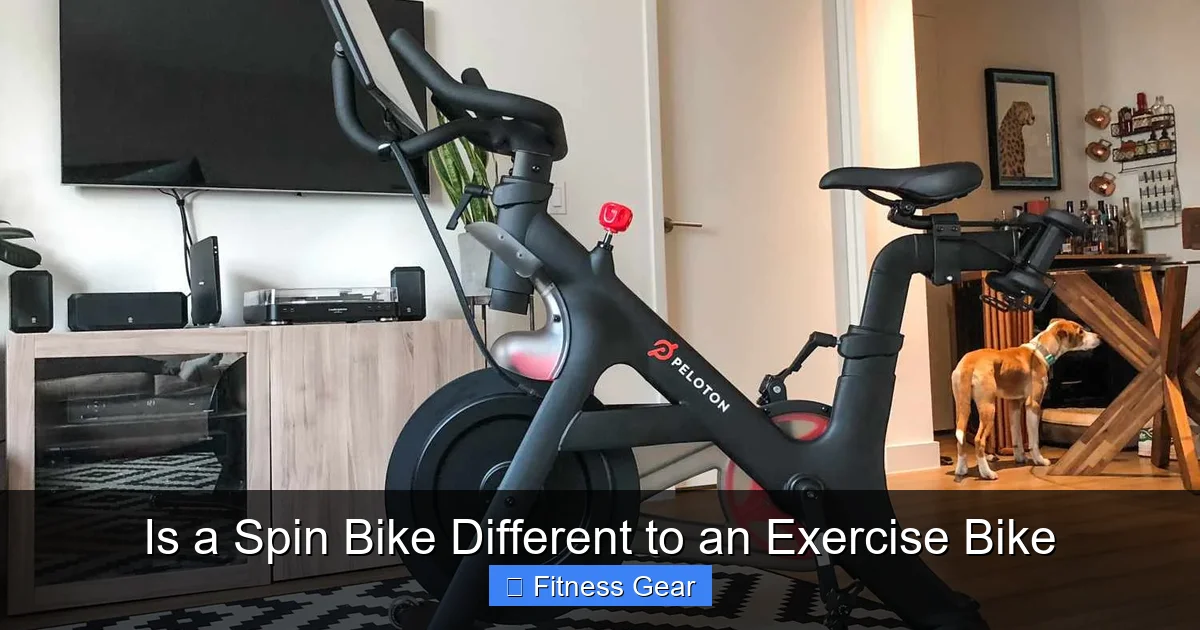
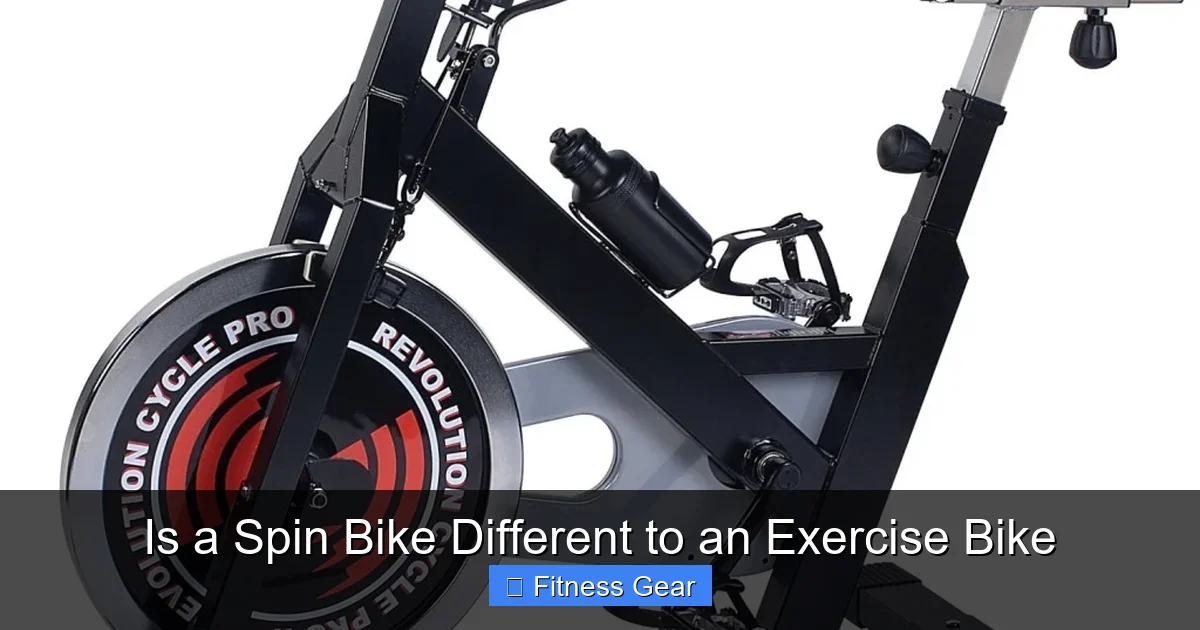
The single most defining feature of a spin bike is its heavy flywheel. Typically weighing between 30 and 50 pounds (or more), this massive disc is attached directly to the pedals via a chain or belt drive (this is called a “direct-drive” system). When you pedal, you’re spinning this heavy weight. This creates significant momentum. Once it’s moving, it wants to keep moving, which mimics the feeling of coasting or riding downhill on a real bike. To change resistance, you use a manual friction knob (think tightening a brake pad against the flywheel) or, in newer models, a magnetic lever. This heavy flywheel is what allows for those signature “jumps” and rapid accelerations in a spin class—you’re fighting against the stored kinetic energy of the wheel.
The Direct-Drive System
Because the pedals are directly attached to the flywheel, there is no “freewheeling.” If the wheel is moving, the pedals are moving. This means you cannot “coast” by stopping pedaling; the pedals will continue to turn with the wheel. This is a crucial safety and authenticity feature. It forces constant engagement and replicates the continuous pedal stroke of outdoor cycling. You learn to “resist” the wheel’s momentum with your legs, which is a key skill in spin training.
The “Exercise Bike” Umbrella: Upright and Recumbent Models
“Exercise bike” is the catch-all term for any stationary bike. Within this vast category, two designs dominate the consumer market: upright and recumbent. These are engineered for general cardiovascular health, low-impact rehabilitation, and convenience, not necessarily for mimicking a road bike.
Visual guide about Is a Spin Bike Different to an Exercise Bike
Image source: verywellfit.com
Upright Exercise Bikes: The Traditional Look
An upright exercise bike looks more like a traditional bicycle you’d ride for leisure. The seat is directly over the pedals, and you sit in a more vertical, “chair-like” position. The handlebars are higher and closer to your body. This position is far more forgiving on the lower back, neck, and wrists. The flywheels on these bikes are typically much lighter (often 10-20 lbs) and use a belt or magnetic resistance system. The pedal stroke is smoother and less momentum-heavy. Many upright models also feature programmable electronic resistance controlled via a digital console, which can automatically adjust difficulty based on pre-set workouts (like “fat burn” or “interval” programs).
Recumbent Exercise Bikes: The Back-Saver
The recumbent bike is in a class of its own for comfort and accessibility. You sit in a reclined, bucket-style seat with full back support. Your legs extend forward to pedals that are out in front of your body. This position places virtually no stress on the lower back, makes it exceptionally easy to get on and off (great for seniors or those with mobility issues), and distributes body weight over a larger surface area, reducing pressure points. The workout is still effective for leg strength and cardio, but the range of motion and potential for high-intensity intervals is more limited compared to a spin bike. Recumbents are the gold standard for physical therapy and gentle, sustainable cardio.
Head-to-Head: Comparing the Key Features
Now that we’ve defined the beasts, let’s put them in a direct comparison across the factors that matter most to a buyer.
Visual guide about Is a Spin Bike Different to an Exercise Bike
Image source: png.pngtree.com
Design & Ergonomics: Aggression vs. Comfort
This is the most immediate difference. The spin bike’s geometry is all about performance: low handlebars, forward seat, and a narrow saddle. It’s designed to put you in a powerful, aerodynamic tuck. An upright exercise bike prioritizes comfort: a higher seat, upright torso, and often a wider, more cushioned saddle. A recumbent bike is the epitome of comfort, with its lounging position. Practical Tip: If you have tight hip flexors, lower back pain, or are new to cycling, jumping straight into a spin bike’s position can be a recipe for discomfort. You may need to adjust the stem or consider an upright model to start.
The Resistance & “Feel” of the Pedal Stroke
On a spin bike, that heavy flywheel creates a distinct, “muddy” or “weighty” feel. You’re constantly managing its momentum. The manual friction knob gives infinite, tactile resistance adjustment—you can feel every small turn. On an upright/recumbent exercise bike, the lighter flywheel and often magnetic resistance create a quieter, smoother, and “lighter” pedal stroke. The resistance change is instant and silent, but you lose that sense of pushing against a massive, spinning weight. Practical Example: On a spin bike, a “hill climb” feels like you’re literally dragging the heavy wheel uphill. On a magnetic exercise bike, it feels more like the machine is gently but firmly pushing back against your foot.
Workout Intensity & Versatility
Spin bikes are built for High-Intensity Interval Training (HIIT). The design allows for explosive standing sprints, powerful seated climbs, and rapid recovery. The intensity ceiling is extremely high. Standard exercise bikes are perfectly capable of challenging workouts, but their design and lower-impact nature naturally lend themselves to steady-state cardio, longer moderate sessions, or light interval training. You can stand on some upright bikes, but it’s not their primary design function and can feel unstable. Key Insight: If your goal is to burn maximum calories in a 45-minute session and you love the energy of a competitive class, a spin bike is your engine. If your goal is 30 minutes of gentle cardio while you watch the news, an upright or recumbent is more suitable.
Console & Technology: Manual Control vs. Programmed Journeys
The classic spin bike is an analog machine. Its console, if it has one, typically shows basic metrics like RPM (cadence), time, distance, and maybe heart rate. The magic is in the instructor’s voice and your manual control. You turn the knob when they say “add resistance.” This fosters a deep mind-body connection. Modern “smart” spin bikes (like Peloton, Echelon) have changed this with large HD screens and live/on-demand classes, but the underlying mechanical design (heavy flywheel, manual resistance feel via digital control) remains spin-specific. Most upright/recumbent exercise bikes, especially in the mid-range, come with pre-programmed workouts on a digital console. You select “Hill Climb” and the machine automatically adjusts resistance levels for you. This is great for a set-and-forget workout but removes some of the rider’s agency.
Noise, Maintenance & Space
The chain-driven, heavy flywheel spin bike can be louder, with a characteristic whirring and chain noise. Belt-driven models are quieter. They often require more periodic maintenance (tightening the chain, lubricating). Upright and recumbent bikes, especially magnetic ones, are generally much quieter—ideal for apartments or late-night workouts. Spin bikes are often taller and have a larger footprint due to the extended handlebars. Recumbent bikes are usually the longest but can be lower to the ground. Always check dimensions against your available space.
Price & Build Quality Spectrum
You can find a basic upright exercise bike for under $200. The range is vast. For spin bikes, true indoor-cycling-style bikes with heavy flywheels start closer to $400-$500 and go well into the thousands for commercial-grade models. The higher price for spin bikes reflects the robust engineering needed to handle the intense, standing forces and the weight of the flywheel. A cheap “spin-style” bike with a light flywheel will feel cheap and unstable, defeating the purpose. You often get what you pay for in terms of sturdiness and smoothness.
Who Is Each Bike *For*? Matching Rider to Machine
This is the most important section. The “best” bike is the one that aligns with your personal context.
Visual guide about Is a Spin Bike Different to an Exercise Bike
Image source: cyclistzone.com
The Ideal Spin Bike Rider
- The Serious Cyclist: You train for road races, triathlons, or simply love the sport of cycling. You want to maintain fitness and technique indoors during winter or bad weather. You crave the authentic road-bike feel.
- The HIIT & Calorie-Torcher Enthusiast: Your primary goal is maximum calorie burn and cardiovascular improvement in a structured, time-efficient session (30-45 mins). You enjoy the push-to-your-limit feeling.
- The Group Energy Seeker: You thrive on the motivation of an instructor and the imaginary pack of riders in a live or on-demand spin class. The competitive, music-driven environment is key to your motivation.
- Someone Without Major Joint Issues: The higher impact (from standing, aggressive position) and intensity require healthy knees, hips, and back. You should be able to comfortably get into and hold the forward-leaning position.
The Ideal Upright Exercise Bike Rider
- The General Fitness Beginner: You’re starting your fitness journey and want a comfortable, non-intimidating machine for regular cardio.
- The Multi-Tasker: You want to read a book, scroll through a tablet, or even do some light upper-body weights while you pedal. The upright position and often more stable design allow for this.
- Those with Minor Back or Neck Concerns: The upright position is significantly less stressful on the lumbar spine and neck than the spin bike’s tuck.
- Someone Preferring Guided, Automated Workouts: You like pressing a button and letting the machine’s programmed resistance changes guide your session without having to constantly adjust a knob.
The Ideal Recumbent Exercise Bike Rider
- Individuals in Rehabilitation: Often prescribed by physical therapists for knee, hip, or back rehab due to its zero-impact, supported nature.
- Seniors or Those with Limited Mobility: The step-through design and supportive seat make it incredibly safe and easy to use. The low center of gravity prevents tipping.
- Those with Chronic Back Pain or Arthritis: The reclined position takes all pressure off the spine and reduces strain on weight-bearing joints.
- Anyone Prioritizing Ultimate Comfort: For long, steady-state cardio sessions where comfort is the primary concern, the recumbent is king.
Debunking Common Myths and Misconceptions
The blurry terminology leads to some persistent myths.
“Spin Bikes Are Just Fancy, Expensive Exercise Bikes.”
Not exactly. The engineering is different. A $300 “spin bike” with a light flywheel and wobbly frame is not a true spin bike; it’s a poorly made upright bike in a spin bike’s clothing. True spin bike engineering (heavy flywheel, direct drive, robust frame) commands a certain price point for durability and performance.
“You Can’t Get a Good Workout on an Upright Bike.”
This is false. You can absolutely achieve a high heart rate and burn significant calories on a quality upright bike, especially with interval programming or a motivated instructor. The limitation is more about maximum intensity ceiling and the inability to safely/effectively perform standing sprints, not about overall efficacy for cardiovascular health.
“All Stationary Bikes Are Low-Impact.”
While all are lower-impact than running, a spin bike used in a class with frequent standing climbs and high resistance is a much higher-impact activity than a seated ride on a recumbent. The standing motion loads the joints differently and can be jarring if not done with proper form.
“The Saddle on a Spin Bike Is Always Painful.”
It can be initially, as it’s designed for a cyclist’s padded shorts. However, a properly fitted spin bike (saddle height, fore/aft position, handlebar height) should not cause *pain*—only a familiar pressure. Discomfort that lasts more than 2-3 rides usually indicates a poor fit. Many modern spin bikes come with more padded or adjustable saddles to help beginners.
Your Buying Guide: How to Choose the Right One for You
Armed with knowledge, here is a step-by-step decision framework.
Step 1: Interrogate Your Goals & Health
Get brutally honest. Is your goal “lose 20 pounds” or “train for a century ride”? Do you have a history of knee pain, a bad back, or are you recovering from surgery? Your primary goal and physical limitations are the #1 deciding factor. If rehab is the goal, a recumbent is non-negotiable. If training for an event is the goal, a spin bike is the clear choice.
Step 2: Consider Your Preferred Workout Style
Do you want to be told what to do by a charismatic instructor in a 45-minute sweatfest? Look at spin bikes (especially smart ones with screens) or find an upright bike with engaging app connectivity. Do you want to zone out with a podcast while pedaling at your own pace? A simple upright or recumbent with a basic console is perfect.
Step 3: Test the Position (If Possible)
This is the best advice. Go to a gym or a large retailer. Sit on a spin bike. Get into the riding position. Can you comfortably reach the handlebars? Does your back feel stretched or supported? Now sit on an upright and a recumbent. The difference in spinal alignment and hip angle will be immediately apparent. Your body’s feedback is invaluable.
Step 4: Set a Realistic Budget & Prioritize Quality
For a durable, enjoyable experience, budget is crucial. For a spin bike, aim for at least $500-$700 for a decent home model with a 30+ lb flywheel and a stable frame. Below that, you’re likely compromising on the core experience. For a quality upright/recumbent, $300-$600 will get you a very solid, quiet machine with good programs. Always read reviews focusing on long-term durability, not just initial features.
Step 5: Think About the Ecosystem
Are you buying just a bike, or are you buying into a fitness platform? If you love the idea of Peloton, NordicTrack, or Echelon, you’re buying a spin-style bike first and a subscription service second. The bike is your portal. If you want a standalone machine with no monthly fee, focus on brands like Schwinn, Nautilus, or Sunny Health & Fitness that offer robust hardware without a mandatory subscription.
The Verdict: It’s About Alignment, Not Superiority
So, is a spin bike different from an exercise bike? Emphatically, yes. The difference is not semantic; it’s mechanical, anatomical, and philosophical. A spin bike is a specialized tool for a specific, intense form of cycling simulation. An exercise bike (upright/recumbent) is a versatile tool for general, often lower-impact, cardiovascular health.
One is not “better” than the other. They are different instruments for different pieces of music. Choosing the wrong one is like using a sledgehammer to put in a screw—it might work, but it will be frustrating, inefficient, and you might hurt yourself. The spin bike demands commitment to its aggressive style. The upright/recumbent offers包容性 (inclusivity) and comfort.
Your perfect match is out there. Ask yourself: when you imagine your ideal workout, are you visualizing a dark room, thumping music, an instructor shouting “climb out of the saddle!”, and a pool of sweat? Reach for the spin bike. Or, are you visualizing a sunny spot by the window, a gentle pedal while you catch up on a favorite show, with no stress on your knees? Reach for the upright or recumbent. Listen to your body, respect your goals, and your choice will become clear. The most effective exercise is the one you will actually do, consistently. Let that be your final guide.
Frequently Asked Questions
Can I use a spin bike as a regular exercise bike for low-impact workouts?
Technically yes, you can pedal seated at low resistance on a spin bike for a gentle workout. However, its aggressive riding position and heavy flywheel are not optimized for true low-impact, long-duration sessions. You’ll likely find the position less comfortable than an upright or recumbent bike for that specific purpose.
Is a spin bike workout better for weight loss than an upright bike?
Not inherently “better,” but it is *designed* to facilitate higher-intensity workouts (like HIIT), which can burn more calories in a shorter time. However, weight loss ultimately comes down to calorie deficit. You can achieve an equally effective calorie burn on an upright bike by sustaining a higher heart rate for longer or using interval programs. Consistency and effort matter more than the machine type.
Why are spin bike seats so uncomfortable, and can I change them?
>The seats are narrow and firm to mimic a real cycling saddle and allow for efficient power transfer and leg movement. They are not designed for casual lounging. Yes, you can often replace them with a wider, more padded aftermarket saddle, but this can slightly alter your riding geometry. The best solution is proper bike fit and wearing padded cycling shorts.
Do I need special shoes for a spin bike?
For the best power transfer and safety (your foot is locked to the pedal), SPD-compatible cycling shoes are highly recommended for spin bikes, especially if you’ll be standing. Many spin bikes have dual-sided pedals (one side with a toe cage/strap for regular sneakers, the other side for clipless SPD shoes). For upright/recumbent bikes, regular athletic shoes in the toe cage are perfectly suitable.
Can a heavier person use a spin bike? Is there a weight limit?
Yes, but you must check the manufacturer’s weight capacity. Consumer-grade spin bikes typically have capacities between 275-350 lbs. Commercial-grade models can support 400+ lbs. The heavy flywheel and robust frame of a quality spin bike can actually handle higher weights better than a flimsy lightweight upright bike. Always prioritize a bike with a capacity above your weight for safety and durability.
Is the noise level a big difference between the two types?
Yes, generally. Chain-driven spin bikes with heavy flywheels produce a noticeable whirring and chain sound, which some find motivating and others find disruptive. Belt-driven spin bikes are quieter. Upright and recumbent bikes, especially those with magnetic resistance, are typically the quietest options, often having only a faint hum. This is a key consideration for apartment living or shared spaces.