How to Use the Elliptical Machine to Lose Weight
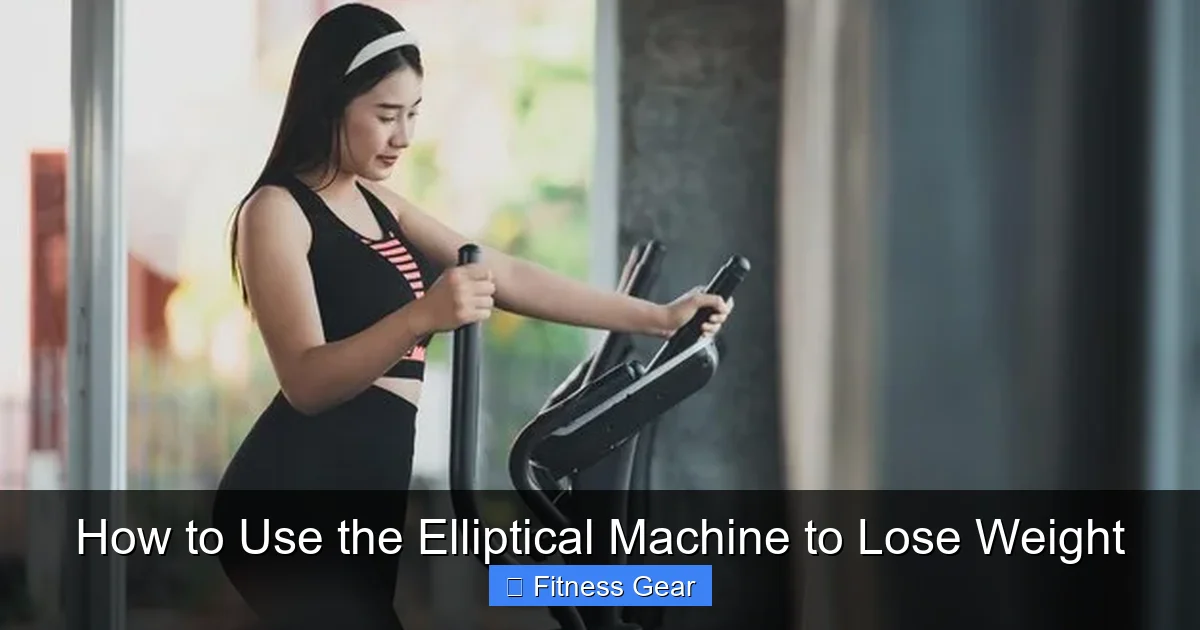
The elliptical machine is a powerful, low-impact tool for burning calories and shedding pounds. By combining consistent cardio sessions with proper resistance and interval training, you can create a significant calorie deficit. Success hinges on mastering correct form, fueling your body right, and tracking your progress to stay motivated and avoid plateaus on your weight loss journey.
Key Takeaways
- It’s a Full-Body, Low-Impact Burner: The elliptical engages both upper and lower body muscles, providing a high-calorie burn without the joint stress of running.
- Calorie Deficit is King: Weight loss occurs when you burn more calories than you consume. The elliptical is a tool to create that deficit efficiently.
- Consistency Trumps Intensity: Regular, moderate sessions (150+ minutes/week) are more sustainable and effective for long-term loss than sporadic, extreme workouts.
- Mix Up Your Workouts: Use intervals, vary resistance, and change your stride to challenge your body, prevent adaptation, and boost metabolism.
- Nutrition is Non-Negotiable: You cannot out-exercise a poor diet. Pair your elliptical routine with mindful eating for real results.
- Form is Fundamental: Proper posture—chest up, core tight, full arm strokes—maximizes calorie burn, prevents injury, and ensures you’re working the right muscles.
- Track More Than Just Weight: Monitor measurements, how clothes fit, energy levels, and workout performance for a holistic view of your progress.
📑 Table of Contents
- Why the Elliptical Machine is Your Secret Weapon for Weight Loss
- Mastering the Machine: Perfect Your Form for Maximum Impact
- Crafting Your Winning Elliptical Workout Plans
- Fueling the Fire: How Nutrition Supercharges Elliptical Weight Loss
- Steering Clear of the 5 Biggest Elliptical Weight Loss Mistakes
- Tracking Progress and Staying Motivated for the Long Haul
- The Final Push: Making the Elliptical a Lifelong Habit
Why the Elliptical Machine is Your Secret Weapon for Weight Loss
Let’s be honest. The journey to lose weight can feel overwhelming. Between confusing diet trends and intimidating gym equipment, it’s easy to get stuck. But what if I told you there’s a machine that’s incredibly effective, gentle on your body, and often overlooked? Enter the elliptical machine. It’s not just a glorified stationary bike; it’s a dynamic, full-body cardio powerhouse that, when used correctly, can be a cornerstone of your weight loss strategy.
Unlike treadmills that pound your joints or stair climbers that annihilate your quads, the elliptical offers a smooth, gliding motion that mimics running without the impact. This makes it perfect for beginners, those with joint sensitivities, or anyone recovering from an injury. But its gentleness doesn’t mean it’s easy. By engaging your legs, glutes, core, chest, back, and arms simultaneously, it torches calories at an impressive rate. A 155-pound person can burn approximately 335 calories in just 30 minutes at a moderate pace. That’s a serious contribution to your daily calorie deficit—the golden rule of weight loss.
Think of the elliptical as your metabolic engine. The more muscle mass you activate, the more energy (calories) you expend. Its dual-action handlebars mean your upper body is working just as hard as your lower body, elevating your heart rate into the optimal fat-burning zone more efficiently than lower-body-only machines. Furthermore, its versatility allows you to tailor every single workout to your current fitness level and goals, ensuring you never hit a boring, ineffective plateau.
The Science of the Calorie Deficit Made Simple
Before we dive into workouts, we must clarify the non-negotiable principle of weight loss: the calorie deficit. Your body needs a certain number of calories daily to maintain its current weight (your Total Daily Energy Expenditure, or TDEE). To lose weight, you must consume fewer calories than your TDEE. One pound of fat is roughly equivalent to 3,500 calories. Therefore, a daily deficit of 500 calories leads to about one pound of fat loss per week. The elliptical is your weapon for creating that deficit through exercise. A 45-minute, high-effort elliptical session can easily create a 300-400 calorie burn. Combine that with a modest 200-calorie reduction from your diet, and you’ve hit your 500-calorie target. It’s this simple, relentless math that delivers results.
Mastering the Machine: Perfect Your Form for Maximum Impact
You can hop on an elliptical and move your legs, but you won’t maximize weight loss—or stay injury-free—without proper form. Poor form is the silent killer of elliptical effectiveness. It reduces calorie burn, shifts work to smaller, less efficient muscle groups, and invites strain. Let’s break down the fundamentals.
Visual guide about How to Use the Elliptical Machine to Lose Weight
Image source: i.pinimg.com
The Foundation: Posture and Stance
Start by stepping onto the pedals and finding a comfortable stride length—your knees should not bend more than 90 degrees at the deepest point. Place your feet flat on the pedals, not just on the balls of your feet. Now, engage your core. Imagine a gentle brace in your midsection, as if preparing for a light punch. Keep your chest up and shoulders relaxed down and back. This prevents you from leaning forward, which puts stress on your lower back and turns the movement into a shaky, inefficient squat. Your spine should be in a neutral, tall position from head to hips.
Arm and Leg Coordination: The Full-Body Symphony
The magic of the elliptical is in the push-pull motion of the handles. Your hands should grip the handles lightly, not white-knuckle them. As one leg pushes forward and down, the opposite arm should be pulling the handle toward you. It’s a natural, contralateral (opposite arm and leg) motion, similar to walking or running. Focus on driving through your entire foot and feeling the power come from your glutes and hamstrings on the push phase. On the pull-back, think of engaging your back muscles (like a rowing motion) and your chest. Short, choppy arm movements are common but ineffective. Aim for long, smooth, full-range strokes that allow your legs to extend fully without locking your knees. You should feel the burn in your large leg muscles and a satisfying pull in your upper back and arms.
Common Form Faux Pas to Avoid Immediately
- Leaning on the Handles: This supports your body weight, drastically reducing calorie burn and taking work away from your core. Keep your weight in your lower body.
- Hunching Your Shoulders: This creates tension and pain. Periodically shake out your arms and reset your shoulders.
- Pigeon-Toeing or Duck-Footing: Keep your knees and toes tracking in the same direction to protect your joints.
- Bouncing: The motion should be fluid and controlled, not a vertical bounce. If you’re bouncing, your resistance is likely too low.
Crafting Your Winning Elliptical Workout Plans
Showing up is step one. Showing up with a plan is what accelerates weight loss. Random, unplanned sessions lead to boredom and subpar results. Here are three proven workout structures to build your week around. Aim for 3-5 elliptical sessions per week, complemented by strength training (2x/week) for best results.

Visual guide about How to Use the Elliptical Machine to Lose Weight
Image source: grandbuy.ca
Plan 1: The Steady-State Endurance Burn (For Beginners & Recovery Days)
This is your foundational work. It builds aerobic capacity and burns a high percentage of calories from fat. The goal is to maintain a consistent, “somewhat hard” effort where you can speak in short sentences but not sing.
- Duration: 30-45 minutes
- Resistance: Moderate (level 4-6 on a scale of 1-10). You should feel a noticeable push against the pedal.
- Incline/Stride: Set to a comfortable, natural stride. If your machine has an incline function, keep it low (1-3).
- Focus: Maintain perfect form, deep breathing, and a steady pace. Your heart rate should be in Zone 2 (roughly 60-70% of your max heart rate).
Example: Warm up for 5 minutes at low resistance. Settle into your working resistance for 30 minutes. Cool down for 5 minutes. This is the bread and butter of building endurance.
Plan 2: High-Intensity Interval Training (HIIT) for Metabolic Afterburn
HIIT is the gold standard for maximizing calorie burn in less time and triggering “Excess Post-Exercise Oxygen Consumption” (EPOC), where your body continues to burn extra calories for hours after your workout. It’s intense but highly efficient for weight loss.
- Duration: 20-25 minutes total
- Structure: Alternate between short, all-out bursts and active recovery periods.
- Work Interval: 60 seconds at a very high resistance (7-9/10) and/or speed. You should be gasping, unable to talk.
- Rest Interval: 60-90 seconds at a very low resistance (2-3/10) to catch your breath and recover.
Sample HIIT Session: 5 min warm-up. Then repeat 8 times: 60 sec MAX effort / 75 sec slow recovery. Finish with 5 min cool-down. The key is that the “all-out” effort is truly maximal. If you can do more, you’re not trying hard enough during the bursts.
Plan 3: The “Pyramid” Power & Endurance Blast
This plan combines strength and stamina by systematically increasing and then decreasing resistance or time, keeping your mind and muscles engaged.
- Duration: 35-40 minutes
- Structure: Start at a moderate resistance. Every 5 minutes, increase resistance by 1-2 levels until you reach a peak (level 7-8), hold for 5 minutes, then work your way back down.
- Focus: This tests your mental and physical grit. On the “up” side, your pace may slow as resistance increases—that’s okay! Focus on power. On the “down” side, you’ll recover while still moving.
Example: Min 0-5: R4. Min 5-10: R5. Min 10-15: R6. Min 15-20: R7. Min 20-25: R8 (Peak). Min 25-30: R7. Min 30-35: R6. Min 35-40: R5. Cool down.
Fueling the Fire: How Nutrition Supercharges Elliptical Weight Loss
You can elliptical until you’re blue in the face, but without nutritional support, your weight loss will stall. Exercise creates the demand for change; food provides the building blocks. Here’s how to align your eating with your elliptical goals.
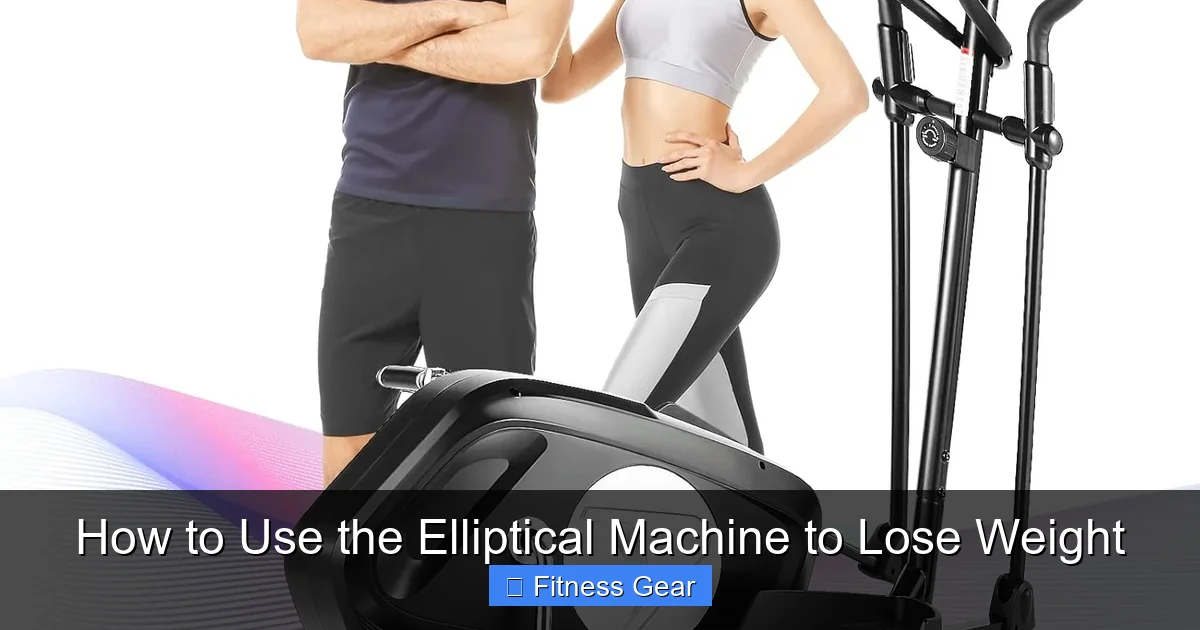
Visual guide about How to Use the Elliptical Machine to Lose Weight
Image source: m.media-amazon.com
The Calorie Deficit in Your Kitchen
First, estimate your TDEE using an online calculator. Subtract 300-500 calories for a sustainable deficit. Do not go below 1,200 calories for women or 1,500 for men without medical supervision. Prioritize protein (0.7-1g per pound of target body weight) to preserve lean muscle mass as you lose fat. Muscle is metabolically active; losing it slows your metabolism. Include lean meats, fish, eggs, tofu, and legumes. Fill the rest of your plate with fiber-rich vegetables and complex carbohydrates (oats, sweet potatoes, quinoa) for sustained energy for your workouts. Healthy fats (avocado, nuts, olive oil) are essential for hormone function and satiety.
Timing Your Fuel Around the Elliptical
What you eat before and after matters. For a session longer than 45 minutes or a HIIT day, have a small carb+protein snack 60-90 minutes prior (e.g., banana with peanut butter, Greek yogurt). This tops off your glycogen stores for energy. Post-workout (within 60 minutes), consume a meal or snack with protein and carbs to repair muscle and replenish energy (e.g., a protein shake, chicken with rice). If your session is shorter (30 min steady-state), you can often exercise in a fasted state if that suits you, but always listen to your body’s hunger cues.
Hydration: The Unsung Hero
Even mild dehydration (2% loss) reduces exercise performance and can be mistaken for hunger. Aim for 16-20 oz of water 2-3 hours before your workout, 8 oz 20 minutes before, and sip during. Weigh yourself before and after a long session; for every pound lost, drink 16-24 oz of water to rehydrate.
Steering Clear of the 5 Biggest Elliptical Weight Loss Mistakes
Even with the best intentions, it’s easy to sabotage your elliptical weight loss efforts. Here are the most common pitfalls and how to fix them.
Mistake 1: The “Zombie Workout” – No Intensity Variation
Getting on, setting the same resistance, and zoning out for 30 minutes while scrolling through your phone. Your body adapts quickly to a repetitive stimulus, burning fewer calories over time. The Fix: Always have a plan. Use the HIIT or Pyramid structures above. Even on steady-state days, consciously increase your resistance by one level every 10 minutes. Make every session a conscious effort.
Mistake 2: Ignoring the Upper Body – “Legs-Only” Syndrome
Resting your hands lightly on the handles or, worse, holding the fixed handrails. This turns your elliptical session into a lower-body-only exercise, cutting your calorie burn by up to 30%. The Fix: Grip the moving handlebars firmly and make a conscious effort to push and pull with your arms. Imagine you’re cross-country skiing. Focus on the engagement in your shoulders, back, and chest.
Mistake 3: Neglecting Strength Training
Relying solely on cardio for weight loss is a short-sighted strategy. Without strength training, you’ll lose valuable muscle along with fat, causing your metabolism to plummet and leading to the dreaded “skinny fat” look. The Fix: Incorporate 2 full-body strength sessions per week. Squats, lunges, push-ups, rows, and planks build muscle. More muscle means you burn more calories 24/7, even at rest, making your elliptical work more effective.
Mistake 4: Rewarding Exercise with Unhealthy Food
“I just burned 400 calories, I deserve a treat!” That 400-calorie muffin or Frappuccino erases your entire workout and puts you in a surplus. You cannot out-train a bad diet. The Fix: Shift your mindset. Food is fuel, not a reward. If you want a treat, plan it into your daily calorie budget consciously, not as an impulsive reward for moving.
Mistake 5: Only Focusing on the Scale
The scale can be a liar, especially when you start strength training. You might be losing fat but gaining water weight from new muscles, causing the number to stall or even go up. This is demotivating and often leads to quitting. The Fix: Track multiple metrics. Take weekly measurements (waist, hips, thighs). Notice how your clothes fit. Take monthly progress photos. Monitor your strength gains (can you push harder resistance?). The scale is just one data point, not the full story.
Tracking Progress and Staying Motivated for the Long Haul
Weight loss is a marathon, not a sprint. Motivation wanes, life gets busy, and progress can feel invisible. A systematic approach to tracking and mindset is what separates those who succeed from those who quit.
Go Beyond the Scale with a Progress Journal
Create a simple log (digital or paper). Track: Date, Workout Type (e.g., HIIT, Pyramid), Duration, Average Resistance/Felt Effort (1-10), and Post-Workout Feeling (Energized/Exhausted). Once a week, add your weight and key measurements. Over time, you’ll see patterns: “When I do HIIT on Tuesdays, my energy is through the roof all week,” or “My resistance levels keep climbing!” This objective data is a powerful motivator when the scale frustrates you.
Use Technology to Your Advantage
Most modern ellipticals connect to apps like Apple Health, Google Fit, or brand-specific apps ( NordicTrack, ProForm). Use these to automatically log duration, distance, estimated calories, and heart rate. A heart rate monitor (chest strap or optical) is the single best investment for accuracy. Aim to spend the majority of your cardio time in Zone 2 (60-70% max HR) for fat-burning endurance and Zone 4-5 (80-90% max HR) during your HIIT intervals. Seeing your heart rate zones in real-time keeps you honest and on-target.
Set SMART Goals and Celebrate Non-Scale Victories (NSVs)
Instead of “I want to lose 20 pounds,” set SMART goals: “I will complete 3 elliptical HIIT sessions per week for the next month,” or “I will increase my working resistance level from 5 to 7 in 6 weeks.” Celebrate when you achieve these! NSVs are crucial: “I walked up the stairs without getting winded,” “My favorite jeans are loose,” “I have more energy to play with my kids,” “I slept better last night.” These are the real, life-changing wins that prove your hard work is paying off.
The Final Push: Making the Elliptical a Lifelong Habit
Using the elliptical machine to lose weight isn’t about a 30-day shred. It’s about integrating a sustainable, enjoyable habit into your lifestyle. Find music, podcasts, or audiobooks you love for your steady-state days. For HIIT, short, high-energy playlists work best. Change your environment—watch a show on a tablet if your gym allows it. The goal is to associate your elliptical time with something positive, not dread.
Remember, perfection is the enemy of progress. Missed a session? Ate off-plan? It’s a single event, not a failure. Get back on track with your very next choice. The elliptical is a tool—a remarkably effective, joint-friendly, full-body tool. By mastering its use, pairing it with intelligent nutrition, and approaching it with a strategic, kind-to-yourself mindset, you are not just using a machine to lose weight. You are building a healthier, stronger, more energetic version of yourself, one smooth, powerful stride at a time. Now, go make it happen.
Frequently Asked Questions
How long should I use the elliptical each day to lose weight?
For significant weight loss, aim for 30-60 minutes per session, most days of the week. The American College of Sports Medicine recommends at least 150 minutes of moderate-intensity cardio weekly for weight loss, which breaks down to about 30 minutes, 5 days a week. Higher-intensity sessions can be shorter (20-30 minutes) but are more demanding.
Can the elliptical specifically target belly fat?
No exercise can “spot-reduce” fat from a specific area. Weight loss occurs systemically, meaning you lose fat from all over your body, though genetics determine the order. The elliptical is excellent for creating the calorie deficit needed for overall fat loss, which will eventually reduce belly fat. Combining it with strength training to build core muscle will help tone the area as fat decreases.
Is the elliptical as effective as running for weight loss?
It can be equally or more effective for weight loss because it’s lower impact, allowing for longer, more frequent sessions without injury or excessive soreness. While running may burn slightly more calories per minute for some, the elliptical’s full-body engagement and sustainability often lead to greater total weekly calorie burn for many people, making it a superior long-term tool.
Should I use the elliptical every day?
Not necessarily. Your body needs recovery to repair and get stronger. Using it every day at high intensity can lead to overtraining and injury. A better approach is 3-5 days per week, alternating between high-intensity days, moderate steady-state days, and rest or active recovery days (like walking or yoga).
How quickly will I see weight loss results from the elliptical?
This depends entirely on your calorie deficit. With a consistent 500-calorie daily deficit (from diet + elliptical), you can expect to lose about 1 pound per week. You may notice changes in how your clothes fit and energy levels within 2-3 weeks. The scale might fluctuate daily due to water retention, so focus on the weekly trend. Real, sustainable weight loss is a gradual process.
Do I need to set the elliptical to an incline to lose weight?
Incline (if your machine has it) increases resistance and engages your glutes and hamstrings more, boosting calorie burn. It’s a great tool for variety and intensity. However, you can absolutely lose weight effectively on a flat resistance setting. The most important factors are your overall effort (heart rate), time spent, and consistency. Use incline to add challenge and prevent boredom, but it’s not mandatory.