How to Jump Rope Like a Pro Boxer

Jumping rope like a pro boxer builds endurance, agility, and lightning-fast footwork. This guide covers boxing-specific jump rope techniques, the right gear, and workout routines used by fighters. You will learn how to master double unders, speed intervals, and rhythm drills that translate directly to the ring.
Few exercises build a fighter’s engine quite like the jump rope. Pro boxers have relied on this simple tool for decades to build endurance, sharpen footwork, and develop the rhythm needed inside the ring. If you want to learn how to jump rope like a pro boxer, you are in the right place.
This guide breaks down everything from basic technique to advanced boxing-specific drills. You will discover the right equipment, the best workouts, and the common mistakes that hold most people back. Whether you are a beginner or a seasoned athlete, these boxer jump rope training tips will take your skills to the next level.
Key Takeaways
- Boxer jump rope technique is built on rhythm, light feet, and wrist control — not arm strength.
- Speed ropes are the gold standard for pro boxer training and conditioning.
- Mastering double unders and single-foot hops separates beginners from advanced fighters.
- Consistent jump rope for boxing sessions improve cardio endurance faster than running.
- Proper rope length and correct posture prevent injury and boost performance.
- Boxing jump rope workout routines can be adapted for all fitness levels.
- Avoid common mistakes like jumping too high or using your arms to turn the rope.
📑 Table of Contents
Why Pro Boxers Use the Jump Rope
You might wonder why boxers spend so much time with a rope. The answer is simple — it works. Jump rope boxing training builds a unique combination of skills that few other exercises can match.
Boxers use the rope to develop cardiovascular endurance, which is essential for lasting through rounds. It also sharpens hand-eye coordination and teaches your body to move with rhythm and precision. The light, quick movements required for rope skipping directly translate to a boxer’s footwork in the ring.
Here is what pro boxer jump rope training gives you:
- Better endurance — sustained rope work builds a strong aerobic base.
- Faster footwork — light, quick hops train your feet to move efficiently.
- Improved timing — the rope teaches you to move in sync with a rhythm.
- Core stability — keeping your torso tight while jumping engages your entire core.
- Low impact — compared to running, jumping rope is easier on your joints when done correctly.
These benefits are exactly why you see boxers with a rope before almost every training session. It is not just a warm-up — it is a fundamental boxing conditioning tool.
Choosing the Right Jump Rope for Boxing
Not all ropes are created equal. If you want to train like a pro boxer, picking the right rope matters more than you might think. The wrong rope can slow you down and make proper technique nearly impossible.
Speed Ropes vs. Weighted Ropes
Speed ropes are the go-to choice for most boxers. They are lightweight, thin, and spin fast, which allows for quick revolutions and clean double unders. These ropes are ideal for speed jumping drills and high-intensity interval training.
Weighted ropes add resistance and build shoulder endurance. They are great for warm-ups and strength-building, but they are not ideal for fast-paced boxing drills. Most pro boxers use speed ropes for their main training and occasionally swap in weighted ropes for variety.
Getting the Right Rope Length
Your rope length directly affects your technique. A rope that is too long will drag on the ground, and one that is too short will constantly hit your head. To get it right, you need to measure a jump rope for your height properly. Stand on the center of the rope and pull the handles up — they should reach about chest level.
Also, consider adjusting the length of your jump rope based on your training goals. Shorter ropes work better for speed drills, while slightly longer ropes give you more room for complex footwork patterns.
Handle and Bearing Quality
Good handles feel comfortable and do not slip. Ball-bearing axles allow the rope to spin smoothly and with minimal friction. This matters a lot when you are doing high-rep speed rope training sessions. Cheap ropes with rough bearings will slow you down and wear out your wrists.
Essential Boxing Jump Rope Techniques
Now that you have the right rope, it is time to learn the techniques that separate casual skippers from pro boxer jump rope practitioners. Each technique targets different skills and carries over to boxing in unique ways.
The Basic Bounce
Start with the fundamentals. The basic bounce uses just enough height to clear the rope — barely an inch off the ground. Keep your feet close together, your knees slightly bent, and your weight on the balls of your feet.
Use your wrists to turn the rope, not your arms. This is one of the most important rope jumping for beginners tips. Your arms should stay relaxed at your sides while your wrists do the work. This saves energy and allows you to jump longer without getting tired.
The Alternate Foot Step
The alternate foot step mimics a boxer’s stance movement. You hop from one foot to the other in a running-like motion while the rope turns. This drill builds boxing agility drills and gets your body used to quick weight transfers.
Jumping rope one foot at a time is a foundational boxing drill that improves balance and coordination. Focus on staying light and keeping your upper body still. The movement should come from your ankles and calves, not your knees.
Double Unders
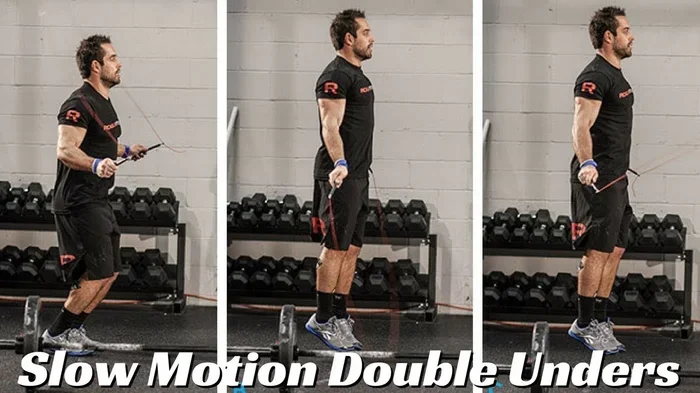
Double unders are where the real magic happens. In this technique, the rope passes under your feet twice for every single jump. This requires faster rope speed and precise timing.
If you are new to double unders, you may want to size a jump rope for double unders correctly. A slightly shorter rope gives you faster revolutions and better control. Start slow and build up speed gradually — do not try to force it.
The Boxer Skip
The boxer skip is a signature move that combines a slight hop with a lateral weight shift. It looks like a boxer bouncing on the balls of their feet between punches. This drill builds jump rope endurance and trains your body to stay light and ready.
Keep your hands up in a guard position while you skip. This adds a boxing-specific element to the drill and reinforces good defensive posture. It is a simple movement but incredibly effective for building ring-ready fitness.
Boxing Jump Rope Workout Routines
Knowing techniques is one thing — putting them into structured workouts is what drives real progress. Here are some boxer jump rope workout routines that fighters use to build stamina, speed, and coordination.
Beginner Routine: Build Your Base
If you are new to jump rope for boxing, start with this simple routine:
- Basic bounce — 2 minutes at a steady pace
- Rest for 30 seconds
- Alternate foot step — 1 minute
- Rest for 30 seconds
- Basic bounce — 2 minutes
- Rest for 30 seconds
- Boxer skip — 1 minute
Repeat this circuit three times. Focus on keeping a consistent rhythm and not getting sloppy as you fatigue. This routine builds the foundation you need before moving on to more advanced drills.
Intermediate Routine: Speed and Endurance
Once you feel comfortable with the basics, try this intermediate session:
- Speed bounce — 3 minutes (fast, light hops)
- Rest for 30 seconds
- Alternate foot step — 2 minutes
- Rest for 30 seconds
- Double unders — try for 10 reps, rest 30 seconds, repeat
- Boxer skip — 2 minutes
- Speed bounce — 3 minutes
This routine pushes your jump rope stamina and introduces faster-paced work. Aim to jump rope for a good workout for at least 15 to 20 minutes total. The goal is to keep your heart rate elevated throughout.
Advanced Routine: Pro Boxer Style
Advanced fighters use high-intensity intervals to simulate the demands of a boxing match:
- All-out speed bounce — 1 minute
- Rest for 15 seconds
- Double unders — max effort for 30 seconds
- Rest for 15 seconds
- Boxer skip with guard position — 1 minute
- Rest for 15 seconds
- Single-leg hops (alternating) — 30 seconds each leg
- Rest for 30 seconds
- Repeat the full circuit 4 to 5 times
This workout mimics the explosive bursts and recovery periods of a real fight. It builds both boxing fitness and mental toughness. Only attempt this routine if you have a solid base of jump rope experience.
Common Mistakes to Avoid
Even dedicated athletes make mistakes with their jump rope technique. Avoiding these errors will save you time, prevent injury, and help you progress faster.
Jumping Too High
The biggest mistake beginners make is jumping way too high. You only need enough clearance to let the rope pass under your feet. Jumping an inch or two too high wastes energy and slows you down. Keep your hops small and efficient.
Using Your Arms to Turn the Rope
Your arms should stay relaxed at your sides. The power to turn the rope comes from your wrists and foreends. If you are swinging your arms wide, you are using the wrong muscles and burning out your shoulders faster.
Ignoring Posture
Slouching or leaning forward ruins your balance and reduces your endurance. Keep your chest up, your core tight, and your eyes forward. Good posture is the foundation of every pro boxer jump rope drill.
Skipping Warm-Ups
Jumping straight into intense rope sessions without warming up is a recipe for injury. Do some light stretching and a few minutes of easy bouncing before you push into speed or endurance work.
Building Jump Rope Stamina Like a Pro
Endurance is what makes a boxer dangerous in the later rounds. Jump rope stamina does not build overnight — it requires consistent, progressive training.
Start with shorter sessions and gradually increase your time. Add one or two minutes to your routine each week. This progressive overload approach applies the same logic that boxers use when training for a fight.
Consistency matters more than intensity. Training jump rope for boxing three to four times per week will produce better results than one brutal session followed by days off. Your body adapts to the rhythm and demands of the rope when you give it regular practice.
Also, mix up your routines. Alternating between speed work, endurance sessions, and technique drills keeps your training fresh and challenges your body in different ways. This variety builds well-rounded combat fitness that serves you both in and out of the ring.
Final Thoughts
How to jump rope like a pro boxer comes down to mastering the basics, choosing the right equipment, and committing to consistent practice. The techniques covered in this guide — from the basic bounce to double unders and boxer skips — form the foundation of every fighter’s rope training.
Start where you are, focus on proper form, and build your jump rope endurance gradually. The rope is one of the simplest and most effective tools in a boxer’s arsenal. Use it wisely, and you will see real improvements in your speed, coordination, and overall fitness.
Grab your rope, find your rhythm, and get after it. The ring will thank you.
Frequently Asked Questions
How long should a beginner practice jump rope for boxing?
Start with 10 to 15 minutes per session, three times a week. Focus on building consistency before increasing duration or intensity. Quality matters more than quantity at this stage.
What type of jump rope do pro boxers use?
Most pro boxers prefer lightweight speed ropes with ball-bearing handles. These ropes spin fast and smoothly, which is essential for speed rope training and advanced techniques like double unders.
Can jump rope replace running for boxing cardio?
Jump rope is an excellent alternative to running for boxing cardio. It builds endurance, footwork, and coordination simultaneously. Many boxers prefer it because it is more sport-specific than jogging.
How do I know if my jump rope length is correct?
Stand on the center of the rope and pull the handles upward. They should reach approximately chest height. If you need to adjust the length of your jump rope, most ropes have adjustable cables or knots.
Why can’t I do double unders yet?
Double unders require faster wrist speed and precise timing. Start by mastering the basic bounce and alternate foot step first. Gradually increase your rope speed and try to snap the rope around twice with a single jump. Patience and practice are key.
How often should I train jump rope for boxing?
Three to four sessions per week is ideal for most athletes. This frequency allows for enough practice to build skill and stamina while giving your body time to recover between sessions.