How to Get Rid of Back Fat Using Dumbbells
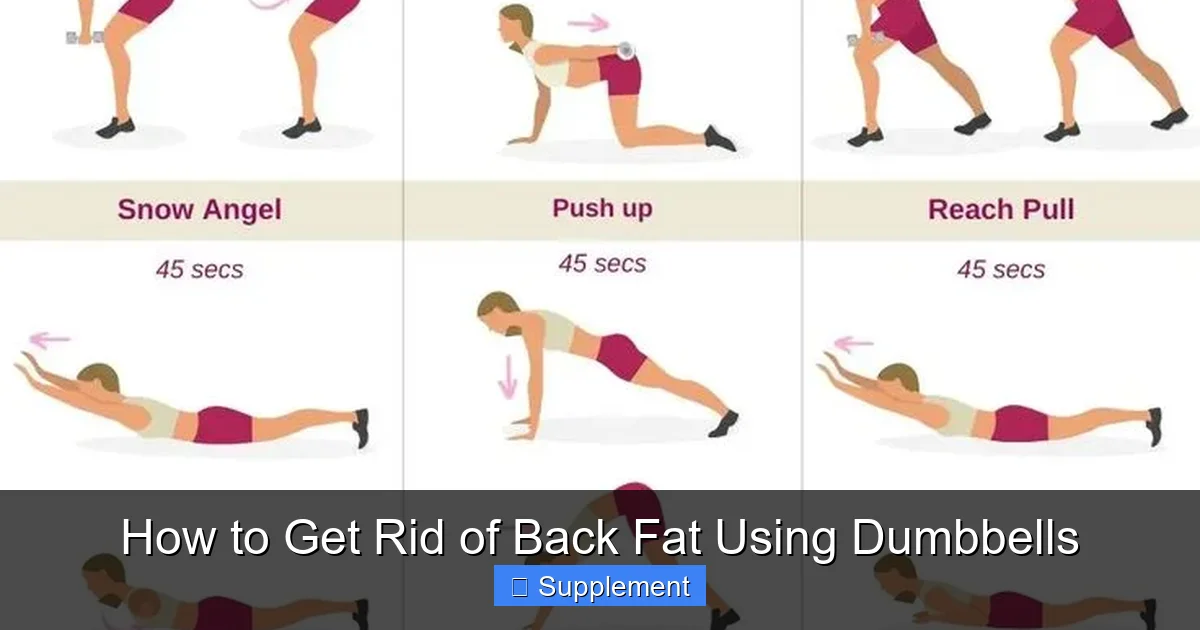
Spot reduction is a myth. To truly get rid of back fat using dumbbells, you must combine targeted strength training with overall fat loss. Focus on building back muscles while maintaining a calorie deficit through diet and consistent cardio. This dual approach will sculpt a leaner, stronger back over time.
Let’s be real. That stubborn bulge around your bra line or the little roll that appears when you sit down can be a real confidence killer. We’ve all been there. You do endless crunches for your belly and maybe some bicep curls for your arms, but that back fat just… persists. It feels like it has a mind of its own. Here’s the good news: it doesn’t have to be a permanent resident. While you can’t “spot reduce” fat away with a magic exercise, you absolutely can use the right tools to sculpt and define the area. And one of the most effective, accessible, and versatile tools in your arsenal is a simple pair of dumbbells. This isn’t about some complicated machine routine. This is about smart, efficient strength training that builds the powerful back muscles underneath, helping you get rid of back fat for good and create a strong, toned silhouette.
In this complete guide, we’re breaking down exactly how to get rid of back fat using dumbbells. We’ll cut through the fitness myths, give you the most effective exercises with clear instructions, and build a realistic plan that combines training with the essential nutrition and lifestyle pieces. Forget the frustration. It’s time to take control and build the back you want to see in the mirror.
Key Takeaways
- Spot reduction is impossible: You cannot burn fat from one specific area alone. Overall body fat loss is required to reduce back fat.
- Dumbbells build metabolically active muscle: Strengthening your back with dumbbells increases muscle mass, which boosts your resting metabolism and aids in total fat loss.
- Consistency is non-negotiable: Regular workouts, a sustainable diet, and patience are essential for seeing lasting changes in back fat.
- Form over weight always: Proper technique prevents injury and ensures the target muscles (your back) are doing the work, not momentum or other areas.
- Progressive overload drives results: To keep challenging your muscles, you must gradually increase weight, reps, sets, or workout frequency over time.
- Nutrition is 50% of the battle: No exercise routine, including dumbbell workouts, can overcome a poor diet. A calorie deficit is mandatory for fat loss.
- Track holistic progress: Use measurements, photos, and how your clothes fit alongside the scale to accurately gauge your success in reducing back fat.
📑 Table of Contents
- Understanding Back Fat: What It Is and Why It’s Stubborn
- Why Dumbbells Are Your Secret Weapon for a Toned Back
- The 5 Best Dumbbell Exercises to Target Back Fat
- Building Your Back-Fat-Blasting Dumbbell Routine
- Nutrition and Lifestyle: The Other Half of the Equation
- Common Mistakes to Avoid When Using Dumbbells for Back Fat
- Tracking Your Progress and Staying Motivated
Understanding Back Fat: What It Is and Why It’s Stubborn
Before we grab the dumbbells, we need to understand our opponent. “Back fat” isn’t a special type of fat. It’s simply adipose tissue stored in the subcutaneous layer (just under the skin) on your upper, mid, and lower back. It becomes noticeable when the layer of fat is thick enough to push against the skin, often creating rolls or a lack of definition between your shoulder blades and waist.
The Science of Fat Loss
Your body stores and burns fat in a systemic, genetically-predetermined order. When you create a calorie deficit (burning more calories than you consume), your body taps into its fat stores for energy. However, it decides where to pull that fat from based on your unique genetics, hormones, and sex. For many people, especially women, the back, hips, and thighs are the last places to lean out due to the influence of estrogen. This is why you might lose weight in your face or stomach first while your back seems unchanged. It’s not your fault; it’s your biology.
The key takeaway? You cannot force your body to burn back fat first. You must focus on reducing your overall body fat percentage. This is where building muscle becomes critical.
Why Back Fat Holds On
Several factors make back fat particularly persistent:
- Lack of Muscle Development: If the underlying back muscles (latissimus dorsi, rhomboids, trapezius) are weak or underdeveloped, there’s nothing to “pull” the skin tight as you lose fat. You end up with a soft, undefined area even at a lower weight.
- Posture: Poor posture—rounded shoulders, forward head—accentuates the appearance of back fat by creating folds and lumps. Strengthening the back helps pull your shoulders back, improving posture and instantly making the area look leaner.
- Hormonal Influences: As mentioned, hormones dictate fat distribution. Cortisol, the stress hormone, is also linked to increased abdominal and back fat storage.
So, the strategy is two-fold: 1) Reduce overall body fat through diet and cardio, and 2) Build the back muscles to create shape, tone, and a tighter appearance as the fat diminishes. Dumbbells are perfect for job number two.
Why Dumbbells Are Your Secret Weapon for a Toned Back
You could use machines or resistance bands, but dumbbells offer unique advantages that make them ideal for targeting back fat and building a proportional, strong back.
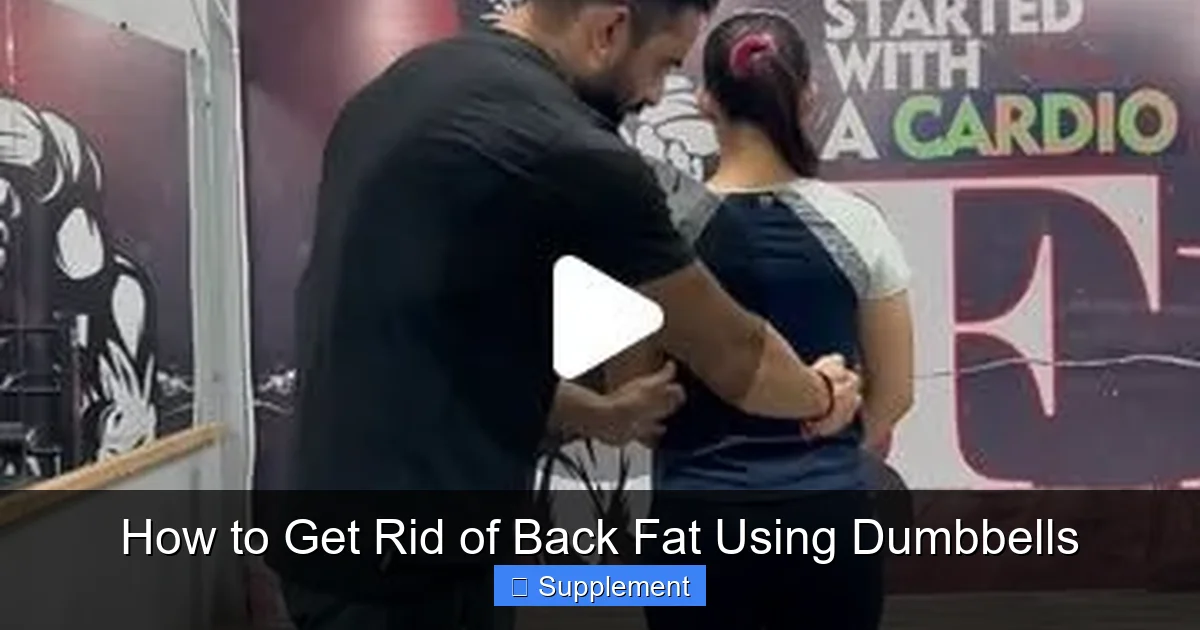
Visual guide about How to Get Rid of Back Fat Using Dumbbells
Image source: i.pinimg.com
Benefits of Dumbbell Training
Unilateral (Single-Arm) Training: This is perhaps the biggest benefit. When you row with one dumbbell at a time (like a single-arm row), you force each side to work independently. This corrects muscle imbalances, ensures both sides develop evenly, and engages your core stabilizers more intensely as you resist rotation. A balanced back looks better and functions better.
Greater Range of Motion: Unlike a fixed barbell or machine path, dumbbells allow for a more natural, longer range of motion. You can get a deeper stretch at the bottom of a row and a fuller squeeze at the top, leading to better muscle activation and growth.
Stabilizer Muscle Engagement: Because the weight is not fixed on a bar, your smaller stabilizer muscles in your shoulders, core, and even your grip must work overtime to keep the dumbbells steady. This builds functional strength and burns more calories.
Accessibility and Versatility: A set of adjustable dumbbells doesn’t take up much space. You can perform a huge variety of exercises to hit your back from every angle, keeping your workouts fresh and effective.
Dumbbells vs. Machines vs. Bodyweight
Machines are great for beginners to learn movement patterns with fixed form, but they often limit the range of motion and reduce stabilizer engagement. They can also create a “machine pattern” strength that doesn’t always translate to real-world movements.
Bodyweight exercises (like pull-ups) are phenomenal for back development but have a high skill barrier and can be difficult to progressively overload if you’re not yet able to do many reps. Dumbbells provide a clear, linear path to increase difficulty by simply adding weight.
Dumbbells hit the sweet spot: they require and build stability, offer full range of motion, and are infinitely scalable. For the specific goal of sculpting a lean, muscular back to get rid of back fat, they are a top-tier choice.
The 5 Best Dumbbell Exercises to Target Back Fat
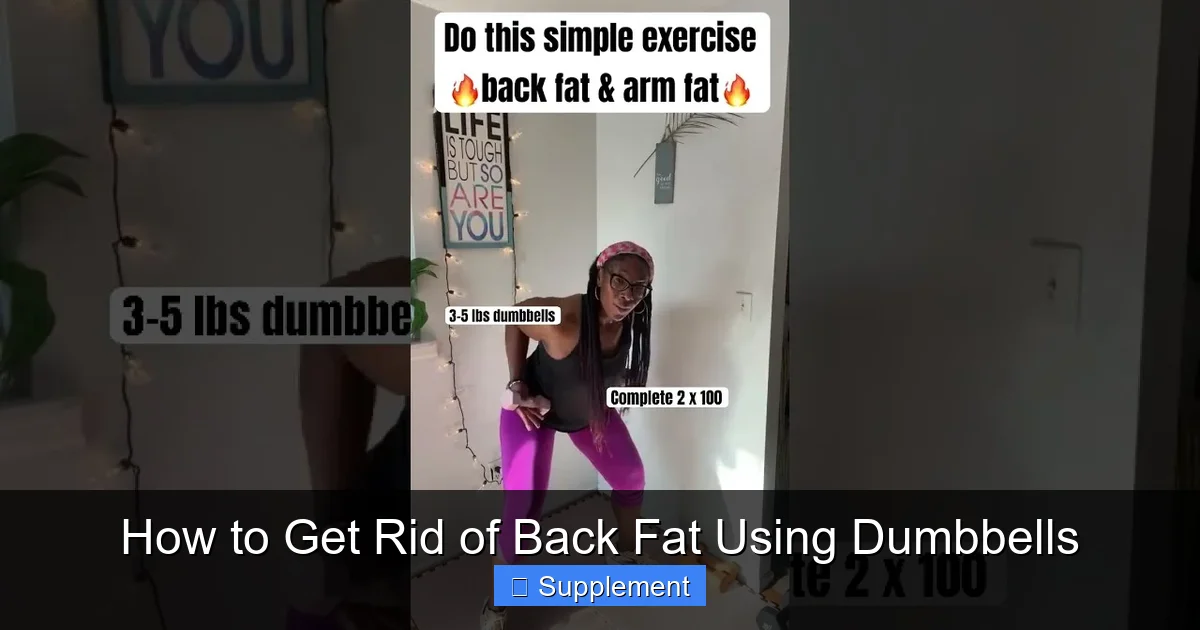
Remember, these exercises build the muscle underneath the fat. As that muscle grows and becomes more defined, and as you lose overall body fat, your back will transform. Perform these with a focus on mind-muscle connection and strict form.
Visual guide about How to Get Rid of Back Fat Using Dumbbells
Image source: i.ytimg.com
1. Bent-Over Two-Arm Dumbbell Row
This is the foundational back builder. It targets the entire back musculature, especially the lats and rhomboids.
- How to do it: Hold a dumbbell in each hand, palms facing your body. Hinge at your hips until your torso is nearly parallel to the floor. Keep your back flat, neck neutral. Let the dumbbells hang straight down. Pull the weights up toward your hips, squeezing your shoulder blades together at the top. Keep your elbows close to your body. Lower with control.
- Key Tip: Initiate the pull by squeezing your back muscles, not by yanking with your arms. Imagine you’re starting a lawnmower.
- Muscles: Latissimus dorsi, rhomboids, posterior delts, traps.
2. Single-Arm Dumbbell Row (Supported)
The unilateral king. It allows for maximum range of motion and core engagement.
- How to do it: Place your left knee and left hand on a flat bench. Your right foot is on the floor. Your torso should be parallel to the bench. Hold a dumbbell in your right hand, arm extended. Pull the dumbbell up to the side of your chest, leading with your elbow. Squeeze your back hard at the top. Lower slowly.
- Key Tip: Keep your torso completely still—no twisting or rocking. Your core is braced like you’re about to be punched.
- Muscles: Same as bent-over row, with added core stabilizer work.
3. Dumbbell Pullover
A unique exercise that hits the lats and the serratus anterior (the “boxing muscle” on your ribcage), creating a tapered, V-taper look that narrows the appearance of your midsection and back.
- How to do it: Lie perpendicular across a bench, with only your upper back resting on it. Your hips are lowered, feet flat on the floor. Hold one dumbbell vertically with both hands above your chest, arms slightly bent. Lower the dumbbell back over your head in a wide arc until you feel a deep stretch in your lats. Pull it back to the start.
- Key Tip: Keep a slight bend in your elbows throughout. The movement comes from your shoulders and lats, not your arms.
- Muscles: Latissimus dorsi, pectoralis major (sternal head), serratus anterior.
4. Renegade Row
A brutal full-body move that annihilates your back and core. It’s essentially a plank with a row.
- How to do it: Start in a high plank position, hands on two dumbbells placed on the floor, shoulders over wrists. Feet are wide for stability. Without moving your torso, row one dumbbell up toward your ribcage, keeping your elbow close. Return it to the floor and repeat on the other side.
- Key Tip: Your body must not rotate. If it’s too hard, widen your feet. If it’s too easy, bring them closer together. Focus on a rigid, straight line from head to heels.
- Muscles: Back (lats, rhomboids), core (obliques, transverse abdominis), shoulders, chest.
5. Dumbbell Shrug
Don’t neglect your traps! The trapezius muscle runs from your neck down your spine. Developing it creates a strong, athletic slope from your neck to your shoulders, which visually minimizes any back fat in that region.
- How to do it: Stand tall, holding a dumbbell in each hand at your sides, palms facing you. Keeping your arms straight, shrug your shoulders straight up toward your ears as high as possible. Hold the peak contraction for a second. Lower with control.
- Key Tip: Avoid rolling your shoulders backward. The movement is pure vertical elevation.
- Muscles: Upper trapezius, levator scapulae.
Building Your Back-Fat-Blasting Dumbbell Routine
Now you have the exercises. How do you string them together into an effective plan? The goal is to stimulate muscle growth (hypertrophy) and strength gains, which will help you get rid of back fat by building a lean, dense foundation.

Visual guide about How to Get Rid of Back Fat Using Dumbbells
Image source: fitnessprogramer.com
Sample Weekly Workout Plan
Aim to train your back 2-3 times per week with at least one day of rest in between sessions to allow for recovery and muscle repair.
Workout A (Focus on Width & Thickness)
- Bent-Over Two-Arm Dumbbell Row: 3 sets of 8-12 reps
- Single-Arm Dumbbell Row: 3 sets of 10-12 reps per arm
- Dumbbell Pullover: 3 sets of 12-15 reps
Workout B (Focus on Core Integration & Detail)
- Renegade Row: 3 sets of 6-10 reps per side (or as many as possible with good form)
- Dumbbell Pullover: 3 sets of 12-15 reps
- Dumbbell Shrug: 4 sets of 15-20 reps
How to Structure Your Week:
- Option 1 (3 days): Workout A on Monday, Workout B on Wednesday, Workout A again on Friday.
- Option 2 (2 days): Workout A on Tuesday, Workout B on Friday.
Always begin with 5-10 minutes of light cardio (jump rope, brisk walk) and dynamic stretches (arm circles, cat-cow) to warm up. After your workout, perform static stretches for your back and chest (doorway chest stretch) to improve posture.
Progressive Overload: How to Keep Making Gains
Your muscles adapt. If you keep lifting the same weight for the same reps, you’ll stop growing and burning maximum calories. You must progressively overload. Here’s how:
- Add Weight: Once you can complete all sets and reps with good form, increase the dumbbell weight by the smallest increment available (e.g., 2.5 lbs / 1.25 kg).
- Add Reps: Aim to do one more rep per set each week until you hit the top of your rep range (e.g., 12 reps), then increase weight.
- Add Sets: Gradually increase from 3 to 4 sets per exercise.
- Improve Form & Mind-Muscle Connection: Sometimes, simply focusing harder on squeezing your back at the peak contraction makes the existing weight feel more effective.
- Decrease Rest Time: Shorten your rest periods between sets from 90 seconds to 60 seconds to increase metabolic stress.
Nutrition and Lifestyle: The Other Half of the Equation
You can do every perfect dumbbell row in the world, but if your diet is off, you will not get rid of back fat. The layer of fat sits on top of the muscle. No amount of muscle building can make that layer disappear if you’re not in a calorie deficit.
Eating for Fat Loss
Create a Moderate Calorie Deficit: Use an online TDEE (Total Daily Energy Expenditure) calculator to estimate your maintenance calories. Subtract 300-500 calories from that number. This creates a sustainable deficit for fat loss without feeling deprived or losing muscle.
Prioritize Protein: Protein is crucial for muscle repair and growth, and it’s highly satiating (keeps you full). Aim for 0.7-1 gram of protein per pound of body weight. Sources: chicken breast, fish, eggs, Greek yogurt, tofu, lentils, protein powder.
Focus on Whole Foods: Fill your plate with vegetables, lean proteins, complex carbs (oats, sweet potatoes, quinoa), and healthy fats (avocado, nuts, olive oil). These foods are nutrient-dense and keep you full. Minimize processed foods, sugary drinks, and excessive alcohol, which are calorie-dense and promote fat storage.
Sleep, Stress, and Hormones
Sleep 7-9 Hours Per Night: Poor sleep disrupts hunger hormones (ghrelin and leptin), increasing cravings and making fat loss harder. It also impairs workout recovery.
Manage Stress: High, chronic stress elevates cortisol, which is linked to increased storage of visceral and back fat. Incorporate stress-reduction techniques like walking, meditation, deep breathing, or hobbies.
Common Mistakes to Avoid When Using Dumbbells for Back Fat
Even with the best exercises, errors can stall your progress or lead to injury. Here’s what to watch out for.
Mistake 1: Neglecting Form for Heavier Weight
This is the #1 mistake. Swinging your body, using momentum, and rounding your back to lift heavier dumbbells turns a back exercise into a lower-back injury risk. The weight should feel challenging but controlled. If you can’t do 8 clean reps, the weight is too heavy. Start lighter, master the movement, and build up.
Mistake 2: Ignoring Other Muscle Groups
Training only your back creates imbalances. A strong back needs strong opposing muscles (chest, shoulders) and a strong core for stability and posture. Ensure your weekly routine includes exercises for your chest, shoulders, core, and legs. A balanced physique is a functional and aesthetically pleasing one.
Mistake 3: Inconsistent Training and Poor Program Design
Doing a random workout once a week won’t cut it. You need consistency (2-3 times per week) and a progressive plan. Also, don’t do the exact same workout every session. Use the “Workout A / Workout B” split above to vary the stimulus slightly while still hitting the key movements.
Tracking Your Progress and Staying Motivated
How do you know if you’re on the path to getting rid of back fat? The scale can be misleading. It doesn’t differentiate between fat and muscle. You might gain muscle and lose fat simultaneously, causing the scale to stay the same—a major motivation killer.
Beyond the Scale
Take Measurements: Every 2-4 weeks, measure your back. Key spots: across the widest part of your back (usually at the bra line), and just below your shoulder blades. A decreasing number means you’re losing fat.
Use Photos: Take front, back, and side photos in the same lighting and clothing every month. Visual comparison is the most powerful tool. You’ll see changes in definition and shape long before the scale moves.
How Clothes Fit: That tight shirt across the back? A looser fit in your favorite tank top? These are real-world indicators of progress.
Celebrating Non-Scale Victories (NSVs)
Celebrate the performance wins! These prove you’re building muscle and getting stronger, which is directly helping your goal.
- Lifting a heavier dumbbell than last month.
- Doing more reps with the same weight.
- Feeling your back muscles engage and squeeze for the first time.
- Having more energy throughout the day.
- Improved posture—your shoulders feel naturally pulled back.
These NSVs are the fuel that will keep you going when motivation dips. Remember, transforming your body is a marathon, not a sprint. Trust the process.
In conclusion, learning how to get rid of back fat using dumbbells is not about a single magic trick. It’s a holistic strategy that marries intelligent strength training—using the exercises and principles outlined above—with a committed focus on nutrition, recovery, and patience. The dumbbells are your tool to build the powerful, shapely back that will become visible as you shed the fat covering it. Start with the exercises, focus on form, be consistent with your workouts and your diet, and track your progress holistically. That stubborn back fat doesn’t stand a chance against a dedicated, informed, and patient you. Now, go lift something heavy and watch your back transform.
Frequently Asked Questions
How often should I do dumbbell back exercises to see results?
For optimal muscle growth and fat loss, aim to train your back with dumbbells 2-3 times per week, with at least one day of rest in between sessions. This frequency allows for adequate stimulation and recovery, which is essential for building muscle and boosting metabolism to help reduce back fat.
Can I combine dumbbell workouts with cardio for better back fat loss?
Absolutely, and you should. Dumbbell strength training builds the muscle that increases your resting metabolism, while cardio (like brisk walking, cycling, or HIIT) creates a larger calorie deficit and improves overall cardiovascular health. For best results, perform your dumbbell workouts on separate days from intense cardio, or do cardio after your strength session.
How long will it take to notice a difference in my back fat from dumbbell exercises?
This varies greatly based on your starting body fat percentage, diet consistency, and genetics. You may feel stronger and notice improved posture within 2-4 weeks. Visible changes in fat loss and muscle definition typically become apparent after 6-12 weeks of consistent training and a proper diet. Patience and consistency are key.
What weight dumbbells should I start with for back exercises?
Choose a weight that allows you to complete the target reps (e.g., 10-12) with perfect form, where the last 2-3 reps feel very challenging but not impossible. For most beginners, this might be anywhere from 5 to 15 pounds per dumbbell, depending on the exercise. When in doubt, start lighter to master the movement pattern first.
Is it normal to feel pain in my back during dumbbell rows?
No. You should feel a strong muscle contraction and burn in your back muscles (lats, rhomboids) during the movement. Sharp, joint, or spinal pain is a sign of poor form (like a rounded back) or using too much weight. Stop immediately, reassess your technique, and lower the weight. If pain persists, consult a fitness professional or doctor.
Are dumbbells better than machines for losing back fat?
Dumbbells are generally more effective for long-term back development and fat loss. They require more stabilizer muscle engagement, allow for a greater range of motion, and correct imbalances through unilateral work. Machines can be useful for beginners to learn patterns, but dumbbells offer more functional benefits and scalability, making them superior for sculpting a lean, defined back.