How to Do Incline Chest Press with Dumbbells
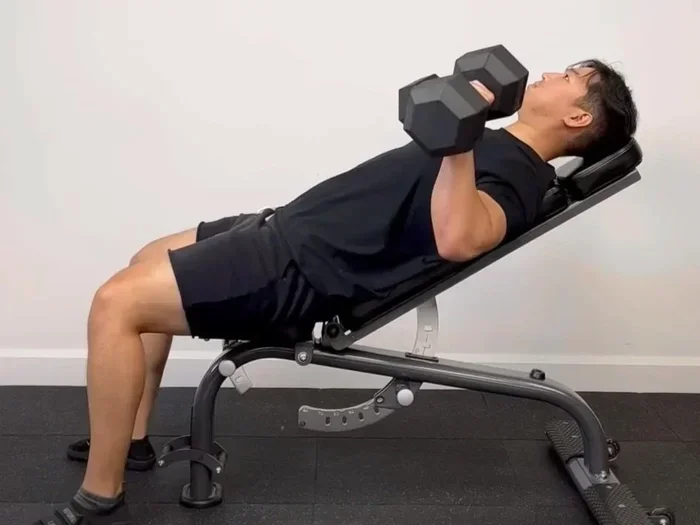
The incline chest press with dumbbells is one of the best exercises for building a strong, well-rounded upper chest. This guide covers proper form, common mistakes, and expert tips to help you get the most out of every rep. Whether you are a beginner or a seasoned lifter, mastering this movement will take your chest training to the next level. You will learn the correct setup, breathing techniques, and variations that target different parts of your chest muscles effectively.
Key Takeaways
- Proper Form Is Everything: Setting the right bench angle and maintaining control throughout the movement prevents injury and maximizes muscle activation.
- Upper Chest Development: The incline press specifically targets the upper chest, which is often underdeveloped in standard flat bench routines.
- Dumbbells Offer More Freedom: Unlike a barbell, dumbbells allow a greater range of motion and help correct muscle imbalances between sides.
- Common Mistakes Slow Progress: Flaring elbows too wide, bouncing the weights, and using too much weight are the top errors to avoid.
- Variations Keep You Growing: Adding single-arm, slow-eccentric, and pause reps challenges your muscles in new ways for continued gains.
📑 Table of Contents
- Why the Incline Chest Press with Dumbbells Deserves a Spot in Your Routine
- How to Properly Perform the Incline Chest Press with Dumbbells
- Muscles Worked During the Incline Chest Press
- Common Mistakes to Avoid
- Incline Chest Press Variations to Try
- How to Program the Incline Chest Press Into Your Workout
- Benefits of the Incline Chest Press with Dumbbells
- Quick Tips for Better Results
- Expert Insights on Upper Chest Training
- Frequently Asked Questions
- Conclusion
Why the Incline Chest Press with Dumbbells Deserves a Spot in Your Routine
If you want a full, balanced chest, you cannot skip the incline chest press with dumbbells. Most people focus too much on flat bench movements and ignore the upper portion of their chest. This creates an imbalance that affects both your physique and your pressing strength. The incline angle shifts the workload directly to the upper chest fibers, which are harder to target with flat exercises alone.
Using dumbbells instead of a barbell adds another layer of benefit. Each arm works independently, which means you can fix strength imbalances over time. Your shoulders and stabilizer muscles also get more involved because dumbbells require more control. This makes the incline dumbbell press a highly effective compound movement for overall upper body development.
You do not need a fancy gym to do this exercise. A simple adjustable bench and a pair of dumbbells are all you need. Whether you train at home or in a commercial gym, the incline chest press fits seamlessly into any routine. Let us break down exactly how to perform it with perfect form.
How to Properly Perform the Incline Chest Press with Dumbbells
Step-by-Step Setup
Getting the setup right is the most important part of this exercise. A poor setup leads to poor results and a higher risk of injury. Follow these steps carefully every time you train.
- Set your adjustable bench to an angle between 30 and 45 degrees. This range targets the upper chest without placing too much stress on the front deltoids.
- Sit down on the bench and hold a dumbbell in each hand. Rest them on your thighs if you need help getting them up.
- Lean back and bring the dumbbells to shoulder level. Your palms should face forward with your elbows bent at about 90 degrees.
- Plant your feet flat on the floor. Keep your back pressed firmly against the bench throughout the entire movement.
- Take a deep breath and press the dumbbells up in a controlled arc until your arms are fully extended.
For a visual guide on getting the dumbbells into position safely, check out our article on how to get dumbbells up for incline bench press. It covers helpful techniques for managing heavier weights without straining.
The Pressing Movement
Once you are set up, the actual pressing motion should feel smooth and deliberate. Push the dumbbells up and slightly inward so they come together at the top. Do not let them crash together. Keep your wrists straight and avoid letting them bend backward. This protects your joints and keeps the tension on your chest muscles.
At the top of the movement, pause for one second and squeeze your chest. Then slowly lower the dumbbells back down to shoulder level. A slow, controlled descent is key. Do not let gravity do the work for you. The lowering phase, known as the eccentric, is where much of the muscle-building stimulus happens.
Breathing Technique
Breathing might seem minor, but it plays a big role in your performance. Inhale as you lower the dumbbells. Exhale forcefully as you press them up. This pattern gives you the energy and stability you need for each rep. Holding your breath is a mistake that can spike your blood pressure and reduce your power output.
Muscles Worked During the Incline Chest Press
The incline chest press with dumbbells hits more than just your chest. It is a compound movement that recruits several muscle groups at the same time. Understanding which muscles are working helps you appreciate the exercise even more.
Primary Muscles
- Upper Chest (Pectoralis Major): The main target. The incline angle shifts emphasis to the clavicular head of the pec, which is often underdeveloped.
- Anterior Deltoids: Your front shoulders assist heavily during the pressing motion, especially at steeper angles.
Secondary Muscles
- Triceps: These muscles extend your elbows and help you lock out each rep.
- Serratus Anterior: Located on the side of your ribcage, this muscle stabilizes your shoulder blades during the press.
- Core Muscles: Your abs and obliques work to keep your torso stable and prevent excessive arching of the lower back.
Compared to a flat bench press, the incline version places less emphasis on the mid and lower chest. This makes it a unique and valuable addition to any chest workout routine. For more chest exercises you can do at home, check out our guide on how to workout your chest with dumbbells at home.
Common Mistakes to Avoid
Even experienced lifters make mistakes on the incline press. These errors reduce effectiveness and increase injury risk. Here are the most common ones and how to fix them.
Flaring Elbows Too Wide
When your elbows flare out at a 90-degree angle to your body, you put excessive strain on your shoulder joints. Instead, keep your elbows at about a 45-degree angle from your torso. This position protects your shoulders and keeps the tension on your chest.
Using Too Much Weight
It is tempting to load up the dumbbells to impress others. But using too much weight forces you to use momentum and poor form. Start with a weight you can control for 8 to 12 reps with perfect technique. You can always increase the load as you get stronger.
Bouncing the Weights at the Top
Some people let the dumbbells slam together at the top of the movement. This wastes energy and removes tension from your chest muscles. Always maintain control and press with intention. A slow, deliberate rep is far more effective than a fast, sloppy one.
Lifting Your Back Off the Bench
If your back arches excessively or you lift your shoulders off the bench, you lose stability and shift the workload away from your chest. Keep your upper back tight and your shoulder blades retracted. This creates a solid foundation for pressing heavy weights safely.
Incline Chest Press Variations to Try
Once you have mastered the standard form, you can add variations to keep your muscles challenged. Variety is one of the best ways to keep making progress in your chest training. Here are some excellent options.
Single-Arm Incline Press
Perform the press one arm at a time. This forces your core to work harder and helps you identify and fix strength imbalances. You will be surprised how much lighter a single dumbbell feels when you do it one arm at a time. Focus on keeping your torso stable and resisting any rotation.
Slow Eccentric Incline Press
Take 3 to 4 seconds to lower the dumbbells on each rep. The slow eccentric increases time under tension, which is a key driver of muscle growth. Keep the same explosive tempo on the way up and the slow tempo on the way down.
Pause Reps
Hold the bottom position for 2 to 3 seconds before pressing up. This eliminates the stretch reflex and forces your muscles to do all the work. Pause reps are brutal but incredibly effective for building strength and muscle size.
Neutral Grip Incline Press
Instead of a pronated (palms forward) grip, hold the dumbbells with your palms facing each other. This variation places less stress on the shoulders and can feel more comfortable for people with shoulder issues. It also hits the chest from a slightly different angle.
For a comprehensive look at dumbbell chest exercises that go beyond the incline press, visit our guide on how to do chest exercises at home with dumbbells. It covers a wide range of movements to round out your routine.
How to Program the Incline Chest Press Into Your Workout
Knowing how to do the exercise is only half the battle. You also need to program it correctly to see results. Here is how to fit the incline chest press with dumbbells into your training plan.
For Beginners
Start with 3 sets of 8 to 10 reps twice per week. Use a moderate weight that challenges you by the last two reps of each set. Rest for 60 to 90 seconds between sets. Focus on learning the movement pattern and building a mind-muscle connection with your upper chest.
For Intermediate Lifters
Aim for 4 sets of 6 to 12 reps, 2 to 3 times per week. You can incorporate variations like pause reps or slow eccentrics on some sets. Increase the weight gradually each week as long as your form stays solid.
For Advanced Lifters
Use a combination of heavy compound sets and high-rep burnout sets. Try 5 sets of 4 to 6 reps with heavier weight, followed by 2 sets of 12 to 15 reps with lighter weight. Drop sets and supersets with flat dumbbell presses also work well for advanced trainees.
| Level | Sets | Reps | Frequency | Rest Between Sets |
|---|---|---|---|---|
| Beginner | 3 | 8-10 | 2x per week | 60-90 seconds |
| Intermediate | 4 | 6-12 | 2-3x per week | 60-90 seconds |
| Advanced | 5 | 4-6 / 12-15 | 3x per week | 90-120 seconds |
Pairing the incline press with other chest exercises creates a well-rounded routine. For example, you can follow it up with a home upper chest workout with dumbbells for complete development. This combination hits the upper chest from multiple angles and ensures no muscle fiber is left untouched.
Benefits of the Incline Chest Press with Dumbbells
The benefits of this exercise go beyond just building bigger chest muscles. Here is why it deserves a permanent spot in your program.
- Balanced Chest Development: It targets the upper chest, which is often neglected and contributes to a fuller, more aesthetic chest appearance.
- Improved Pressing Strength: Strengthening the upper chest directly carries over to flat bench press performance and other pressing movements.
- Better Shoulder Health: The dumbbell version allows a more natural range of motion compared to a barbell, reducing shoulder strain.
- Core Stability: The unilateral nature of dumbbells engages your core more than a barbell, improving overall stability and balance.
- Versatility: You can adjust the bench angle, grip, and tempo to target different muscle fibers and keep your workouts fresh.
Compared to machines or a barbell, dumbbells give you the freedom to move naturally. This freedom reduces the risk of injury and allows you to find the strongest path of motion for your body. If you are interested in comparing dumbbell and barbell options, check out our article on how to do bench press with dumbbells at home for more insights.
Quick Tips for Better Results
Small adjustments can make a big difference in your incline press performance. Keep these quick tips in mind during your next session.
- Start with a light warm-up set. Use 50% of your working weight for 15 reps before moving to heavier sets.
- Squeeze your shoulder blades together. This creates a stable base and activates your upper chest more effectively.
- Do not bounce the dumbbells. Control the weight on the way down and press with purpose on the way up.
- Train your upper chest first. Do your incline press before flat exercises when your energy levels are highest.
- Track your workouts. Write down your sets, reps, and weights. Progress tracking keeps you accountable and motivated.
Expert Insights on Upper Chest Training
Many fitness experts agree that the upper chest is one of the most overlooked muscle groups in training. A well-developed upper chest creates the appearance of a thicker, more powerful chest from the front and adds depth to your physique from the side. The incline press is the single most effective exercise for addressing this area.
One common misconception is that you need a steep incline to hit the upper chest. In reality, an angle of 30 to 45 degrees works best for most people. Steeper angles shift the workload toward the shoulders and reduce chest activation. Finding the sweet spot is key to getting the most out of every rep.
Another expert tip is to focus on the mind-muscle connection. Instead of just moving the weight, think about squeezing your upper chest as you press. This mental focus has been shown to increase muscle activation and improve results over time. Slow down your reps and really feel the chest working through each movement.
Frequently Asked Questions
What angle should the bench be set to for an incline chest press?
Set the bench between 30 and 45 degrees. This range effectively targets the upper chest without overloading your front deltoids. Steeper angles shift too much work to the shoulders and reduce the benefit for your chest muscles.
Can beginners do the incline chest press with dumbbells?
Absolutely. Beginners can start with lighter dumbbells and focus on mastering the movement pattern. Use a bench angle of 30 degrees and perform 3 sets of 8 to 10 reps. As your strength improves, you can increase the angle and the weight gradually.
How often should I train the incline chest press?
Training it 2 to 3 times per week is ideal for most people. This frequency gives your muscles enough stimulus to grow while allowing adequate recovery. Make sure you leave at least 48 hours between sessions targeting the same muscle group.
Is the incline chest press better than the flat bench press?
Neither is better; they serve different purposes. The incline press targets the upper chest more effectively, while the flat press works the mid and lower chest. For a complete chest, you should include both movements in your routine.
What weight should I use for incline dumbbell presses?
Choose a weight that allows you to complete 8 to 12 reps with good form. If you can do more than 12 reps easily, increase the weight slightly. If you cannot complete 6 reps with proper technique, decrease the weight. Progressive overload is the key to long-term gains.
Can I do the incline chest press without a bench?
Yes, you can perform a floor press or use a stability ball as an alternative. However, a proper adjustable bench gives you the best results because it allows you to set the exact angle you need. Without a bench, you lose the ability to target the upper chest as precisely.
Conclusion
The incline chest press with dumbbells is a must-have exercise for anyone serious about building a strong, well-defined chest. It targets the upper chest, improves pressing strength, and offers the unique benefits of dumbbell training. By following the proper form, avoiding common mistakes, and programming the exercise correctly, you will see noticeable improvements in both strength and muscle size.
Start with the basic version, master your technique, and then gradually add variations to keep challenging your muscles. Consistency is what drives results. Show up, put in the work, and trust the process. Your upper chest will thank you for it.
Now that you know exactly how to perform the incline chest press with dumbbells effectively, it is time to put this knowledge into action. Head to your bench, grab those dumbbells, and give your upper chest the attention it deserves. Your future self will appreciate the effort you put in today.