How to Do a Bench Press with Dumbbells
The dumbbell bench press is one of the best upper body exercises you can do. It builds chest muscle, strengthens your shoulders and triceps, and works well at home or in the gym. This guide walks you through proper form, common mistakes, and smart variations so you can train safely and effectively. Whether you are a beginner or looking to lift heavier, you will find everything you need right here.
The bench press with dumbbells is a staple movement in almost every strength training program. It targets your chest, shoulders, and triceps while giving you more freedom of movement than a barbell. If you want to build a bigger, stronger upper body, learning this exercise is a must.
Whether you are working out at home or hitting the gym, the dumbbell bench press fits into almost any routine. It is forgiving on your joints, easy to learn, and incredibly effective. In this guide, we break down everything you need to know to do it right.
We will cover proper form step by step, common mistakes that hold people back, helpful variations, and tips for getting stronger over time. By the end, you will feel confident enough to add this exercise to your next chest workout with ease.
Key Takeaways
- Proper form is everything: Keeping your back flat and feet grounded protects your joints and maximizes chest activation.
- Dumbbells offer more freedom than a barbell: They allow a natural range of motion and help fix muscle imbalances.
- You can train anywhere: The dumbbell bench press works great at home with minimal equipment.
- Variations keep workouts fresh: Incline, decline, and close-grip options target different parts of your chest and arms.
- Progressive overload drives results: Gradually increasing weight or reps builds strength over time.
- Avoid common mistakes: Bouncing weights, flaring elbows too wide, and skipping warm-ups can lead to injury.
📑 Table of Contents
- What Is a Bench Press with Dumbbells?
- Benefits of the Dumbbell Bench Press
- How to Do a Bench Press with Dumbbells: Step by Step
- Common Mistakes to Avoid
- Dumbbell Bench Press Variations
- How to Progress and Get Stronger
- Quick Tips for a Better Dumbbell Bench Press
- Comparison: Dumbbell vs. Barbell Bench Press
- Final Thoughts
What Is a Bench Press with Dumbbells?
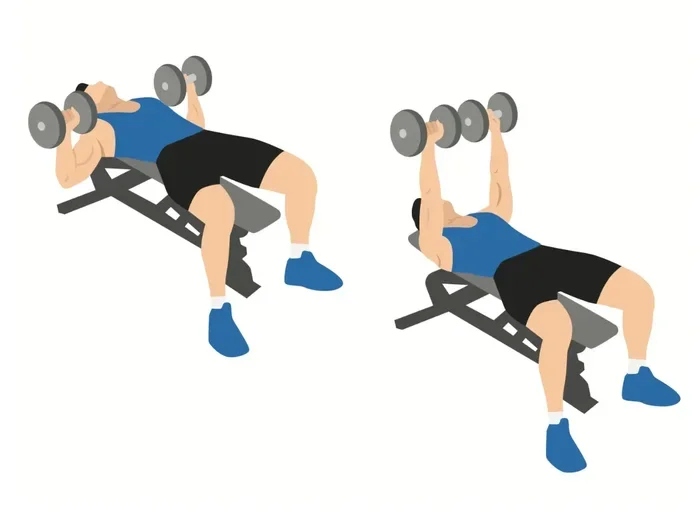
The dumbbell bench press is a compound upper body exercise performed while lying on a flat bench. You press a dumbbell in each hand from chest level up until your arms are fully extended. It is one of the most popular weight training movements for building chest size and strength.
Unlike the barbell bench press, dumbbells let each arm work independently. This means your weaker side cannot hide behind your stronger side. Over time, this helps correct muscle imbalances and builds a more symmetrical physique. The movement also allows a greater range of motion, which can lead to better muscle activation.
This exercise hits your pectoral muscles hard, but it also works your front deltoids and triceps. It is a true compound movement that earns its place in almost every gym workout plan. If you are new to lifting, this is one of the best exercises to start with.
Benefits of the Dumbbell Bench Press
There are many reasons why the dumbbell bench press deserves a spot in your routine. Here are some of the top benefits that make it worth your time.
1. Builds Chest Muscle Effectively
The primary target of this exercise is your chest. The pectoral muscles do the heavy lifting as you press the weight upward. Over time, consistent training leads to noticeable chest growth and improved pressing strength.
2. Improves Muscle Balance
Because each arm handles its own dumbbell, both sides of your chest work equally. This helps prevent the dominance issues that often come with barbell training. A balanced chest not only looks better but also performs better.
3. Easier on Your Joints
Dumbbells allow your wrists and shoulders to move naturally. This reduces stress on your joints compared to a fixed barbell path. If you have had shoulder issues in the past, the dumbbell bench press is often a safer alternative.
4. Works Multiple Muscle Groups
While the chest does most of the work, your triceps and front deltoids also contribute. Your core stabilizes your body throughout the movement. This makes it a fantastic compound exercise for overall upper body development.
5. Great for Home Workouts
You do not need a power rack or a spotter to do this exercise safely. A pair of adjustable dumbbells and a bench is all you need. This makes the bench press with dumbbells perfect for home training setups.
How to Do a Bench Press with Dumbbells: Step by Step
Proper form is the foundation of every great exercise. Follow these steps carefully to get the most out of your dumbbell bench press while staying safe.
Step 1: Set Up Your Position
Sit on the edge of a flat bench with a dumbbell in each hand. Rest the dumbbells on your thighs. Keep your back straight and your core tight. This is your starting position, and it sets you up for a safe lift.
Step 2: Get Onto the Bench
Using your thighs, push the dumbbells up and then carefully lie back on the bench. Plant your feet flat on the floor about shoulder-width apart. Your knees should be bent at roughly 90 degrees. This stable base is essential for generating power.
If you are new to this, you may want to check out our guide on how to do a bench press with dumbbells at home for extra setup tips. A solid setup makes everything else easier.
Step 3: Start the Press
Hold the dumbbells at chest level with your palms facing forward. Your elbows should be tucked at about a 45-degree angle from your body. Take a deep breath, engage your chest, and press the weights upward in a controlled motion.
Lock your arms out at the top without hyperextending your elbows. Squeeze your chest muscles briefly at the peak of the movement. This contraction helps maximize muscle activation and builds strength over time.
Step 4: Lower the Weights
Slowly bring the dumbbells back down to chest level. Control the descent — do not let the weights drop quickly. A slow, controlled negative increases time under tension and promotes muscle growth.
Stop just before the dumbbells touch your chest. Keep your elbows slightly above your body to maintain tension in the chest muscles. Then press back up for the next rep.
Step 5: Finish the Set
After completing your desired reps, push the dumbbells up to thigh level again. Use your knees to help guide them forward. Then sit up carefully and place the dumbbells on the floor or rack. Never drop the weights, especially in a home gym.
Common Mistakes to Avoid
Even experienced lifters make mistakes on the bench press with dumbbells. Knowing what to avoid can save you from injury and help you get better results.
Bouncing the Weights Off Your Chest
Some people bounce the dumbbells off their chest to cheat reps. This is risky and reduces muscle activation. It can also cause rib or shoulder injuries. Always control the descent and pause briefly at the bottom.
Flaring Elbows Too Wide
Letting your elbows fly out to the sides puts too much stress on your shoulder joints. Keep your elbows at about a 45 to 60-degree angle from your torso. This protects your shoulders while still engaging the chest effectively.
Arching Your Back Excessively
A slight natural arch is fine, but over-arching your back shifts the workload away from your chest. It also increases the risk of lower back pain. Keep your back flat against the bench and your core engaged throughout the movement.
Skipping the Warm-Up
Jumping straight into heavy dumbbells without warming up is a fast track to injury. Start with lighter weights and perform a few warm-up sets. This prepares your muscles and joints for the heavier work ahead.
Using Too Much Weight Too Soon
Ego lifting is one of the most common mistakes in any gym. Using dumbbells that are too heavy forces you to sacrifice form. Start with a weight you can control and increase gradually over weeks and months.
For tips on handling heavier weights safely, check out our article on how to get heavy dumbbells up for bench press. It covers smart strategies for loading up without compromising safety.
Dumbbell Bench Press Variations
Once you have mastered the standard dumbbell bench press, adding variations keeps your training fresh and challenges your muscles in new ways. Here are some excellent options.
Incline Dumbbell Bench Press
Set your bench to an incline of about 30 to 45 degrees. This shifts more focus to your upper chest and front deltoids. The incline variation is excellent for building a fuller, more balanced chest. It also helps improve pressing strength for sports and daily activities.
If you want detailed guidance on this variation, our article on how to get dumbbells up for incline bench press is a great resource. It covers setup and form specifics for the incline position.
Close-Grip Dumbbell Bench Press
Instead of keeping your hands shoulder-width apart, bring them closer together. This places more emphasis on your triceps and inner chest. It is a fantastic way to add arm size and pressing power to your routine.
Our guide on how to do close grip bench press with dumbbells provides a complete breakdown of this variation. It is worth checking out if you want to target your triceps more effectively.
Single-Arm Dumbbell Bench Press
This variation involves pressing one dumbbell at a time while the other arm stabilizes. It is excellent for identifying and fixing strength imbalances. It also challenges your core stability more than the standard two-arm version.
Floor Press with Dumbbells
If you do not have a bench, you can perform the bench press with dumbbells on the floor. Lie on your back with your knees bent and press the dumbbells up from the ground. The floor limits your range of motion slightly, but it still provides a great chest and triceps workout.
How to Progress and Get Stronger
The dumbbell bench press is a progressive exercise. That means you should aim to get stronger over time. Here are proven strategies to keep making gains.
Add Reps or Weight Gradually
The most straightforward way to progress is to either add more reps or increase the weight. Try adding one or two reps each week. Once you can comfortably complete your target reps, increase the dumbbell weight by a small amount.
Control Your Tempo
Slowing down the lowering phase of each rep increases muscle time under tension. Try a 3-second descent followed by a 1-second pause at the bottom. This simple technique can dramatically improve muscle growth without adding more weight.
Pair It with Complementary Exercises
The dumbbell bench press works best when paired with other chest and upper body exercises. Consider adding dumbbell flyes, push-ups, or shoulder presses to your routine. This creates a well-rounded upper body workout that builds balanced strength.
Train Consistently
Consistency matters more than intensity. Aim to train your chest two to three times per week with at least one rest day between sessions. Over weeks and months, this consistent effort adds up to serious strength and muscle gains.
For beginners looking to build a solid foundation, our article on how to workout with dumbbells at home for beginners offers a great starting point. It covers essential exercises and tips for new lifters.
Quick Tips for a Better Dumbbell Bench Press
- Keep your feet planted: A stable base gives you more power and balance during each rep.
- Use a full range of motion: Lower the dumbbells until your upper arms are slightly below parallel to the floor.
- Breathe properly: Inhale as you lower the weight and exhale as you press it up.
- Grip the dumbbells firmly: A secure grip improves control and reduces wrist strain.
- Focus on your chest: Think about squeezing your chest muscles as you press. This mind-muscle connection improves results.
- Use a spotter or safety pins: Especially when lifting heavier, always have a way to safely end a set.
Comparison: Dumbbell vs. Barbell Bench Press
Both the dumbbell bench press and barbell bench press are excellent chest builders. But they have some key differences that may make one better for your goals.
| Feature | Dumbbell Bench Press | Barbell Bench Press |
|---|---|---|
| Range of Motion | Greater, allows more stretch | Limited by the bar |
| Muscle Balance | Each arm works independently | Stronger side can compensate |
| Joint Friendliness | More natural movement path | Fixed path can stress joints |
| Weight Capacity | Lower max weight | Higher max weight possible |
| Home Gym Friendly | Yes, needs only dumbbells and bench | Requires a squat rack or power rack |
| Best For | Muscle building and balance | Max strength and heavy lifting |
Both exercises have a place in a well-rounded training program. If your goal is muscle building and balanced development, the dumbbell bench press is hard to beat. If you want to test your max strength, the barbell version is the better choice.
Final Thoughts
The bench press with dumbbells is one of the most effective and accessible exercises you can do for your upper body. It builds chest muscle, strengthens your shoulders and triceps, and works well in any setting. Whether you are training at home or in a gym, this exercise delivers real results.
Focus on proper form, avoid the common mistakes we covered, and progressively challenge yourself over time. The variations we discussed give you plenty of ways to keep your workouts interesting and effective. Pair the dumbbell bench press with a balanced chest workout routine, and you will be on your way to building a stronger, more muscular upper body.
Start with a weight you can control, stay consistent, and trust the process. The gains will come. Happy lifting.
Frequently Asked Questions
What muscles does the bench press with dumbbells work?
The primary muscles worked are the pectorals (chest), but the front deltoids (shoulders) and triceps also play a big role. Your core muscles engage to stabilize your body throughout the movement. This makes it a fantastic compound exercise for overall upper body strength.
Is the dumbbell bench press good for beginners?
Absolutely. The dumbbell bench press is one of the most beginner-friendly chest exercises available. Dumbbells allow a natural range of motion and are easier to control than a barbell. Start with lighter weights, focus on form, and gradually increase as you get stronger and more confident.
How much weight should I start with for dumbbell bench presses?
Start with a weight you can comfortably press for 10 to 12 reps with good form. Most beginners begin with 15 to 25 pounds per dumbbell. The key is to master the movement pattern before adding heavier weight. You can increase the load every few weeks as your strength improves.
Can I do the bench press with dumbbells at home without a bench?
Yes, you can perform a floor press by lying on the floor instead of a bench. This limits the range of motion slightly but still provides an effective chest and triceps workout. For more ideas on chest exercises without equipment, check out our guide on working chest with dumbbells and no bench.
How often should I train the bench press with dumbbells?
Training your chest two to three times per week is ideal for most people. Make sure you leave at least one rest day between sessions to allow your muscles to recover. Consistency over time is what drives real strength and muscle gains.
What is the difference between dumbbell and barbell bench press?
Dumbbells allow a greater range of motion and each arm works independently, which helps fix muscle imbalances. A barbell allows you to lift heavier weights and is better for testing max strength. Both are excellent exercises, and many lifters benefit from including both in their routine.
=== CONCLUSION ===
The bench press with dumbbells is a foundational exercise that belongs in every strength training program. It builds chest muscle, improves pressing strength, and works beautifully in both home and gym settings. With proper form, smart progression, and consistent effort, you will see real results in no time.
Remember to avoid the common mistakes we covered, try different variations to keep things fresh, and always prioritize safety over ego. Your chest, shoulders, and triceps will thank you. Now go out there and press some dumbbells.