How to Clean Yoga Mat After Hot Yoga
Cleaning your yoga mat after hot yoga is essential to remove sweat, bacteria, and buildup that can cause odors and degrade the mat over time. This guide walks you through simple, effective methods to clean yoga mat after hot yoga using household items or dedicated mat cleaners, so your mat stays fresh, hygienic, and ready for your next session.
Key Takeaways
- Rinse your mat immediately after every hot yoga session to prevent bacteria buildup.
- Use a gentle yoga mat cleaner or a DIY vinegar-water solution for safe disinfection.
- Never machine wash or submerge your mat, as this damages the material and structure.
- Dry your mat completely before rolling it up to avoid mold and mildew growth.
- Deep clean your mat weekly with a thorough scrub and air-dry for best hygiene results.
- Use a yoga towel during practice to absorb sweat and reduce mat cleaning frequency.
- Store your mat rolled loosely in a breathable bag to maintain freshness longer.
📑 Table of Contents
Why You Need to Clean Your Yoga Mat After Hot Yoga
Hot yoga pushes your body to the limit. You sweat. A lot. And all that sweat soaks into your yoga mat, creating a perfect breeding ground for bacteria and odor. If you have ever unrolled your mat after class only to be hit with a funky smell, you know exactly what I mean.
Cleaning your mat after every hot yoga session is not just about freshness. It is about hygiene and protecting your skin. When sweat sits on a mat, it feeds bacteria that can cause breakouts and skin irritation. The good news? A proper cleaning routine takes just a few minutes and keeps your mat in great shape for months.
In this guide, I will walk you through everything you need to know about how to clean yoga mat after hot yoga. From simple wipe-downs to deep cleaning methods, you will find practical steps that actually work. Let us get into it.
What Happens When You Skip Cleaning Your Mat
It is tempting to roll up your mat and toss it in the corner after class. But skipping the clean-up comes with real consequences. Here is what builds up on an unwashed yoga mat:
- Bacteria and germs thrive in the warm, moist environment of a used mat.
- Odor buildup gets worse over time and becomes harder to remove.
- Sweat residue creates a sticky film that affects your grip during the next session.
- Skin irritation and breakouts can develop from repeated contact with a dirty surface.
- Mat degradation happens faster when sweat and oils break down the material.
The bottom line is simple. A little effort after each session saves you from bigger problems later. Think of it as part of your post-workout cooldown. Just like stretching, it matters.
Simple Steps to Clean Your Yoga Mat After Hot Yoga
You do not need fancy products or a lot of time. Here is a straightforward routine you can follow every single time. These steps will keep your mat fresh and ready for your next practice.
Step 1: Wipe It Down Right Away
As soon as you finish your session, grab a clean cloth or paper towel. Use it to wipe off the surface sweat while it is still wet. This prevents sweat from soaking deep into the material. Do not let your mat sit bundled up in a bag while it is still damp.
Step 2: Spray With a Cleaning Solution
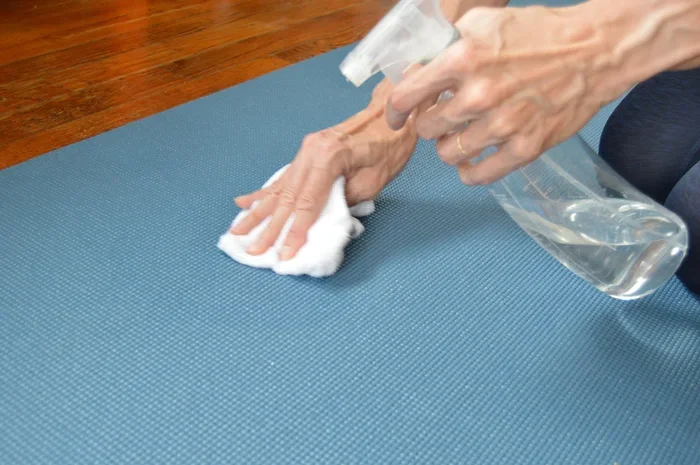
Next, spray both sides of your mat with a yoga mat cleaner. You can use a store-bought spray or make your own at home. A simple mix of water and a few drops of tea tree oil works wonders. Spray generously but do not soak the mat. You want it damp, not dripping.
Step 3: Gently Scrub the Surface
Use a soft cloth or a gentle brush to work the cleaner into the mat. Focus on areas where you noticed the most sweat buildup, especially around the hands and feet zones. Gentle circular motions lift dirt and oils without damaging the surface texture.
Step 4: Rinse or Wipe Again
For mats that can handle moisture, a quick rinse helps remove any remaining cleaner and sweat. If your mat material does not tolerate water well, use a damp cloth with plain water to wipe away the cleaning solution. Make sure no soap residue is left behind.
Step 5: Dry It Completely
Hang your mat over a shower rod or lay it flat on a clean towel. Air drying is the best method. Avoid direct sunlight for long periods, as it can break down the material. Make sure the mat is completely dry before you roll it up. Trapped moisture leads to mold and mildew, which is exactly what you are trying to avoid.
Best Cleaning Solutions for Hot Yoga Mats
Not all cleaning solutions work the same way. Some are gentle, some are powerful, and some are simply better for certain mat types. Here is a quick look at your options for yoga mat cleaning.
| Cleaning Solution | Best For | Pros | Cons |
|---|---|---|---|
| Water + White Vinegar | All mat types | Natural, disinfects, cheap | Strong smell that fades quickly |
| Water + Tea Tree Oil | Sensitive skin | Antibacterial, pleasant scent | Slightly more expensive |
| Commercial Yoga Mat Spray | Quick cleanings | Convenient, no mixing needed | Can be costly over time |
| Baking Soda Paste | Deep odor removal | Neutralizes tough smells | Requires rinsing |
| Mild Dish Soap + Water | Heavy sweat buildup | Effective, easy to find | Must rinse thoroughly |
If you want a natural approach, vinegar and water is one of the most popular choices. Mix equal parts white vinegar and water in a spray bottle. Spritz your mat after every hot yoga session, and you will notice a big difference in smell and cleanliness. Just make sure your mat material can handle vinegar before you go all in.
For those dealing with stubborn odors, a baking soda paste works wonders. Mix baking soda with a small amount of water, apply it to the affected areas, let it sit for 15 minutes, then wipe clean. This method is especially effective for mats that have absorbed weeks of sweat without proper care.
How to Dry and Store Your Yoga Mat the Right Way
Drying is just as important as cleaning. A mat that is rolled up while still wet will develop mold and bacteria within hours. Here are some tips to make sure your mat stays fresh between sessions.
First, always air dry your mat in a well-ventilated area. A bathroom with a fan works great. Lay the mat flat or hang it over a sturdy hanger. The goal is maximum airflow on both sides. If you are in a hurry, use a clean towel to pat down excess moisture before letting it finish drying naturally.
When it comes to storage, never store a damp mat in a bag or closed container. Use a breathable yoga mat bag or a simple cotton strap. These allow air to circulate and prevent moisture from getting trapped. Proper storage extends the life of your mat and keeps it hygienic for every practice.
Long-Term Yoga Mat Care Tips for Hot Yoga Practitioners
Cleaning after every session is the foundation, but a few extra habits take your mat maintenance to the next level. Here are some expert-backed tips that make a real difference.
- Deep clean your mat once a week. Even with regular wipe-downs, a deeper clean once a week removes buildup that surface cleaning misses. You can use a bathtub soak or a gentle machine wash depending on your mat type.
- Use a yoga towel during class. A microfiber yoga towel absorbs sweat before it reaches your mat. This simple addition cuts down on how much cleaning you need to do afterward.
- Replace your mat when it wears out. No amount of cleaning brings a mat back to life once the surface is damaged. Watch for peeling, cracking, or persistent odors that do not go away.
- Avoid harsh chemicals. Bleach and strong detergents can break down the material and leave residue that irritates your skin. Stick to gentle, natural cleaners whenever possible.
- Wash your hands before practice. This reduces the amount of oil and dirt transferred to your mat in the first place. It is a small habit with a big impact.
If you are serious about your hot yoga practice, your mat deserves the same attention you give your body. A clean mat supports better grip, safer movements, and a more enjoyable experience on the floor. Plus, it simply feels better to unroll a fresh, clean mat every time you step onto it.
Remember, the goal is not perfection. It is consistency. A quick wipe-down after each session and a deeper clean once a week will keep your mat in excellent condition. Your future self, and your nose, will thank you.
Frequently Asked Questions
How To Clean Yoga Mat After Hot Yoga?
After every hot yoga session, spray your mat with a gentle cleaner or a mix of water and mild dish soap. Wipe it down with a soft cloth and let it air dry completely before rolling it up. This prevents bacteria and odor from building up.
How Often Should You Deep Clean Your Yoga Mat?
A deep clean once a week is usually enough if you practice hot yoga regularly. If you notice a strong smell or visible grime, go ahead and clean it more often. Regular cleaning keeps your mat hygienic and extends its lifespan.
Can You Use Vinegar to Clean a Yoga Mat?
Yes, a mix of white vinegar and water works great as a natural cleaner for your mat. Spray it on, wipe gently, and rinse with a damp cloth if needed. Just avoid using too much vinegar on mats with delicate surfaces, as it can cause damage over time.
What’s the Best Way to Get Rid of Smells from a Hot Yoga Mat?
After cleaning, sprinkle baking soda on your mat and let it sit for 15 minutes before wiping it off. You can also use essential oils like tea tree or lavender for a fresh scent. Let the mat dry fully in open air to eliminate trapped moisture and odor.
Can You Put a Yoga Mat in the Washing Machine?
Most yoga mats should not go in the washing machine, as the agitation can tear or warp the material. Stick to hand cleaning with a gentle spray and cloth for best results. If your mat is machine washable, check the manufacturer’s label first.
How Long Does It Take for a Yoga Mat to Dry After Cleaning?
A yoga mat usually takes 30 minutes to an hour to dry, depending on the material and thickness. Hang it over a shower rod or lay it flat on a clean towel in a well-ventilated area. Make sure it is completely dry before storing it to prevent mold and mildew.