How to Build Up Arm Muscles with Dumbbells
Building up arm muscles with dumbbells is one of the most effective and accessible ways to gain strength and size. You do not need a gym membership or fancy equipment. This guide covers the best dumbbell exercises for your biceps, triceps, and forearms, along with a simple workout plan you can start today. You will learn proper form, common mistakes, and how to keep making progress over time.
Want bigger arms without joining a gym? You are in the right place. Building arm muscles with dumbbells is one of the simplest and most effective ways to transform your upper body. Whether you are a complete beginner or someone looking to break through a plateau, this guide has everything you need.
Arms are one of the most visible muscle groups on your body. They are also one of the most rewarding to train because you can see real progress relatively quickly. The key is knowing which exercises work, how to do them correctly, and how to structure your routine for steady gains.
In this article, we will walk you through the best dumbbell exercises for each arm muscle group. We will also cover how to set up a weekly routine, avoid common mistakes, and fuel your body for growth. By the end, you will have a clear roadmap to build bigger arms at home with nothing more than a pair of dumbbells.
Key Takeaways
- Dumbbells are all you need: A simple pair of dumbbells can deliver serious arm growth at home.
- Target all three muscle groups: Train your biceps, triceps, and forearms for balanced, full-arm development.
- Form matters more than weight: Using proper technique prevents injury and maximizes muscle activation.
- Progressive overload drives growth: Gradually increase weight or reps to keep challenging your muscles.
- Consistency beats intensity: A regular routine with good nutrition will produce better results than sporadic heavy workouts.
- Rest is part of the process: Muscles grow during recovery, not during the workout itself.
📑 Table of Contents
Why Dumbbells Are Perfect for Building Arm Muscles
Dumbbells are incredibly versatile. Unlike barbells, they allow each arm to work independently. This means you can fix strength imbalances and ensure both arms grow evenly. They also take up very little space, making them ideal for home workouts.
Here is why dumbbells are a top choice for arm strength training:
- Natural range of motion: Dumbbells let your joints move freely, which reduces strain and improves muscle activation.
- Easy to adjust intensity: You can simply grab a heavier pair when exercises become too easy.
- Safe and beginner-friendly: If you lose balance, you can just drop a dumbbell to the side.
- Affordable and compact: A single adjustable dumbbell set can replace an entire home gym.
One of the best things about dumbbell training is that you can target every part of your arm. Your arms are made up of several muscles, and each one needs direct attention for balanced growth.
The Anatomy of Your Arms: What You Are Training
To build up your arms effectively, you need to understand what muscles you are working. Your arms are not just one big muscle. They are made up of several distinct groups that each play a different role.
Biceps Brachii
The biceps sit on the front of your upper arm. They are responsible for elbow flexion, which means bending your arm. The biceps also help with rotating your forearm. When most people think about bigger arms, the biceps are usually the first muscle they picture.
Key exercises for bicep development include curls, hammer curls, and concentration curls. These movements directly target the bicep and help it grow in both size and strength.
Triceps Brachii
The triceps make up about two-thirds of your upper arm mass. They sit on the back of your arm and are responsible for straightening your elbow. Many people neglect their triceps, but training them is essential for overall arm size.
Effective tricep exercises include overhead extensions, skull crushers, and tricep kickbacks. If you want bigger arms, do not skip your triceps. They are the secret to arm size that turns heads.
Forearms
Your forearms run from your elbow to your wrist. They control your grip and wrist movements. Strong forearms improve your performance in almost every exercise, from pulling movements to carrying heavy objects.
Wrist curls, reverse wrist curls, and farmer walks are excellent for forearm development. Many people overlook this area, but visible forearms add a lot to the overall look of your arms.
The Best Dumbbell Exercises for Arm Growth
Now let us get into the exercises. These movements are proven to stimulate arm muscle growth effectively. Each one targets a specific muscle group and can be done at home with minimal space.
Bicep Exercises
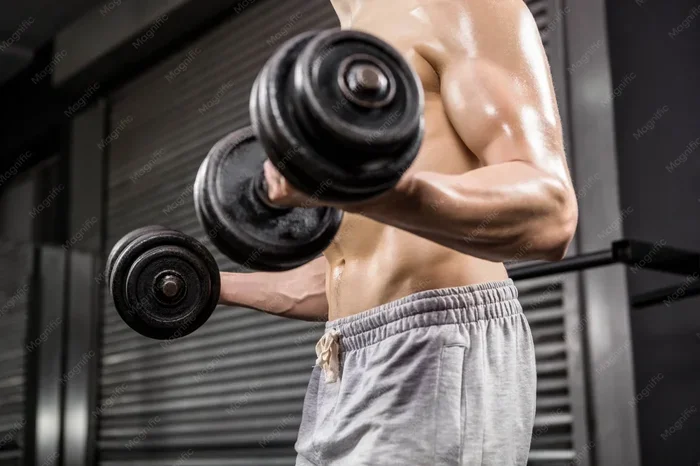
Dumbbell Bicep Curl: Stand tall with a dumbbell in each hand. Keep your elbows close to your sides. Curl the weights up slowly, squeezing at the top. Lower them back down with control. This is the foundation of any bicep workout.
Hammer Curls: Hold the dumbbells with a neutral grip, meaning your palms face each other. Curl up the same way you would with a standard curl. Hammer curls target the brachialis, a muscle underneath the bicep that adds width to your arm.
Concentration Curls: Sit on a bench or chair. Rest your elbow against the inside of your thigh. Curl the dumbbell up in a slow, controlled motion. This isolation movement really focuses the tension on the bicep.
Tricep Exercises
Overhead Tricep Extension: Hold one dumbbell with both hands overhead. Lower it behind your head by bending your elbows. Extend back up to full arm length. This exercise hits all three heads of the tricep.
Tricep Kickback: Lean forward with a flat back. Hold a dumbbell in each hand with your elbows bent at 90 degrees. Extend your arms straight back. Squeeze your triceps at the top and lower slowly.
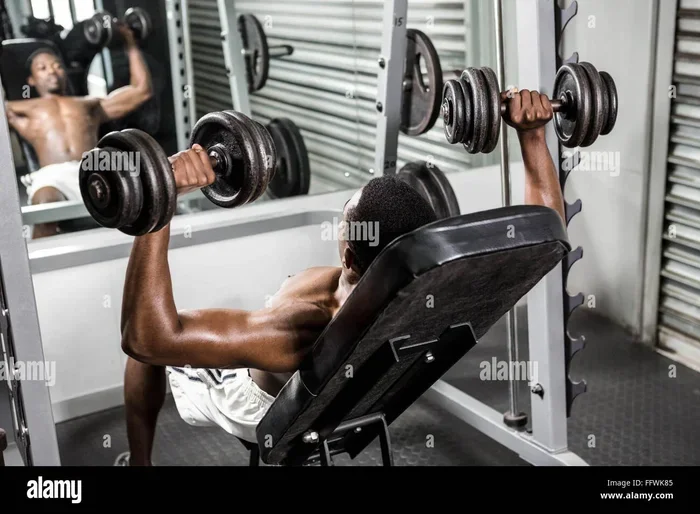
Skull Crushers: Lie on your back on the floor or a bench. Hold dumbbells above your shoulders with straight arms. Bend your elbows to lower the weights toward your forehead. Press back up to the starting position. This is a powerful movement for building tricep mass.
Forearm Exercises
Wrist Curls: Sit down and rest your forearms on your thighs. Hold a dumbbell in each hand with your palms facing up. Curl the weights up by flexing your wrists. Lower them slowly. This builds the muscles on the front of your forearms.
Reverse Wrist Curls: The same position, but with your palms facing down. Extend your wrists upward. This targets the muscles on the back of your forearms and helps create balanced forearm development.
Farmer Walks: Hold a heavy dumbbell in each hand and walk for 30 to 60 seconds. Keep your posture tall and your core tight. This simple exercise builds grip strength and forearm size like nothing else.
How to Structure Your Arm Workout Routine
Having the right exercises is only half the battle. You also need a well-structured routine to see consistent results. A good dumbbell arm workout balances volume, intensity, and recovery.
Sample Weekly Arm Routine
Here is a simple routine you can follow. Aim to train your arms two to three times per week. Allow at least 48 hours of rest between sessions for the same muscle group.
Day 1 (Bicep Focus):
- Dumbbell Bicep Curls — 3 sets of 10 to 12 reps
- Hammer Curls — 3 sets of 10 to 12 reps
- Concentration Curls — 2 sets of 12 to 15 reps
Day 2 (Tricep Focus):
- Overhead Tricep Extension — 3 sets of 10 to 12 reps
- Tricep Kickbacks — 3 sets of 10 to 12 reps
- Skull Crushers — 2 sets of 12 to 15 reps
Day 3 (Forearm Focus):
- Wrist Curls — 3 sets of 15 reps
- Reverse Wrist Curls — 3 sets of 15 reps
- Farmer Walks — 3 rounds of 45 seconds
Progressive Overload: The Key to Growing Arms
Your muscles grow when they are challenged beyond what they are used to. This principle is called progressive overload. Without it, your muscles have no reason to adapt and get bigger.
You can apply progressive overload in several ways:
- Increase weight: Add 1 to 5 pounds to your dumbbells every few weeks.
- Increase reps: If you used to do 10 reps, try for 12 or 15.
- Increase sets: Add one extra set to each exercise over time.
- Improve form: Slower, more controlled reps increase time under tension.
The most important thing is to track your progress. Keep a workout log and write down your weights and reps. This way, you can see exactly how you are improving over time.
Common Mistakes to Avoid When Training Arms with Dumbbells
Even with the best exercises, mistakes can slow down your progress. Here are the most common errors people make when training their arms with dumbbells.
Using Too Much Weight
This is the number one mistake. When the weight is too heavy, you start swinging and using momentum. This takes the tension off your target muscles and increases your risk of injury. Choose a weight that challenges you but still allows you to complete each rep with proper form.
Skipping the Triceps
Many lifters spend all their time on bicep curls and forget about their triceps. Since the triceps make up the majority of your upper arm, neglecting them will limit your overall arm size. Make sure tricep work is a regular part of your arm workout plan.
Rushing Through Reps
Speed is not your friend when it comes to arm muscle growth. Fast, sloppy reps use momentum instead of muscle. Slow down. Take two to three seconds on the way up and two to three seconds on the way down. The squeeze at the top matters too.
Not Resting Enough
Your muscles do not grow during the workout. They grow during rest. Training your arms every single day without recovery will lead to fatigue and even injury. Give each muscle group at least 48 hours to recover before hitting it again.
Ignoring Nutrition
No matter how hard you train, you will not build muscle without proper nutrition. Your body needs protein to repair and grow muscle tissue. Aim for at least 0.7 to 1 gram of protein per pound of body weight each day. Eat whole foods, stay hydrated, and get enough sleep.
Tips for Faster Arm Growth
Want to speed up your results? Here are some practical tips that can make a real difference in your arm training journey.
- Focus on the mind-muscle connection: Think about the muscle working during every rep. Feel it contract and stretch.
- Use a full range of motion: Do not cut reps short. Full range of motion leads to better muscle development.
- Train arms after compound movements: If you are doing a full-body workout, train arms after your bigger lifts like rows and presses.
- Vary your grip: Changing your hand position shifts the emphasis on your muscles and prevents plateaus.
- Stay consistent: Results come from showing up week after week. Stick with your plan and trust the process.
If you are new to training, you may also want to check out how to build arm muscles at home with dumbbells for a more detailed breakdown of beginner-friendly routines. The principles are the same, but a dedicated beginner guide can help you get started on the right foot.
For those who want to focus specifically on bicep development, learning how to get bigger biceps at home with dumbbells will give you targeted exercises and tips to add more mass to the front of your arms. And do not forget the back of your arm. Understanding how to get bigger triceps at home with dumbbells ensures you are not leaving any muscle group behind in your pursuit of bigger, more balanced arms.
Finally, if your goal is overall arm size and definition, you will benefit from exploring how to get bigger arms at home with dumbbells for a complete approach that covers all the tips, exercises, and strategies you need to see real results.
Conclusion
Building up arm muscles with dumbbells is one of the most straightforward and rewarding fitness goals you can pursue. You do not need a expensive gym membership or complicated equipment. A pair of dumbbells, a solid plan, and consistency are all you need.
Focus on training all three muscle groups — your biceps, triceps, and forearms. Use proper form, apply progressive overload, and give your muscles time to recover. Eat enough protein, stay hydrated, and get quality sleep. These habits will accelerate your results and keep you healthy.
Start with the routine in this guide. Track your progress. Adjust as you go. Within a few weeks, you will notice your arms getting stronger and more defined. The journey to bigger arms starts with a single rep. Pick up those dumbbells and get to work.
Frequently Asked Questions
How long does it take to build arm muscles with dumbbells?
Most people start seeing noticeable changes in 4 to 6 weeks with consistent training. Significant muscle growth typically takes 8 to 12 weeks or more, depending on your diet, rest, and training intensity.
Can I build big arms with just dumbbells at home?
Absolutely. Dumbbells provide enough resistance and variety to build substantial arm muscle at home. The key is progressive overload, proper form, and consistent effort over time.
How heavy should my dumbbells be for arm exercises?
Choose a weight that challenges you in the 8 to 15 rep range. If you can easily do 15 reps, the weight is too light. If you cannot complete 8 reps with good form, it is too heavy.
Should I train arms every day?
No. Muscles need rest to grow. Training your arms two to three times per week is ideal for most people. Allow at least 48 hours between sessions for the same muscle group.
What is the best exercise for biceps with dumbbells?
The dumbbell bicep curl is the most effective and foundational bicep exercise. It targets the bicep directly and is easy to learn. Hammer curls and concentration curls are also excellent additions.
Do I need supplements to build arm muscles?
Supplements are not required. A balanced diet with enough protein, carbohydrates, and healthy fats provides what your muscles need to grow. Protein powder can be helpful but is not essential.
=== QUICK SUMMARY ===
Building up arm muscles with dumbbells is one of the most effective and accessible ways to gain strength and size. You do not need a gym membership or fancy equipment. This guide covers the best dumbbell exercises for your biceps, triceps, and forearms, along with a simple workout plan you can start today. You will learn proper form, common mistakes, and how to keep making progress over time.