How Much Should I Be Able to Barbell Curl
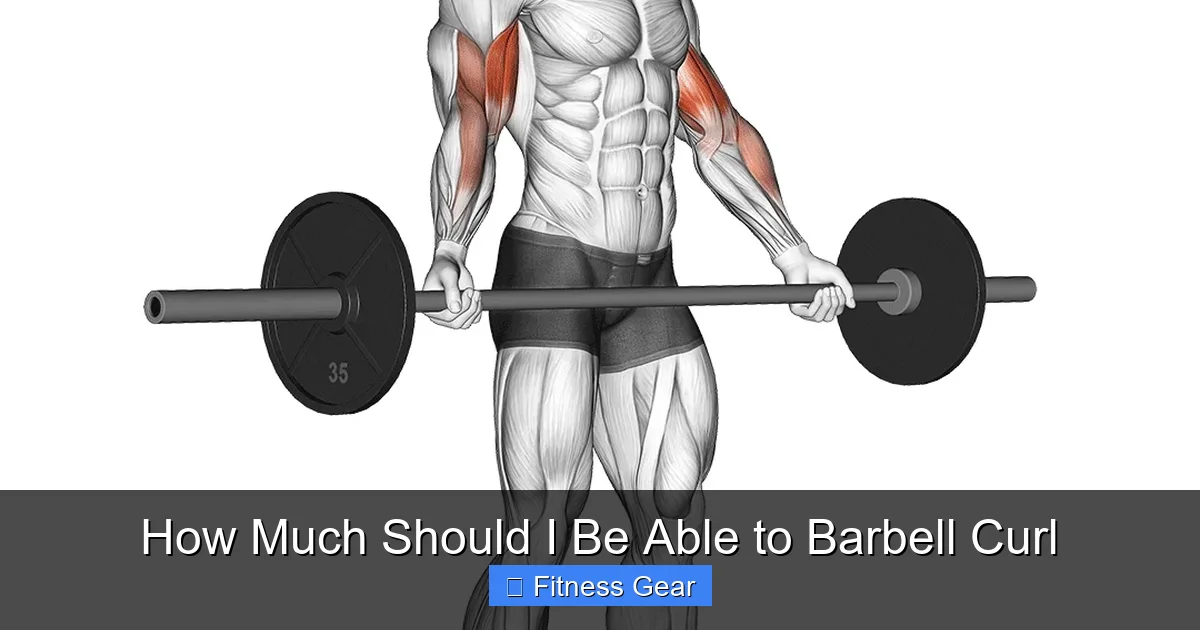
Wondering how much you should be able to barbell curl? This guide breaks down the numbers by age, gender, and experience, shows you how to test your max safely, and offers practical tips to close the gap. Get clear benchmarks and step‑by‑step progress plans so you can lift confidently.
Key Takeaways
- Benchmark ranges: Learn the typical barbell curl weight for beginners, intermediates, and advanced lifters.
- Factors that matter: Age, gender, body weight, and training history all influence your ideal curl weight.
- Testing safely: Use a proper warm‑up, proper form, and a 1‑RM protocol to get an accurate number.
- Progression plan: Simple weekly increments and accessory work can add 5–10 lb to your curl in months.
- Common mistakes: Avoid swinging, using too much momentum, and neglecting grip variety.
- Injury prevention: Key cues and mobility drills keep elbows and wrists healthy.
- When to reassess: Re‑test every 6–8 weeks to track real gains and adjust goals.
📑 Table of Contents
- Introduction: Why the Barbell Curl Still Matters
- 1. Understanding the Variables That Influence Your Curl
- 2. Benchmarks: How Much Should You Be Able to Curl?
- 3. How to Test Your Barbell Curl Safely
- 4. Building a Progressive Curl Program
- 5. Common Mistakes and How to Fix Them
- 6. When to Re‑Assess and Set New Goals
- Conclusion: Your Personal Barbell Curl Target
Introduction: Why the Barbell Curl Still Matters
When you think about “big arms,” the first image that pops into most people’s heads is a dumbbell‑curling gym‑rat. Yet the barbell curl remains a cornerstone movement for building biceps, forearms, and overall grip strength. Unlike a dumbbell curl, a barbell forces both arms to work together, teaching balance and exposing weaknesses you might not notice when you lift one arm at a time.
But here’s the real question most beginners ask: How much should I be able to barbell curl? The answer isn’t a single number—it’s a range that shifts as you age, gain weight, and accumulate training experience. In this article we’ll decode those ranges, show you how to test your one‑rep max (1‑RM) safely, and give you a road‑map to improve your curl without hurting yourself.
1. Understanding the Variables That Influence Your Curl
1.1 Body Weight and Muscle Mass
All else being equal, a heavier lifter with more muscle can typically move more weight. A good rule of thumb is that your barbell curl should fall somewhere between 30 % and 60 % of your body weight, depending on your training level.
Visual guide about How Much Should I Be Able to Barbell Curl
Image source: lihpao.com
1.2 Gender Differences
On average, men have about 10–15 % more upper‑body strength than women due to higher testosterone levels and larger muscle fibers. That said, many women out‑perform men in relative strength (weight lifted ÷ body weight) when they train consistently.
1.3 Age and Hormonal Factors
Strength peaks in the late 20s to early 30s. After age 40, hormone changes and recovery speed can reduce max lifts by roughly 5–10 % per decade if training intensity drops.
1.4 Training History
Someone who has been curling for five years will lift far more than a newcomer, even if they share the same weight and age. Experience improves neural recruitment, technique, and confidence.
2. Benchmarks: How Much Should You Be Able to Curl?
2.1 Beginner Benchmarks (0‑6 months)
For a brand‑new lifter, the goal is simply to move the bar with proper form.
Visual guide about How Much Should I Be Able to Barbell Curl
Image source: lihpao.com
- Men (150‑180 lb): 40‑55 lb total (including a 45‑lb bar, so add 5‑10 lb plates).
- Women (110‑140 lb): 30‑45 lb total (45‑lb bar plus 0‑5 lb plates).
2.2 Intermediate Benchmarks (6‑24 months)
After a year of consistent training, most lifters see a noticeable jump.
- Men: 65‑85 lb total (45‑lb bar + 20‑40 lb plates).
- Women: 45‑65 lb total (45‑lb bar + 0‑20 lb plates).
2.3 Advanced Benchmarks (2+ years)
These numbers reflect a well‑trained athlete who curls regularly.
- Men: 95‑130 lb total (45‑lb bar + 50‑85 lb plates).
- Women: 70‑95 lb total (45‑lb bar + 25‑50 lb plates).
2.4 Elite / Competitive Levels
Powerlifters and bodybuilding pros often exceed 150 lb on the bar for men and 110 lb for women. These are outliers and require specialized programming.
3. How to Test Your Barbell Curl Safely
3.1 Warm‑Up is Non‑Negotiable
Spend at least 5‑10 minutes warming the shoulders, elbows, and forearms. A quick routine could be:
Visual guide about How Much Should I Be Able to Barbell Curl
Image source: static.strengthlevel.com
- Arm circles – 30 seconds each direction.
- Band pull‑aparts – 2 sets of 15.
- Light dumbbell curls – 2 sets of 12 reps with 15‑lb dumbbells.
3.2 The 1‑RM Protocol
- Start with the empty 45‑lb bar. Perform 5‑8 reps to gauge comfort.
- Add 10 lb plates and perform 3‑5 reps.
- Continue adding 5‑10 lb plates, decreasing reps each set, until you can only complete one full‑range rep with good form.
- Record that weight – it’s your 1‑RM.
Never sacrifice form for a heavier weight. If you feel your elbows “cheating” or you’re swinging the bar, stop and reduce the load.
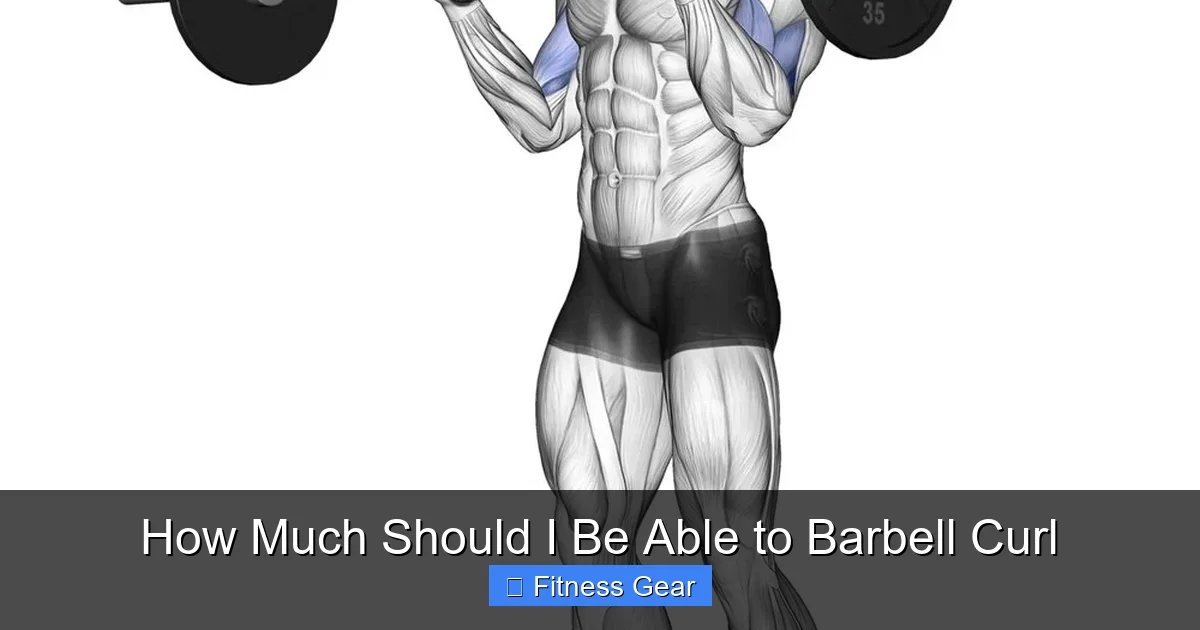
3.3 Form Checklist
- Stance: Feet shoulder‑width apart, slight bend in knees.
- Back: Neutral spine, no excessive arch.
- Elbows: Tucked close to your torso, no forward movement.
- Movement: Curl the bar to shoulder height, squeeze the biceps, then lower under control.
- Grip: Supinated (palms up) and shoulder‑width; a slightly wider grip hits the brachialis more.
4. Building a Progressive Curl Program
4.1 Frequency & Volume
Most lifters see the best results curling 2‑3 times per week, with each session containing 3‑4 sets of 6‑12 reps. Keep total weekly volume between 12‑18 sets.
4.2 Linear Progression Model
Start with a weight you can lift for 8 reps comfortably. Each week, add 2.5‑5 lb to the bar (or one 2.5‑lb plate on each side). When you can complete 3 sets of 12 reps, increase the load again.
4.3 Accessory Movements
- Hammer curls: Strengthen the brachioradialis and forearm.
- Incline dumbbell curls: Stretch the biceps for a fuller range.
- Reverse curls: Target the wrist extensors, supporting elbow health.
4.4 Deload Weeks
Every 4‑6 weeks, reduce the weight by 15‑20 % for one session. This lets joints recover and prevents plateaus.
5. Common Mistakes and How to Fix Them
5.1 Using Momentum (The “Cheat Curl”)
Swinging the bar uses hip drive, taking stress off the biceps. To avoid it, place a light “stop” (like a small plate) on the floor a few inches in front of you. It forces you to stop the bar before it reaches the floor, eliminating momentum.
5.2 Over‑Gripping the Bar
A grip that’s too tight activates forearm flexors more than the biceps. Try a “relaxed” grip—just enough to keep the bar from slipping.
5.3 Neglecting the Negative (Eccentric) Phase
Lowering the bar slowly (3‑4 seconds) creates more muscle fiber damage, leading to growth. Count out loud on the way down.
5.4 Ignoring Wrist Position
Excessive wrist flexion can strain the joint. Keep wrists neutral; a thin wrist strap can help if you have limited flexibility.
6. When to Re‑Assess and Set New Goals
6.1 The 6‑Week Check‑In
After 6‑8 weeks of consistent training, repeat the 1‑RM test. Compare the new number to your baseline and adjust your target range accordingly.
6.2 Setting SMART Goals
- Specific: “Add 10 lb to my barbell curl.”
- Measurable: Track weight each session.
- Achievable: Ensure the increase is realistic (2.5‑5 lb per month).
- Relevant: Align with your overall strength or aesthetic goals.
- Time‑bound: Aim for the target within 12 weeks.
6.3 Adjusting for Life Changes
If you gain or lose significant body weight, recalculate your relative strength target (percentage of body weight). This keeps your goals realistic and motivating.
Conclusion: Your Personal Barbell Curl Target
There’s no one‑size‑fits‑all answer to “How much should I be able to barbell curl?” Instead, use the benchmark ranges as a starting point, factor in your age, gender, body weight, and training history, and then test your 1‑RM safely. With a simple progressive program, a few accessory moves, and regular re‑assessment, you’ll see steady gains that feel both impressive and sustainable.
Remember, strength is a marathon, not a sprint. Focus on form, listen to your body, and celebrate each incremental bump on the bar. Before long, the weight you once thought impossible will become your new warm‑up.
Frequently Asked Questions
What is a realistic barbell curl weight for a beginner?
A beginner should aim to curl the 45‑lb bar plus 5‑10 lb of plates total (50‑55 lb for men, 45‑50 lb for women) while maintaining strict form.
How often should I train barbell curls?
Two to three times per week is ideal, keeping total weekly volume between 12‑18 sets to balance stimulus and recovery.
Can I improve my curl without a barbell?
Yes. Dumbbell curls, hammer curls, and resistance‑band curls all develop the biceps and can be used as accessories or substitutes when a bar isn’t available.
Is it safe to use a mixed grip (one palm up, one palm down) for barbell curls?
Mixed grip is generally reserved for heavy pulling moves like deadlifts. For curls, a supinated (both palms up) grip ensures even biceps activation and reduces wrist strain.
Why does my curl weight stall after a few months?
Plateaus often stem from lack of progressive overload, insufficient recovery, or over‑reliance on the same rep range. Add small weight increments, incorporate deload weeks, and vary rep schemes.
Should I use a lifting strap for barbell curls?
Straps are rarely needed for curls because the grip is usually the limiting factor, not grip strength. Over‑reliance on straps can hinder forearm development.