How Much Does It Cost to Ship a Barbell
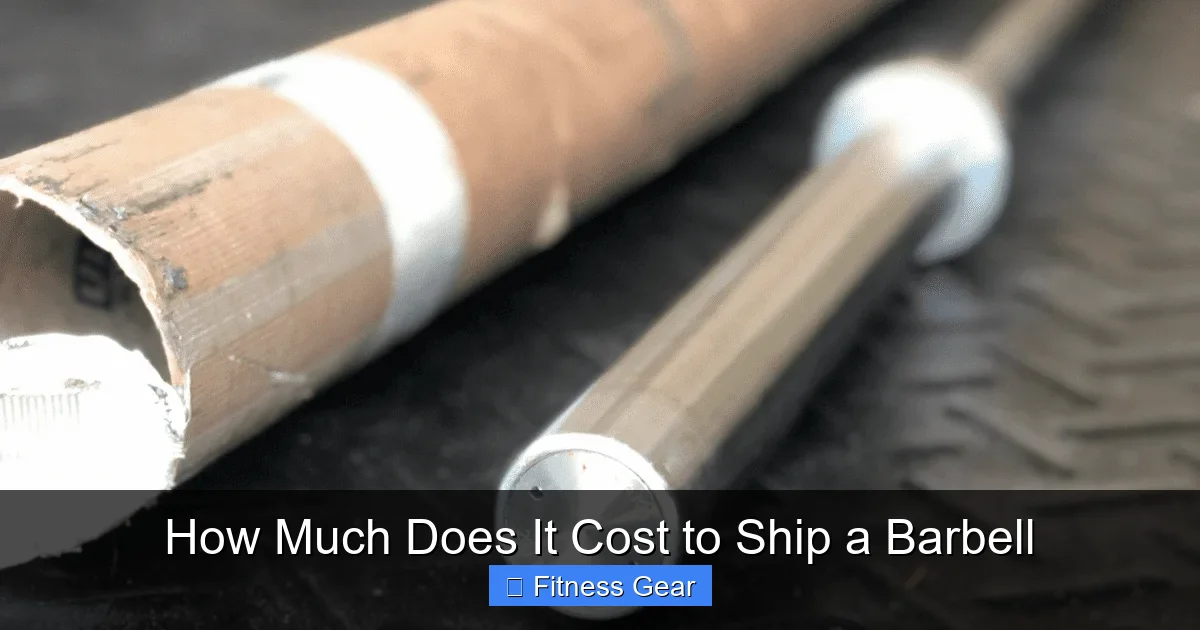
Shipping a barbell doesn’t have to break the bank. By understanding weight classes, carrier options, and smart packing tricks, you can keep costs low and get your gear where it needs to go safely. Read on for a step‑by‑step guide that turns a pricey task into a simple, affordable process.
Key Takeaways
- Weight matters most: Most carriers charge by pound, so knowing the exact weight of your barbell is the first step.
- Packaging can save $10‑$30: Using the right box, padding, and dimensional weight tricks reduces fees.
- Carrier choice impacts price: UPS, FedEx, USPS, and freight services each have sweet spots for barbell shipments.
- Regional vs. national rates: Shipping within the same state is often half the cost of cross‑country deliveries.
- Discounts are real: Membership programs, business accounts, and online shipping tools can shave 15‑25% off the bill.
- Insurance is optional but wise: For high‑value bars, adding coverage costs little compared to potential loss.
- Plan ahead: Booking early, comparing quotes, and consolidating orders prevent last‑minute price spikes.
📑 Table of Contents
- Introduction: Why Shipping a Barbell Feels Like a Big Deal
- 1. Understanding the Basics: Weight, Size, and Dimensional Weight
- 2. Choosing the Right Carrier
- 3. Packing Your Barbell Like a Pro
- 4. Calculating the Exact Cost: A Step‑by‑Step Example
- 5. Saving Money: Proven Strategies
- 6. Insurance, Returns, and What to Do If Something Goes Wrong
- Conclusion: You’re Ready to Ship Smart
Introduction: Why Shipping a Barbell Feels Like a Big Deal
Imagine you just ordered a brand‑new 45‑lb Olympic barbell. The excitement builds, but then you see the shipping estimate – $70, $120, maybe even $200. It’s enough to make anyone pause. Shipping a barbell isn’t like sending a pair of socks; it’s heavy, long, and can be oddly expensive.
Fortunately, the cost doesn’t have to be a mystery. In this guide we break down every factor that influences the price, compare the major carriers, and share real‑world tricks that keep your wallet happy. By the end, you’ll know exactly how much does it cost to ship a barbell and, more importantly, how to make that number as low as possible.
1. Understanding the Basics: Weight, Size, and Dimensional Weight
1.1. The real weight of a barbell
Most people think of a standard Olympic barbell as 45 lb (20 kg). That’s the weight of the steel rod alone. Add collars, sleeves, or a bumper coating and you can easily add another 5‑10 lb. Always weigh the whole package, not just the bar.
Visual guide about How Much Does It Cost to Ship a Barbell
Image source: liftbigeatbig.com
1.2. Dimensional (DIM) weight explained
Carriers calculate cost two ways: actual weight and dimensional weight. Dimensional weight uses the formula:
(Length × Width × Height) ÷ 139 (for UPS/FedEx, in inches). If the result is higher than the actual weight, you pay for the DIM weight.
Because a barbell is long and thin, DIM weight can sometimes exceed the real weight, especially when shipped in a box with extra padding.
1.3. How to measure for the best rate
- Measure the longest side (usually the length of the bar) first.
- Add 2‑3 inches on each side for packing material.
- Keep the box as square as possible; a 48 × 12 × 12 in box is cheaper than a 60 × 8 × 8 in one.
2. Choosing the Right Carrier
2.1. USPS: The budget-friendly option for lighter bars
USPS handles parcels up to 70 lb. For a 45‑lb barbell with a modest box, Priority Mail often lands between $55‑$80. If you’re shipping a 55‑lb bar, Parcel Select Ground (commercial rate) can drop the price to the low $60s.

Visual guide about How Much Does It Cost to Ship a Barbell
Image source: liftbigeatbig.com
2.2. UPS and FedEx: Speed and reliability for heavier loads
Both carriers have similar pricing tiers. For a 45‑lb barbell:
- UPS Ground: $70‑$95, 2‑5 business days.
- FedEx Ground: $68‑$92, comparable transit.
If you need faster delivery, UPS 2‑Day Air or FedEx Express Saver will cost $130‑$170, but most people choose ground for cost reasons.
2.3. Freight services: When the barbell is a heavyweight
Bars over 70 lb or multiple bars in one shipment move into freight territory. Companies like FreightCenter or Old Dominion charge by cubic foot and distance. A single 70‑lb barbell can ship for $120‑$150 via LTL (less‑than‑truckload) freight, often with free lift‑gate service.
2.4. Comparison snapshot
| Carrier | Max Weight | Typical Cost (45 lb) | Transit Time |
|---|---|---|---|
| USPS Priority | 70 lb | $55‑$80 | 2‑3 days |
| UPS Ground | 150 lb | $70‑$95 | 2‑5 days |
| FedEx Ground | 150 lb | $68‑$92 | 2‑5 days |
| LTL Freight | 500 lb+ | $120‑$150 | 1‑3 days |
3. Packing Your Barbell Like a Pro
3.1. The right box
Use a double‑wall corrugated box rated for at least 65 lb. A 48 × 12 × 12 in box is a sweet spot: it holds a 45‑lb barbell with a few inches of padding, and its DIM weight stays low.

Visual guide about How Much Does It Cost to Ship a Barbell
Image source: coaffect.com
3.2. Padding materials
- Bubble wrap: 3‑4 layers around the sleeves.
- Foam pipe insulation: Cut lengthwise and slide over the bar for extra shock absorption.
- Packing peanuts or crumpled paper: Fill the empty space to prevent movement.
3.3. DIY cost‑saving tips
- Reuse boxes from previous shipments – sturdy ones last for years.
- Buy bubble wrap in bulk; a 100‑ft roll costs under $15.
- Seal with reinforced packing tape (minimum 2‑3 strips per seam).
4. Calculating the Exact Cost: A Step‑by‑Step Example
4.1. Gather your data
Suppose you have a 45‑lb Olympic barbell, 2 in sleeves, and a 48 × 12 × 12 in box. You add 5 lb of padding, bringing the total weight to 50 lb.
4.2. Compute dimensional weight
DIM = (48 × 12 × 12) ÷ 139 = 49.6 lb → round up to 50 lb. Since actual weight = 50 lb, the carrier will charge for 50 lb.
4.3. Get quotes
Enter the details into each carrier’s online calculator:
- USPS Priority: $68
- UPS Ground: $78
- FedEx Ground: $76
4.4. Factor in discounts
If you have a UPS business account with a 10 % discount, the UPS price drops to $70. Add $5 for insurance (optional). Final cost: $75.
4.5. Decision time
USPS is cheapest at $68, but if you need a tracking dashboard and liability coverage, UPS at $75 may be worth it.
5. Saving Money: Proven Strategies
5.1. Ship during off‑peak times
Mid‑week shipments (Tuesday‑Thursday) avoid weekend surcharges. Holiday seasons add 10‑20 % to rates.
5.2. Use online shipping platforms
Sites like ShipStation or Pirate Ship negotiate bulk rates with carriers. Many users report $10‑$20 savings per package.
5.3. Combine orders
If you’re buying plates, racks, or accessories, pack them together. A single large box can be cheaper than several small ones.
5.4. Leverage membership programs
Warehouse clubs (Costco, Sam’s Club) sometimes offer discounted freight services for members.
5.5. Consider local pickup or delivery
For short distances (under 100 mi), a local courier or rideshare service may cost $30‑$40, beating carrier rates.
6. Insurance, Returns, and What to Do If Something Goes Wrong
6.1. Is insurance necessary?
Most carriers include $100 of liability for free. A 45‑lb barbell typically costs $120‑$200. Adding $5‑$10 insurance covers the full value and gives peace of mind.
6.2. Filing a claim
- Document damage with photos before packing.
- Keep the original receipt and tracking number.
- Contact the carrier within 7 days of delivery.
- Submit a claim form and wait for a resolution (usually 5‑10 business days).
6.3. Return policies
If the barbell arrives defective, most retailers offer a prepaid return label. The cost of the return is usually covered by the seller, but confirm before shipping.
Conclusion: You’re Ready to Ship Smart
Knowing how much does it cost to ship a barbell is just the start. By weighing your bar accurately, choosing the right carrier, packing efficiently, and using discounts, you can keep the price between $55 and $80 for most single‑bar shipments in the United States. For heavier loads or multiple items, freight options become cost‑effective.
Take the time to compare quotes, reuse packaging, and ship during low‑traffic days. A little planning turns a potentially pricey task into a smooth, affordable experience – and you’ll have more money left for the next set of plates.
Frequently Asked Questions
How do I know which carrier is cheapest for my barbell?
Enter the weight, dimensions, and destination into each carrier’s online rate calculator. Compare the total cost, including any discounts you may have.
Can I ship a barbell internationally?
Yes, but international rates are higher. Expect $150‑$250 for a 45‑lb barbell to Europe or Canada, plus customs fees.
Do I need to insure my barbell shipment?
Insurance isn’t required, but adding $5‑$10 coverage protects the full value of the barbell and is worth the peace of mind.
What size box should I use?
A double‑wall box around 48 × 12 × 12 in works for most standard bars. It balances protection and dimensional weight.
Are there any weight limits for ground shipping?
UPS and FedEx ground handle packages up to 150 lb. For anything heavier, you’ll need freight services.
Can I get a discount if I ship multiple barbells at once?
Yes. Shipping multiple bars in one larger box or using a freight LTL service often reduces the per‑bar cost by 20‑30 %.