How Many Strokes per Minute on Rowing Machine
Finding the right strokes per minute on your rowing machine is key to unlocking better results and avoiding injury. Most experts recommend a stroke rate between 18 and 32 strokes per minute for effective workouts. Whether you are a beginner or a seasoned rower, understanding your rowing cadence helps you train smarter, burn more calories, and build endurance faster.
Rowing machines offer one of the best full-body workouts you can do at home or in the gym. But many people wonder about the right strokes per minute on rowing machine settings. Your stroke rate, also called your cadence, determines how hard you work and how effective your session truly is.
Setting the wrong pace can lead to poor form, wasted effort, and even injury. On the other hand, nailing the right rowing machine stroke rate helps you get stronger, burn more calories, and improve your endurance over time. This guide breaks down everything you need to know about finding your perfect rowing cadence.
Whether you are just starting out or looking to push your limits, understanding strokes per minute rowing is the foundation of every great workout. Let us dive in and explore what the numbers really mean for your fitness journey.
Key Takeaways
- Optimal Stroke Rate: The ideal strokes per minute range is 18-32 for most fitness levels.
- Beginner Friendly: New rowers should start at 18-24 strokes per minute and build up gradually.
- Performance Boost: Higher stroke rates increase intensity but can reduce form quality if done incorrectly.
- Distance and Pace: Your stroke rate directly affects how far you row and how fast you reach your goals.
- Calorie Burn: Maintaining the right cadence maximizes calorie burn during every rowing session.
- Common Mistakes: Going too fast too soon is the most frequent error beginners make on the rowing machine.
📑 Table of Contents
- What Are Strokes Per Minute on a Rowing Machine?
- What Is the Ideal Strokes Per Minute for Beginners?
- What Is the Ideal Strokes Per Minute for Advanced Rowers?
- How Does Stroke Rate Affect Calorie Burn and Distance?
- Common Mistakes People Make With Stroke Rate
- Tips to Improve Your Rowing Stroke Rate
- How to Find Your Perfect Rowing Pace
- Expert Insights on Rowing Stroke Rate
- Final Thoughts
What Are Strokes Per Minute on a Rowing Machine?
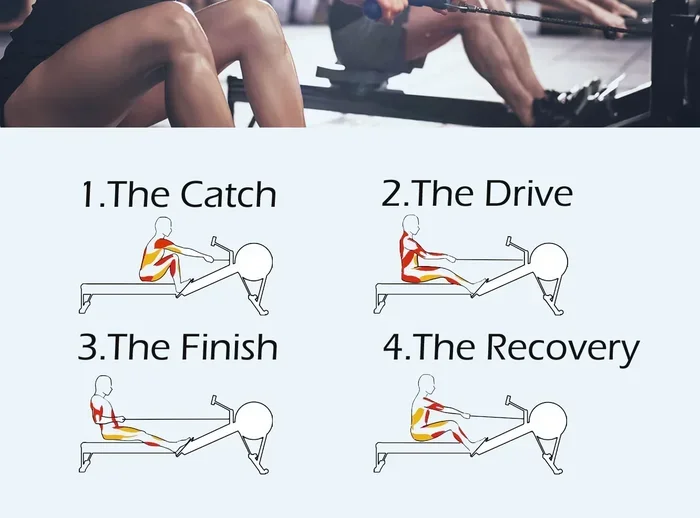
Strokes per minute, often written as SPM, measures how many complete rowing cycles you perform in one minute. Each stroke includes the drive phase and the recovery phase. The drive is when you push off with your legs and pull the handle toward your chest. The recovery is when you slide forward and prepare for the next stroke.
Your rowing cadence is displayed on the rowing machine’s monitor. Most modern rowers show this number clearly on the screen. You can adjust your pace at any time during your session. The goal is to find a rhythm that feels sustainable and effective for your fitness goals.
Think of it like running. A sprinter takes quick, explosive steps. A marathon runner takes slower, steadier steps. Rowing works the same way. Your strokes per minute on rowing machine should match your workout type and fitness level.
How Stroke Rate Affects Your Workout
Your stroke rate directly controls the intensity of your rowing session. A lower SPM means each stroke carries more power and effort. A higher SPM means you are moving faster but potentially with less force behind each pull.
Here is how different stroke rates affect your workout:
- Low SPM (18-24): Builds strength and power. Each stroke requires more effort. Great for building muscle and endurance.
- Moderate SPM (24-30): Balances speed and power. This is the sweet spot for most rowing machine workouts.
- High SPM (30-40): Increases cardiovascular demand. Best for advanced rowers and high-intensity interval training.
Finding your right rowing machine pace depends on what you want to achieve. A steady, moderate pace works well for general fitness. A higher pace suits those training for competition or looking to maximize calorie burn.
What Is the Ideal Strokes Per Minute for Beginners?
If you are new to rowing, your strokes per minute on rowing machine should start low. Most fitness experts recommend beginning at 18 to 24 SPM. This range lets you focus on proper form without feeling rushed or overwhelmed.
Good technique is everything in rowing. When you row too fast too soon, your form breaks down quickly. You start using momentum instead of muscle. This reduces the effectiveness of your workout and increases the risk of injury.
Start with short sessions of 10 to 15 minutes at a comfortable pace. Focus on smooth, controlled movements. Once your body adapts, you can gradually increase your rowing cadence by 1 to 2 SPM every week or two.
Beginner Stroke Rate Guidelines
- Week 1-2: Aim for 18-20 SPM. Focus on learning the movement pattern.
- Week 3-4: Increase to 20-24 SPM. Start building endurance.
- Week 5+: Try 24-28 SPM. Push for longer sessions with consistent pace.
Remember, there is no shame in keeping a slow pace. Rowing is about quality, not just speed. Even professional rowers spend a lot of time training at lower strokes per minute rowing rates to build a strong foundation.
What Is the Ideal Strokes Per Minute for Advanced Rowers?
Experienced rowers can handle higher strokes per minute on rowing machine settings without sacrificing form. Advanced athletes typically row between 28 and 36 SPM during intense training sessions. Some competitive rowers even push above 36 SPM during short sprints.
At higher stroke rates, the key is maintaining efficiency. Each stroke should still be powerful and controlled. If you notice your form slipping, it is a sign to slow down. A fast pace with poor technique delivers fewer benefits and raises injury risk.
Advanced Training Zones
Advanced rowers often use different stroke rates for different training purposes:
- Steady State (26-30 SPM): Builds aerobic endurance. Great for long, sustained sessions.
- Tempo Training (30-34 SPM): Increases speed and power. Challenges your cardiovascular system.
- Sprint Intervals (34-40+ SPM): Max effort for short bursts. Pushes your anaerobic threshold.
Using a rowing strokes per minute chart can help you track your progress over time. Many rowing machines let you save your workout data. Reviewing this data helps you see how your pace and endurance improve week by week.
How Does Stroke Rate Affect Calorie Burn and Distance?
Your stroke rate plays a big role in how many calories you burn and how far you travel during a session. A higher strokes per minute rowing rate generally means more effort and more calories burned per minute. But it is not just about going fast.
When you row at a moderate pace with good power, you actually burn more total calories than when you row fast but with weak strokes. Efficiency matters. A strong, controlled stroke at 24 SPM can outperform a sloppy, rushed stroke at 36 SPM.
Distance also ties directly to your stroke rate. If you want to cover more ground in less time, increasing your rowing machine stroke rate helps. But you need the strength and technique to support that speed.
Calorie Burn and Stroke Rate Comparison
The relationship between stroke rate and calorie burn depends on your weight, fitness level, and intensity. Here is a general breakdown:
- 18-24 SPM: Burns approximately 200-400 calories per hour for an average person. Focuses on strength and endurance.
- 24-30 SPM: Burns approximately 400-600 calories per hour. Balances cardio and muscle engagement.
- 30-40 SPM: Burns approximately 600-800+ calories per hour. High-intensity effort for experienced rowers.
To learn more about how many calories you can expect to burn during your rowing sessions, check out our detailed guide on how many calories you can burn on a rowing machine. Understanding the calorie impact helps you plan your workouts more effectively.
Common Mistakes People Make With Stroke Rate
Even experienced rowers sometimes make mistakes with their strokes per minute on rowing machine. Knowing these common errors helps you avoid them and get better results from every session.
Going Too Fast Too Soon
This is the number one mistake beginners make. When people see the monitor showing a high SPM, they feel like they are doing great. But rushing through strokes sacrifices form and power. Your muscles do not get the right stimulus, and your workout becomes less effective.
Start slow. Build your rowing cadence gradually. Focus on feeling each stroke in your legs, back, and arms.
Chasing Speed Over Technique
Speed without technique is like running with bad posture. You might move fast for a few minutes, but you will burn out quickly and risk injury. Always prioritize smooth, powerful strokes over a high number on the screen.
Ignoring the Recovery Phase
The recovery phase is just as important as the drive phase. Many rowers rush through the recovery, which throws off their rhythm and reduces efficiency. A steady recovery lets you reset and prepare for a strong next stroke. Think of it as catching your breath before the next push.
Not Matching Stroke Rate to Workout Type
Different workouts need different strokes per minute rowing rates. A recovery row should be slow and easy. A power workout should be faster and more intense. Using the wrong pace for your workout type leads to poor results and frustration.
Tips to Improve Your Rowing Stroke Rate
Improving your strokes per minute on rowing machine takes practice and patience. Here are some proven tips to help you find your rhythm and push your pace safely.
Focus on Rhythm and Timing
Rowing is all about rhythm. Your drive and recovery should flow smoothly into each other. Count your strokes or use the machine’s rhythm guide to stay on pace. A steady beat helps you maintain consistency throughout your workout.
Use the Damper Setting Wisely
The damper controls how much air flows into the rowing machine’s flywheel. A higher damper setting creates more resistance. A lower setting makes each stroke easier. For most rowing machine workouts, a damper setting between 3 and 5 works best. This lets you maintain a good pace without burning out too quickly.
Many people confuse the damper with the stroke rate. The damper changes how heavy each stroke feels. The stroke rate changes how fast you row. They work together but are not the same thing.
Track Your Progress Over Time
Use your rowing machine’s monitor to track your strokes per minute over multiple sessions. Look for trends in your pace, distance, and calorie burn. Seeing your progress keeps you motivated and helps you spot areas for improvement.
You can also compare your current pace with past sessions. For example, if you rowed 2000 meters at 26 SPM last month and now you can do it at 28 SPM, that is real progress worth celebrating.
Incorporate Interval Training
Interval training is one of the best ways to improve your rowing cadence and endurance. Alternate between high-intensity bursts and recovery periods. For example, row hard at 34 SPM for 2 minutes, then recover at 20 SPM for 1 minute. Repeat this cycle for 15 to 20 minutes.
This type of training pushes your cardiovascular system and helps your body adapt to different strokes per minute rowing rates. Over time, you will notice your comfortable pace getting faster and your recovery getting quicker.
Get the Right Workout Duration
The length of your rowing session matters just as much as your stroke rate. For beginners, 15 to 20 minutes is a great starting point. As your fitness improves, you can extend sessions to 30, 45, or even 60 minutes. To learn more about how long you should row for the best results, check out our guide on how long you should row on a rowing machine.
For those interested in how far specific stroke counts take you, our article on how far 1000 strokes takes you on a rowing machine provides great insights into distance and pace calculations.
How to Find Your Perfect Rowing Pace
Your perfect strokes per minute on rowing machine depends on several factors. Your fitness level, goals, age, and experience all play a role. There is no one-size-fits-all answer. But there is a range that works well for almost everyone.
Start by identifying your goal. Are you training for endurance? Speed? Strength? Each goal calls for a different approach to your rowing machine stroke rate.
For general fitness and health, aim for 22-28 SPM. For weight loss, combine a moderate pace with longer session durations. For competitive training, experiment with higher rates and interval work. The key is to listen to your body and adjust as needed.
Over time, your comfortable stroke rate will shift. As you get stronger and more experienced, you will naturally row faster while maintaining good form. This is a sign of real progress and shows that your body is adapting to the demands of rowing.
Expert Insights on Rowing Stroke Rate
Coaches and fitness professionals agree that strokes per minute on rowing machine is one of the most important metrics to watch. But they also emphasize that it should never come at the cost of proper form.
Professional rowing coaches often tell their athletes to focus on power per stroke rather than just speed. A powerful stroke at 24 SPM delivers more benefit than a weak, rushed stroke at 36 SPM. The goal is to find your sweet spot where speed and power work together seamlessly.
If you are serious about improving, consider working with a coach or using video analysis to check your form. Small adjustments to your technique can make a big difference in your efficiency and results.
For more tips on getting the most out of your sessions, read our guide on how to get a good workout on a rowing machine for practical advice that complements your stroke rate training.
Also, if you want to understand how your rowing pace compares to other exercises, check out our comparison of how many calories jump rope burns per minute to see how rowing stacks up against other popular cardio workouts.
Final Thoughts
Mastering your strokes per minute on rowing machine is one of the best things you can do for your fitness journey. The right pace helps you train smarter, avoid injury, and get real results from every session. Whether you are just starting out or pushing for new personal records, your stroke rate is a powerful tool to guide your progress.
Start with a comfortable range, focus on form, and gradually increase your rowing cadence as your strength and endurance grow. Track your numbers, celebrate your improvements, and stay consistent. Rowing is a journey, and every stroke counts toward a healthier, stronger you.
Remember, there is no perfect number that fits everyone. Your ideal strokes per minute rowing pace is the one that feels challenging yet sustainable. Find that balance, stay patient, and enjoy the process. Your body will thank you for it.
Frequently Asked Questions
What is a good strokes per minute for a beginner on a rowing machine?
A good starting range for beginners is 18 to 24 strokes per minute. This pace lets you focus on learning proper form and building a solid foundation. As your confidence and endurance grow, you can gradually increase your strokes per minute on rowing machine by a few counts each week.
Is it better to row fast or slow on a rowing machine?
Neither is universally better. It depends on your goals. A slower pace with strong strokes builds power and endurance. A faster pace increases cardiovascular demand and calorie burn. The best approach combines both, adjusting your rowing machine stroke rate based on the type of workout you are doing.
How does stroke rate affect calorie burn on a rowing machine?
A higher stroke rate generally increases calorie burn because you are working harder. But quality matters more than speed. A controlled, powerful stroke at a moderate pace often burns more calories overall than a rushed, sloppy fast pace. Consistency and proper technique make the biggest difference.
Can rowing too fast cause injury?
Yes, rowing too fast with poor form can lead to back strain, knee issues, and muscle fatigue. Your strokes per minute rowing should always match your current fitness level and technique ability. If you feel your form breaking down, slow down immediately and focus on controlled movements.
How long should I maintain a specific stroke rate during a workout?
For steady-state workouts, maintain your chosen pace for 15 to 30 minutes. For interval training, alternate between different rates for 2 to 5 minute blocks. The duration depends on your fitness level and workout type. Always listen to your body and adjust as needed.
What stroke rate do competitive rowers use?
Competitive rowers typically train between 28 and 36 strokes per minute during intense sessions. During races, they may push above 36 SPM for short bursts. Their high stroke rates are supported by years of training that build the strength and technique to maintain power at speed.