How Many Pints in a Cup Everything You Need to Know
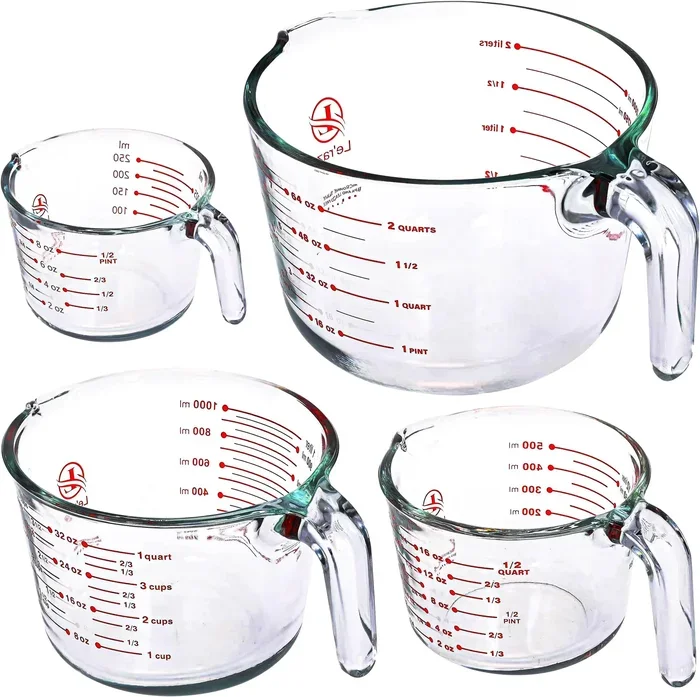
Knowing how many pints in a cup is essential for cooking, baking, and meal prep. One cup equals exactly half a pint, making conversion simple and quick. Whether you are scaling a recipe up or down, understanding this basic volume relationship saves time and reduces errors. This guide covers everything from the basics to advanced kitchen tips that make measuring effortless.
Have you ever stood in your kitchen staring at a recipe that calls for pints when all you have is a cup measurer? You are not alone. How many pints in a cup is one of those simple questions that can trip up even experienced home cooks. The answer is straightforward, but understanding the full picture helps you tackle dozens of recipes with confidence.
Volume measurement matters in cooking and baking. A slight mistake can change the texture, taste, and overall outcome of your dish. That is why mastering the relationship between cups and pints is so valuable. In this guide, we break down everything you need to know about how many pints in a cup and how to use this knowledge in real kitchen situations.
Whether you are a beginner just starting out or a seasoned cook looking to sharpen your skills, this article has something for you. We will cover the basics, dive into practical examples, and share tips that make measuring feel second nature. Let us get started.
Key Takeaways
- 1 cup equals 0.5 pints: This is the foundational conversion you need to remember for all volume measurements.
- The US customary system uses cups and pints: These units are standard in American recipes and kitchen tools.
- Liquid and dry measurements differ slightly: Always use the right measuring tool for the ingredient type.
- Conversion charts speed up cooking: Keep a reference chart handy to avoid guesswork during meal prep.
- Common mistakes cause recipe failures: Using the wrong measuring method or confusing units leads to inaccurate results.
- Practice makes perfect: The more you cook with these measurements, the more intuitive conversions become.
📑 Table of Contents
What Is a Pint and What Is a Cup?
Before we answer how many pints in a cup, let us define these terms clearly. A pint is a unit of volume in the US customary measurement system. It is commonly used for liquids like milk, water, and juice. A cup is a smaller unit of volume that you see in almost every kitchen.
In the United States, the standard cup holds 8 fluid ounces. The standard pint holds 16 fluid ounces. This means a pint is exactly twice the size of a cup. These measurements are part of the US customary system, which is different from the metric system used in most other countries.
A Quick Look at the Numbers
Here is the basic breakdown to keep in mind:
- 1 pint = 2 cups
- 1 cup = 0.5 pints
- 1 pint = 16 fluid ounces
- 1 cup = 8 fluid ounces
These numbers are fixed in the US customary system. They do not change. Once you memorize that 1 pint equals 2 cups, you can handle most kitchen conversions with ease.
How Many Pints in a Cup: The Simple Answer
The direct answer to how many pints in a cup is zero point five, or half a pint. One cup is exactly half of one pint. This is the single most important fact to remember.
Think of it this way. If you have a full pint of ice cream and you scoop out one cup, you have used half of the pint. You are left with one cup still in the container. That visual makes the conversion easy to remember.
Many people confuse this and think a cup is bigger than a pint. It is not. A pint is always larger. When you are converting cups to pints, you divide by 2. When you are converting pints to cups, you multiply by 2. That simple rule works every time.
Why This Matters in Real Cooking
Imagine you are making a smoothie and the recipe says you need 1 pint of milk. But your measuring tool only shows cups. You now know you need 2 cups of milk. Without this knowledge, you might guess and end up with too much or too little liquid.
Similarly, if a recipe calls for 3 cups of broth and you only have a pint-sized container, you know you need 1.5 pints. That is 1 full pint plus 1 more cup. These small moments of clarity make cooking smoother and more enjoyable.
Understanding the US Customary Measurement System
The US customary system is the measurement system used in the United States for everyday cooking, baking, and shopping. It includes units like inches, feet, pounds, ounces, cups, pints, quarts, and gallons. Understanding how these units relate to each other is key to kitchen success.
Volume measurement in this system follows a clear hierarchy. Here is how it breaks down from smallest to largest:
- Fluid ounce – the smallest common unit
- Cup – 8 fluid ounces
- Pint – 2 cups or 16 fluid ounces
- Quart – 2 pints or 4 cups
- Gallon – 4 quarts or 8 pints or 16 cups
How This Connects to Your Kitchen
When you understand this chain, how many pints in a cup becomes just one small piece of a bigger puzzle. You can now convert between any of these units. For example, if a recipe calls for 2 pints and you want to know how many gallons that is, you know 2 pints equals 1 quart, which is a quarter of a gallon.
This system is not just for liquids. It applies to dry ingredients too, though the weight can vary. A cup of flour weighs differently than a cup of sugar. But the volume relationship stays the same. One cup is still half a pint regardless of what you are measuring.
Many people also wonder about the metric system. In the metric world, volume is measured in milliliters and liters. One US cup equals about 237 milliliters. One US pint equals about 473 milliliters. If you ever cook with international recipes, this conversion helps bridge the gap between systems.
How to Convert Pints to Cups and Vice Versa
Converting between pints and cups is one of the simplest math operations in the kitchen. You do not need a calculator. You just need to know the basic rule.
To convert pints to cups, multiply the number of pints by 2. To convert cups to pints, divide the number of cups by 2.
Pints to Cups Conversion Examples
- 1 pint = 2 cups
- 1.5 pints = 3 cups
- 2 pints = 4 cups
- 0.5 pints = 1 cup
- 3 pints = 6 cups
Cups to Pints Conversion Examples
- 1 cup = 0.5 pints
- 2 cups = 1 pint
- 4 cups = 2 pints
- 6 cups = 3 pints
- 8 cups = 4 pints
Keep these examples handy. Over time, you will memorize the conversions without needing to look them up. The more you cook, the more natural this becomes.
Quick Tips for Accurate Conversions
- Always level off dry ingredients when using a cup measure. Use a flat edge like a knife to scrape the top smooth.
- Use liquid measuring cups for fluids. They are designed with a spout and clear markings for easy reading.
- Read measurements at eye level to avoid parallax errors. Looking from above or below can give you a wrong reading.
- Do not pack flour into the cup unless the recipe specifically says to. Spoon the flour in and level it off.
- Double-check the unit on your recipe before you start measuring. A pint and a cup look different on paper.
Practical Tips for Everyday Cooking and Baking
Now that you know how many pints in a cup, let us talk about how to apply this knowledge in real life. Cooking and baking are practical skills, and the more tools you have in your toolkit, the better your results will be.
Scaling Recipes Up or Down
Ever wanted to double a recipe but got confused by the measurements? Knowing that 1 pint equals 2 cups makes scaling easy. If a recipe serves 4 and you need to serve 8, just multiply every ingredient by 2. If a recipe calls for 1 pint of cream and you are halving it, you now need 1 cup.
This skill is especially useful when you are meal prepping for the week. You might want to make a large batch of soup that calls for 4 pints of stock. That is 8 cups. If you are using a big pot, knowing this conversion helps you fill it correctly the first time.
Using the Right Tools
Having the right measuring tools makes a huge difference. A good set of measuring cups should include 1 cup, 1/2 cup, 1/3 cup, and 1/4 cup sizes. For liquids, a glass or plastic measuring pitcher with pint and cup markings is invaluable.
Some kitchen scales also help with volume conversions. While a scale measures weight, knowing the volume relationship between cups and pints helps you estimate amounts when you do not have a scale handy.
Hydration and Nutrition Tracking
Volume measurement is not just for cooking. It also matters for fitness and nutrition. Many people track their daily water intake in cups. Knowing that 4 cups equals 2 pints, or 1 quart, helps you set hydration goals. If you are doing a high-intensity kettlebell workout or a long session on the rowing machine, staying properly hydrated is critical.
For those who track calories, understanding volume helps with portion control. A cup of juice is half a pint, and that has a specific calorie count. If you want to know how much energy a kettlebell workout burns, or how many calories you torch during a jump rope session, volume-based nutrition tracking starts with accurate measurements.
Common Mistakes People Make With Volume Measurements
Even experienced cooks make measurement errors. Here are the most common mistakes and how to avoid them.
Confusing Cups and Pints
The most obvious mistake is confusing the size of a cup and a pint. Remember, a pint is always bigger. Two cups fit inside one pint. If a recipe asks for 1 pint and you use 1 cup, you are using half the amount needed.
Using the Wrong Measuring Tool
Using a dry measuring cup for liquids leads to inaccurate results. Dry cups are filled to the top and leveled off. Liquid cups have a pour spout and are read from the bottom of the meniscus. Mixing these up causes errors every time.
Not Accounting for Ingredient Density
A cup of honey weighs much more than a cup of flour. Both are the same volume, but the weight is very different. When converting between volume and weight, always consider what ingredient you are measuring.
Ignoring the Difference Between US and Imperial Pints
The US pint and the Imperial pint (used in the UK) are different sizes. A US pint is 16 fluid ounces. An Imperial pint is 20 fluid ounces. If you are using a British recipe, keep this in mind. The conversion for how many pints in a cup stays the same within each system, but the actual volume differs.
Key Takeaways
- 1 cup equals 0.5 pints: This is the foundational conversion you need to remember for all volume measurements.
- The US customary system uses cups and pints: These units are standard in American recipes and kitchen tools.
- Liquid and dry measurements differ slightly: Always use the right measuring tool for the ingredient type.
- Conversion charts speed up cooking: Keep a reference chart handy to avoid guesswork during meal prep.
- Common mistakes cause recipe failures: Using the wrong measuring method or confusing units leads to inaccurate results.
- Practice makes perfect: The more you cook with these measurements, the more intuitive conversions become.
Conclusion
Understanding how many pints in a cup is one of those small kitchen skills that makes a big difference. The answer is simple: one cup is half a pint, and one pint is two cups. Once you know this, you can confidently tackle any recipe that uses these units.
We covered the basics of volume measurement, explored the US customary system, and shared practical tips for everyday cooking and baking. We also highlighted common mistakes to avoid so your recipes turn out perfectly every time.
The beauty of this knowledge is that it applies everywhere. In the kitchen, at the grocery store, or even when tracking your nutrition and hydration. Volume conversions are a fundamental life skill that everyone benefits from.
So the next time you see a recipe that calls for pints and all you have is a cup, you will know exactly what to do. Just remember: divide by 2 to go from cups to pints, and multiply by 2 to go from pints to cups. Keep this guide bookmarked, and you will never second-guess yourself again.
Happy cooking, and may your measurements always be spot on!
Frequently Asked Questions
How many pints in a cup?
There are 0.5 pints in one cup. This means a single cup is exactly half of a pint. The conversion is simple: divide the number of cups by 2 to get pints, or multiply pints by 2 to get cups.
Is a pint bigger than a cup?
Yes, a pint is always bigger than a cup. One pint equals 2 cups, so a pint holds twice the volume of a cup. This relationship stays the same for both liquid and dry measurements in the US customary system.
How many cups are in 2 pints?
There are 4 cups in 2 pints. Since 1 pint equals 2 cups, you simply multiply 2 pints by 2 to get 4 cups. This is a common conversion for recipes that call for larger volumes of liquid.
Does the pint-to-cup ratio change for dry ingredients?
No, the volume ratio stays the same. One cup is always half a pint whether you are measuring flour, sugar, or liquids. However, the weight of a dry ingredient in that cup will vary based on how dense the ingredient is.
How does this conversion work in the metric system?
The metric system does not use cups or pints. Instead, it uses milliliters and liters. One US cup equals about 237 milliliters, and one US pint equals about 473 milliliters. The ratio of 1 cup being half a pint still holds when converted to metric units.
Can I use a regular drinking cup instead of a measuring cup?
It is not recommended. A drinking cup is not standardized and can hold more or less than 8 fluid ounces. Always use a proper measuring cup for accurate results in cooking and baking. Accurate measurements lead to better recipes and fewer kitchen mistakes.