How Many Calories Do You Burn with Jump Rope

Jump rope is a powerhouse calorie‑burning tool that can torch 10–16 calories per minute, depending on intensity, weight, and skill level. By tweaking speed, duration, and technique, you can tailor workouts to meet any fitness goal—from fat loss to cardio endurance.
Key Takeaways
- Calorie range: Most people burn 10‑16 calories per minute, which equals 600‑960 calories per hour.
- Weight matters: Heavier individuals burn more calories; a 155‑lb person burns about 12 cals/min at moderate pace.
- Intensity counts: Faster speeds, double‑unders, and interval training dramatically increase the burn.
- Technique improves efficiency: Proper posture, wrist‑driven turns, and light shoes reduce injury risk and keep the heart rate high.
- Short sessions work: Even 10‑minute bursts can burn 100‑150 calories, perfect for busy schedules.
- Combine with strength: Adding body‑weight moves between jumps boosts total calorie expenditure.
- Track progress: Use a heart‑rate monitor or fitness app to see real‑time calorie burn and stay motivated.
📑 Table of Contents
- Introduction: Why Jump Rope Is a Calorie‑Burning Superstar
- 1. The Science of Calorie Burning
- 2. How Many Calories Do You Actually Burn?
- 3. How to Maximize Calorie Burn With Jump Rope
- 4. Sample Jump Rope Workouts for Different Goals
- 5. Common Mistakes and How to Avoid Them
- Conclusion: Make the Jump Rope Your Calorie‑Burn Companion
Introduction: Why Jump Rope Is a Calorie‑Burning Superstar
Imagine a piece of equipment that fits in a backpack, costs less than a cup of coffee, and can burn more calories than a treadmill in half the time. That’s jump rope. Whether you’re a seasoned athlete or a couch‑to‑5K beginner, the rope offers a quick, high‑intensity cardio workout that torches calories and improves coordination.
In this guide we’ll break down exactly how many calories you can expect to burn, the science behind the numbers, and practical tips to get the most out of every jump. By the end, you’ll have a clear game plan for using the rope to hit your weight‑loss or fitness goals.
1. The Science of Calorie Burning
What Is a Calorie?
A calorie is a unit of energy that your body uses to fuel every movement—from blinking to sprinting. When you exercise, you increase your metabolic rate, causing your body to consume more calories than it would at rest.

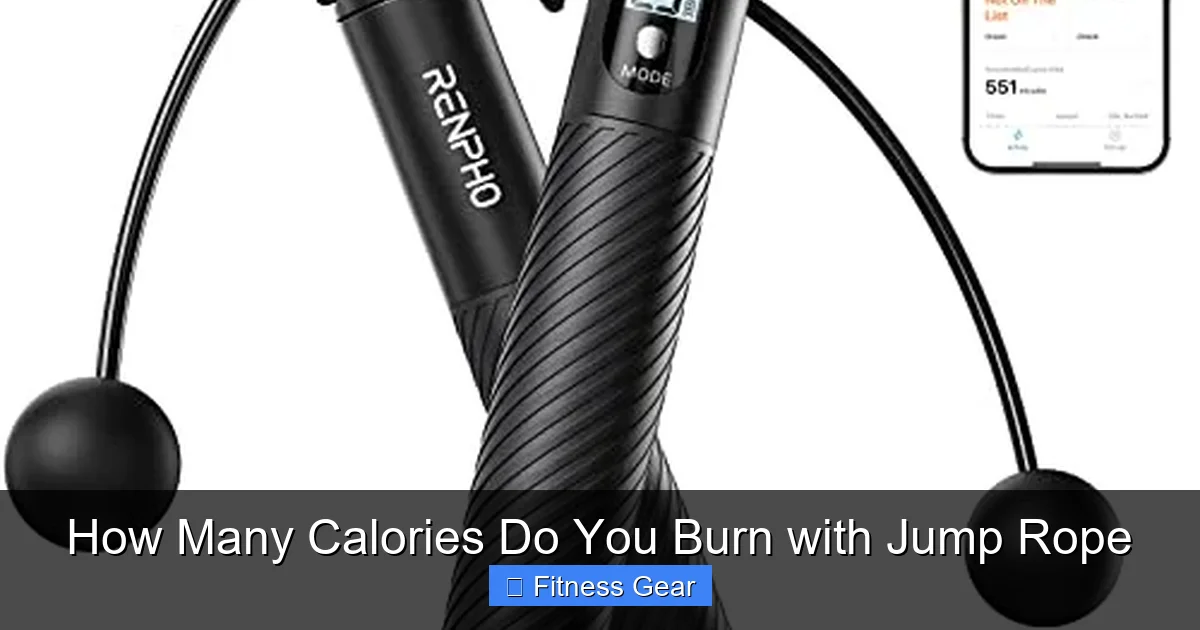
Visual guide about How Many Calories Do You Burn with Jump Rope
Image source: m.media-amazon.com
How Jump Rope Affects Metabolism
Jump rope is a form of aerobic exercise that also engages many muscle groups simultaneously: calves, quads, glutes, core, shoulders, and forearms. This full‑body activation raises your heart rate quickly, pushing you into the “fat‑burning zone” and even the “peak performance zone” if you go hard enough.
Factors That Influence Calorie Burn
- Body weight: Heavier people expend more energy to move the same distance.
- Intensity: Faster rope speed, higher jumps, and complex moves (double‑unders, cross‑overs) demand more oxygen.
- Duration: Longer sessions keep the heart rate elevated, adding up the total burn.
- Fitness level: Beginners may burn slightly less because they can’t sustain high intensity for long.
- Age & gender: Metabolic rate naturally declines with age; men typically have higher muscle mass, which burns more calories.
2. How Many Calories Do You Actually Burn?
Baseline Numbers from Research
Studies from the American Council on Exercise (ACE) and the Journal of Sports Science show the following average calorie burns for a 155‑lb (70 kg) adult:
Visual guide about How Many Calories Do You Burn with Jump Rope
Image source: m.media-amazon.com
- Moderate pace (120 spm): ~10 cal/min (≈600 cal/hr)
- Vigorous pace (150 spm): ~12 cal/min (≈720 cal/hr)
- High‑intensity (180 spm + double‑unders): 14‑16 cal/min (≈840‑960 cal/hr)
Weight‑Based Estimates
Use this quick chart to estimate your burn based on weight and speed:
| Weight | Moderate (10 cpm) | Vigorous (12 cpm) | High‑Intensity (14‑16 cpm) |
|---|---|---|---|
| 125 lb (57 kg) | 8 cal/min | 10 cal/min | 12‑14 cal/min |
| 155 lb (70 kg) | 10 cal/min | 12 cal/min | 14‑16 cal/min |
| 185 lb (84 kg) | 12 cal/min | 14 cal/min | 16‑18 cal/min |
Real‑World Example
Jane weighs 150 lb and does a 20‑minute interval workout: 1 minute fast (180 spm), 1 minute slow (120 spm), repeat 10 times. At fast speed she burns ~14 cal/min, at slow speed ~10 cal/min.
Total calories = (10 min × 14) + (10 min × 10) = 140 + 100 = 240 calories in just 20 minutes. That’s comparable to a 45‑minute jog.
3. How to Maximize Calorie Burn With Jump Rope
1. Choose the Right Rope
Lightweight speed ropes (0.5‑0.8 mm PVC) let you turn the rope faster with less effort, perfect for high‑intensity work. Heavier beaded ropes are better for beginners learning timing.

Visual guide about How Many Calories Do You Burn with Jump Rope
Image source: kayakcountry.com
2. Perfect Your Form
- Keep elbows close to your sides; use wrists, not arms, to turn the rope.
- Stay on the balls of your feet; avoid heavy heel strikes.
- Maintain a slight knee bend to absorb impact.
- Look straight ahead; don’t crane your neck.
3. Incorporate Interval Training
Alternate 30‑seconds of maximal effort with 30‑seconds of active recovery (slow jumps or marching). This “HIIT” style spikes your heart rate, leading to an “afterburn” effect (EPOC) that continues burning calories for up to an hour post‑workout.
4. Add Skill Variations
Mix in double‑unders, side swings, criss‑crosses, and high knees. Each new move recruits different muscles and raises intensity.
5. Combine With Bodyweight Moves
Do a circuit: 1 minute of jumps → 10 push‑ups → 15 squats → repeat 5‑8 rounds. The added strength work keeps the calorie burn high and builds lean muscle, which further boosts resting metabolism.
6. Track With Tech
Wear a heart‑rate monitor or use a fitness app that calculates calories based on your personal data. Seeing real‑time numbers motivates you to push harder.
4. Sample Jump Rope Workouts for Different Goals
Workout A – Quick Fat‑Burn (10 minutes)
- Warm‑up: 1 minute easy jumps.
- 30 seconds fast (180 spm) → 30 seconds slow (120 spm) × 6.
- Cool‑down: 1 minute marching in place.
Estimated burn: 130‑150 calories.
Workout B – Endurance Builder (30 minutes)
- 5 minutes steady pace (130 spm).
- 5 minutes alternating 1 minute fast, 1 minute moderate.
- 5 minutes double‑unders (as many as you can, rest as needed).
- 5 minutes side‑to‑side jumps.
- 5 minutes cool‑down and stretching.
Estimated burn: 450‑550 calories.
Workout C – Full‑Body HIIT (20 minutes)
- 30 seconds jump rope (max speed).
- 30 seconds push‑ups.
- 30 seconds jump rope (high knees).
- 30 seconds squats.
- Repeat 8 times.
Estimated burn: 300‑350 calories plus afterburn.
5. Common Mistakes and How to Avoid Them
1. Using the Wrong Length Rope
Stand on the middle of the rope; the handles should reach roughly to your armpits. Too long = tangled; too short = limited turn.
2. Jumping Too High
Higher jumps waste energy and increase impact on knees. Aim for 1‑2 inches off the ground; let the rope do the work.
3. Relying Solely on Arms
Turn the rope with your wrists, not your elbows. This keeps the motion fast and reduces shoulder fatigue.
4. Ignoring Footwear
Wear supportive cross‑training shoes with good cushioning. Barefoot or old running shoes can lead to shin splints.
5. Skipping Warm‑Up and Cool‑Down
A 5‑minute dynamic warm‑up (leg swings, light jogging) prepares joints and raises heart rate gradually. Stretching after the session aids recovery.
Conclusion: Make the Jump Rope Your Calorie‑Burn Companion
Jump rope is one of the most efficient ways to torch calories—up to 16 per minute for high‑intensity work. By understanding the variables that affect burn, choosing the right gear, and structuring your sessions with intervals and skill variations, you can tailor a workout that fits any schedule and any fitness goal.
Start small, track your progress, and gradually increase speed and complexity. In a few weeks you’ll notice not only a slimmer waistline but also better coordination, stronger legs, and a heart that thanks you for the love. Grab a rope, step outside, and let the calories melt away—one jump at a time.
Frequently Asked Questions
How many calories does a 10‑minute jump rope session burn?
For an average‑weight adult (≈155 lb), a moderate‑pace 10‑minute session burns about 100‑120 calories. High‑intensity intervals can push that to 150‑180 calories.
Does jump rope help with weight loss?
Yes. Because it burns a high number of calories in a short time and builds lean muscle, it boosts both workout and resting metabolism, supporting steady weight loss when paired with a balanced diet.
Can beginners still get a good calorie burn?
Absolutely. Even a slow, steady pace burns roughly 8‑10 calories per minute. As skill improves, you can increase speed and add variations for a bigger burn.
Is it safe to jump rope daily?
Most people can rope daily if they keep sessions short (10‑20 minutes) and vary intensity. Listen to your joints—if you feel persistent pain, add rest days or lower‑impact cardio.
What’s the best rope length for me?
Stand on the rope’s midpoint; the handles should reach near your armpits. This typically means a 9‑ft rope for people under 5’8”, and a 10‑ft rope for taller individuals.
How can I track calories burned accurately?
Use a heart‑rate monitor or a fitness app that inputs your weight, age, and intensity level. While estimates vary, they give a reliable trend to gauge progress.