How Many Calories Do U Burn on an Elliptical

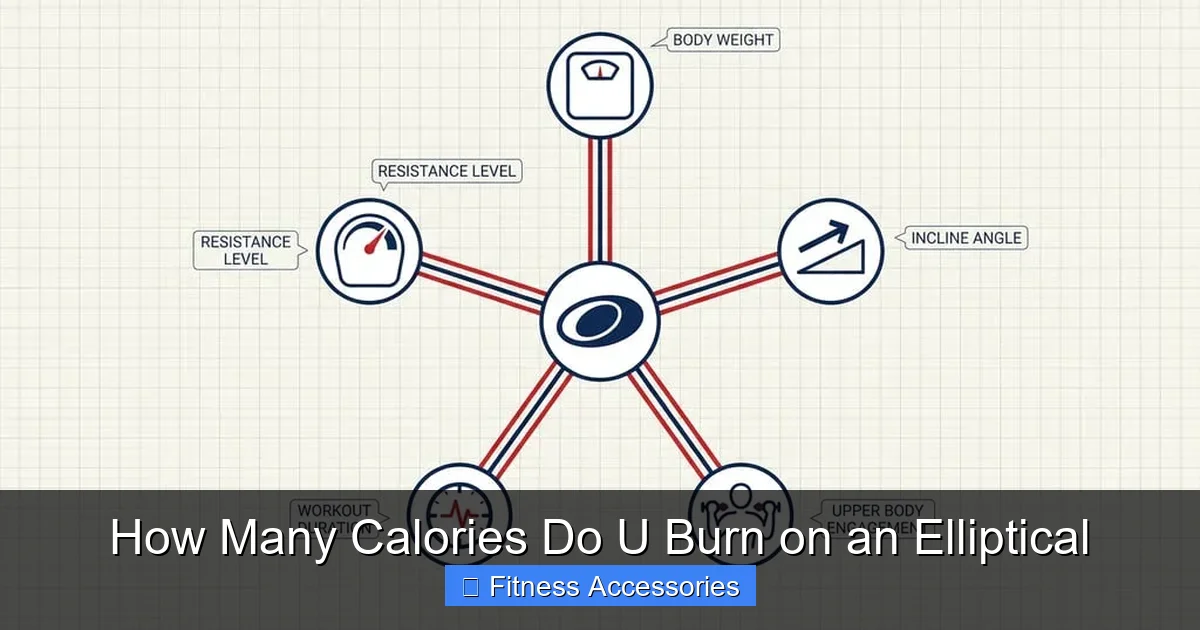
How many calories do u burn on an elliptical? The answer depends on your weight, workout intensity, and session duration. On average, a 150-pound person burns roughly 300–400 calories in 30 minutes. Factors like resistance level, incline, and whether you use the moving handles all play a big role. Keep reading to learn exactly how to maximize every minute on the machine.
Key Takeaways
- Weight matters most: Heavier individuals burn more calories on the elliptical because their bodies expend more energy to perform the same movement.
- Intensity changes everything: A vigorous elliptical workout can burn nearly double the calories compared to a light, casual pace.
- Duration adds up: A 30-minute session burns roughly 250–450 calories for most people, while 60 minutes can exceed 600 calories.
- Use the moving handles: Engaging your upper body can increase total calorie burn by up to 20–30% compared to pedaling with legs alone.
- Incline and resistance boost burn: Higher settings force your muscles to work harder, leading to significantly more calories burned.
- HIIT on the elliptical is extremely effective: Interval training can elevate your calorie burn both during and after your workout through the afterburn effect.
- Consistency beats perfection: Regular elliptical sessions, even at moderate intensity, deliver better long-term results than occasional intense workouts.
📑 Table of Contents
- How Many Calories Do U Burn on an Elliptical?
- Average Calorie Burn on an Elliptical
- Key Factors That Affect Calorie Burn
- How to Maximize Calorie Burn on the Elliptical
- Elliptical vs. Other Cardio Machines
- Common Mistakes That Reduce Calorie Burn
- Who Should Use the Elliptical?
- Sample Elliptical Workouts for Different Goals
- Conclusion
How Many Calories Do U Burn on an Elliptical?
If you have ever stepped onto an elliptical trainer at the gym or at home, you have probably glanced at the calorie counter and wondered — is that number even accurate? It is one of the most common questions in fitness, and for good reason. Knowing how many calories you burn on an elliptical helps you plan your workouts, set realistic goals, and track your progress over time.
The elliptical is one of the most popular cardio machines in the world, and for good reason. It is low-impact, easy on the joints, and works both your upper and lower body at the same time. Whether you are a beginner just starting your fitness journey or a seasoned athlete looking for a solid cross-training tool, the elliptical has something to offer. But the big question remains: how many calories do u burn on an elliptical during a typical session?
The short answer is that it depends. Your body weight, workout intensity, duration, resistance level, and even whether you use the moving handles all influence the final number. In this article, we will break down every factor that affects calorie burn on the elliptical, give you realistic estimates, and share practical tips to help you get the most out of every workout.
Average Calorie Burn on an Elliptical
What the Research Says
Multiple studies have looked at energy expenditure on the elliptical. According to research from the Medical Science Sports Exercise, a person weighing around 150 pounds burns approximately 325 to 385 calories in 30 minutes of moderate-intensity elliptical exercise. For a 180-pound person, that number jumps to roughly 390 to 460 calories in the same time frame.

Visual guide about How Many Calories Do U Burn on an Elliptical
Image source: thumbs.dreamstime.com
A separate study by the Harvard Medical School estimates that a 155-pound individual burns about 325 calories in 30 minutes of moderate elliptical activity. At a vigorous pace, that same person can burn close to 400 calories in half an hour.
Calorie Estimates by Body Weight
Here is a general breakdown of how many calories you burn on an elliptical for 30 minutes of moderate-intensity exercise:
- 125 pounds: approximately 250–300 calories
- 150 pounds: approximately 300–385 calories
- 180 pounds: approximately 360–460 calories
- 200 pounds: approximately 400–500 calories
- 220+ pounds: approximately 440–550+ calories
For a 60-minute session, you can roughly double these numbers. A 150-pound person doing a full hour of moderate elliptical work can expect to burn between 600 and 770 calories. That is a significant chunk of your daily calorie budget.
Why the Machine’s Calorie Counter May Be Wrong
Here is something important to know — the calorie counter on the elliptical machine is often inaccurate by 10–20%. Most machines do not account for your exact body composition, fitness level, or how efficiently you move. They use general formulas based on average users. If the machine asks for your weight and age, it will be closer to reality, but it is still an estimate.
For the most accurate measurement, consider using a heart rate monitor or a fitness tracker with a built-in calorie estimation feature. These devices track your actual heart rate during the workout, which gives a much better picture of how hard your body is working.
Key Factors That Affect Calorie Burn
Your Body Weight
This is the single biggest factor. The more you weigh, the more energy your body needs to move. Think of it like driving a truck versus a compact car — the heavier vehicle burns more fuel to travel the same distance. A 200-pound person will burn significantly more calories than a 130-pound person doing the exact same workout at the same speed and resistance.
Visual guide about How Many Calories Do U Burn on an Elliptical
Image source: cdn.shopify.com
This is actually good news if your goal is calorie burn. It means that as you lose weight, you may need to increase your workout intensity to maintain the same calorie output. Your body becomes more efficient over time, which is great for fitness but means the calorie counter might tick a little slower.
Workout Intensity and Speed
How fast you pedal and how hard you push directly impacts how many calories you burn on an elliptical. A leisurely pace at low resistance might only burn 200–250 calories in 30 minutes for an average person. But crank up the speed and resistance, and that number can jump to 400–500 calories or more.
Vigorous effort means your heart rate is elevated, your muscles are working hard, and your body is burning through energy at a much faster rate. Most experts recommend working at a pace where you can still talk but would struggle to sing. This moderate-to-vigorous zone is where the magic happens for calorie burn.
Resistance Level
Resistance is your secret weapon on the elliptical. When you increase the resistance, your leg muscles have to push harder through each stride. This not only burns more calories during the workout but also helps build lean muscle, which boosts your resting metabolism over time.
Try this: pedal at a comfortable speed with low resistance for five minutes, then increase the resistance by three to five levels while maintaining the same speed. You will immediately feel the difference in your quads, glutes, and calves. That extra effort translates directly into more calories burned.
Incline Settings
Many elliptical machines come with adjustable incline. Increasing the incline shifts the emphasis to your glutes and hamstrings, which are large, powerful muscle groups. Working bigger muscles requires more energy, which means more calories burned.
Some machines offer a ramp incline of up to 20 degrees. Even a modest incline of 5–10 degrees can increase your calorie burn by 10–15% compared to pedaling on a flat setting. If your machine has this feature, use it.
Using the Moving Handles
One of the biggest advantages of the elliptical over a treadmill is the ability to work your upper body. The moving handles engage your chest, shoulders, back, and arms. When you push and pull the handles as you pedal, you activate more muscle groups simultaneously, which increases your total calorie expenditure.
Studies suggest that using the moving handles can increase calorie burn by 20–30% compared to pedaling with your legs alone. If you want to maximize how many calories you burn on an elliptical, do not let those handles just sit there — grab them and get your upper body involved.
Workout Duration
This one is straightforward — the longer you work out, the more calories you burn. A 15-minute session might burn 150–200 calories, while a 45-minute session can burn 450–600 calories or more. However, duration alone is not the whole story. A shorter, more intense workout can sometimes burn more calories than a longer, easier one.
For most people, 30 to 45 minutes is the sweet spot. It is long enough to burn a meaningful number of calories but short enough to maintain good form and intensity throughout.
How to Maximize Calorie Burn on the Elliptical
Try High-Intensity Interval Training (HIIT)
If you really want to know how many calories you burn on an elliptical at maximum capacity, HIIT is the answer. This training method alternates between short bursts of all-out effort and recovery periods. For example, pedal as hard as you can for 30 seconds, then recover at a slow pace for 60 seconds. Repeat this cycle for 20 to 30 minutes.

Visual guide about How Many Calories Do U Burn on an Elliptical
Image source: a4fitness.com
HIIT is incredibly effective because it creates what scientists call excess post-exercise oxygen consumption (EPOC), commonly known as the afterburn effect. Your body continues to burn calories at an elevated rate for hours after you finish the workout. Some research suggests that HIIT can keep your metabolism elevated for up to 24 hours post-exercise.
A 30-minute HIIT session on the elliptical can burn 400–600 calories for an average person, and the afterburn effect adds even more. Compare that to 30 minutes of steady-state cardio, which might burn 300–400 calories with minimal afterburn.
Increase Resistance Before Speed
A common mistake people make is pedaling at a very high speed with very low resistance. This might feel like a good workout, but it is not as effective as you think. Instead, focus on building resistance first and then finding a speed you can maintain at that level.
Higher resistance forces your muscles to recruit more muscle fibers, which increases energy expenditure. It also builds strength in your legs and glutes, which improves your overall fitness and makes future workouts more efficient.
Engage Your Core
Do not forget about your core muscles. Pull your belly button toward your spine and maintain good posture throughout the workout. Engaging your core not only protects your lower back but also adds a small but meaningful increase in calorie burn because you are activating additional muscle groups.
Try letting go of the center handles (if your machine has them) for short periods to challenge your balance and core stability. Just make sure you feel stable before you do this.
Vary Your Workouts
Your body is incredibly adaptable. If you do the same elliptical workout every day, your muscles and cardiovascular system become more efficient at performing that specific task. This means you will burn fewer calories over time doing the exact same routine.
To keep your body guessing, change your workouts regularly. Alternate between steady-state sessions, HIIT workouts, high-resistance climbs, and reverse pedaling. Some ellipticals also offer pre-programmed workouts that automatically adjust resistance and incline. Use these programs to add variety.
Track Your Progress
Use a fitness tracker, heart rate monitor, or a simple workout journal to log your sessions. Record the duration, resistance level, speed, and estimated calories burned. Over time, you will see patterns and be able to adjust your workouts for better results.
Tracking also keeps you motivated. Seeing that you burned 450 calories today compared to 350 calories a month ago is a tangible sign of progress that keeps you coming back to the machine.
Elliptical vs. Other Cardio Machines
Elliptical vs. Treadmill
The treadmill is the elliptical’s biggest competitor. For the same perceived effort, a treadmill generally burns slightly more calories because it involves bearing your full body weight with each step. A 150-pound person jogging at 5 mph on a treadmill burns about 350–400 calories in 30 minutes, compared to roughly 325–385 on the elliptical.
However, the elliptical has a major advantage — it is low-impact. There is no pounding on your joints, making it a better choice for people with knee, hip, or back issues. If joint health is a priority, the elliptical wins even if the calorie burn is slightly lower.
Elliptical vs. Stationary Bike
A stationary bike is another low-impact option. At moderate intensity, a 150-pound person burns about 250–300 calories in 30 minutes on a stationary bike, which is less than the elliptical. The reason is simple — the elliptical works more muscle groups, especially if you use the moving handles.
For pure calorie burn, the elliptical beats the bike. But the bike is still an excellent choice for people who need an even gentler option or who want to focus specifically on lower-body endurance.
Elliptical vs. Rowing Machine
The rowing machine is a full-body powerhouse. It works your legs, back, core, and arms in every stroke. A 150-pound person rowing at moderate intensity burns approximately 350–400 calories in 30 minutes, which is comparable to or slightly higher than the elliptical.
The difference is in the muscle groups emphasized. Rowing targets the back and lats more heavily, while the elliptical focuses more on the legs and glutes. Both are excellent choices, and alternating between them can provide a well-rounded cardio routine.
Common Mistakes That Reduce Calorie Burn
Leaning on the Machine
One of the most common errors is leaning your weight on the center handles or console. This takes load off your legs and reduces the work your muscles have to do. Stand upright, keep your weight centered over your feet, and let your legs do the work.

Visual guide about How Many Calories Do U Burn on an Elliptical
Image source: thumbs.dreamstime.com
Pedaling Too Fast with No Resistance
Spinning your legs at high speed with zero resistance might feel intense, but it is mostly momentum doing the work. You will get a better workout — and burn more calories — by increasing the resistance and maintaining a controlled, deliberate pace.
Skipping the Warm-Up and Cool-Down
A proper warm-up prepares your muscles and cardiovascular system for the workout ahead. It also helps you reach a higher intensity sooner, which means more calories burned during the main session. Spend 5 to 10 minutes warming up at a light resistance before ramping up.
Similarly, a cool-down helps your body transition back to its resting state and can reduce muscle soreness. Do not skip it.
Not Using the Moving Handles
We mentioned this before, but it bears repeating. If you pedal without using the moving handles, you are leaving 20–30% of your potential calorie burn on the table. Make the handles a regular part of your workout.
Who Should Use the Elliptical?
Beginners
The elliptical is one of the best machines for beginners. It is intuitive, easy to learn, and gentle on the body. You can start with short, low-intensity sessions and gradually build up as your fitness improves. There is almost no learning curve.
People with Joint Issues
If you have arthritis, knee pain, hip problems, or a history of joint injuries, the elliptical is an ideal choice. Your feet never leave the pedals, which means there is no impact force traveling through your joints. You get all the cardiovascular benefits of running without the wear and tear.
Cross-Training Athletes
Runners, cyclists, and other athletes use the elliptical as a cross-training tool. It provides a cardiovascular workout while giving the primary sport-specific muscles a break. The movement pattern is similar enough to running to maintain fitness but different enough to work the muscles from a new angle.
People Focused on Weight Loss
If weight loss is your goal, the elliptical deserves a regular spot in your routine. The combination of calorie burn, low impact, and full-body engagement makes it one of the most efficient tools for creating a calorie deficit. Pair it with a healthy diet, and you will see results.
Sample Elliptical Workouts for Different Goals
Beginner Fat-Burning Workout (30 Minutes)
- Minutes 1–5: Warm-up at low resistance, comfortable pace
- Minutes 6–10: Moderate pace, increase resistance by 2 levels
- Minutes 11–15: Slightly faster pace, same resistance
- Minutes 16–20: Increase resistance by 2 more levels, maintain pace
- Minutes 21–25: Moderate pace, use moving handles
- Minutes 26–30: Cool-down at low resistance, slow pace
This workout burns approximately 250–350 calories for most beginners and is a great way to build a habit.
HIIT Workout for Maximum Calorie Burn (25 Minutes)
- Minutes 1–3: Warm-up at easy pace, low resistance
- Minutes 3–4: Sprint — maximum effort, high resistance
- Minutes 4–5: Recovery — slow pace, low resistance
- Repeat the sprint/recovery cycle 7 more times
- Minutes 23–25: Cool-down at easy pace
This intense session can burn 400–600 calories including the afterburn effect. It is challenging but incredibly effective.
Endurance Builder (45 Minutes)
- Minutes 1–5: Warm-up, gradually increasing resistance
- Minutes 6–35: Steady-state at moderate-to-high resistance, use handles for the last 15 minutes
- Minutes 36–40: Increase resistance, push the pace slightly
- Minutes 41–45: Cool-down, gradually decreasing resistance
This longer session targets endurance and burns approximately 500–700 calories for an average person.
Conclusion
So, how many calories do u burn on an elliptical? As you have seen, the answer depends on a variety of personal factors. But the general range is clear: most people burn between 250 and 500 calories in a 30-minute session, and 500 to 1,000 calories in a full hour. Heavier individuals, higher intensity, greater resistance, and using the moving handles all push those numbers higher.
The elliptical remains one of the most effective and accessible cardio machines available. It is gentle on your joints, engages your entire body, and offers enough variety to keep your workouts fresh and challenging for years. Whether you are just starting out or looking to break through a plateau, understanding your calorie burn helps you train smarter and reach your goals faster.
The best workout is the one you actually do consistently. So step onto that elliptical, set a challenging but sustainable resistance level, grab those moving handles, and start burning calories. Your future self will thank you.
Frequently Asked Questions
Is the elliptical good for weight loss?
Yes, the elliptical is excellent for weight loss. A 30-minute session burns 250–500 calories for most people, and regular use combined with a healthy diet creates the calorie deficit needed for fat loss. The low-impact nature also makes it sustainable for long-term use.
How long should I use the elliptical to burn 500 calories?
For a 150-pound person, it takes approximately 40–50 minutes of moderate-intensity elliptical exercise to burn 500 calories. If you increase the resistance and use the moving handles, you can reach that number in closer to 35 minutes.
Does the elliptical burn more calories than running?
Running generally burns slightly more calories than the elliptical at the same perceived effort because it involves full body weight bearing. However, the difference is small, and the elliptical’s low-impact design makes it a better option for people with joint concerns.
Should I use the elliptical every day?
You can use the elliptical every day if you vary your intensity and listen to your body. Many experts recommend taking at least one rest day per week for recovery. Alternating between intense and moderate sessions helps prevent overuse injuries.
How can I burn more calories on the elliptical?
To burn more calories, increase the resistance, use the moving handles to engage your upper body, try HIIT interval training, and extend your workout duration. Varying your routines also prevents your body from adapting and becoming too efficient.
Is 30 minutes on the elliptical enough?
Yes, 30 minutes on the elliptical is a solid workout for most people. It burns a meaningful number of calories and provides significant cardiovascular benefits. For even better results, aim for 30–45 minutes at moderate-to-vigorous intensity most days of the week.