How Long Should I Use a Rowing Machine For
Wondering how long you should use a rowing machine for optimal results? This guide breaks down ideal session lengths for beginners, intermediates, and seasoned athletes, plus tips to avoid fatigue and injury. Get clear, actionable advice so every row counts.
Key Takeaways
- Understanding How Long Should I Use A Rowing Machine For: Provides essential knowledge
📑 Table of Contents
- Introduction: Why the Length of Your Rowing Session Matters
- 1. Understanding the Basics: What Happens When You Row?
- 2. Tailoring Session Length to Your Goals
- 3. How to Structure Your Rowing Workouts
- 4. Listening to Your Body: When to Stop or Adjust
- 5. Frequently Asked Questions About Rowing Duration
- Conclusion: Finding Your Personal Sweet Spot
Introduction: Why the Length of Your Rowing Session Matters
Rowing machines are a powerhouse in home gyms. They give you a full‑body cardio workout, build strength, and burn calories—all while being low‑impact on the joints. But just like any other exercise, the amount of time you spend on the machine can make the difference between progress and plateau, or even injury.
If you’ve ever asked yourself, “How long should I use a rowing machine for?” you’re not alone. Newcomers often start with a vague idea of “a few minutes,” while seasoned rowers may push for hour‑long sessions without checking if that’s truly beneficial. This article walks you through the science, the practical tips, and the personalized plans you need to answer that question with confidence.
1. Understanding the Basics: What Happens When You Row?
Cardiovascular Impact
Rowing engages the heart and lungs in a rhythmic, whole‑body motion. In the first five minutes, your heart rate climbs quickly, reaching 70‑80% of its maximum in most people. That spike is what burns calories and improves aerobic capacity.

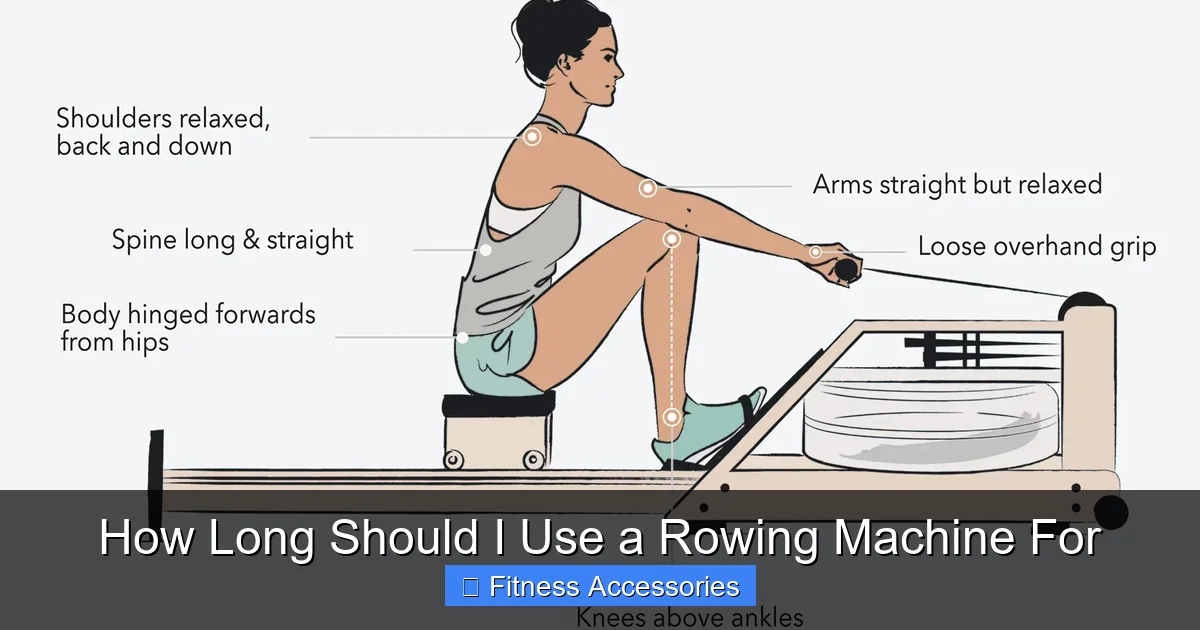
Visual guide about How Long Should I Use a Rowing Machine For
Image source: i.pinimg.com
Muscular Engagement
The drive phase works the legs, glutes, core, back, and arms. Each repetition is a mini‑strength set. Over time, this builds muscular endurance and can even increase muscle size, especially in the legs and upper back.
Energy Systems
Short bursts (under 2 minutes) rely on the phosphagen system, the same energy source used for sprints. Sessions lasting 20‑30 minutes shift toward aerobic metabolism, which is ideal for fat loss and endurance.
Practical Example
Imagine a beginner who rows 6 minutes at a moderate pace. The heart rate climbs, the legs feel the burn, and the mind learns the proper technique. After a few weeks, the same person can comfortably row 15 minutes, tapping deeper aerobic pathways without feeling exhausted.
2. Tailoring Session Length to Your Goals
Goal #1: Weight Loss
For fat loss, consistency beats duration. Aim for 20‑30 minutes of steady rowing 4‑5 times a week. This keeps you in the “fat‑burn zone” (about 60‑70% of max heart rate) while preserving muscle mass.

Visual guide about How Long Should I Use a Rowing Machine For
Image source: cdn.builder.io
Goal #2: Building Endurance
Endurance athletes should target 30‑45 minutes at a moderate to high intensity. Incorporate a few longer rows (up to 60 minutes) once a week to improve mitochondrial density and mental stamina.
Goal #3: Strength & Power
If you’re after raw power, keep rows short (5‑10 minutes) but intense. Pair high‑intensity interval training (HIIT) with heavy resistance settings. This trains the phosphagen system and builds explosive strength.
Goal #4: General Fitness & Stress Relief
Most people fall into this category. A 15‑20 minute session, three times a week, is enough to improve cardiovascular health, boost mood, and maintain weight.
3. How to Structure Your Rowing Workouts
Warm‑Up (5‑7 Minutes)
Start with easy strokes, focusing on technique. Add a few dynamic stretches for the hips, hamstrings, and shoulders. A proper warm‑up reduces injury risk and improves performance.
Primary Set (Variable Length)
- Steady‑State Row: Row at a consistent pace for the desired duration (e.g., 20 minutes).
- Interval Row: Alternate 1 minute hard, 1 minute easy. Repeat 8‑10 times for a 16‑20 minute workout.
- Pyramid Row: Increase time each interval (1‑2‑3‑2‑1 minutes) with equal rest periods.
Cool‑Down (4‑6 Minutes)
Gradually lower the resistance and stroke rate. Finish with gentle stretching—especially the lower back, hamstrings, and forearms.
Sample Weekly Plan
- Monday – 20‑minute steady‑state row (weight loss)
- Wednesday – 10‑minute HIIT (30‑second sprint, 30‑second rest)
- Friday – 30‑minute endurance row (steady pace)
- Saturday – Optional 45‑minute long row (endurance) or active recovery
4. Listening to Your Body: When to Stop or Adjust
Signs You’re Overdoing It
- Persistent lower‑back pain
- Sharp joint discomfort in knees or wrists
- Rapid loss of rowing form (slouching, uneven pull)
- Excessive fatigue lasting more than 24‑48 hours
Adjusting Duration on the Fly
If you feel any of the above, cut the session short by 5‑10 minutes and focus on form. You can also lower the resistance or switch to a slower stroke rate to reduce stress.
Recovery Strategies
- Hydrate well before and after rowing
- Incorporate foam rolling for the back and legs
- Use active recovery (light walking or yoga) on off‑days
- Sleep 7‑9 hours to allow muscle repair
5. Frequently Asked Questions About Rowing Duration
Can I row every day?
Yes, but vary intensity. Alternate hard days with light or technique‑focused rows to avoid overtraining.
How many calories do I burn in a 30‑minute row?
Generally 250‑350 calories, depending on weight, resistance, and effort level.
Is a longer row always better for weight loss?
No. Consistency and moderate intensity trump occasional marathon sessions. A 20‑minute row 5 times a week is more effective than a single 60‑minute session.
What’s the ideal stroke rate?
For most fitness goals, 22‑26 strokes per minute (spm) works well. Power athletes may target 28‑32 spm during sprints.
Should I combine rowing with other cardio?
Mixing modalities (running, cycling, swimming) can prevent boredom and reduce repetitive strain.
Do I need a coach to determine my perfect duration?
Not necessarily. Start with the guidelines here, track your progress, and adjust based on how you feel.
Conclusion: Finding Your Personal Sweet Spot
The answer to “How long should I use a rowing machine for?” isn’t a one‑size‑fits‑all number. It depends on your fitness level, goals, and how your body responds. Begin with short, consistent sessions, gradually increase duration, and always prioritize technique and recovery. By listening to your body and aligning workout length with clear objectives, you’ll turn every row into a step toward stronger health and a fitter you.
Frequently Asked Questions
How often should I increase my rowing session length?
Add 2‑5 minutes to your workout every 1‑2 weeks, as long as you maintain good form and feel comfortable.
Is it okay to row for more than an hour?
Only if you have built a solid endurance base and can sustain proper technique without excessive fatigue.
What’s the best way to track my rowing progress?
Use a rowing log or a fitness app to record duration, distance, split times, and perceived effort after each session.
Can rowing replace strength training?
Rowing builds muscular endurance, but it doesn’t fully replace targeted strength work for maximal muscle growth.
Should I adjust my rowing time based on the weather or season?
Indoor rowing isn’t weather‑dependent, but you might vary duration to match seasonal activity patterns or energy levels.
How does rowing time affect heart health?
Regular sessions of 20‑30 minutes improve cardiovascular fitness, lower blood pressure, and reduce heart disease risk.