How Fast Should I Row on a Rowing Machine
Finding the right rowing speed is key to getting fit, burning calories, and avoiding injury. Whether you’re a beginner or a seasoned rower, this guide shows you how to gauge your pace, use metrics like strokes per minute and split time, and adjust for goals such as endurance, strength, or weight loss. Follow the practical steps and examples to row smarter, not harder.
Key Takeaways
- Know your metrics: Strokes per minute (SPM) and split time (500‑m time) are the two main numbers to watch.
- Beginners start at 18‑22 SPM: This range builds technique without over‑taxing the heart.
- Endurance rows aim for 20‑24 SPM: A steady, sustainable pace that burns fat and improves aerobic capacity.
- Power rows target 26‑30 SPM: Short, intense bursts develop strength and sprint speed.
- Use a heart‑rate zone: Keep cardio effort between 70‑85 % of max HR for most workouts.
- Adjust by goal: Weight loss, performance, or rehab each have a different “ideal” speed.
- Listen to your body: Fatigue, form breakdown, or joint pain mean you need to slow down.
📑 Table of Contents
Introduction: Why Rowing Speed Matters
Rowing machines are one of the most efficient full‑body cardio tools you can own. They work your legs, core, back, and arms in a single, smooth motion. But just hopping on the seat and pulling hard isn’t enough. The speed at which you row—often expressed as strokes per minute (SPM) or a 500‑meter split—determines how hard your heart works, how many calories you burn, and how quickly you improve.
Think of rowing speed like the gear on a bike. Too low and you’ll spin without moving forward; too high and you’ll tire out before you finish your ride. The sweet spot varies by fitness level, training goal, and even the type of rowing machine you own. This article breaks down everything you need to know to set the right pace, measure it accurately, and tweak it for any workout.
1. Understanding the Core Metrics
Strokes Per Minute (SPM)
SPM counts how many complete rowing cycles you perform in one minute. A “stroke” includes the drive (pull) and the recovery (return). Most rowing monitors let you set a target SPM, and many coaches use it to keep you in a specific training zone.
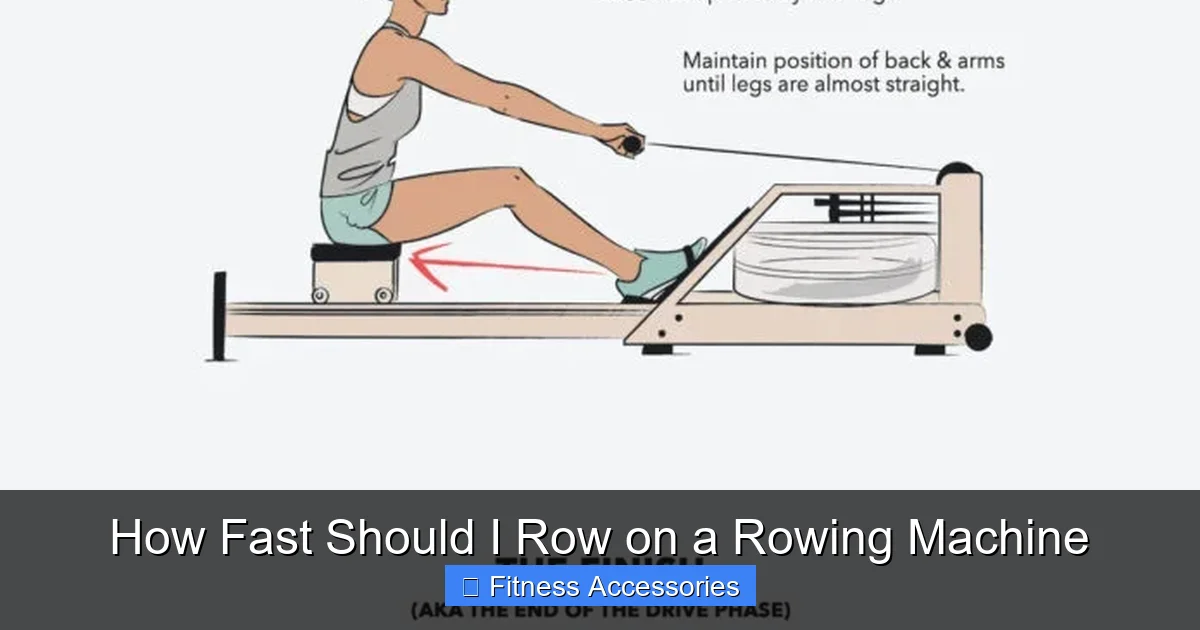
Visual guide about How Fast Should I Row on a Rowing Machine
Image source: wellnessed.com
Split Time (500‑m Pace)
The split shows how long it would take you to row 500 meters at your current effort. It’s displayed as minutes:seconds (e.g., 2:00). Split time is especially useful for comparing workouts because it normalizes distance regardless of your total row length.
Power Output (Watts)
Higher‑end rowers (Concept2, WaterRower, NordicTrack) calculate power in watts. While not necessary for beginners, watts give an objective measure of effort that isn’t influenced by boat drag or resistance setting.
Heart Rate (HR)
Pairing a chest strap or wrist HR monitor with your rower lets you stay inside a target cardio zone. Most users aim for 70‑85 % of their maximum heart rate for steady‑state rows.
2. Setting the Right Pace for Your Goal
Weight Loss and General Fitness
For burning calories and improving overall health, a moderate, sustainable pace works best. Aim for 20‑24 SPM with a split of 2:10–2:20 per 500 m. Keep your heart rate in the “fat‑burn” zone (about 65‑75 % of max). This pace lets you row for 30‑60 minutes without excessive fatigue.
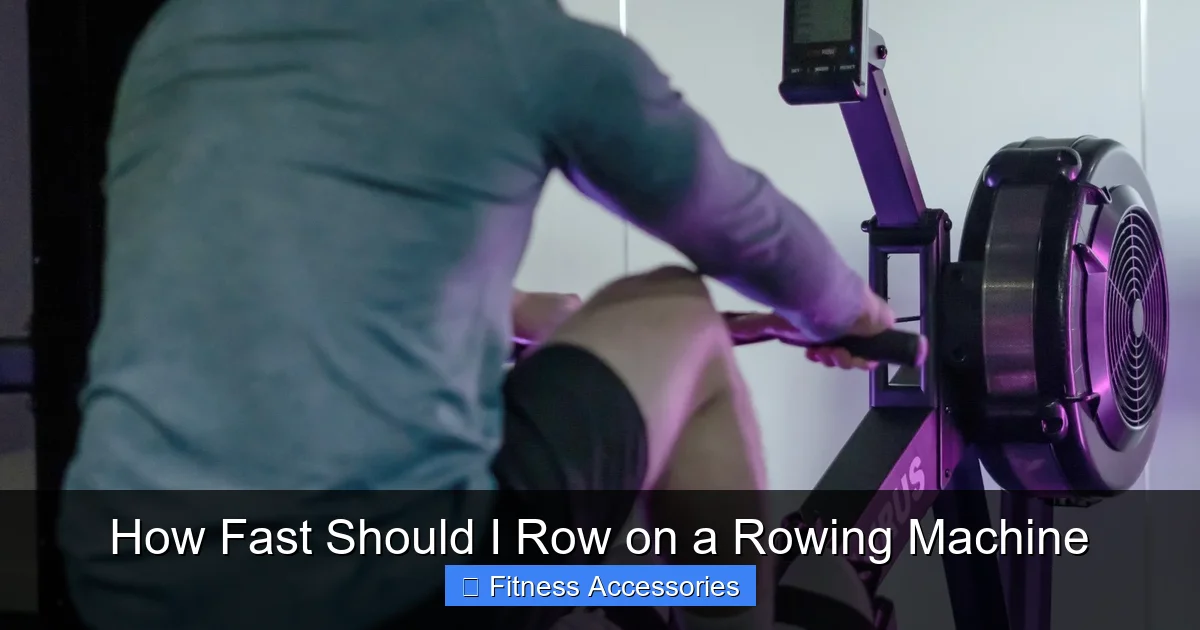
Visual guide about How Fast Should I Row on a Rowing Machine
Image source: cdn.fitshop.co.uk
Endurance Training
Endurance rows mimic long‑distance rowing races. The goal is to stay efficient for 45 minutes to 2 hours. Target 22‑24 SPM and a split around 2:00–2:05. Practice “steady state” – keep the same rhythm, breathing, and power throughout the session.
Strength and Power Development
If you want to build muscle and sprint speed, go for high‑intensity intervals. Use 26‑30 SPM for short bursts (30‑60 seconds) followed by equal rest. Your split may drop to 1:45–1:55 during the work phase, showing how hard you’re pulling.
Rehabilitation and Low‑Impact Cardio
Recovering from injury or easing back into exercise calls for a gentle pace. Stay at 18‑20 SPM with a split over 2:30. Focus on smooth, controlled movements and keep resistance low.
How to Choose Your Target
- Identify your primary goal (lose weight, race, build strength, recover).
- Pick the corresponding SPM range from the tables above.
- Test a 5‑minute row at that pace and note your split, HR, and how you feel.
- Adjust up or down 2‑3 SPM until you hit a “challenging but sustainable” feeling.
3. How to Measure and Track Your Speed
Using the Rowing Machine’s Console
Most modern machines display SPM, split, watts, and HR in real time. Set a “target SPM” if the console allows it; the screen will flash when you’re off‑pace. Some models also have a “pace alarm” that beeps when you exceed a preset split.
Third‑Party Apps and Wearables
Apps like Kinomap, Zwift, or the Concept2 Logbook sync via Bluetooth and give deeper analytics—trend graphs, weekly averages, and personal bests. Pair a smartwatch (Apple Watch, Garmin) to capture HR and calories.
Manual Tracking (Paper or Spreadsheet)
If you prefer analog, write down the following after each session: date, duration, distance, average SPM, average split, HR zone, and a quick “effort” rating (1‑10). Over weeks, you’ll see patterns and know when to push or pull back.
4. Practical Tips to Hit Your Target Pace
1. Master the Technique First
Good form reduces wasted energy, letting you row faster with less effort. Follow the “catch‑drive‑finish‑recovery” sequence:
- Catch: Sit tall, shins vertical, arms extended, torso hinged forward.
- Drive: Push with legs, open hips, then pull elbows past the torso.
- Finish: Legs straight, slight lean back, handle at the chest.
- Recovery: Extend arms, hinge hips, bend knees, return to catch.
2. Use a Metronome or Music Beat
Set a metronome at your target SPM (e.g., 22 bpm) and let the click guide each stroke. Alternatively, create a playlist where each song’s beat matches your desired SPM. The rhythm helps maintain consistency.
3. Warm‑Up Properly
Start with 5‑10 minutes at 15‑18 SPM, focusing on smooth technique. Gradually increase to your target pace over the next few minutes. A proper warm‑up raises core temperature and prevents early fatigue.
4. Adjust Resistance Wisely
Higher resistance makes each stroke harder, raising power but also heart rate. If you’re consistently overshooting your split, lower the damper (air rower) or resistance level (magnetic rower) by one notch. Keep the feel “heavy enough to work” but not “so heavy you can’t keep form.”
5. Monitor Breathing
Coordinate breathing with the stroke: inhale during recovery, exhale during drive. A steady breathing pattern helps keep HR in the desired zone and prevents “talk test” failures.
6. Cool‑Down and Stretch
Finish with 3‑5 minutes at 15 SPM, then stretch the hamstrings, quadriceps, hips, and shoulders. Cooling down helps lower HR gradually and reduces soreness.
5. Sample Workouts for Different Speeds
Workout A – 30‑Minute Fat‑Burn Row (20‑22 SPM)
- 5‑minute warm‑up at 15 SPM.
- 20 minutes at 20 SPM, split goal 2:15/500 m. Keep HR 70‑75 % max.
- 5‑minute cool‑down at 15 SPM.
Workout B – 45‑Minute Endurance Row (22‑24 SPM)
- 5‑minute warm‑up, gradually rise to 22 SPM.
- 30 minutes steady at 23 SPM, split around 2:05/500 m.
- 5 minutes “pump‑up” – increase to 26 SPM for 30 seconds every 5 minutes.
- 5‑minute cool‑down.
Workout C – 20‑Minute Power Intervals (28‑30 SPM)
- 5‑minute warm‑up at 18 SPM.
- 10 rounds of: 45 seconds hard at 30 SPM (split ~1:45) → 45 seconds easy at 18 SPM.
- 5‑minute cool‑down.
Workout D – Rehab Row (18‑20 SPM)
- 5‑minute gentle warm‑up, focus on full range of motion.
- 15 minutes at 18 SPM, split >2:30/500 m, resistance low.
- 5‑minute cool‑down, finish with shoulder and hip mobility drills.
Conclusion: Row Smarter, Not Faster
Choosing the right rowing speed isn’t about bragging rights; it’s about matching effort to goal, protecting your joints, and making steady progress. By understanding SPM, split time, and heart‑rate zones, you can set a clear target, track it with built‑in consoles or apps, and adjust on the fly. Start with a comfortable pace, perfect your technique, and gradually move into higher‑intensity zones as your fitness improves. Remember, consistency beats occasional sprinting—row regularly, listen to your body, and enjoy the full‑body benefits of this amazing machine.
Frequently Asked Questions
What is a good beginner rowing speed?
Beginners should aim for 18‑22 SPM with a 500‑m split of 2:20–2:40. This range builds technique while keeping heart rate manageable.
How do I calculate my target heart‑rate zone for rowing?
Use the formula 220 minus your age to estimate max HR, then multiply by 0.70–0.85 for the aerobic zone. For a 30‑year‑old, that’s roughly 133–162 bpm.
Can I rely solely on split time instead of SPM?
Split time reflects speed and power, but SPM tells you about rhythm. Combining both gives a fuller picture; many coaches set targets for each.
Should I increase resistance or speed to burn more calories?
Both raise calorie burn, but increasing speed (SPM) tends to improve cardio more, while higher resistance builds strength. Alternate between the two for balanced fitness.
How often should I change my rowing speed or program?
Every 4‑6 weeks, vary the intensity, duration, or interval scheme. This prevents plateaus and keeps your body adapting.
Is rowing on a machine safe for people with lower‑back issues?
Yes, if you keep a neutral spine, engage the core, and avoid over‑reaching. Start with low resistance, short sessions, and focus on hip‑hinge mechanics.