How Big Should a Yoga Mat Be 2
Choosing the right yoga mat size matters more than most people think. A mat that is too short or too narrow can throw off your balance and comfort during poses. This guide covers standard yoga mat dimensions, helps you find the best size based on your height, and explains when to go bigger or smaller.
Have you ever tried a yoga pose and felt like your mat was just a little too small? Maybe your feet kept sliding off the edge, or your knees felt crowded. The size of your yoga mat plays a bigger role in your practice than you might think. Picking the right dimensions can mean the difference between a comfortable flow and a frustrating session.
Not all mats are created equal. Some are designed for tall people. Others are built for travel. And some are perfect for gentle stretching but not for intense power yoga. In this guide, we walk you through everything you need to know about yoga mat sizing. By the end, you will know exactly what size mat fits your body and your style.
Whether you are a complete beginner or a seasoned practitioner, getting the right mat size is a simple change that can level up your entire practice. Let us dive in.
Key Takeaways
- Standard yoga mat size is 68 inches long and 24 inches wide, but this may not work for everyone.
- Tall yogis should consider extra-long mats (72 or 84 inches) to avoid hanging off the edge.
- Travel yoga mats are shorter and lighter but sacrifice stability for portability.
- Mat thickness affects comfort and balance, so pick wisely based on your practice style.
- Measuring your body before shopping saves time and money on returns.
- Width matters too, especially for side sleepers or those who do restorative poses.
📑 Table of Contents
- Standard Yoga Mat Dimensions
- How to Choose the Right Yoga Mat Size
- Yoga Mat Sizes for Different Body Types
- Travel Yoga Mats vs Full-Size Mats
- How to Measure for the Perfect Yoga Mat
- Common Mistakes When Choosing a Yoga Mat Size
- Expert Tips for Getting the Most Out of Your Yoga Mat
- How Mat Size Connects to Your Practice Style
- Budget and Size: Finding the Right Balance
- Final Thoughts on Yoga Mat Size
Standard Yoga Mat Dimensions
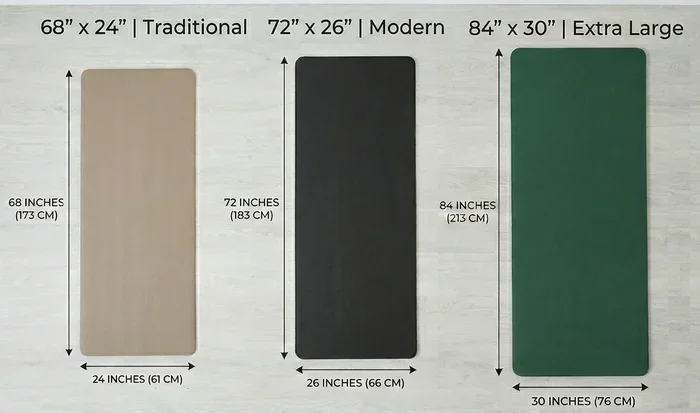
The most common yoga mat dimensions you will see are 68 inches long and 24 inches wide. This is what most brands consider the standard size. It works well for people who are around 5 feet 5 inches to 5 feet 10 inches tall.
But here is the thing. “Standard” does not mean “perfect for everyone.” Your body is unique, and your mat should be too. Let us break down what these numbers really mean for you.
Length Matters Most
The length of your mat determines whether your body fits comfortably on it. If you are taller than 5 feet 10 inches, a 68-inch mat might leave your feet or hands hanging off the edge. This can throw off your balance during standing poses like Warrior II or Tree Pose.
For most people, a 72-inch mat is a safer choice. It gives you a few extra inches of breathing room. And if you are 6 feet or taller, an 84-inch mat might be worth the investment.
Width Affects Stability
A standard mat is 24 inches wide. This works for most people doing traditional yoga poses. But if you like to spread out, do restorative poses, or need extra space for your arms, a wider mat can help. Some mats come in 26- or 30-inch widths for those who want more room.
How to Choose the Right Yoga Mat Size
Choosing the right yoga mat size comes down to three things: your height, your practice style, and where you practice. Let us look at each one.
Match the Mat to Your Height
This is the simplest way to find your ideal mat. Stand up straight and measure your height. Then compare it to the mat length you are considering.
Here is a quick guide:
- Under 5 feet 5 inches: A 68-inch mat works great.
- 5 feet 5 inches to 5 feet 10 inches: A 72-inch mat gives you comfortable room.
- Over 6 feet: Go for an 84-inch mat to avoid feeling cramped.
When you lie down on the mat, your hands and feet should stay on the surface. No fingers or toes hanging off the edge. That is the goal.
Consider Your Practice Style
Different styles of yoga call for different mat sizes. A hot yoga practice involves a lot of flowing movements and sweating. You want a mat that gives you stable footing. A thicker, wider mat can help with grip and comfort.
On the other hand, if you do restorative yoga or gentle stretching, you might prefer a longer mat so you can stretch out fully without feeling confined. And if you practice yoga for beginners, a standard-sized mat is usually plenty to get started.
Think About Where You Practice
Where you unroll your mat matters too. If you practice at home on a large floor, you have more freedom to go bigger. But if you practice in a crowded studio, a massive mat might bother the people around you. A standard or slightly longer mat keeps things respectful and practical.
Yoga Mat Sizes for Different Body Types
Not everyone fits the same mold, and that is perfectly fine. Let us look at how different body types benefit from specific mat sizes.
For Tall People
If you are 6 feet or taller, finding the right yoga mat for tall people can feel like a challenge. Many standard mats simply do not give you enough length. An 84-inch mat is your best friend in this case. It gives you full coverage from head to toe.
Some brands also make mats that are 86 or even 96 inches long. These are great for tall athletes or anyone who wants extra space. Just keep in mind that longer mats are heavier and harder to carry around.
For Shorter People
Shorter yogis do not need a huge mat. A 68-inch standard mat usually works perfectly. If you find that even a standard mat feels too long, you can try a 66-inch travel mat. These are compact and still give you enough room for most poses.
For Wider Builds
People with broader shoulders or wider frames might feel squeezed on a 24-inch mat. In this case, a 26- or 30-inch wide mat can make a big difference. You will feel more stable and less restricted during poses like Downward Dog or Cobra.
Travel Yoga Mats vs Full-Size Mats
If you travel often, you have probably wondered whether a travel yoga mat is worth it. These mats are shorter and lighter, making them easy to pack in a suitcase or carry on a yoga mat bag.
But there is a trade-off. Travel mats are usually thinner and shorter than full-size mats. This means less cushioning and less room for your body. They work well for quick sessions on the go, but they are not ideal for long, restorative practices.
If you travel frequently, look for a travel mat that is at least 68 inches long and 18 inches wide. This gives you a good balance of portability and comfort. And if you practice Pilates on your mat, make sure the thickness is enough to support your spine during core work.
How to Measure for the Perfect Yoga Mat
Measuring for the right mat is simple, but it makes a huge difference. Follow these steps to get it right.
- Measure your height. Stand against a wall and mark where the top of your head reaches. Measure from the floor to that mark.
- Add a few inches. Give yourself 3 to 6 inches of extra space on the mat. This ensures your hands and feet stay on the surface during poses.
- Consider your practice style. If you do dynamic flows, you need more room to move. If you do gentle stretching, a standard size is fine.
- Try before you buy. If possible, visit a store and lie down on a few different mats. See what feels right for your body.
Once you find the right size, you will wonder how you ever practiced without it. A well-fitted mat gives you confidence and stability in every session.
Common Mistakes When Choosing a Yoga Mat Size
Avoid these common pitfalls when shopping for a new mat.
- Buying based on price alone. A cheap mat might be the wrong size for your body. Always prioritize fit over cost.
- Ignoring thickness. Size is not just about length and width. Thickness affects your comfort and joint support. Check out how thick your mat should be for more guidance.
- Choosing a mat that is too long. Extra length sounds nice, but it adds weight and bulk. Only go longer if you truly need the space.
- Not measuring your practice space. Make sure your practice area is big enough to fit the mat you want. A huge mat in a small room creates clutter and limits your movement.
Expert Tips for Getting the Most Out of Your Yoga Mat
Once you have the right size mat, a few extra tips can help you get the most from it.
- Roll your mat with the top side facing out. This prevents creasing and keeps the surface smooth.
- Clean your mat regularly. A clean mat grips better and lasts longer. Use a gentle mat cleaner or a mix of water and vinegar.
- Replace your mat when it wears out. Over time, mats lose their cushioning and grip. If you notice thinning or slipping, it is time for a new one. Learn more about how often to replace your mat.
- Use a mat bag or strap. This makes carrying your mat easier, especially if you are commuting to a studio.
Taking care of your mat means it will take care of you. A well-maintained mat supports your joints, grips your feet, and makes every session feel better.
How Mat Size Connects to Your Practice Style
Different styles of yoga demand different things from your mat. Understanding this connection helps you choose wisely.
If you practice Vinyasa flow or Ashtanga, you move a lot. You need a mat that is long enough to support lunges, jumps, and transitions. A standard 68- or 72-inch mat works well for most flowing practices.
If you practice Yin yoga or Restorative yoga, you hold poses for longer periods. A longer mat gives you room to stretch out fully and relax into each pose. Width also matters here, since you may spend time lying on your side or stomach.
For Power yoga or hot yoga, grip and cushioning are key. A thicker, wider mat provides more stability when you are sweating and moving quickly. Some practitioners even use a yoga towel over their mat for extra grip in hot conditions.
If you are curious about how mat thickness plays into all of this, check out our guide on how thick of a yoga mat you should get for detailed recommendations.
Budget and Size: Finding the Right Balance
Yoga mats come in a wide range of prices. You do not have to spend a fortune to get a good-sized mat. But spending a little more often gets you better materials, better grip, and a longer-lasting product.
If you are wondering how much to budget, a solid yoga mat in the right size typically costs between $30 and $80. High-end mats can go higher, but for most people, the mid-range options offer the best value. If you want to learn more about pricing, read our guide on how much you should spend on a yoga mat.
The key is to find a mat that fits your body, your practice, and your budget. When all three align, you have found the perfect mat.
Final Thoughts on Yoga Mat Size
Getting the right yoga mat size is one of the easiest ways to improve your practice. A mat that fits your height, supports your style, and suits your space makes every session more enjoyable and effective.
Take the time to measure yourself. Consider where and how you practice. Choose a length, width, and thickness that feel right. And remember, the best mat is the one that makes you want to unroll it and get on the floor.
Your practice deserves the right foundation. Start with the right mat size, and everything else falls into place.
Frequently Asked Questions
What is the standard yoga mat size?
The standard yoga mat dimensions are 68 inches long and 24 inches wide. This size works well for most people between 5 feet 5 inches and 5 feet 10 inches tall. If you are taller or shorter, you may want to adjust up or down.
How do I know if my yoga mat is too small?
If your hands or feet hang off the edge of the mat during poses, it is too small. You should be able to lie down fully stretched out with your limbs staying on the surface. A mat that is too small can throw off your balance and comfort.
Can I use a travel yoga mat for regular practice?
Yes, but travel mats are usually thinner and shorter, which may limit your comfort during longer sessions. They work well for quick practices or when you are on the go. For regular home practice, a full-size mat is a better choice.
Does yoga mat thickness affect the size I need?
Thickness does not change the length or width of the mat, but it does affect how the mat feels under your body. A thicker mat provides more cushioning, which is great for joint support. Check out our guide on how thick a yoga mat needs to be for more details.
What size yoga mat is best for tall people?
Tall people should look for mats that are 72 to 84 inches long. This ensures full body coverage without hanging off the edge. Some brands even make 96-inch mats for very tall practitioners. Always add a few extra inches to your height when choosing a mat.
How often should I replace my yoga mat?
Most yoga mats last between 1 and 5 years depending on how often you use them and how well you care for them. Signs that it is time for a replacement include thinning material, loss of grip, and visible wear. Learn more about how often to get a new yoga mat.
=== CONCLUSION ===
Finding the right yoga mat size does not have to be complicated. With a little measuring and some thought about your practice style, you can find a mat that fits your body perfectly. Whether you need a standard 68-inch mat or an 84-inch extra-long mat, the right size makes every yoga session better.
Remember to consider your height, your practice type, and where you practice. A well-chosen mat supports your joints, improves your balance, and keeps you comfortable from start to finish. Take the time to get it right, and your body will thank you on the mat.