Could a Plane Take Off on a Treadmill
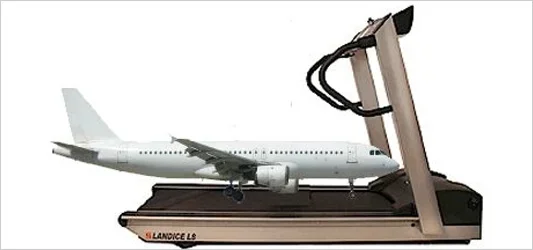
The idea of a plane taking off on a treadmill is one of the most debated physics questions online. The short answer is yes, a plane can take off on a treadmill, and here is why. Understanding this concept helps you appreciate how treadmill mechanics and airplane physics really work.
You have probably seen the wild question floating around the internet. Could a plane take off on a treadmill? It sounds like something out of a science fiction movie. But this question has sparked heated debates among engineers, pilots, physicists, and fitness enthusiasts alike.
The plane on a treadmill debate has been going on for years. It started as a thought experiment and grew into one of the most famous internet physics puzzles. Some people say no way. Others say absolutely yes. So who is right? Let us break it all down in simple terms.
In this article, we will explore the science behind this fascinating question. We will look at how airplanes fly, what a treadmill actually does, and what happens when you combine the two. By the end, you will understand the answer clearly and be able to explain it to anyone who asks.
Key Takeaways
- Planes generate lift through airspeed, not ground speed: This means a treadmill does not prevent a plane from flying.
- The Mythbusters proved it: Their experiment confirmed that a model plane can take off on a moving conveyor belt.
- Treadmill speed and plane thrust are unrelated: The wheels spin freely, and the engine pushes the plane forward regardless of belt movement.
- This question teaches real physics: Newton’s laws, thrust, and lift all play a role in how aircraft fly.
- Your treadmill works the same way: Understanding this helps you appreciate how your fitness equipment functions.
- The debate is settled: Science and experimentation both confirm that a plane can take off on a treadmill.
📑 Table of Contents
The Viral Question: Could a Plane Actually Take Off on a Treadmill?
This question first gained popularity online because it seems impossible at first glance. Imagine a giant airplane sitting on a massive treadmill. The treadmill moves backward at the same speed the plane would normally roll forward. Does the plane stay in place? Can it still take off?
The answer depends on how well you understand airplane physics. A plane does not move forward because of its wheels. Cars push themselves forward using their wheels against the ground. Planes do not work that way. A plane moves forward because of its engines. The engines create thrust that pushes the plane through the air.
Here is the key point. The wheels of a plane are free-spinning. They do not power the plane forward. They simply reduce friction as the plane moves along the ground. So even if a treadmill moves backward, the plane’s engines can still push it forward through the air.
Many people confuse ground speed with airspeed. Ground speed is how fast you move relative to the ground. Airspeed is how fast you move relative to the air around you. A plane needs airspeed to generate lift. A treadmill does not affect the air around the plane.
For a deeper dive into this exact question, check out Will a Plane on a Treadmill Take Off, which explores this topic in great detail.
How Airplanes Generate Lift for Takeoff
The Role of Thrust
Thrust is the force that moves a plane forward. Jet engines or propellers push air backward, which pushes the plane forward. This is Newton’s third law in action. For every action, there is an equal and opposite reaction.
When a plane’s engines produce enough thrust, the plane accelerates down the runway. As it speeds up, air flows faster over the wings. This creates a difference in air pressure above and below the wings. That pressure difference is what we call lift.
Lift must be greater than the weight of the plane for takeoff to happen. This is why speed matters so much. A plane needs a certain takeoff speed to generate enough lift to leave the ground.
Why Wheels Do Not Matter for Flight
This is the part that trips people up. A plane’s wheels are not connected to the engine. They are just there to reduce friction during ground movement. Think of them like casters on a shopping cart.
When a plane sits on a treadmill, the wheels spin faster because the belt moves backward. But this does not stop the plane from moving forward. The engines still push the plane through the air. The wheels just spin freely to accommodate both the forward motion of the plane and the backward motion of the belt.
Some people argue that the treadmill would match the wheel speed and hold the plane in place. But this ignores a crucial fact. The wheels are not driven. They spin with almost no resistance. The treadmill can spin the wheels faster, but it cannot stop the thrust from the engines.
For more on this topic, visit Can A Plane Take Off On A Treadmill Mythbusters to see real-world testing of this concept.
What Happens When a Treadmill Meets an Airplane
The Physics of Relative Motion
Let us think about this more carefully. A treadmill moves a surface backward. A plane generates its own forward force through its engines. These two things happen independently.
Imagine you are standing on a treadmill holding a rope attached to a wall. The treadmill moves backward, but you walk forward holding the rope. You still move forward because you are generating your own force. A plane works the same way, except the engine is the force and the air is the wall.
The treadmill only affects the wheels. It makes them spin faster. It does not push the plane backward. The plane still accelerates forward because of engine thrust. And once it reaches the right speed, it takes off.
Airspeed vs. Ground Speed Explained
Airspeed is the speed at which air flows over the wings. This is what creates lift. Ground speed is how fast the plane moves relative to the ground below it.
On a normal runway, airspeed and ground speed are the same when there is no wind. But on a treadmill, they are different. The treadmill changes ground speed but not airspeed. The plane still moves through the air at the required speed for lift.
So even if the treadmill moves backward at 200 miles per hour, the plane’s engines can push it forward at 200 miles per hour relative to the air. The wheels spin at 400 miles per hour, but the plane moves forward through the air just fine.
Another popular variation of this question is explored in Would A Plane On A Treadmill Take Off, which covers the same physics with a slightly different angle.
The Mythbusters Experiment Explained
The TV show Mythbusters tackled this question directly. They built a small model airplane and placed it on a massive conveyor belt. The belt was designed to match the speed of the plane’s wheels.
What happened? The model plane took off. Just like a real airplane, the thrust from the propeller pushed the plane forward through the air. The conveyor belt spun the wheels faster, but it did not prevent the plane from flying.
This experiment was a definitive test. Mythbusters proved that the plane on a treadmill concept works. The engine provides thrust. The wheels just spin. The treadmill does not cancel out the forward motion of the plane.
Some critics argued the model was too small to be a perfect representation. But the basic physics remain the same. Whether it is a small model plane or a giant Boeing 747, the principles of thrust, lift, and free-spinning wheels apply equally.
For those interested in the 747 specifically, check out Will A 747 Take Off On A Treadmill for a focused look at large aircraft and treadmill scenarios.
Treadmill Mechanics vs. Runway Physics
How Your Home Treadmill Works
Your home treadmill and a runway treadmill work on the same basic principle. A motor moves a belt backward or forward. When you walk or run on it, your legs push you forward while the belt moves beneath you.
But there is a key difference. You are a human using your legs to move forward. A plane uses jet engines to create thrust. Neither of these forces is stopped by the treadmill belt. The belt only affects whatever is in contact with it.
For runners, the treadmill belt moves under your feet. You stay in place relative to the room. But your legs are still working the same way they would on a road. The treadmill incline, speed settings, and motor power all affect your workout, but they do not change the basic mechanics of how you move.
Why This Question Matters for Fitness
You might wonder why this airplane question matters to treadmill users. It actually teaches us something valuable about how treadmills work. The belt moves, but your body generates its own forward force. The treadmill resists your feet, but your muscles push you forward.
This is similar to how a plane works. The treadmill moves. The plane’s engines push. The result is forward motion and, eventually, takeoff. On a fitness level, understanding this helps you appreciate that your treadmill is not holding you back. You are the engine.
Whether you are walking at 3 mph, jogging at 5 mph, or running at 8 mph, your body creates the movement. The treadmill simply provides a surface to move on.
Common Myths and Misconceptions
There are several myths surrounding the plane on a treadmill question. Let us clear them up.
- Myth 1: The treadmill will hold the plane in place. This is false. The treadmill only moves the wheels faster. It does not create a force that pushes the plane backward.
- Myth 2: Planes need a stationary runway to take off. False. Planes can take off on moving runways, conveyor belts, and even aircraft carriers. What matters is airspeed.
- Myth 3: The wheels will spin out of control. The wheels are designed to spin freely. They handle high speeds without any problem. Faster spinning does not cause failure.
- Myth 4: This is just a theoretical question with no real answer. Mythbusters proved the answer with a real experiment. The science is settled.
Key Takeaways
- Planes generate lift through airspeed, not ground speed: This means a treadmill does not prevent a plane from flying.
- The Mythbusters proved it: Their experiment confirmed that a model plane can take off on a moving conveyor belt.
- Treadmill speed and plane thrust are unrelated: The wheels spin freely, and the engine pushes the plane forward regardless of belt movement.
- This question teaches real physics: Newton’s laws, thrust, and lift all play a role in how aircraft fly.
- The debate is settled: Science and experimentation both confirm that a plane can take off on a treadmill.
Conclusion
So, could a plane take off on a treadmill? Yes, absolutely. The physics are clear, and the experiment proves it. A plane does not rely on its wheels for forward motion. It relies on engine thrust to push through the air and generate lift.
The treadmill only affects the wheels. It makes them spin faster. It does not stop the plane from moving forward. The engines keep pushing. The air keeps flowing over the wings. And eventually, the plane lifts off the ground.
This question is more than just a fun internet debate. It teaches us about real physics principles that apply to our everyday lives. It also gives us a new appreciation for how treadmills work. Your treadmill belt moves, but your body creates the motion. You are the engine.
Next time someone asks you, could a plane take off on a treadmill, you will have a clear and confident answer. Share the science. Share the fun. And maybe get back to your own treadmill workout with a little more appreciation for how simple and elegant the physics really are.
Frequently Asked Questions
Can a real airplane actually take off on a treadmill?
Yes, a real airplane can take off on a treadmill. The engines produce thrust that moves the plane forward through the air. The treadmill only spins the wheels faster. It does not prevent the plane from reaching the airspeed needed for lift and takeoff.
Why do people think a plane cannot take off on a treadmill?
People think this because it seems counterintuitive. We are used to cars and bikes, where wheels provide the forward motion. If the ground moves backward, those vehicles stay in place. But planes do not use wheels for propulsion. The engines do. This fundamental difference is what confuses many people.
What did Mythbusters find in their experiment?
Mythbusters built a small model plane and placed it on a conveyor belt. The belt moved backward at the same speed as the plane’s wheels. The model plane successfully took off. This proved that thrust from the engine, not ground contact, is what makes a plane fly.
Does treadmill speed affect how a plane takes off?
No, treadmill speed does not affect takeoff. The plane’s engines create thrust independent of the treadmill. The wheels simply spin faster to accommodate the belt movement. The plane still accelerates through the air and reaches the speed needed for lift.
How is airspeed different from ground speed on a treadmill?
Airspeed is how fast the plane moves through the air. Ground speed is how fast it moves relative to the surface below. On a treadmill, the ground speed changes because the belt moves. But airspeed stays the same because the engine pushes the plane through the air regardless of belt movement.
What can treadmill users learn from the plane on a treadmill debate?
Treadmill users can learn that the belt does not do the work for you. Just like a plane’s engines create thrust, your muscles create the force that moves you forward. The treadmill belt simply provides a surface. You are the engine in your workout.