Can You Use Map My Run on a Treadmill

Yes, you can use Map My Run on a treadmill! While the app is famous for outdoor GPS tracking, it has built-in features for indoor treadmill workouts. You can manually enter your distance and time, use a footpod or heart rate monitor for auto-tracking, or connect it directly to many modern smart treadmills. This allows you to keep all your runs—indoors and out—in one training log, complete with calories, splits, and analysis.
Key Takeaways
- GPS is not needed: Map My Run works perfectly on a treadmill using manual input, connected sensors, or direct treadmill links.
- Manual entry is a core feature: You can easily log a treadmill run by entering total time, distance, and average pace after your workout.
- Sensors enhance automation: Pairing a footpod (stryd, Zwift) or a chest strap heart rate monitor allows the app to auto-calculate distance and pace.
- Smart treadmill integration is key: Many NordicTrack, ProForm, Peloton, and other Bluetooth-enabled treadmills can sync directly with Map My Run.
- Accuracy depends on your method: Treadmill console data is very accurate; manual entry relies on you; sensors need calibration; direct sync is most seamless.
- Indoor runs get full credit: Your treadmill workouts count towards your weekly mileage, challenges, and personal records in the app.
[FEATURED_IMAGE_PLACEHOLDER]
📑 Table of Contents
- Can You Use Map My Run on a Treadmill? Absolutely, and Here’s How
- The Core Solution: Manual Workout Entry
- Using Sensors for Automatic Indoor Tracking
- Direct Treadmill Sync: The Seamless Experience
- Accuracy Concerns: Treadmill Console vs. App Data
- Maximizing Your Indoor Training with Map My Run
- Conclusion: Your Indoor Miles Matter
Can You Use Map My Run on a Treadmill? Absolutely, and Here’s How
So, you’ve downloaded Map My Run, laced up your shoes, and are ready to log some miles. You step onto the treadmill at the gym or in your home, start walking, and then… panic. The GPS icon is spinning, searching for a satellite signal that will never come. You’re inside, on a moving belt. Does this mean your run won’t count? Is the app useless for indoor training? Take a deep breath. The answer is a resounding yes, you can use Map My Run on a treadmill, and it’s actually quite simple. The app was designed with runners in mind, and that includes those who train indoors due to weather, time, injury, or personal preference. Let’s break down exactly how to make it work, so your indoor sweat sessions are just as valuable as your outdoor adventures.
The Core Solution: Manual Workout Entry
This is the most straightforward method and works with any treadmill, anywhere. It requires no special equipment, no Bluetooth pairing, and no technical know-how. You simply use the app to log your workout after you’ve finished running. It’s a two-step process: run on the treadmill, then input the data.
Visual guide about Can You Use Map My Run on a Treadmill
Image source: deerruntreadmill.com
How to Manually Log a Treadmill Run
After your treadmill session, open the Map My Run app. Tap the big “+” button or the “Log Workout” option, typically found on the home screen or in a menu. You’ll select “Run” as your activity. Instead of hitting “Start” to begin a GPS-tracked session, you’ll scroll down to find the section labeled “Enter workout manually” or similar. Here, you’ll input three key pieces of information: the total time you ran (e.g., 30:00), the total distance you covered (e.g., 3.1 miles or 5.0 km), and your average pace (though the app can calculate pace from time and distance). You can also add notes about incline, heart rate if you wore a monitor, and how you felt. Once saved, this workout appears in your activity history just like a GPS-tracked run, complete with splits (calculated evenly from your total distance and time), calorie estimates, and contribution to your monthly goals.
Pros and Cons of Manual Entry
- Pros: Universally compatible. No tech to fail. Free. Simple. You can use the exact distance and pace shown on the treadmill’s console, which is generally very accurate.
- Cons: Requires you to remember and input data. No real-time tracking or audio feedback during the run. No detailed route map (which is irrelevant indoors). Splits are evenly distributed, not based on actual effort changes (e.g., if you did intervals, the app won’t know).
Tip: Keep your phone or a notepad nearby on the treadmill to jot down your final time and distance immediately after finishing. It’s easy to forget once you’re off the machine and moving to your cool-down.
Using Sensors for Automatic Indoor Tracking
If you want a more “automatic” experience where the app tracks your pace and distance in real-time without GPS, you need an external sensor. The two primary types are footpods and chest strap heart rate monitors (with some advanced models tracking pace/distance). These devices use accelerometers or foot strike detection to measure your running dynamics.
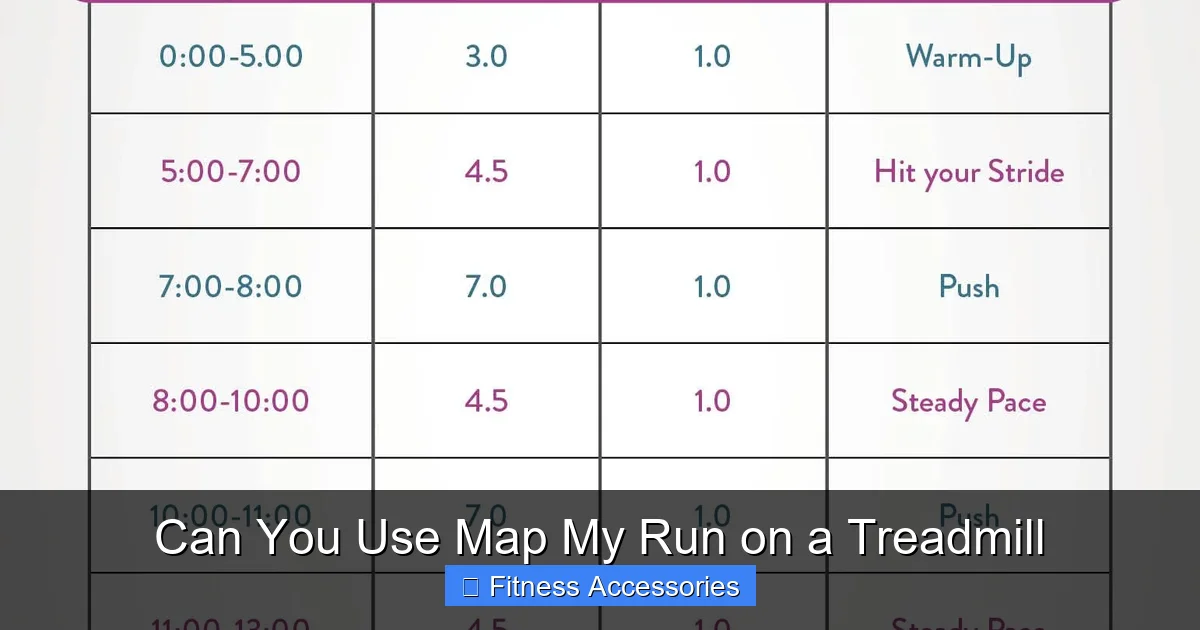
Visual guide about Can You Use Map My Run on a Treadmill
Image source: i.pinimg.com
Footpods: The Indoor Runner’s Best Friend
A footpod is a small device you attach to your shoelace or the front of your shoe. Brands like Stryd, Wahoo, and Garmin make them. When paired with Map My Run via Bluetooth, the footpod sends your real-time pace, distance, and cadence to the app. This creates a live, GPS-like tracking experience on the treadmill. The app will show your pace, distance, and time updating as you run. It’s fantastic for interval training because you get live audio feedback on pace.
How to set it up: Ensure your footpod is charged and paired with your phone’s Bluetooth first (usually in your phone’s Bluetooth settings or the device’s companion app). Then, in Map My Run, go to Settings > Connections > Sensors and add your footpod. When you start a new run, make sure the sensor is connected (you’ll see a sensor icon on the recording screen). Now, as you run, the app uses the footpod’s data instead of GPS.
Chest Strap HRMs with Running Dynamics
Not all heart rate monitors do this, but premium models from Garmin (HRM-Pro, HRM-Dual) and Polar (H10) can transmit both heart rate and running pace/distance data over Bluetooth. This works identically to a footpod for indoor tracking. If you already wear a chest strap for accurate heart rate, check if your model supports Bluetooth Smart broadcasting of pace. If it does, you can pair it directly to Map My Run and get automatic indoor tracking without buying a separate footpod.
Calibration is Crucial
Important: Sensors like footpods often need calibration for the most accurate indoor distance. They use your stride length to calculate distance. You must perform a calibration run where you know the exact distance (e.g., on a measured track or a treadmill with a known accurate console). You then adjust the sensor’s stride factor in its companion app until its calculated distance matches the known distance. A well-calibrated footpod can be incredibly accurate on a treadmill, often matching the console within 0.1 miles over several miles.
Direct Treadmill Sync: The Seamless Experience
This is the gold standard for home gym owners with compatible equipment. Many modern “smart” treadmills from brands like NordicTrack, ProForm, Peloton, Echelon, Sole (newer models), and Schwinn have built-in Bluetooth connectivity that can broadcast your workout data directly to fitness apps like Map My Run, Strava, Apple Health, and Google Fit.

Visual guide about Can You Use Map My Run on a Treadmill
Image source: i.ytimg.com
How Treadmill-to-App Sync Works
The treadmill’s console connects to your phone via the manufacturer’s app (e.g., iFit for NordicTrack/ProForm, Peloton App) first. This establishes a connection and often requires you to link your Map My Run account within that app. Once linked, when you complete a workout on the treadmill, the data—including total distance, time, average pace, elevation gain, and sometimes even split times—is automatically uploaded to your Map My Run account. It appears as a synced activity, often with a note like “imported from iFit.” There’s no manual entry and no need for a separate sensor.
Setup Steps and Compatibility
1. Check your treadmill’s manual: Look for “Bluetooth connectivity,” “app integration,” or “share workouts.” See if Map My Run is listed as a partner.
2. Download the manufacturer’s app: Install iFit, Peloton, etc., and set up your treadmill within it.
3. Link accounts: In the manufacturer’s app settings, find “Connections,” “Integrations,” or “Share to” and link your Map My Run account (you’ll log in with your Map My Run credentials).
4. Workout and sync: After your run on the treadmill, ensure the console finishes syncing to the manufacturer’s app (usually via Wi-Fi). The data should flow to Map My Run within a few minutes to a few hours.
Note: Some older smart treadmills may only sync to the manufacturer’s own ecosystem and not to third-party apps. Always verify compatibility before purchasing a treadmill based on this feature.
Accuracy Concerns: Treadmill Console vs. App Data
This is a common point of confusion. You might see a discrepancy between the distance on your treadmill’s console and what ends up in Map My Run. Which one is correct? Generally, the treadmill’s own measurement is the source of truth for the belt distance you actually ran. The treadmill measures belt revolutions directly. However, how that data gets to Map My Run can introduce variables.
Why Manual Entry Matches the Console
When you manually enter the distance from the treadmill console, you are copying that exact number. This is the most accurate representation of the ground you covered. The app’s calorie and pace calculations are then based on your verified time and that console distance.
Why Sensor or Sync Data Might Differ
A footpod calculates distance based on your stride length. If your calibration is off, or if your stride changes slightly on a treadmill (some people have a shorter, quicker stride), the footpod’s distance may not perfectly match the treadmill’s belt measurement. Similarly, with direct sync, there’s a tiny chance of a data transfer glitch, but usually, the treadmill sends its own calculated distance. The most common reason for a difference is user error: if you manually enter a distance from a poorly calibrated gym treadmill console, that’s your baseline. For the best accuracy, trust the treadmill you use most frequently and know to be consistent.
The Calorie Conundrum
Don’t stress too much about minor calorie discrepancies between the treadmill and Map My Run. Calorie estimates are algorithms based on weight, age, gender, heart rate (if available), and pace. Treadmills and apps use different formulas. Use them as a general guide, not an exact science. Consistency in your method (e.g., always using the treadmill console distance) is more important for tracking trends over time.
Maximizing Your Indoor Training with Map My Run
Once you have your treadmill data flowing into Map My Run, you can leverage all the app’s powerful features to make indoor training more effective and engaging.
Set Goals and Track Progress
Your indoor runs now contribute to your weekly mileage goals, monthly challenges, and personal records (PRs) for 5K, 10K, half marathon, and marathon. This is huge for motivation. Seeing that treadmill run add to your “Longest Run” or “Weekly Total” provides the same psychological reward as an outdoor run.
Analyze Your Workouts
Review the workout details in Map My Run. Look at your average pace, heart rate graph (if synced), and elevation gain (if you used incline). You can identify patterns. Are your treadmill paces slower than your outdoor paces? That’s normal due to lack of terrain variation and wind resistance. Use this data to adjust your training paces appropriately.
Create and Follow Workouts
You can create a custom interval workout in Map My Run (e.g., 10 min warm-up, 6 x 800m at 7:00/mile with 400m recovery, 10 min cool-down). With a connected footpod or heart rate monitor, you can run this workout on the treadmill and get audio cues (“Time to speed up,” “Recovery period”) through your headphones. This turns a mundane treadmill jog into a structured, purposeful session.
Join the Community
Share your indoor runs with friends on the Map My Run social feed. You might inspire someone else stuck indoors! You can also join virtual challenges that accept treadmill miles. It helps combat the isolation of indoor training and keeps you accountable.
Conclusion: Your Indoor Miles Matter
So, can you use Map My Run on a treadmill? Without a doubt. The method you choose depends on your equipment, budget, and desire for automation. For the occasional treadmill user, manual entry is a perfectly valid and simple solution. For the dedicated indoor athlete, investing in a footpod or ensuring your smart treadmill is properly synced creates a seamless, data-rich experience. The core principle is this: your training effort is what counts. Whether you run outside under open skies or inside staring at a wall, the miles you put in are building your fitness. Map My Run provides the tools to capture, quantify, and celebrate every single one of them. Don’t let a lack of GPS signal discourage your indoor training. Set up your preferred method today, and next time you’re on the belt, you can run with confidence, knowing every step is being logged and contributing to your goals.
Frequently Asked Questions
Will using Map My Run on a treadmill drain my phone battery quickly?
Yes, any continuous screen-on tracking will drain your battery. For manual entry, you’re not tracking in real-time, so battery use is minimal. For sensor-based tracking (footpod/HRM), the app uses less battery than GPS but still requires the screen and Bluetooth. Consider plugging your phone in during long treadmill sessions.
Can I use Map My Run on a treadmill without any sensors or a smart treadmill?
Absolutely. The manual workout entry feature is designed for exactly this scenario. Simply log your run after you finish by entering the time and distance from the treadmill’s console. It’s a simple, reliable, and equipment-free method.
Is the distance from a footpod accurate on a treadmill?
It can be very accurate, but calibration is key. A footpod calculates distance based on your stride length. You must calibrate it on a known, accurate distance (like a measured track or a trusted treadmill) to match its readings to reality. A well-calibrated footpod is often within 1-2% accuracy on a treadmill.
My smart treadmill syncs to its own app (like iFit). Why doesn’t it always show up in Map My Run?
Third-party syncing (like from iFit to Map My Run) is not always instant. Data often transfers in batches every few hours or overnight. Check that you’ve properly linked your Map My Run account within the manufacturer’s app. If it’s been over 24 hours and the workout still hasn’t appeared, try disconnecting and reconnecting the integration in the app settings.
What if my treadmill doesn’t show distance in miles/kilometers that Map My Run uses?
Use the unit your treadmill displays. Map My Run allows you to set your preferred unit (miles or km) in its settings, but when manually entering, you can input whatever unit your treadmill uses. Just be consistent. If your treadmill shows kilometers and you prefer miles, you can convert (1 km ≈ 0.62 miles) or change the treadmill’s display unit if possible.
Can I track treadmill walking or incline training in Map My Run?
Yes! The “Run” activity type is used for all treadmill work, including walking and hiking. When manually entering, you can specify the average incline percentage. For sensor or sync methods, if your treadmill reports elevation gain (from incline changes) and the data syncs, it will populate in Map My Run. You can also add notes about your incline settings.