Can You Lose Weight by Walking on a Treadmill

Yes, you can absolutely lose weight by walking on a treadmill. It’s a sustainable, low-impact way to burn calories, boost metabolism, and create the calorie deficit needed for fat loss. By combining consistent treadmill sessions with mindful nutrition and strategic intensity, you can achieve meaningful and lasting weight loss results without needing a gym membership or braving the elements.
Key Takeaways
- Calorie Deficit is King: Weight loss happens when you burn more calories than you consume. Treadmill walking reliably creates this deficit.
- Consistency Trumps Intensity: Regular, moderate walks are more effective for sustainable weight loss than occasional, grueling sessions you might skip.
- Incline is Your Secret Weapon: Adding incline dramatically increases calorie burn and builds leg muscle, which boosts your resting metabolism.
- It’s Low-Impact and Accessible: Treadmill walking is gentle on joints, making it a perfect starting point or go-to exercise for all fitness levels and body types.
- Nutrition is Non-Negotiable: You cannot out-walk a poor diet. Pairing your walks with balanced, portion-controlled meals is essential for success.
- Mindset and Habit Building Matter: The real victory is building a lifelong habit of daily movement, which is the foundation of maintaining weight loss long-term.
📑 Table of Contents
- Can You Lose Weight by Walking on a Treadmill? The Simple, Powerful Truth
- The Science: How Treadmill Walking Actually Burns Fat
- Crafting Your Weight Loss Walking Plan: From Steps to Strategy
- Maximizing Your Results: Beyond Just Walking
- The Nutrition Connection: You Can’t Out-Walk a Bad Diet
- Safety, Sustainability, and Staying Motivated
- The Final Step: Your Action Plan
Can You Lose Weight by Walking on a Treadmill? The Simple, Powerful Truth
Let’s get right to it. The short answer is a resounding yes. You can lose weight by walking on a treadmill. In fact, it might be one of the most underrated, sustainable, and effective tools in your fitness arsenal. When you see those complex workout plans and high-intensity interval training (HIIT) routines dominating fitness headlines, it’s easy to overlook the humble treadmill walk. But the science is clear, and the results are real for thousands of people who have made this simple activity a cornerstone of their weight loss journey.
The beauty of treadmill walking for weight loss lies in its simplicity and accessibility. It doesn’t require mastering Olympic lifts or enduring punishing sprints. It’s putting one foot in front of the other, repeatedly, in a controlled environment. This low-impact exercise torches calories, improves heart health, and—perhaps most importantly—builds a consistent habit that lasts. So, let’s break down exactly how it works, how to do it right, and how to maximize your results.
The Science: How Treadmill Walking Actually Burns Fat
At its core, weight loss is a game of numbers: calories in versus calories out. To lose one pound of fat, you need to create a deficit of approximately 3,500 calories. Treadmill walking directly attacks the “calories out” side of that equation.

Visual guide about Can You Lose Weight by Walking on a Treadmill
Image source: fitnesslume.com
The Calorie Burn Equation
Every time you take a step, your body expends energy. The number of calories you burn depends on three primary factors: your weight, the speed you’re walking, and the incline of the treadmill. A general rule of thumb is that a 155-pound person burns about 150 calories per 30-minute walk at a moderate pace (around 3.5 mph) on a flat surface. Increase the speed to 4.5 mph, and that jumps to roughly 200 calories. Add a 5% incline, and you’re looking at 250+ calories in the same 30 minutes. Over a week, these sessions add up significantly.
Beyond the Immediate Burn: The Afterburn and Metabolic Boost
The benefits don’t stop when your walk ends. While walking is primarily aerobic, incorporating intervals of higher intensity (like brisk walking or light jogging) can create an “afterburn” effect, scientifically known as Excess Post-exercise Oxygen Consumption (EPOC). Your body continues to burn extra calories for hours as it works to restore oxygen levels, repair muscles, and return to its resting state. Furthermore, regular walking builds lean muscle mass in your legs and core. More muscle means a higher basal metabolic rate (BMR), meaning you burn more calories even while sitting still.
Crafting Your Weight Loss Walking Plan: From Steps to Strategy
Showing up is the first step. The second is having a plan. Wandering on the treadmill at a leisurely pace while scrolling through your phone is relaxing, but for weight loss, you need a bit more intention. Here’s how to build a plan that delivers.

Visual guide about Can You Lose Weight by Walking on a Treadmill
Image source: gym-pact.com
Setting the Foundation: Frequency, Duration, and Pace
Start with the fundamentals. The American Heart Association recommends at least 150 minutes of moderate-intensity aerobic activity per week for substantial health benefits, and up to 300 minutes for weight loss. That breaks down to about 30-60 minutes, 5 days a week. Your initial pace should be one where you can hold a conversation but feel you’re working—this is often called the “talk test.” For most beginners, this is a speed between 2.5 to 3.5 mph.
The Magic of Incline: Simulating Hills for Maximum Impact
If you want to supercharge your treadmill walking routine, learn to love the incline button. Walking uphill engages more muscle fibers, particularly in your glutes and hamstrings, and forces your heart to work harder. Start with a 1-2% incline and gradually work your way up. A great beginner interval is: 5 minutes warm-up at 0% incline, then 20 minutes alternating between 3% incline for 3 minutes and 1% incline for 1 minute, finishing with a 5-minute cool-down. This simple tweak can increase your calorie burn by 30-50% without adding any impact to your joints.
Maximizing Your Results: Beyond Just Walking
To lose weight effectively and keep it off, you need to view your treadmill walking as one powerful piece of a larger puzzle. Here’s how to amplify its effects.
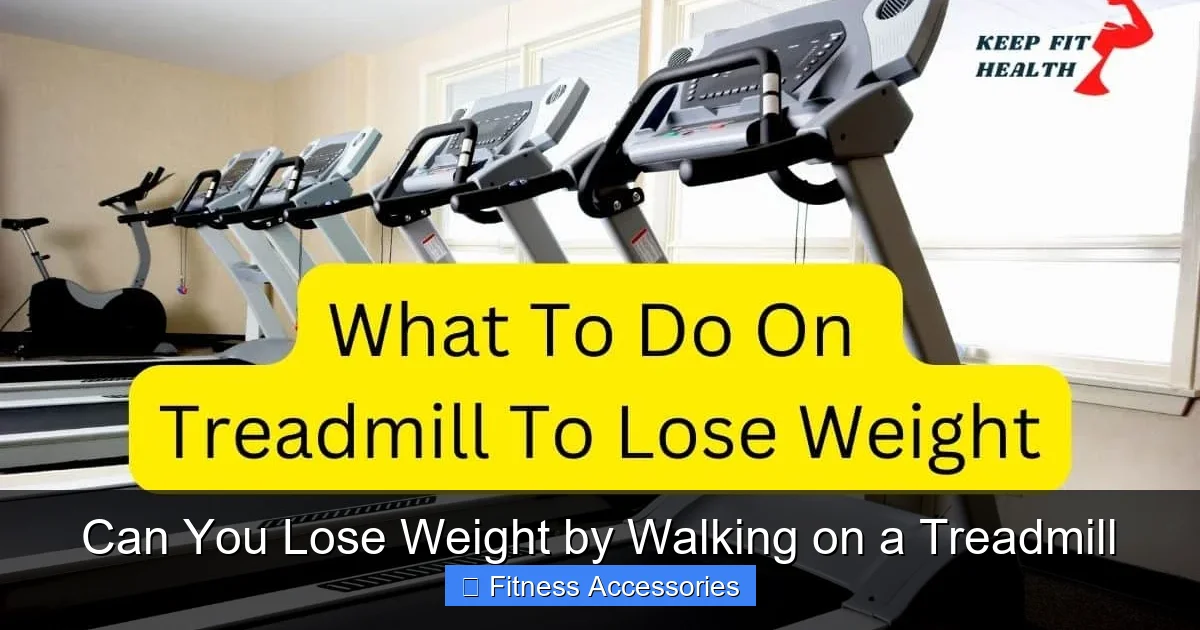
Visual guide about Can You Lose Weight by Walking on a Treadmill
Image source: keepfithealth.com
Incorporate Interval Training (The Walk-Jog-Walk Method)
You don’t need to run a marathon. “Interval training” for a walker simply means alternating periods of higher and lower intensity. This is a game-changer for weight loss. Try this sample 30-minute interval walk:
- 0-5 min: Warm-up, flat surface, easy pace (2.5-3 mph).
- 5-10 min: Increase speed to a brisk walk (3.5-4 mph).
- 10-12 min: Increase speed to a light jog or very fast walk (4.5-5 mph).
- 12-14 min: Back to brisk walk (3.5-4 mph).
- 14-16 min: Light jog/fast walk again.
- 16-25 min: Continue alternating 2 minutes brisk / 1 minute light jog.
- 25-30 min: Cool-down, easy pace, flat surface.
This pattern spikes your heart rate, maximizes calorie burn, and improves cardiovascular fitness more than steady-state walking alone.
Strength Training: The Essential Companion
Walking is fantastic cardio, but it’s not a full-body strength workout. Adding 2-3 days of simple strength training—using your bodyweight, resistance bands, or dumbbells—is crucial. Building muscle throughout your body increases your overall metabolic rate. Focus on major muscle groups with squats, lunges, push-ups, and rows. A stronger body is a more efficient calorie-burning machine, even at rest.
The Nutrition Connection: You Can’t Out-Walk a Bad Diet
This is the non-negotiable truth. Exercise is a powerful tool for health and weight loss, but nutrition is the foundation. You can walk for an hour and burn 300 calories, but that can be easily undone by a single sugary coffee drink or a handful of nuts. To see the scale move, you must pair your treadmill efforts with mindful eating.
Fueling for Fat Loss, Not Storage
Focus on whole, unprocessed foods: lean proteins (chicken, fish, tofu), fiber-rich vegetables, whole grains, and healthy fats. These foods keep you fuller longer and provide steady energy for your walks. Prioritize protein, especially after your workout, to aid muscle repair and recovery. Stay hydrated—often thirst is mistaken for hunger. The goal isn’t starvation; it’s about making higher-quality choices that support your activity level.
Timing Matters: Walk Before or After Meals?
There’s some evidence that a brisk walk before a meal can help regulate blood sugar and may slightly reduce appetite. A post-meal walk (20-30 minutes) is also excellent for digestion and blood sugar control. The best timing is the one that fits your schedule and you can do consistently. Consistency in both your exercise and your eating patterns is what creates lasting change.
Safety, Sustainability, and Staying Motivated
Starting a new routine is exciting, but long-term success depends on safety and enjoyment. Pushing too hard, too fast leads to burnout or injury.
Listen to Your Body: Avoiding Treadmill Burnout
Joint pain is a signal to slow down, check your form, or reduce incline. Ensure you have proper footwear—old, worn-out sneakers are a common cause of foot and knee pain. Start slowly, especially if you’re new to exercise. The “talk test” is a great guide; if you’re gasping for air, you’re going too hard. Remember, a 20-minute walk is infinitely better than a 5-minute run you hate and will never repeat.
Making It a Habit You Love
To lose weight and keep it off, you must learn to enjoy—or at least tolerate—your walks. Make it entertaining: listen to audiobooks, podcasts, or upbeat playlists. Walk while watching a favorite TV show. Change your scenery if your treadmill faces a window. Track your progress with a fitness app or simple journal—seeing your miles and calories add up is incredibly motivating. Find a walking “buddy,” even if it’s a virtual one for accountability. The goal is to make this ritual something you look forward to, not a chore you dread.
The Final Step: Your Action Plan
So, can you lose weight by walking on a treadmill? Absolutely. The path is clear: lace up your shoes, set a realistic schedule, add some incline or intervals, fuel your body well, and be patient. Weight loss is a marathon, not a sprint, and walking is one of the most sustainable, joint-friendly marathons you can run. It’s not flashy, but it works. Start today with a 20-minute walk. Tomorrow, add 5 minutes. Next week, try a 1% incline. Small, consistent actions compound into remarkable transformations. Your journey to a healthier, lighter you can begin with a single step on a moving belt. Take that step.
Frequently Asked Questions
Is walking on a treadmill enough to lose weight?
Yes, it can be enough if you combine it with a calorie-controlled diet. The key is creating a consistent calorie deficit. For significant weight loss, aim for at least 300 minutes of moderate-intensity walking per week alongside healthy eating habits.
What is the best speed and incline for weight loss on a treadmill?
There is no single “best” setting, as it depends on your fitness level. A great starting point is a speed of 3.5 to 4.5 mph (a brisk walk) with an incline of 1-3%. To maximize burn, incorporate intervals: alternate between a higher incline (4-6%) for 2-3 minutes and a lower one (1%) for recovery.
How long should I walk on a treadmill each day to see results?
For visible weight loss results, aim for 45-60 minutes per day, 5-6 days a week. However, if you’re just starting, begin with 20-30 minutes and gradually increase duration and intensity. Consistency over time is far more important than occasional long sessions.
Should I walk before or after eating for weight loss?
Both have benefits. A brisk walk before a meal can help control blood sugar spikes and may mildly suppress appetite. A walk after eating aids digestion. The most important factor is choosing a time you can stick to consistently, whether that’s first thing in the morning, during your lunch break, or in the evening.
Is treadmill walking better than outdoor walking for weight loss?
In terms of calorie burn, they are very similar at comparable speeds and inclines. The treadmill’s advantage is control: you can precisely set and maintain your pace and incline regardless of weather, terrain, or time of day. This consistency often makes it easier to stick to a routine, which is the ultimate key to weight loss success.
Can I lose belly fat specifically by walking on a treadmill?
You cannot “spot reduce” fat from any specific area. However, consistent treadmill walking creates a body-wide calorie deficit, which will lead to overall fat loss, including from your abdominal region. Combining your walks with core-strengthening exercises (like planks) will tone the underlying muscles, giving a firmer appearance as the fat reduces.