Can I Use Silicone Spray on My Treadmill Belt

No, you should generally avoid using standard silicone spray on your treadmill belt. While it might seem like a quick fix for squeaks, most treadmill manufacturers explicitly warn against it. Standard silicone sprays can degrade belt materials, attract dust and debris into the motor and deck, and create a slippery, unsafe surface. The correct approach is to use a 100% pure, treadmill-specific silicone-based lubricant applied precisely to the deck, not the belt, following your machine’s manual guidelines.
Key Takeaways
- Most manufacturers forbid standard silicone spray: Your treadmill’s warranty and longevity depend on using only recommended lubricants, typically pure silicone liquid or gel applied to the deck.
- Silicone spray can damage your belt and deck: Aerosol propellants and additives in general-purpose sprays can dry out, crack, or swell the PVC/rubber belt and deck materials.
- It creates a magnet for dust and hair: The oily residue from spray traps carpet fibers, pet hair, and dust, forcing it into the motor and rollers, leading to overheating and premature failure.
- Proper lubrication is deck-focused: Lubricant is applied directly to the clean deck surface *between* the belt and deck, not sprayed onto the belt’s top surface where you walk.
- Safety is the primary concern: An over-lubricated or incorrectly lubricated belt can become dangerously slippery, increasing the risk of falls and injuries during your workout.
- Diagnose the noise first: A squeak might not be a lubrication issue at all; it could be belt misalignment, loose roller bolts, or a worn bearing, requiring different solutions.
- Use only treadmill-specific products: Products like “100% Pure Silicone Treadmill Lubricant” (often in a squeeze bottle) are formulated to be safe, non-aerosol, and the correct viscosity for your machine.
📑 Table of Contents
- The Squeak That Started a Question
- Understanding Your Treadmill’s “Underbelly”: How the Belt System Works
- The Silicone Spray Trap: Why It’s a Bad Idea
- What the Manufacturer Actually Says (and Why You Should Listen)
- The Right Way: Proper Treadmill Lubrication Step-by-Step
- Troubleshooting: When Lubrication Isn’t the Answer
- The Cost of a Shortcut: Long-Term Damage and Safety Risks
- Conclusion: Stick to the Script for a Long-Lasting Machine
The Squeak That Started a Question
You’re in the middle of a solid run, heart rate climbing, when you hear it: a persistent, high-pitched squeak coming from beneath your feet. It’s not the belt slipping; it’s a sound that grates on your nerves and makes you wonder if your trusty treadmill is developing a serious problem. Your first instinct might be to grab something—anything—from the garage to silence it. For many, that “something” is a can of all-purpose silicone spray. After all, silicone is slippery, right? It’s used for everything from zippers to squeaky door hinges. So the logical question arises: Can I use silicone spray on my treadmill belt?
It’s an excellent question, born from a desire to solve a problem quickly and cheaply. But before you point that nozzle at your treadmill’s belt, you need to understand the intricate dance between your belt, deck, rollers, and motor. The short, critical answer is that using standard aerosol silicone spray on a treadmill belt is a dangerous and costly mistake—one that can void your warranty, damage your machine, and create a serious safety hazard. Let’s break down exactly why, and what you should do instead.
Understanding Your Treadmill’s “Underbelly”: How the Belt System Works
To grasp why the wrong lubricant is so harmful, you need a clear mental picture of what happens under the belt. Your treadmill is a system of precise, friction-managed components.

Visual guide about Can I Use Silicone Spray on My Treadmill Belt
Image source: img.drz.lazcdn.com
The Belt, Deck, and Roller Trinity
The belt is the moving surface you walk or run on. It’s typically made of a multi-layered PVC (polyvinyl chloride) or rubber composite, designed for durability and slight grip. Beneath it lies the deck (or board), a rigid, often laminated wood or composite surface that the belt slides over. At either end of the deck are the rollers—one usually motor-driven (the front roller) and one idler (the rear). The belt is looped around these two rollers. The entire system relies on a delicate balance: enough friction for the drive roller to pull the belt without slipping, but not so much friction that it creates excessive drag, heat, and wear on the motor.
Where Friction Lives (and Why We Lubricate)
The primary point of friction is the interface between the bottom of the belt and the top of the deck. As the belt moves, it rubs against the deck. In a properly maintained treadmill, a thin, even film of lubricant separates these two surfaces. This film dramatically reduces friction, allowing the motor to do its job efficiently without overheating, and preventing premature wear on the belt’s underside and the deck’s surface. The goal of lubrication is to maintain that invisible, slippery layer between these two parts.
The Silicone Spray Trap: Why It’s a Bad Idea
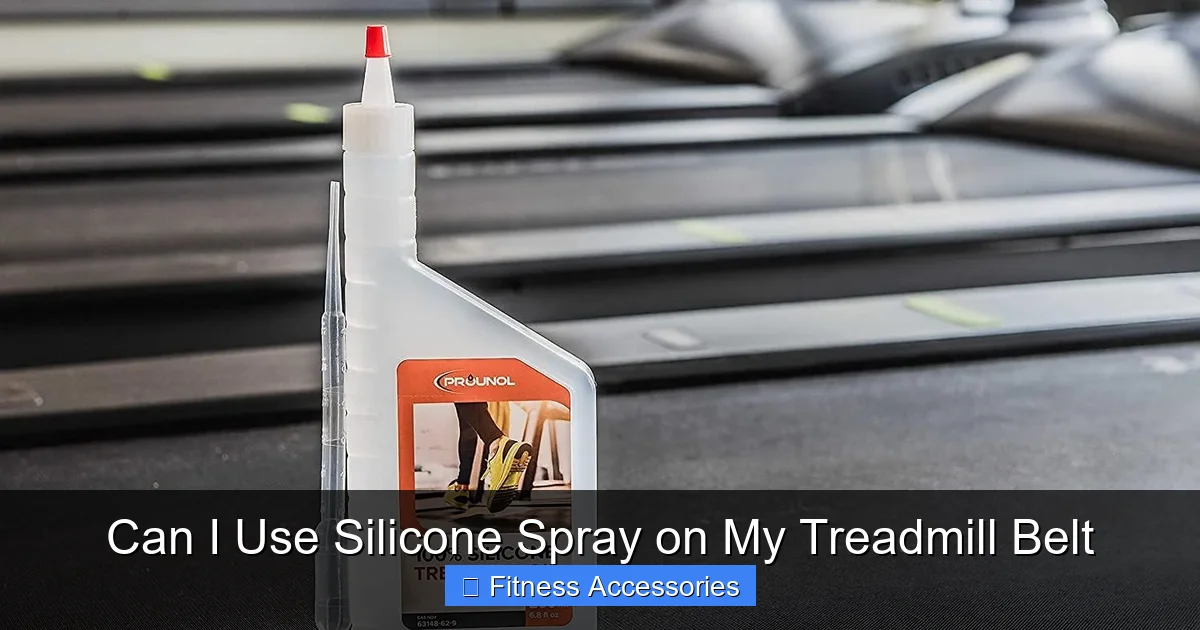
Now, let’s examine the can of “silicone spray” you’re thinking of using. This is typically an aerosol product containing silicone (polydimethylsiloxane) suspended in a solvent with a propellant. It’s designed for light-duty, quick applications on things like hinges, tools, or automotive parts. Using it on a treadmill introduces several critical problems.
Visual guide about Can I Use Silicone Spray on My Treadmill Belt
Image source: gosupps.com
1. The Propellant Problem: A Sticky, Dust-Attracting Residue
When you spray an aerosol, the propellant (often a petroleum distillate or alcohol) evaporates quickly, leaving behind the silicone oil. On a treadmill, this creates a viscous, gummy residue. Unlike a pure silicone liquid lubricant designed for treadmills, this residue is an absolute magnet for the microscopic dust, carpet fibers, pet hair, and lint that naturally exist in a home environment. This gritty paste gets smeared across the deck and, worse, is pulled into the roller bearings and, ultimately, the motor compartment. Inside the motor, this abrasive gunk acts like sandpaper, wearing down bearings and coating windings, leading to overheating and catastrophic motor failure. You’ve traded a simple squeak for a $300+ motor replacement.
2. Material Compatibility: A Chemical Attack
Treadmill belts and decks are engineered for specific chemical environments. Standard silicone sprays contain additives, stabilizers, and carriers that can be incompatible with PVC and rubber compounds. These chemicals can:
- Dry out and embrittle the belt’s material, causing it to crack and eventually split.
- Swell or soften the deck’s laminated surface, creating a soft, gummy spot that increases friction instead of reducing it.
- Degrade the adhesive that bonds the belt’s layers (if it’s a multi-ply belt), leading to delamination.
Manufacturers formulate their own lubricants (or specify exact types) to be chemically benign to these specific materials. Using a foreign chemical is essentially an uncontrolled experiment on your equipment.
3. Application Error: Spraying the Wrong Surface
The most common user error is spraying the top of the belt—the walking surface. This is a major safety hazard. A lubricant on the walking surface makes it dangerously slick, especially when you begin to sweat. Even a small amount can cause a sudden, unexpected slip and a serious fall. The lubricant must only be applied to the deck surface, which requires lifting the belt’s edge—a task many users skip when using a spray, leading to direct application on the belt top.
4. The “More is Better” Fallacy
Aerosol sprays are hard to control. It’s easy to over-apply, creating a thick, pooling layer of lubricant. Too much lubricant on the deck can cause the belt to hydroplane—it loses contact with the drive roller and simply slips without moving. The motor will whir, the belt won’t move, and you’re left with a non-functional machine. Proper treadmill lubrication requires a thin, even coat, often just 1-2 ounces total for the entire deck. A spray can delivers far more than needed in seconds.
What the Manufacturer Actually Says (and Why You Should Listen)
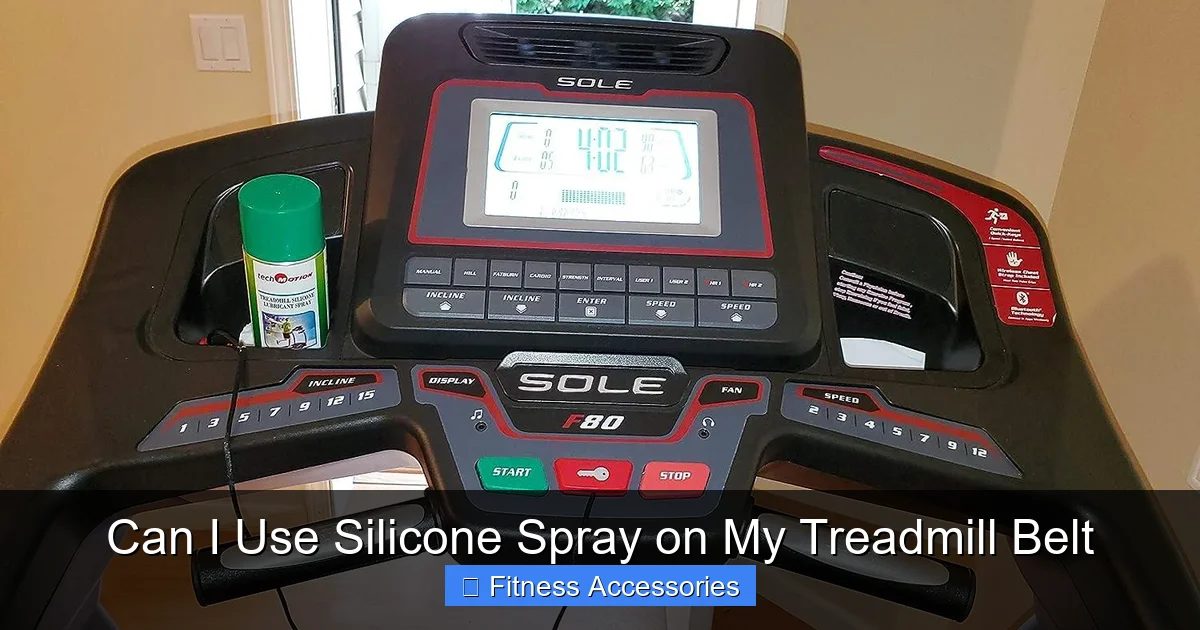
If you still have your treadmill’s owner’s manual, dig it out. In the maintenance section, you will find definitive instructions. They will almost universally state one of two things:
Visual guide about Can I Use Silicone Spray on My Treadmill Belt
Image source: gosupps.com
- “Use only 100% pure silicone lubricant.” They will specify it must be a liquid or gel, not a spray, and often provide a part number or brand recommendation.
- “Do not use WD-40, silicone spray, oil, or grease.” Many manuals explicitly list prohibited substances, and “silicone spray” is a common entry.
The Warranty Voidance Clause
This isn’t just a friendly suggestion; it’s a warranty condition. Using an unapproved lubricant is considered “misuse” or “negligent maintenance.” If your treadmill develops a problem—a failed motor, a cracked belt, a seized roller bearing—the service technician will immediately look for signs of improper lubrication. The greasy, dusty residue from a silicone spray is a dead giveaway. If they find it, your warranty is instantly void, and you will be on the hook for the full, expensive repair.
Decoding “Silicone-Based” vs. “Silicone Spray”
This is a crucial distinction. Your manual likely calls for a “100% pure silicone lubricant” or “silicone-based treadmill lubricant.” This is a specific product: a clear, viscous liquid or gel (often in a squeeze bottle or tube) consisting almost entirely of silicone oil with no solvents, propellants, or other additives. It is designed to be poured or dabbed directly onto the deck. Silicone spray is an entirely different delivery mechanism and formulation. Never assume a “silicone” product is safe; it must be the exact type specified.
The Right Way: Proper Treadmill Lubrication Step-by-Step
Okay, so standard silicone spray is out. What’s the correct procedure? Whether you have a belt-drive or a direct-drive treadmill, the principles are similar. Always, always start with your owner’s manual for model-specific instructions and lubrication intervals (typically every 3-6 months for home use, more frequently for heavy use).
Step 1: Gather the Correct Tools & Lubricant
You need:
- The Correct Lubricant: Purchase a 100% pure silicone treadmill lubricant from the manufacturer, an authorized dealer, or a reputable fitness equipment supplier. Do not guess.
- Allen Wrench/Hex Key: Usually 5mm or 6mm, to loosen the rear roller bolts (on most models).
- Clean Rags: Lint-free cloths.
- Mild Cleaner: A treadmill deck cleaner or a diluted, mild dish soap solution (rinsed thoroughly).
- Optional: A plastic spatula or a “lubrication wand” to help spread lubricant under the belt.
Step 2: Prepare the Treadmill
Unplug the treadmill. This is non-negotiable. Raise the belt on one side by loosening the rear roller adjustment bolts (located at the tail end of the deck, usually under the end caps). You only need to loosen them 2-3 turns each. This creates a gap between the belt and the deck on that side, allowing you access. On some models, you may need to loosen the front roller instead. Consult your manual.
Step 3: Clean Thoroughly
With the belt lifted, use your rags and cleaner to vigorously scrub the entire exposed deck surface. Remove all old, gummy lubricant, dust, and debris. This is the most important step. A clean deck ensures the new lubricant can form a proper, even film. Wipe until the rag comes away clean. Let the deck dry completely.
Step 4: Apply Lubricant Correctly
Apply the recommended amount (check manual—typically 1 oz per foot of deck length, or about 10-15ml total). Apply it directly to the clean deck, not the belt. If your bottle has a straw applicator, insert it into the gap and squeeze a thin, zig-zag line of lubricant down the center of the deck. For wider decks, you may do two parallel lines. Do not pour it directly onto the roller bearings.
Step 5: Spread and Distribute
Use a clean rag or a plastic spatula to gently spread the lubricant into a thin, even layer covering about 75% of the deck width (avoiding the very edges where the belt tracking guides are). You want a sheen, not a puddle.
Step 6: Reassemble and Test
Carefully lower the belt back into place by tightening the roller bolts evenly (alternating sides) until the belt is taut but not overly tight (refer to manual for tension specs). Plug in the treadmill. With the belt running at a slow speed (1-2 mph), watch the belt track. It should run centered. Let it run for 2-3 minutes to allow the lubricant to distribute fully between the belt and deck. You should feel and hear a significant reduction in friction and noise.
Troubleshooting: When Lubrication Isn’t the Answer
What if you lubricate correctly and the noise or problem persists? The squeak might be a symptom, not the disease. Here are other common culprits:
Belt Misalignment (Tracking)
A belt that rubs against one of the side trim rails will create a consistent rubbing or squeaking noise. This is fixed by adjusting the rear roller bolts (tighten the bolt on the side the belt is moving *towards*). A properly aligned belt will stay centered within the trim rails.
Loose or Worn Roller Bearings
Each roller has bearings that allow it to spin freely. If these become worn, dry, or clogged with debris, they will emit a grinding, humming, or squeaking noise. You can often diagnose this by manually spinning each roller (with the treadmill unplugged). They should spin smoothly and silently. A gritty feeling or noise indicates a bearing failure, requiring roller replacement.
Motor or Drive Belt Issues
On older or belt-drive models, a squeak could come from the V-belt that connects the motor to the front roller. This belt can slip, glisten (from old lubricant), or wear out. This is a more complex repair. On direct-drive models, the noise could be internal to the motor itself.
Deck Damage
A cracked, splintered, or warped deck will create noise and friction regardless of lubrication. Inspect the deck surface carefully through the belt gap. If you see deep cracks or significant warping, the deck needs to be replaced.
The Cost of a Shortcut: Long-Term Damage and Safety Risks
Let’s connect the dots on the real consequences of using the wrong product. The initial “savings” of using a $5 can of silicone spray is a false economy that leads to one of three outcomes:
- The Dust-Filled Motor: The gummy residue pulls in debris, coating the motor windings. This insulates the motor, causing it to overheat. Heat is the number one killer of treadmill motors. The result is a burned-out motor, a costly replacement, and a machine that may smell of burnt electronics.
- The Slippery Belt Fall: Lubricant on the walking surface is an invisible hazard. During a vigorous workout, a sweaty foot can lose traction instantly. Falls from a moving treadmill can cause severe injuries—broken bones, head trauma, and abrasions. The risk is simply not worth it.
- The Premature Belt & Deck Failure: Chemically attacked materials crack, split, and wear unevenly. A $200-$400 belt replacement or a $150+ deck resurfacing becomes inevitable far sooner than the machine’s natural lifespan.
Your treadmill is an investment in your health. Using the wrong products turns that investment into a pile of hazardous junk. The peace of mind that comes from following the manufacturer’s guidelines—using the right lubricant, in the right place, at the right time—is invaluable. It ensures your machine runs quietly, safely, and efficiently for years, protecting both your body and your wallet.
Conclusion: Stick to the Script for a Long-Lasting Machine
So, can you use silicone spray on your treadmill belt? The definitive, evidence-based answer is a resounding no. The convenience of a generic aerosol is vastly outweighed by the risks of warranty voidance, component damage, and personal injury. Your treadmill is a finely tuned piece of fitness engineering that requires specific care.
The path to a quiet, smooth-running treadmill is straightforward: consult your manual, use only the recommended 100% pure silicone lubricant applied to the deck, and stick to a regular maintenance schedule. Combine this with regular cleaning, belt alignment checks, and listening for abnormal noises to diagnose issues early. By respecting the design of your equipment, you protect your investment, ensure your safety, and guarantee that your treadmill remains a reliable partner in your fitness journey for the long haul. When in doubt, contact the manufacturer’s customer service or a certified treadmill technician. It’s always better to ask than to assume.
Frequently Asked Questions
Can I use WD-40 on my treadmill belt instead of silicone spray?
No. WD-40 is a solvent and water displacer, not a long-term lubricant. It will evaporate quickly, leaving no protective film, and its solvents can damage belt and deck materials. It also attracts dust aggressively, making it worse than silicone spray.
My treadmill manual doesn’t specify a lubricant. Is any silicone-based product okay?
If your manual is vague, you must contact the manufacturer directly for their official recommendation. Do not assume. The safest bet is a product explicitly labeled “for treadmills” or “100% pure silicone treadmill lubricant.” Generic “silicone spray” or “silicone grease” is not suitable.
What should I do if I accidentally sprayed silicone spray on my belt?
Act immediately. Unplug the treadmill. Lift the belt as described in your manual. Using a rag soaked in a mild degreaser (like diluted dish soap or a dedicated treadmill cleaner), thoroughly scrub the deck and the bottom of the belt to remove all residue. Rinse with a clean, damp rag and let everything dry completely for 24 hours before applying the correct lubricant. You may need to repeat this process.
My belt still squeaks after proper lubrication. What’s wrong?
>A properly lubricated treadmill should be very quiet. A persistent squeak usually indicates a problem elsewhere. Check for: belt misalignment (tracking), loose roller bolts, worn roller bearings (spin rollers manually), a deck that is warped or cracked, or a failing motor/drive belt. Diagnose each component systematically.
How do I know if I’ve over-lubricated my treadmill?
Signs of over-lubrication include: the belt slipping or stalling when you step on it (motor whirs but belt doesn’t move), visible excess lubricant squeezing out from the sides of the belt, a very slick feeling underfoot, and the belt tracking poorly to one side. If this happens, you must remove the excess by lifting the belt and wiping the deck thoroughly with rags until only a thin film remains.
Do all treadmills require belt lubrication?
No. Many newer, higher-end models come with pre-lubricated decks or lubrication-free systems (often using a special coating or a different belt/deck material). Always check your manual. If it states “no lubrication required” or “do not lubricate,” then applying any product will damage it. Only lubricate if the manual explicitly instructs you to do so and specifies the product type.