Can I Ride a Stationary Bike with Broken Ribs

Riding a stationary bike with broken ribs is generally not advised without explicit medical clearance. The jarring motion and core engagement can exacerbate pain, delay healing, and risk further injury. While gentle, low-impact movement might be encouraged later in recovery, the priority is always pain management and following your doctor’s specific guidance. Always prioritize healing over maintaining your routine.
Key Takeaways
- Medical Clearance is Non-Negotiable: Never start or resume any exercise, including stationary biking, without your doctor’s approval. They know the specifics of your fracture.
- Jarring Motion is the Primary Risk: The up-and-down pedaling motion can directly jolt the fractured rib cage, increasing pain and potentially displacing bone fragments.
- Core Engagement is Involved: Even on a recumbent bike, stabilizing your torso engages abdominal and intercostal muscles attached to the ribs, which can strain the injury.
- Pain is Your Guide: Any sharp, shooting, or increased pain during or after movement is a clear signal to stop immediately. Discomfort is not the same as pain.
- Alternatives Exist for a Reason: Upper-body ergometers (hand bikes) and gentle, doctor-approved breathing exercises are safer initial options to maintain some cardiovascular activity.
- Healing Takes Precedence: A few weeks of modified activity is a small trade-off for preventing complications like pneumonia or a chronic, non-healing fracture.
- Recovery is a Process, Not a Race: Return to exercise gradually, starting with short, slow sessions only when cleared, and listen to your body every step of the way.
[FEATURED_IMAGE_PLACEHOLDER]
📑 Table of Contents
- Can I Ride a Stationary Bike with Broken Ribs? The Straight Answer
- Understanding Your Ribs: More Than Just a Cage
- The Stationary Bike’s Motion: A Direct Conflict with Healing Ribs
- The Critical First 72 Hours and Beyond: What to Do Instead
- When (If Ever) a Stationary Bike Might Be Considered
- Your Safer Path: Building a Rib-Friendly Fitness Plan
- The Long-Term Perspective: Returning to Normalcy
Can I Ride a Stationary Bike with Broken Ribs? The Straight Answer
So, you’ve taken a tumble, had a rough cough, or been in an accident, and the diagnosis is in: broken ribs. The sharp, shooting pain with every breath, sneeze, or laugh is a constant reminder. You’re a dedicated fitness enthusiast, and the idea of missing weeks of workouts feels unbearable. Your eyes drift to that stationary bike in the corner of your home gym. It’s low-impact, right? Safe for knees and hips. Could it possibly be safe for broken ribs?
Let’s be brutally clear upfront: in the vast majority of cases, riding a stationary bike with fresh, untreated, or recently treated broken ribs is a very bad idea. The popular notion that “low-impact” automatically means “safe for all injuries” is dangerously misleading here. The specific mechanics of a rib injury collide directly with the fundamental motion of pedaling. Your primary goal right now isn’t fitness; it’s uncomplicated healing. Before we dive into the “why” and the rare “when,” you must internalize this: you must consult the physician treating your rib injury before even considering any form of exercise. Their advice, based on X-rays and your specific pain, is the only rule that matters.
Understanding Your Ribs: More Than Just a Cage
To grasp why a bike can be problematic, you need to understand what you’ve actually broken. Your rib cage isn’t a rigid, solid box. It’s a dynamic, flexible structure made of 24 ribs (12 pairs) that attach to the thoracic spine in your back and the sternum (breastbone) in the front via cartilage. This design allows for the expansion and contraction of your lungs as you breathe.
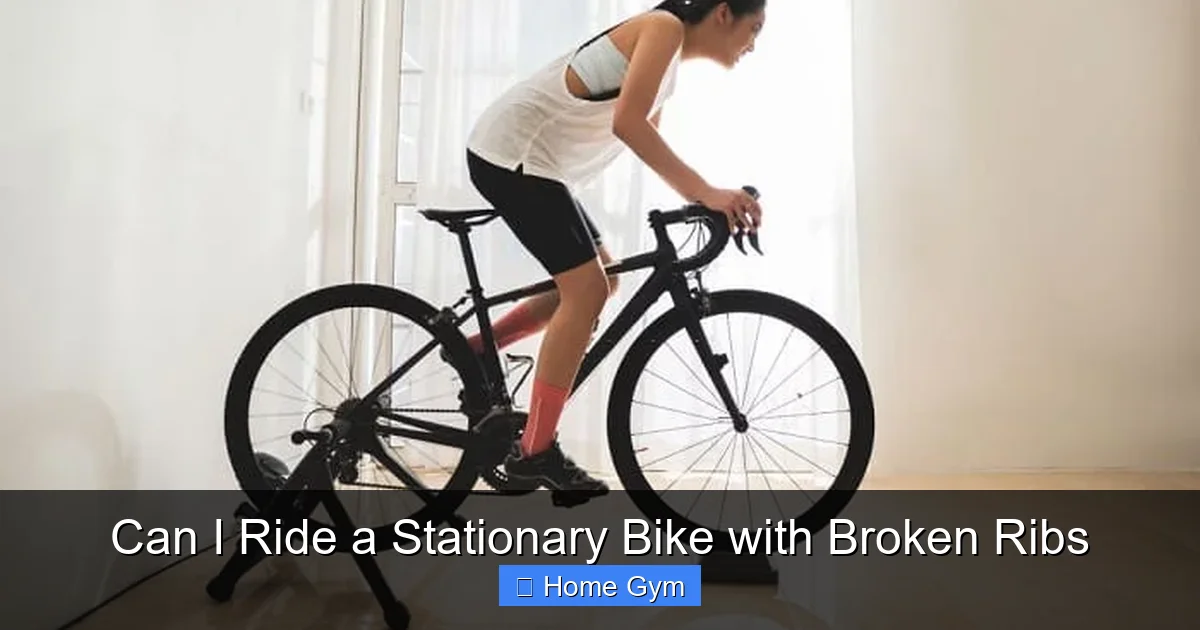
Visual guide about Can I Ride a Stationary Bike with Broken Ribs
Image source: biketoworkday.us
The Muscular Web: It’s All Connected
Holding this system together and powering your breathing is a complex web of muscles. The intercostal muscles run in layers between each rib. The diaphragm, your primary breathing muscle, attaches to the lower ribs. Major muscles of your back, like the erector spinae, and your abdominal muscles, including the obliques and rectus abdominis, all anchor to various parts of the rib cage. When you fracture a rib, you’re not just breaking a bone; you’re traumatizing this entire muscular and connective tissue network. Every breath becomes a painful reminder of that trauma.
The Healing Process: A Delicate Dance
Bone healing is a three-stage process. First, inflammation and a blood clot form at the break site. Then, a soft “callus” of collagen bridges the gap. Finally, this callus mineralizes into hard, new bone over 6-8 weeks. During the first 2-3 weeks, the fracture site is most unstable. The goal is to minimize movement at the break to allow that initial callus to form without being constantly disrupted. Jarring motion can not only cause immense pain but can also displace bone fragments, turning a simple, clean fracture into a complicated one that heals poorly or with a deformity.
The Stationary Bike’s Motion: A Direct Conflict with Healing Ribs
Now, let’s break down the pedaling action and see exactly where it conflicts with your healing ribs.
Visual guide about Can I Ride a Stationary Bike with Broken Ribs
Image source: biketoworkday.us
The Vertical Jar: Shock Through the Seat
Even on a smooth, high-quality bike, each time your foot pushes down on the pedal, a tiny shock travels up through the pedal, crank, and into the bike frame. This vibration is then transmitted to your body via the saddle. If you’re on an upright bike, your spine is vertical, and this jarring force travels directly up your spinal column and into the thoracic vertebrae where your broken ribs attach. On a recumbent bike, with its reclined position and larger seat, the force is distributed more across your pelvis and lower back, but it doesn’t disappear. That rhythmic, up-and-down compression is the antithesis of the stillness your broken ribs need.
The Core Stabilizer: Unconscious Engagement
Think about riding a bike. Even when you’re trying to relax, your core—your abs, obliques, and back muscles—is working isometrically to stabilize your torso. It’s an unconscious effort to keep you upright and balanced on a moving seat. For injured ribs, this is a major problem. Those very muscles are likely already in spasm, trying to protect the injured area. Forcing them to engage to hold your posture on a bike creates tension and stress directly on the fractured bone and the painful intercostal muscles. You might not feel a “crunch,” but you’re creating micro-movement at the fracture site with every pedal stroke.
The Breathing Compromise: Shallow Sips
Pain from broken ribs naturally causes you to take shallow, guarded breaths to avoid the agony of full lung expansion. This is a huge risk factor for developing pneumonia, as you’re not clearing secretions effectively. Now, add the physical exertion of pedaling. Exercise increases your respiratory rate and depth. You will instinctively try to breathe deeper to get more oxygen, which will directly conflict with your body’s pain-induced protective mechanism. This puts you in a no-win situation: either you breathe poorly and risk lung complications, or you try to breathe properly and suffer excruciating pain that your body will then try to guard against by tensing those core muscles again.
The Critical First 72 Hours and Beyond: What to Do Instead
So, if the bike is off the table, what *should* you be doing? Your activity prescription changes dramatically as time passes.
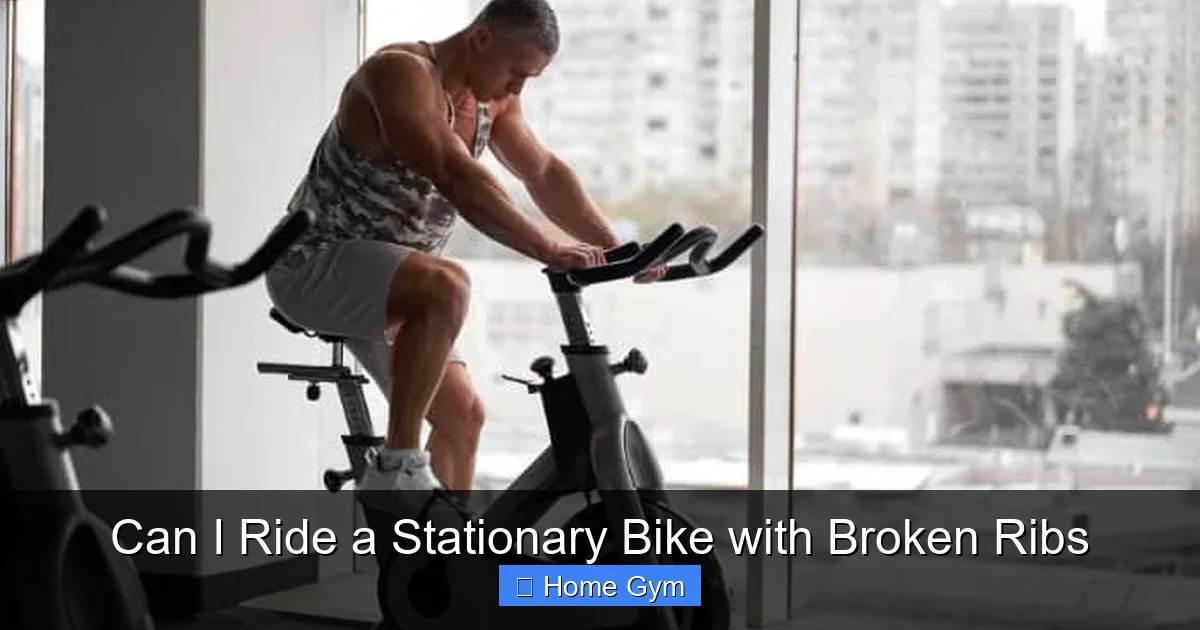
Visual guide about Can I Ride a Stationary Bike with Broken Ribs
Image source: biketoworkday.us
Phase 1: Acute Phase (First 3-7 Days)
This is pure damage control. Your focus is on pain management and preventing secondary complications like pneumonia or atelectasis (collapsed lung). Exercise, as we traditionally think of it, is not on the agenda.
- Ice: Apply ice packs to the most painful areas for 15 minutes on, 15 minutes off, several times a day to reduce inflammation.
- Gentle Breathing Exercises: This is your “exercise.” Every hour, take 5-10 slow, deep breaths. Inhale deeply through your nose, letting your belly expand, and exhale fully through pursed lips. This is non-negotiable for lung health. If it’s too painful, do it in a position where you’re supported, like reclining with a pillow under your knees.
- Supported Movement: Short, gentle walks around your house as pain allows, using a pillow to hug against your chest for support when you cough or sneeze. The goal is to prevent deconditioning and blood clots, not to raise your heart rate.
- Rest: Seriously. Your body is directing immense energy to the healing process. Let it.
Phase 2: Sub-Acute Phase (Week 2-4)
Pain should be less intense, more of a dull ache. The initial inflammation is subsiding. This is where you might cautiously discuss *very* light activity with your doctor. They may give the green light for:
- Walking: Progressing to longer, slightly brisker walks on flat ground.
- Upper Body Ergometry (Hand Bike): This is the golden ticket for many in this phase. A hand bike allows you to get your heart rate up and work your arms, shoulders, and back without any axial loading, core engagement, or jarring to your torso. It’s truly the safest cardiovascular alternative during rib recovery. If you don’t have one, some physical therapists have them, or you can find them at select rehab centers.
- Isometric Exercises: Your doctor or a physical therapist might teach you gentle isometrics for your legs (like quad sets) and very gentle, pain-free isometrics for your upper back and shoulders, avoiding any engagement of the chest or obliques.
The stationary bike is still almost certainly a “no.” The risk of a cough, sneeze, or an unexpected bump while mounting/dismounting causing a sharp pain and a jerk is too high.
When (If Ever) a Stationary Bike Might Be Considered
We’re talking about a very narrow window, typically no earlier than 4-6 weeks post-injury, and only if:
- You have complete, documented medical clearance. Your doctor has seen a follow-up X-ray showing bridging callus (bone starting to form) and confirms the fracture is stable.
- You are completely pain-free at rest. No dull ache, no twinges when you move normally or take a deep breath.
- You can perform a “test” without the bike: Can you do 30 seconds of gentle, shallow jumping jacks or run in place without any pain in your ribs? If you can’t do that, the bike is a definite no-go.
- You have access to a recumbent bike. An upright bike is a harder pass. The recumbent’s reclined position and back support offer significantly less axial loading and require less core stabilization.
- You commit to an extremely cautious protocol:
- Zero Resistance: Start with the lightest possible setting, essentially just moving your legs against the inertia.
- Extremely Low Cadence: Pedal slowly, about 40-50 RPMs, to minimize the up-down force cycle.
- Short Duration: 5 minutes max for the first session.
- No Hands: Keep your hands on the handlebars to stabilize your upper body and prevent any twisting.
- Stop at First Sign of Pain: Not discomfort. Sharp, shooting, or *any* increase in your baseline rib pain. Stop immediately.
Even if you meet all these criteria, the risk is not zero. You are choosing to accept a small risk for the benefit of movement. This is a decision for you and your doctor to make together, not one to take based on an online article.
Your Safer Path: Building a Rib-Friendly Fitness Plan
Instead of fixating on the bike, let’s build a smart, phased recovery plan that respects your injury.
Embrace the “Upper Body Only” Cardio
As mentioned, a hand bike or arm ergometer is your best friend. It elevates your heart rate, burns calories, and maintains some upper-body conditioning. If you don’t own one, look for them at local YMCAs or rehab clinics. Some people even get creative with resistance bands anchored in front of them, performing continuous rowing or pressing motions for time.
Focus on Legs Without the Jar
Your legs will get restless. You can do:
- Isometric Quad/Hamstring Contractions: Sit or lie down, tighten your thigh muscles, hold for 10 seconds, release. No joint movement, zero impact.
- Seated Leg Extensions & Curls: If you have access to a gym, a leg extension/curl machine allows you to work your quads and hamstrings while your torso is fully supported in a seated position. No core engagement required.
- Straight Leg Raises: Lying on your back (with a pillow under your knees if needed), slowly lift one straight leg a few inches off the floor, hold, lower. Keep your back flat.
Rehabilitative Stretching and Mobility (When Cleared)
Later in recovery, gentle thoracic spine rotations (lying on your side with knees bent, opening your top arm towards the floor) and scapular mobility exercises (gentle shoulder rolls, squeezes) can help combat the stiffness from weeks of guarding. Never stretch the intercostal muscles directly.
The Power of Nutrition and Hydration
Healing bone requires protein, calcium, vitamin D, and vitamin C. Focus on a nutrient-dense diet. Staying hydrated is critical for overall health and to help keep mucus thin in your lungs, aiding those all-important deep breathing exercises.
The Long-Term Perspective: Returning to Normalcy
Patience is the hardest but most crucial part of this journey. A broken rib typically takes 6-8 weeks to form a solid callus, but full remodeling can take months. Rushing back to your pre-injury workout intensity is a ticket to re-injury or chronic pain.
When you finally get that medical green light for the stationary bike:
- Start with the recumbent bike, not upright.
- Begin with 5 minutes, zero resistance, slow cadence.
- Progress by adding only one variable at a time: first a minute of time, then a tiny bit of resistance, then a slightly faster cadence. Give yourself 3-5 days between adding a new variable.
- Continue your deep breathing exercises throughout the day, even as you resume activity.
- Listen to your body the next day. If you have a significant increase in baseline pain or stiffness, you did too much. Dial it back.
Your fitness will return. Your body is resilient. But right now, your ribs have one job: to heal cleanly and strongly. Give them the quiet, stable environment they need to do it. That stationary bike will be there, ready and waiting, when your body is truly ready for it.
Frequently Asked Questions
Can I do a gentle, slow stationary bike ride if my rib pain is mostly gone?
No. Even if pain subsides at rest, the fracture site may still be unstable and vulnerable. “Mostly gone” is not “healed.” You must get a follow-up evaluation and explicit clearance from your doctor based on imaging, not just your pain level, before considering any impact activity.
What’s the absolute safest form of cardio with broken ribs?
The safest is upper-body ergometry (using a hand bike or arm ergometer). This allows you to elevate your heart rate and work your cardiovascular system without any weight-bearing, impact, or core engagement on your injured torso. Gentle, supported walking is also a very safe option.
If I hug a pillow to my chest, does that make the bike safe?
Hugging a pillow can provide some psychological comfort and mild support during coughing or sudden movements, but it does not stabilize the fracture site or prevent the jarring forces transmitted through the bike saddle. It is not a safety measure that makes stationary biking medically advisable.
How long after a broken rib can I expect to return to normal exercise?
A typical timeline for returning to full, unrestricted activity is 6-8 weeks for simple, uncomplicated fractures. However, this varies greatly based on age, overall health, the severity and location of the fracture, and whether there were complications. Your doctor will guide you through a graded return, starting with light activity long before you’re back to heavy lifting or high-intensity intervals.
Is there any exercise I should absolutely avoid besides the stationary bike?
Avoid any activity that involves running, jumping, heavy weightlifting (especially overhead or squats/deadlifts that load the spine), contact sports, or intense core workouts (crunches, planks, Russian twists). Also avoid activities with a high risk of falling or sudden torso twisting, like tennis or golf, until fully cleared.
What’s the biggest risk of exercising too soon with broken ribs?
The biggest risks are displacing the broken bone fragments (which can lead to a permanently deformed rib cage and chronic pain), puncturing a lung (pneumothorax), and developing pneumonia from not being able to breathe deeply due to pain and guarding. Rushing exercise jeopardizes the healing process and can turn a straightforward injury into a long-term problem.