Can I Just Use the Treadmill at the Gym

Absolutely, you can build a fantastic fitness routine using only the treadmill at the gym. It’s a powerful tool for burning calories, improving cardiovascular health, and building consistency. The key is to move beyond simple, steady-state walks and incorporate varied workouts like intervals and inclines to challenge your body and avoid plateaus. While it primarily works your lower body and cardio system, a strategic treadmill-only plan can be highly effective for weight loss, endurance, and overall health.
Key Takeaways
- Yes, it’s perfectly valid: Using only the treadmill is a legitimate and effective way to improve fitness, especially for cardiovascular health, calorie burn, and building a consistent habit.
- Variety is non-negotiable: To see results and prevent boredom, you must mix up your routines with intervals, hill workouts, and different paces, not just plod along at one speed.
- It’s a leg-day machine: The treadmill primarily strengthens and endurance-train your lower body (quads, hamstrings, glutes, calves) and your heart and lungs.
- Mind your form and safety: Avoid holding the rails, maintain good posture, and listen to your body to prevent injury and maximize the effectiveness of each stride.
- It has limits for full-body fitness: For balanced strength, bone density, and muscle building, you will eventually need to add some form of resistance training (weights or bodyweight).
- Mental engagement is key: Treat your treadmill time as a meditative or entertaining session with podcasts, playlists, or focused breathing to make it sustainable.
- Start simple, then strategize: Begin with comfortable, consistent sessions to build the habit, then layer in advanced techniques like HIIT or progressive incline to continue challenging your body.
📑 Table of Contents
- Can I Just Use the Treadmill at the Gym? The Honest Answer
- The Undeniable Power of the Treadmill: Why It’s More Than Enough
- How to Actually Get Results: Beyond the Steady-State Walk
- The Common (and Costly) Treadmill Mistakes
- The Mental Game: Making the Treadmill a Sanctuary, Not a Prison
- The Honest Truth: What the Treadmill CAN’T Do (And What To Do About It)
- Crafting Your Personal Treadmill-Only Blueprint: A Sample Week
- Conclusion: Your Treadmill, Your Rules, Your Results
Can I Just Use the Treadmill at the Gym? The Honest Answer
You stand at the threshold of the gym, looking past the clanging free weights and the intimidating strength machines. Your eyes lock onto the familiar, rhythmic beeping of the treadmill row. It’s straightforward. It’s predictable. It’s there. The question bubbles up, a mix of hope and hesitation: Can I just use the treadmill at the gym? Can I really get fit, lose weight, and feel accomplished by walking, jogging, or running on one single piece of equipment, over and over again?
The short, empowering answer is a resounding YES. You absolutely can. The treadmill is not a fitness beginner’s consolation prize; it’s a versatile, powerful, and scientifically-backed tool for transforming your health. But the real answer, the one that leads to actual results, is a little more nuanced. It’s not about *just* using the treadmill; it’s about how you use it. This guide will transform your “just” into a “brilliantly effective” strategy. We’ll move beyond the mundane 30-minute stroll and unlock the machine’s full potential to build endurance, torch calories, and create a sustainable routine you actually enjoy.
The Undeniable Power of the Treadmill: Why It’s More Than Enough
Before we dive into the “how,” let’s establish the “why.” The treadmill gets a bad rap as boring or “basic,” but that’s a profound misunderstanding of its capabilities. It’s a controlled laboratory for your cardiovascular system. Unlike outdoor running, where terrain and weather are wild cards, the treadmill offers a perfectly consistent, measurable environment. You control every variable: speed, incline, duration, and even temperature. This control is its superpower.

Visual guide about Can I Just Use the Treadmill at the Gym
Image source: sa1s3optim.patientpop.com
A Calorie-Torching, Heart-Strengthening Powerhouse
At its core, cardiovascular exercise is about moving your body against resistance to elevate your heart rate. Running or brisk walking on a treadmill does this with exceptional efficiency. The number of calories you burn is a direct product of your body weight, speed, and incline. By manipulating these levers, you can create a workout that burns anywhere from a few hundred to over a thousand calories. More importantly, you’re strengthening your heart muscle, improving lung capacity, lowering blood pressure, and boosting your metabolism for hours after you step off. This is the foundational work of any fitness journey.
Unmatched Consistency and Convenience
How many times have you abandoned a workout plan because the class you wanted was full, the yoga studio was closed, or you couldn’t find a park to run in? The treadmill eliminates these variables. It’s available 24/7 at your gym, rain or shine, day or night. This reliability is the secret sauce of habit formation. When your tool is always ready, you remove excuses. You can show up, put in your work, and leave, building a rock-solid routine that becomes as automatic as brushing your teeth.
The Perfect Platform for Progressive Overload
This is the most critical concept in fitness: to get stronger, faster, or leaner, you must progressively challenge your body. The treadmill is a masterclass in applying progressive overload. You can start at a 3% incline and 3.5 mph. Next week, you hold that for 5 minutes longer. The week after, you add 0.5 mph. Then you try 4% incline. The machine provides immediate, objective feedback. Your pace, your distance, your heart rate—it’s all there on the display. This data-driven approach removes guesswork and makes improvement tangible.
How to Actually Get Results: Beyond the Steady-State Walk
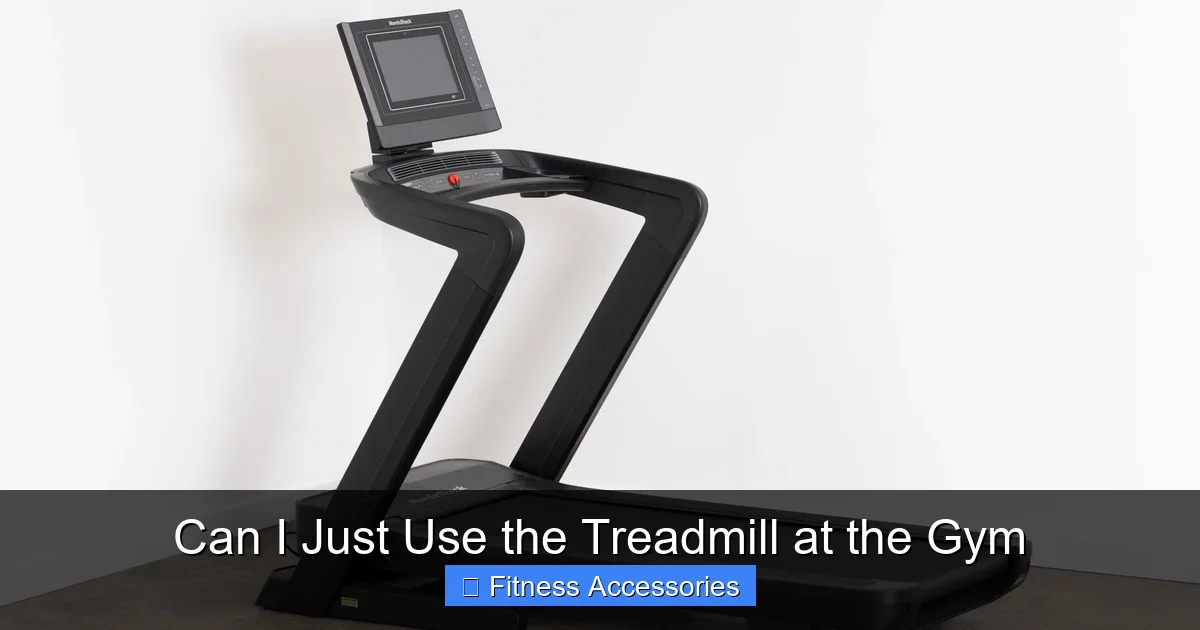
Here’s where we separate the “just using” from the “using brilliantly.” If your treadmill routine consists solely of setting a speed and zoning out for 30 minutes, you will eventually hit a wall. Your body adapts, your progress stalls, and boredom sets in. To unlock results, you need to treat each session as a specific workout with a goal. Think of the treadmill not as a single tool, but as a whole gym of settings you can play with.
Visual guide about Can I Just Use the Treadmill at the Gym
Image source: cdn.thewirecutter.com
1. High-Intensity Interval Training (HIIT): The Time-Saver
HIIT is the golden child of modern cardio for a reason: it’s incredibly efficient. The protocol is simple: short bursts of all-out effort followed by periods of active recovery or complete rest. On a treadmill, this looks like: 30 seconds of sprinting (or a very fast jog) at a challenging pace, then 60-90 seconds of slow walking to recover. Repeat this cycle 6-10 times. A 20-minute HIIT session can burn more calories and create a greater metabolic boost (the “afterburn effect”) than a 45-minute steady-state jog. It’s brutal, effective, and over quickly.
- Pro Tip: Your “sprint” pace should feel like a 9/10 effort. Your recovery pace should be a 2/10. The magic is in the stark contrast.
2. Incline Walking/Hiking: The Glute & Hamstring Builder
Increasing the incline is the single best way to transform your treadmill walk into a serious strength and calorie-burning session without the impact of running. At a 4-8% incline, you engage your glutes and hamstrings in a way flat running never can. It’s essentially simulated hill climbing. Try a workout where you set the incline to 5% and maintain a brisk walking pace (3.5-4.5 mph) for 20-30 minutes. Your legs will burn in the best way. For an extra challenge, do “incline intervals”: 2 minutes at 4% incline, 1 minute at 0% flat, repeat.
- Real-World Application: This directly translates to easier hiking, stronger hill climbs on outdoor runs, and a more powerful posterior chain.
3. Tempo Runs: Building Speed and Lactate Threshold
For runners looking to get faster, tempo runs are essential. This is a “comfortably hard” pace you can sustain for 20-40 minutes. It’s slower than your 5K race pace but faster than an easy jog. On the treadmill, find a pace where you can speak in short phrases but not sing. Hold it steady. This teaches your body to clear lactate more efficiently, directly improving your race times and making your “easy” pace feel easier.
- How to Find It: Warm up for 10 minutes. Run for 20 minutes at a pace that feels “challenging but controlled.” Cool down for 10 minutes. That middle 20 minutes is your tempo.
4. The “Never-Boring” Playlist Workout
Structure your workout around your music or podcast. Have a 60-minute playlist? Commit to walking/jogging for the entire duration, changing your speed or incline with every new song. Fast song? Pick up the pace. Ballad? Increase the incline. This external cueing keeps your mind engaged and your body guessing, making time fly by.
The Common (and Costly) Treadmill Mistakes
You can have all the right intentions but still sabotage your results with poor form or strategy. Let’s correct the most frequent errors.
Visual guide about Can I Just Use the Treadmill at the Gym
Image source: treadmill.run
Holding the Rails: The #1 Form Faux Pas
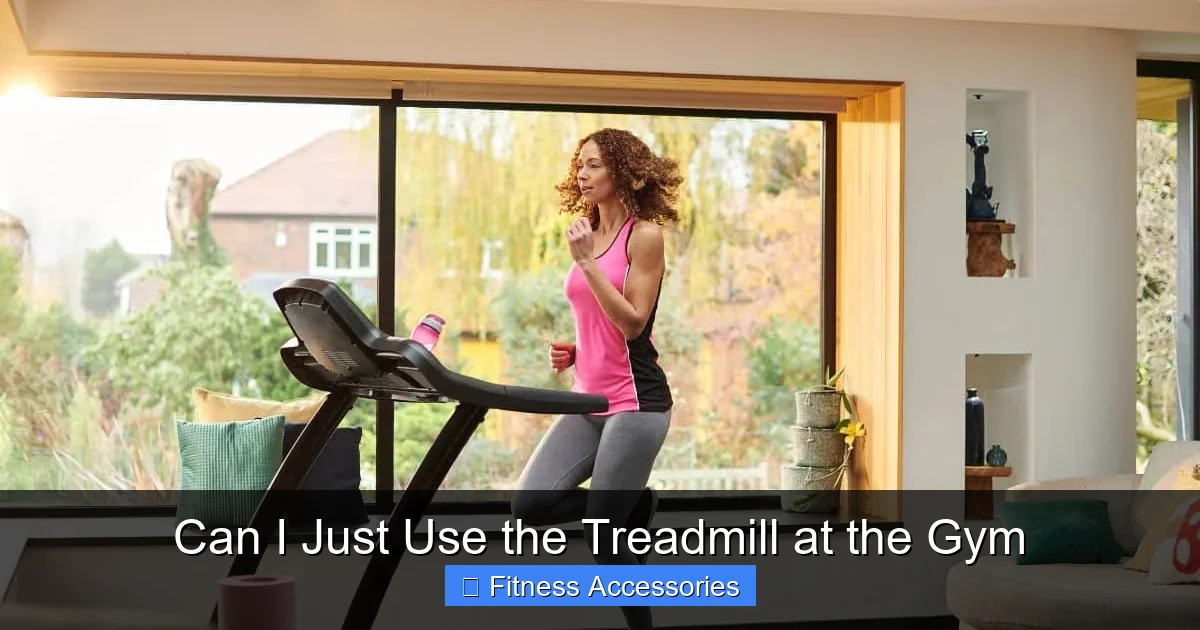
This is the big one. Grabbing the front or side rails for support dramatically alters your natural gait, reduces the work your core and legs are doing, and can lead to shoulder and back tension. It also artificially lowers your heart rate because you’re supporting some of your body weight. The rails are there for safety when getting on/off or in an emergency, not for your workout. If you need to hold on to “keep up,” your speed or incline is too high. Lower it until you can move freely with a slight arm swing.
Repeating the Exact Same Workout
Your body is an adaptation machine. Do the same 3-mile run at 6.0 mph, 1% incline, three times a week for a month, and you will get *less* fit. The initial stimulus causes adaptation, then your body becomes efficient and stops changing. You must vary the stimulus: change the incline, try intervals, extend your distance one week, increase speed another. Keep your body guessing.
Ignoring the Warm-Up and Cool-Down
Jumping from zero to sprinting is a recipe for pulled muscles and undue stress on your joints. Always start with 5-10 minutes of easy walking or very slow jogging to increase blood flow and warm your muscles. After your main set, never stop abruptly. Walk for 5 minutes to let your heart rate come down gradually and begin the recovery process. This prevents blood pooling and dizziness.
Setting the Incline Too Low (The “False Flat”)
Treadmill calibration can be off. A setting of “1%” might feel flat, but it’s actually a slight decline. To simulate true outdoor running (which has natural wind resistance and slight undulations), most coaches recommend setting your treadmill to a 1-2% incline even for “flat” runs. This small adjustment makes your effort more honest and translates better to outdoor performance.
The Mental Game: Making the Treadmill a Sanctuary, Not a Prison
The physical challenges are one thing; the mental battle is another. Staring at a wall or your reflection for 45 minutes can be soul-crushing. Winning this mental game is what separates those who last from those who quit.
Embrace the “Treadmill Time” as Me-Time
Reframe your mindset. This is not a punishment; it’s your dedicated hour for a podcast you love, an audiobook you can’t put down, or a curated playlist that fuels you. It’s a moving meditation. Use the repetitive motion to focus on your breathing, to process your day, or to simply let your mind wander without distraction. When you associate the treadmill with mental pleasure instead of physical dread, you create a powerful positive reinforcement loop.
Use Technology to Your Advantage
Don’t fight the screen; use it. Apps like Zwift, Peloton App, or even Netflix on a tablet can immerse you in virtual worlds, guided runs, or compelling stories. The miles fly by when you’re running through a digital Paris or engrossed in a drama. If your gym has a TV, bring headphones and tune into a show you only allow yourself to watch while exercising. This is a classic behavioral trick: pair something you love with something you need to do.
Set Micro-Goals Within the Session
Looking at the full 30 or 60 minutes can be overwhelming. Break it down. “Just get to the 10-minute mark.” “Survive this next incline interval.” “Make it to the next song.” Each small victory releases a hit of dopamine and makes the total time feel more manageable. You can also use the display data: “I’m going to run until I hit 1.5 miles,” then reassess.
The Honest Truth: What the Treadmill CAN’T Do (And What To Do About It)
Now for the balance. Acknowledging the treadmill’s limitations isn’t an attack on your chosen method; it’s the key to building a truly complete, resilient, and injury-resistant body. The treadmill is a cardio machine. It is not a comprehensive strength training system.
The Missing Strength and Bone Density
Running and walking are weight-bearing exercises, which is great for bone health. However, they do not provide the progressive, targeted overload needed to build significant muscle mass or full-body strength. You will not develop a strong, defined upper body, core, or even fully balanced legs (your hip abductors and stabilizers get less work) from the treadmill alone. Over time, this can lead to muscle imbalances and plateaus.
The Simple, Non-Negotiable Supplement
The solution is beautifully simple and doesn’t require a massive time commitment. Add 2-3 days of 20-30 minutes of basic resistance training. This can mean:
- Bodyweight circuits: Push-ups, squats, lunges, planks, glute bridges. (You can do these at home!).
- A few dumbbells/kettlebells: Goblet squats, rows, overhead presses, deadlifts.
- Resistance bands: Incredibly portable and effective for glute and shoulder work.
This small addition will protect your joints, boost your metabolism (muscle burns more calories at rest), improve your running economy, and give you a more balanced, aesthetic physique. Think of it as the essential fertilizer for the garden you’re watering with your treadmill work.
When “Just the Treadmill” is Perfectly Fine
There are seasons of life where treadmill-only is not just okay, it’s optimal. If you’re:
- Just starting your fitness journey and building the habit is the #1 priority.
- Recovering from an injury and need controlled, low-impact cardio (walking on an incline is fantastic).
- In a severe time crunch and need the most efficient cardio session possible (HIIT).
- Training specifically for a running event and need to focus purely on mileage and pace.
In these phases, go all-in on the treadmill. But have a plan to eventually integrate strength work as your goals expand or as the habit solidifies.
Crafting Your Personal Treadmill-Only Blueprint: A Sample Week
Let’s put it all together. Here is a sample 4-day weekly plan that demonstrates variety, progression, and mental engagement. This assumes a beginner-to-intermediate level.
- Day 1: HIIT Day. 5 min warm-up walk. Then: 8 rounds of (45 sec sprint @ 8.0 mph, 75 sec walk @ 3.5 mph). 5 min cool-down walk. Total: ~30 minutes.
- Day 2: Incline Power Walk. 5 min warm-up. Set incline to 5%. Walk at a brisk 4.0 mph for 25 minutes. Focus on powerful arm drive and squeezing glutes. 5 min cool-down flat. Total: ~35 minutes.
- Day 3: Rest or Active Recovery. Light stretching, walk outside, or gentle yoga. No treadmill.
- Day 4: Tempo Run. 10 min warm-up jog. 20 minutes at a “comfortably hard” pace (where you can speak 2-3 words). 10 min cool-down jog. Total: ~40 minutes.
- Day 5: The “Fun Run.” 5 min warm-up. Then, walk/jog/run at whatever pace feels good for the duration of your favorite 45-minute podcast or album. No rules, just movement and entertainment. Total: ~50 minutes.
- Day 6 & 7: Rest or Light Activity.
Notice the variety in stimulus: pure intensity (HIIT), muscular endurance (incline), cardiovascular stamina (tempo), and mental enjoyment (Fun Run). This is how you build a complete athlete—or at least a very fit, healthy person—with one machine.
Conclusion: Your Treadmill, Your Rules, Your Results
So, can you just use the treadmill at the gym? More than just “can,” you should—if it’s the tool that will get you moving consistently. The best exercise is the one you will actually do. The treadmill offers a uniquely accessible, controllable, and measurable path to better health. It is a perfectly valid cornerstone of a fitness lifestyle.
The power lies not in the machine itself, but in the intention and strategy you bring to it. Ditch the monotonous plod. Embrace the intervals. Seek the incline. Use the data. Pair it with a great story. Respect its limits by occasionally adding a few minutes of bodyweight strength. By doing so, you transform a simple belt of moving fabric into a dynamic engine for weight loss, endurance, mental clarity, and lifelong health. Now, go lace up. Your first, brilliant, treadmill-only workout is waiting.
Frequently Asked Questions
Will I lose weight by only using the treadmill?
Yes, you can lose weight using only the treadmill, as long as you create a consistent calorie deficit (burning more calories than you consume). The treadmill is excellent for burning calories. For best results, combine your treadmill sessions with a balanced, nutritious diet and incorporate variety like HIIT and incline work to maximize calorie burn and metabolic impact.
Can I build muscle just by running on a treadmill?
Running on a treadmill will strengthen and build endurance in your lower body muscles (quads, hamstrings, glutes, calves), but it’s not optimal for significant muscle hypertrophy (bulking). For balanced muscle growth and strength, you need progressive resistance from weights or bodyweight exercises. Think of treadmill running as building lean, endurance-oriented muscle, not size.
How often should I use the treadmill to see results?
For general health and weight loss, aim for 3-5 sessions per week, lasting 30-60 minutes each, depending on intensity. Consistency is far more important than occasional heroic efforts. Pair this with 1-2 days of strength training for a complete, sustainable plan. Listen to your body and include rest days to prevent burnout and injury.
Is it bad to hold the rails on the treadmill?
Yes, holding the rails during your workout is generally bad. It reduces the work your legs and core are doing, lowers your heart rate, promotes poor posture, and can strain your shoulders. Only use the rails for safety when getting on/off or if you truly lose balance. If you feel you need to hold on, your speed or incline is likely too high—lower it until you can move freely.
What’s better for fat loss: long slow runs or short fast intervals?
Both are effective, but HIIT (High-Intensity Interval Training) is often more time-efficient. A 20-minute HIIT session can burn a comparable or greater number of calories and trigger a larger “afterburn effect” (EPOC), where your body continues burning calories at an elevated rate for hours after the workout. However, longer, steady-state runs are excellent for building aerobic base and can be more sustainable for some people. The best approach is to include both in your weekly routine.
Should I set the treadmill to a 1% incline for all my runs?
Many running coaches recommend adding a 1% incline to your “flat” treadmill runs to better simulate outdoor running conditions, which include wind resistance and natural terrain. This small adjustment makes your effort more honest and can improve your outdoor performance. However, for true hill-specific training, you’ll want to use much higher inclines (4-10%). For recovery walks, keep it flat or very low.