Can a Plane on a Treadmill Take Off
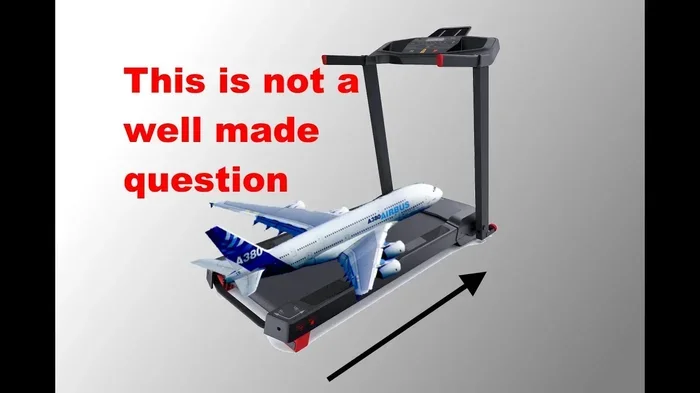
Can a Plane on a Treadmill Take Off? The answer is yes, and it surprises most people. A plane generates thrust through its engines pushing against the air, not against the ground, so a moving treadmill underneath has no effect on its ability to lift off. The wheels simply spin faster to match the treadmill speed, but the aircraft still accelerates forward and takes off normally. This classic physics question reveals how little the ground actually matters when it comes to flight.
Key Takeaways
- Thrust comes from engines, not wheels. The treadmill can’t stop the plane’s forward motion.
- A treadmill only spins the wheels faster. It doesn’t prevent the aircraft from moving through the air.
- Lift depends on airspeed, not ground speed. The plane moves forward relative to the air, generating lift.
- Wheels are free-spinning. They reduce friction but don’t provide propulsion.
- The plane will take off normally. The treadmill’s speed is irrelevant to the engines’ thrust.
- Newton’s third law explains the physics. The engine pushes air backward, propelling the plane forward.
📑 Table of Contents
- The Surprising Truth About Whether a Plane on a Treadmill Can Take Off
- Understanding the Basic Physics of Flight and Treadmills
- What the Mythbusters Experiment Revealed
- Comparing a Plane on a Treadmill vs. a Normal Runway
- Why Pilots and Engineers Agree on the Answer
- Common Misconceptions That Keep This Myth Alive
- What This Teaches Us About How Flight Really Works
- The Final Verdict: Can a Plane on a Treadmill Take Off?
The Surprising Truth About Whether a Plane on a Treadmill Can Take Off
Imagine this: a massive airplane sitting on a giant treadmill. The engines roar to life. The wheels spin faster and faster. But does the plane actually move forward? And more importantly, can a plane on a treadmill take off? This question has puzzled aviation fans, physics nerds, and casual thinkers for years. It sounds like something out of a science fiction movie, but the answer is more fascinating than you might expect.
In this deep dive, we will break down the science, the myths, and the real-world physics behind this famous debate. Whether you have wondered about this yourself or stumbled across the question online, you are in the right place. We will explore why this question matters, what experts say, and what actually happens when a plane meets a moving belt.
The short answer is yes, a plane can take off on a treadmill under the right conditions. But the “why” behind it is what makes this topic so incredibly fun to unpack. Let us get into it.
Understanding the Basic Physics of Flight and Treadmills
To answer whether a plane on a treadmill can take off, we first need to understand how airplanes fly in the first place. Many people assume that a plane moves forward because its wheels spin against the ground. That is not how it works at all. A plane moves forward because of thrust generated by its jet engines or propellers. The wheels are just along for the ride, spinning freely without powering the aircraft.
How Thrust Creates Forward Motion
A jet engine works by pushing air backward at incredibly high speeds. This creates a forward force called thrust. Think of it like a balloon releasing air and flying around a room. The plane does not need the ground to push against. It moves through the air, not over the ground. This is a key point that many people miss when thinking about treadmill takeoff scenarios.
Here is what matters for flight:
- Airspeed — the speed at which air flows over the wings
- Lift — the upward force created by wing shape and air movement
- Thrust — the forward force produced by engines
- Weight — the gravitational pull on the aircraft
When these four forces balance correctly, a plane lifts off the ground. The treadmill underneath the wheels has almost nothing to do with this process.
The Role of Wheels and Friction
A plane’s wheels are designed to spin freely. They are not powered by the engine. When a plane taxis down a runway, the wheels simply roll along the surface. They spin because of friction from the ground moving beneath them. On a treadmill, the belt would spin the wheels backward faster, but the engines would still push the plane forward through the air.
The treadmill can only affect the wheels. It cannot stop the engines from producing thrust. It cannot prevent air from flowing over the wings. And it certainly cannot cancel out lift. This is why most physicists and pilots agree that a plane on a treadmill can still take off.
What the Mythbusters Experiment Revealed
One of the most famous tests of this question came from the TV show Mythbusters. The team built a scale model of a plane on a treadmill to see what would happen. Their experiment showed that the model plane did take off. The treadmill spun the wheels faster, but the plane still moved forward through the air and generated lift.
If you want to dig deeper into the Mythbusters results, you can check out their full episode on Can a Plane Take Off on a Treadmill Mythbusters for more details.
Why the Myth Persists
Many people believe a treadmill would prevent takeoff because they confuse a plane with a car. A car uses its wheels to push against the ground. If you put a car on a treadmill moving backward, the car stays in place. But a plane does not work like a car. The engines push against the air, not the ground. This distinction is the entire reason the debate exists.
The Mythbusters experiment helped clarify this, but the myth is still alive and well. People love a good brain teaser, and this one keeps getting shared across the internet. The question “will a plane on a treadmill take off” continues to spark heated debates in forums and classrooms around the world.
Comparing a Plane on a Treadmill vs. a Normal Runway
Let us look at how a plane behaves on a treadmill compared to a normal runway. This comparison helps make the physics crystal clear.
| Factor | Normal Runway | Treadmill |
|---|---|---|
| Wheel Movement | Wheels spin freely from forward motion | Wheels spin faster due to belt moving backward |
| Engine Thrust | Engines push plane forward through air | Engines push plane forward through air (same) |
| Airspeed | Builds as plane accelerates | Builds as plane accelerates (same) |
| Lift Generation | Wings generate lift at takeoff speed | Wings generate lift at takeoff speed (same) |
| Takeoff Possible? | Yes | Yes (under matched belt conditions) |
As you can see from the table, the treadmill affects the wheels but does not change the fundamental physics of flight. The engines still produce thrust, the wings still generate lift, and the plane still reaches takeoff speed. The only difference is that the wheels spin faster on the treadmill.
What Happens If the Treadmill Matches Wheel Speed Exactly?
Some people argue that if the treadmill perfectly matches the wheel speed, the plane would stay in place. This sounds logical but is actually flawed. The treadmill can only spin the wheels. It cannot push back against the plane’s body in any meaningful way. The engines would still push the aircraft forward through the air mass. The wheels would just spin twice as fast as normal.
Think of it this way: if you stand on a treadmill and hold onto a rope attached to a wall, you can walk forward. The treadmill moves under your feet, but you still move relative to the room. A plane works the same way. The treadmill moves under the wheels, but the plane still moves through the air.
Why Pilots and Engineers Agree on the Answer
Most pilots and aerospace engineers will tell you the same thing: a plane on a treadmill can take off. The question itself contains a false assumption — that a treadmill would prevent forward motion. In reality, a treadmill only affects the wheels, and wheels do not power a plane.
Expert Perspectives on Treadmill Takeoff
Aviation experts have weighed in on this topic many times. The consensus is clear: will an airplane take off on a treadmill depends on whether the treadmill is designed to perfectly match wheel speed. Even if it is, the plane still takes off. The engines do not care what the ground beneath them is doing. They only care about moving air over the wings.
Here are some key points that experts emphasize:
- Jet engines push air, not the ground. The treadmill has no effect on engine performance.
- Lift depends on airspeed, not ground speed. A plane can generate lift even if its wheels are spinning wildly.
- Friction on the wheels is minimal. It does not slow the plane down in any meaningful way.
- The treadmill belt is not a brake. It spins freely and cannot hold the plane in place.
If you want to explore another angle on this topic, check out our article on Will a Plane on a Treadmill Take Off for additional insights.
The Real-World Scenario
In the real world, no airport has a treadmill runway. But the thought experiment teaches us valuable lessons about how flight works. Understanding the difference between airspeed and ground speed is crucial for any pilot. It also helps explain why planes can fly into headwinds and still take off at shorter runway distances.
The treadmill scenario actually highlights something important: a plane’s relationship with the air is what matters, not its relationship with the ground. This is why tailwinds help planes take off and headwinds make it harder. The treadmill just adds another layer to this understanding.
Common Misconceptions That Keep This Myth Alive
There are several reasons why people still doubt that a plane on a treadmill can take off. Let us address the most common misconceptions head-on.
Misconception 1: The Treadmill Acts Like a Brake
Many people assume that a moving treadmill belt would slow the plane down or hold it in place. This is not true. A treadmill belt only interacts with the wheels. Since the wheels are not powered and spin freely, the belt has no way to transfer force back to the plane’s body. The engines keep pushing forward regardless of what the belt is doing.
Misconception 2: Planes Need the Ground to Push Against
This is probably the biggest source of confusion. Cars, bicycles, and humans need the ground to push against to move forward. Planes do not. They push against the air. The air is the “ground” for a plane. This is why planes can fly upside down and why they do not need a treadmill to take off.
Misconception 3: The Wheels Are What Make a Plane Move
Some people think the wheels are powered, like a car’s tires. They are not. A plane’s wheels are passive. They spin because of the plane’s forward motion, not the other way around. The engines provide all the power needed to move the aircraft forward. The wheels simply reduce friction during taxiing and takeoff.
Misconception 4: Treadmill Speed Can Match Engine Power
Even if we imagine a treadmill that can spin at incredible speeds, it still would not prevent takeoff. The treadmill would just make the wheels spin faster. The plane would still move forward through the air at takeoff speed. The treadmill cannot match engine power because it only contacts the wheels, not the fuselage.
What This Teaches Us About How Flight Really Works
The plane-on-treadmill question is more than just a fun thought experiment. It reveals fundamental truths about aviation and physics. Understanding these principles helps us appreciate how incredible modern flight really is.
The Importance of Airspeed Over Ground Speed
Pilots always care about airspeed, not ground speed. Airspeed is what determines whether lift is generated. Ground speed is just how fast the plane moves relative to the surface below it. On a treadmill, the ground speed might be zero or even negative, but the airspeed would still build as the engines push the plane forward.
This is exactly why planes can take off into strong headwinds. The airspeed builds quickly even if the ground speed is low. The treadmill scenario exaggerates this principle to an extreme level.
Why This Question Matters for Aviation Education
Teachers and professors use the treadmill question to help students understand Newton’s laws of motion. It demonstrates the difference between forces acting on different parts of a system. The treadmill affects the wheels, but the engines affect the air. These are separate interactions that do not cancel each other out.
If you are curious about related topics, check out our article on Will an Airplane Take Off on a Treadmill for more in-depth analysis.
Quick Tips for Understanding the Concept
- Remember that engines push air, not ground
- Think of wheels as free-spinning, not powered
- Focus on airspeed, not ground speed, for lift
- Imagine the treadmill only touching the wheels
- Picture a plane on a perfectly frictionless surface — it would still take off
The Final Verdict: Can a Plane on a Treadmill Take Off?
So, can a plane on a treadmill take off? The answer is a definitive yes. The physics is clear, the experiments support it, and aviation experts agree. A treadmill can only affect the wheels, and wheels do not power a plane. The engines push the aircraft forward through the air, generating the lift needed for takeoff regardless of what is happening on the ground below.
This does not mean the treadmill has zero effect. The wheels would spin faster and experience more friction. But these effects are tiny compared to the massive thrust produced by jet engines. The plane would still accelerate, still reach takeoff speed, and still lift off into the sky.
The beauty of this question is that it forces us to think carefully about how things actually work. It challenges our assumptions and pushes us to learn more about the physics of flight. Next time someone asks you whether a plane can take off on a treadmill, you will know the answer and the science behind it.
Can a plane on a treadmill take off? Absolutely. And now you know exactly why.
Frequently Asked Questions
Can a Plane on a Treadmill Take Off?
No, a plane on a treadmill can still take off. The engines produce thrust by pushing against the air, not against the ground, so the treadmill has no effect on the plane’s ability to generate lift.
Why Can’t a Plane on a Treadmill Take Off?
A treadmill only affects the wheels, which spin freely on a plane. Since the engines push the aircraft forward through the air regardless of what the treadmill does, the plane will move forward and take off normally.
What Happens If the Treadmill Matches the Wheel Speed?
Even if the treadmill matches the wheel rotation speed, the plane will still move forward. The wheels simply spin faster, but the thrust from the engines remains unaffected, allowing the plane to take off as it normally would.
Does the Treadmill Affect the Plane’s Engines?
No, the treadmill does not affect the engines at all. Jet engines work by pulling in air and expelling it backward, creating forward thrust that is completely independent of what is happening beneath the wheels.
Has Anyone Actually Tested a Plane on a Treadmill?
Yes, the MythBusters team tested this exact scenario and confirmed that the plane took off without any issue. Their experiment proved that the treadmill concept does not prevent a plane from achieving the forward motion needed for lift.
What Is the Physics Behind Why a Plane on a Treadmill Still Takes Off?
The key physics principle is that a plane generates lift through airflow over its wings, which comes from forward motion through the air. Since the treadmill only interacts with the wheels and not the air around the plane, it cannot stop the aircraft from moving forward and creating the lift required for takeoff.