Are Hack Squats the Same as Barbell Squats
Hack squats and barbell squats are not the same exercise. While both target your lower body, the hack squat machine offers back support and a fixed movement path, whereas the barbell squat is a free-weight compound movement that demands more balance and core engagement. Understanding these differences helps you choose the right squat variation for your strength and hypertrophy goals.
Leg day is a staple in any serious workout routine. And when it comes to building strong, muscular legs, few exercises compare to squatting movements. But if you have spent any time in the gym, you have probably wondered about the difference between the hack squat and the barbell squat. Are they really that different? Or are they just two names for the same movement?
The short answer is no. They are not the same. While both exercises target your lower body, they use different equipment, place different demands on your joints, and activate your muscles in distinct ways. Whether you are a beginner just starting your leg training journey or a seasoned lifter looking to optimize your workouts, understanding these differences matters.
In this article, we break down everything you need to know about the hack squat vs barbell squat debate. We will cover form, muscle activation, benefits, and when to use each exercise. By the end, you will know exactly which squat variation fits your goals.
Key Takeaways
- Different Equipment: Hack squats use a specialized machine, while barbell squats require a barbell and rack.
- Muscle Activation Varies: Barbell squats engage more stabilizer muscles, while hack squats isolate the quadriceps more effectively.
- Spinal Loading Differs: Hack squats reduce lower back strain, making them safer for beginners or those with back issues.
- Foot Placement Matters: Both exercises allow foot placement adjustments to target different parts of the legs.
- Both Build Leg Strength: Each squat variation is excellent for building lower body strength and muscle mass.
- Choose Based on Goals: Pick hack squats for isolation and safety, or barbell squats for overall functional strength.
📑 Table of Contents
What Is a Hack Squat?
The hack squat is a compound lower body exercise performed on a specialized machine. You place your back against a pad and your shoulders under the machine’s shoulder pads. You then push the platform away with your feet to complete the movement. The machine guides your motion along a fixed path.
Because the hack squat machine supports your back, it takes the load off your spine. This makes it a popular choice for people who want to train their legs without putting excessive stress on their lower back. The exercise primarily targets your quadriceps but also works your glutes and hamstrings to a degree.
How to Perform a Hack Squat
Here is a quick breakdown of the proper hack squat form:
- Sit on the hack squat machine and place your back firmly against the pad.
- Position your shoulders under the shoulder pads and unrack the platform.
- Keep your feet shoulder-width apart on the platform.
- Lower the platform by bending your knees until your thighs are parallel to the ground.
- Push through your heels to extend your legs and return to the starting position.
- Avoid locking your knees at the top of the movement.
The beauty of the hack squat is its simplicity. The machine does the balancing for you. You can focus entirely on pushing the weight and feeling your quads work. This makes it an excellent exercise for those who are new to weight training or who want to isolate their quadriceps without worrying about form breakdown.
What Is a Barbell Squat?
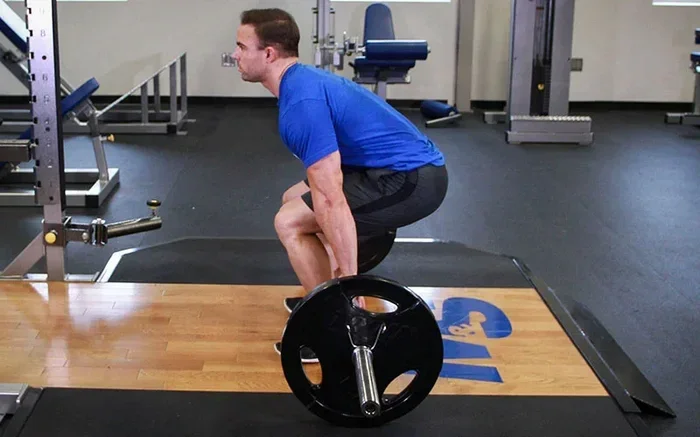
The barbell squat is one of the most fundamental exercises in strength training. You place a barbell across your upper back and squat down while holding the weight on your back. Unlike the hack squat, the barbell squat is a free-weight exercise. This means you must balance the load yourself using your core and stabilizer muscles.
The barbell squat is often called the king of lower body exercises for good reason. It builds raw strength, promotes muscle growth across your entire lower body, and even engages your core and upper back. It is a staple in powerlifting, Olympic weightlifting, and general fitness programs alike.
How to Perform a Barbell Squat
Follow these steps for proper barbell squat form:
- Set the barbell on a squat rack at chest height.
- Step under the bar and place it across your upper traps and rear delts.
- Grip the bar tightly and unrack it by stepping back.
- Stand with your feet shoulder-width apart, toes slightly pointed out.
- Lower your body by bending at your hips and knees.
- Keep your chest up and your back straight throughout the movement.
- Descend until your thighs are parallel to the ground or slightly below.
- Drive through your heels to stand back up to the starting position.
The barbell squat demands more from your body than the hack squat. Your core must work hard to keep your torso upright. Your stabilizer muscles in your hips and ankles help maintain balance. This makes the barbell squat a more functional movement that translates to real-world strength.
Key Differences Between Hack Squats and Barbell Squats
Now that you understand what each exercise involves, let us look at the key differences. These distinctions matter because they affect how you train and what results you get.
Equipment and Setup
The most obvious difference is the equipment. The hack squat requires a hack squat machine, which not every gym has. The barbell squat only needs a barbell, a squat rack, and some plates. This makes the barbell squat more accessible and versatile.
If you train at home, a hack squat machine takes up a lot of space and costs significantly more than a barbell and rack. On the other hand, if you train at a well-equipped gym, you have access to both options.
Spinal Loading and Back Stress
This is where the two exercises diverge the most. The hack squat supports your back against a pad, which means your spine bears very little direct load. The barbell squat places the weight across your upper back, which compresses your spine under heavy loads.
For people with existing back issues or those who are just starting out, the hack squat is often the safer choice. It allows you to train your legs intensely without risking your lower back. However, the barbell squat strengthens your back and core over time, which can actually improve your spinal health when performed correctly.
Muscle Activation and Target Muscles
Both exercises target your quadriceps, but they differ in how they distribute the workload. Here is a closer look:
- Hack Squat: Primarily targets the quadriceps. The fixed machine path reduces the involvement of stabilizer muscles. Your glutes and hamstrings assist but play a secondary role.
- Barbell Squat: Targets the quadriceps, glutes, hamstrings, and core. The free movement pattern demands more from your stabilizer muscles, including your hip abductors, adductors, and deep core muscles.
If your goal is to isolate your quads and achieve a strong mind-muscle connection, the hack squat shines. If you want a full lower body compound movement that builds overall strength, the barbell squat is hard to beat.
Range of Motion and Knee Position
The hack squat machine limits your range of motion to the machine’s track. You cannot go deeper than the machine allows in most cases. The barbell squat allows a full, natural range of motion, which can be deeper depending on your flexibility and mobility.
Knee position also differs. In the hack squat, your knees track forward more because the machine guides your path. In the barbell squat, you have more control over knee tracking, which allows you to adjust based on your body mechanics and mobility.
Difficulty and Learning Curve
The hack squat is beginner-friendly. You sit down, push the platform, and the machine guides you. There is very little technique to learn. The barbell squat has a steeper learning curve. You must master the setup, bracing, breathing, and movement pattern before adding significant weight.
This does not mean beginners should avoid barbell squats entirely. But it does mean they should start with lighter weights and focus on form. Working with a qualified coach can help you learn proper barbell squat technique safely.
Which Squat Is Better for Your Goals?
The right squat for you depends on your training goals. Let us break it down by common fitness objectives.
For Quadriceps Hypertrophy
If your primary goal is building bigger quads, the hack squat has an edge. The machine isolates the quadriceps more effectively and allows you to push heavy weight without worrying about balance. You can also adjust foot placement on the hack squat platform to shift emphasis to different parts of the quad.
That said, barbell squats also build quad size. They just do so as part of a broader compound movement. Many bodybuilders use both exercises in their leg training programs for maximum development.
For Overall Leg Strength and Functional Fitness
The barbell squat wins here. It builds functional strength that carries over to athletic performance and daily activities. The free movement pattern trains your entire lower body and core to work together as a unit. This kind of strength is harder to develop on a machine.
For People with Back Issues
If you have a sensitive back or a history of lower back pain, the hack squat is the safer option. It removes spinal loading from the equation while still giving you an intense leg workout. Always consult a healthcare professional before starting any new exercise program, especially if you have existing injuries.
For Powerlifting and Strength Sports
If you compete in powerlifting or strength sports, the barbell squat is essential. It is one of the three competition lifts. No machine can replicate the strength and stabilization demands of a heavy barbell squat.
Can You Use Both Exercises Together?
Absolutely. In fact, many advanced lifters and bodybuilders program both the hack squat and barbell squat in their training routines. They serve different purposes and complement each other well.
For example, you might perform barbell squats as your primary compound lift on leg day. Then, you can follow up with hack squats to isolate your quads and add extra volume. This combination gives you the benefits of both exercises.
Here is a simple way to structure your leg day:
- Exercise 1: Barbell squats for 3-4 sets of 5-8 reps to build raw strength.
- Exercise 2: Hack squats for 3 sets of 10-12 reps to target the quads and add hypertrophy work.
- Accessory Work: Add lunges, leg presses, or Romanian deadlifts to round out your leg training.
This approach gives you a well-rounded leg workout that builds strength, size, and muscular balance.
Common Mistakes to Avoid
Whether you are doing hack squats or barbell squats, certain mistakes can reduce your results or increase your injury risk. Here are the most common ones to watch out for.
- Partial Reps: Not going deep enough limits your muscle activation. Aim for full range of motion on every rep.
- Rounded Back: Especially in barbell squats, rounding your back under heavy loads is dangerous. Keep your chest up and your core braced.
- Knee Caving: Letting your knees collapse inward puts stress on your joints. Push your knees out in line with your toes.
- Lifting Too Much Weight: Sacrificing form for heavier weight is a recipe for injury. Increase weight gradually and maintain proper technique.
- Neglecting Warm-Up: Cold muscles and joints are more prone to injury. Always warm up before heavy squatting.
Avoiding these mistakes will help you get better results and stay injury-free. Form always comes before weight.
Expert Insights and Practical Tips
Here are some expert-backed tips to get the most out of both squat variations:
- Focus on Foot Placement: In both exercises, your foot position changes which muscles get worked more. A narrower stance emphasizes the quads, while a wider stance engages the glutes more.
- Breathe Properly: Inhale before you descend, brace your core, and exhale as you push back up. Proper breathing supports your spine and helps you generate more force.
- Control the Eccentric: Lower the weight slowly on the way down. This increases time under tension and promotes greater muscle growth.
- Use Progressive Overload: Gradually increase the weight, reps, or sets over time to keep challenging your muscles and driving progress.
- Listen to Your Body: If an exercise causes pain (not just discomfort), stop and reassess your form or reduce the weight.
These tips apply whether you are using the hack squat machine or a barbell. They form the foundation of safe and effective squat training.
Final Thoughts
The hack squat and the barbell squat are both excellent exercises for building strong, muscular legs. But they are not the same. The hack squat offers a machine-guided, back-supported movement that isolates the quads and is easy to learn. The barbell squat is a free-weight compound movement that builds overall lower body strength and functional fitness.
The best approach depends on your goals, experience level, and any physical limitations you may have. Many lifters benefit from using both exercises in their routine. They each bring something unique to the table, and together they create a complete leg training program.
Now that you understand the differences, you can make an informed choice about which squat variation to include in your workouts. Start with proper form, progress gradually, and enjoy the results. Your legs will thank you.
For more information on comparing similar gym exercises, you might want to check out are T bar rows the same as barbell rows or explore is T bar row the same as barbell row to understand how different equipment variations compare in the gym.
Also, if you are interested in learning more about how different squat and row variations compare, the article on are T bar rows and barbell rows the same provides additional insights that can help you understand exercise comparisons more broadly.
Frequently Asked Questions
Are hack squats easier on your knees than barbell squats?
Hack squats can be easier on the knees for some people because the machine supports your back and guides your movement. However, the fixed path of the machine can also place stress on the knees if your form is poor. Barbell squats allow more natural knee tracking, which may be better for people with healthy knees and good mobility.
Can hack squats replace barbell squats in my routine?
Hack squats can partially replace barbell squats, especially if you have back issues or are a beginner. However, barbell squats offer unique benefits for functional strength and stabilizer muscle development. Ideally, you should consider using both exercises for a well-rounded leg program.
Which squat builds more muscle?
Both squats build muscle, but they do so differently. The barbell squat builds overall leg mass and functional strength because it engages more muscle groups. The hack squat can build more isolated quad size because it allows you to focus purely on the quadriceps with heavy weight and less balance demand.
Is the hack squat a good exercise for beginners?
Yes, the hack squat is an excellent exercise for beginners. The machine provides support and guidance, making it easier to learn proper form. It is also safer for those who are new to weight training and have not yet developed the core strength needed for heavy barbell squats.
How much weight should I use on the hack squat?
Start with a weight that allows you to complete 10-12 reps with proper form. Gradually increase the weight as you get stronger. A good rule of thumb is to choose a weight where the last two reps of each set feel challenging but still doable without compromising your technique.
What is the main benefit of the barbell squat over the hack squat?
The main benefit of the barbell squat is that it is a compound, free-weight movement that builds functional strength across your entire lower body and core. It also improves balance, coordination, and bone density in ways that a machine-based exercise like the hack squat cannot fully replicate.
=== CONCLUSION ===
The hack squat and barbell squat are two distinct exercises that serve different purposes in a leg training program. The hack squat offers a safe, machine-guided way to isolate your quads and build muscle with less spinal stress. The barbell squat is a foundational compound movement that builds raw strength, functional fitness, and overall lower body development.
Both exercises deserve a place in your training routine if your goal is well-developed legs and improved lower body strength. Choose based on your experience level, goals, and any physical limitations. And remember, the best exercise is the one you can perform with proper form and consistency.
Start experimenting with both squat variations today. Your legs will grow stronger, and you will gain a deeper understanding of how different exercises work together to build a balanced, powerful lower body.