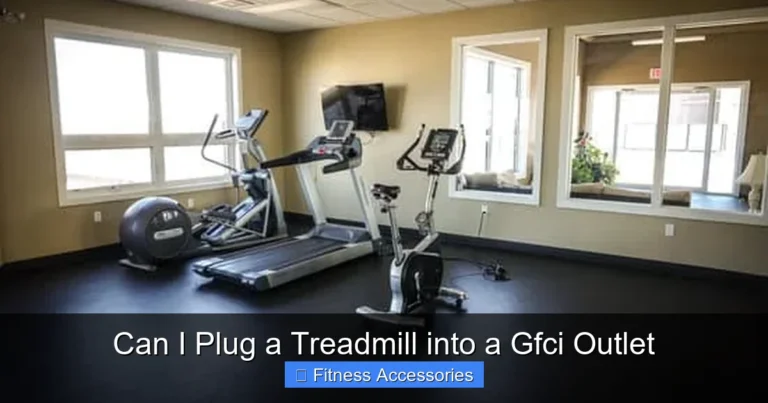
Can You Put a Treadmill on Vinyl Plank Flooring

Yes, you can place a treadmill on vinyl plank flooring, but it requires careful planning and protective measures to prevent costly damage. The immense weight and vibrational energy of a treadmill can cause denting, cracking, or separation of the planks if not properly managed. Using a high-quality, dense rubber mat is the single most critical step to distribute weight and absorb shock. Additionally, ensuring your subfloor is perfectly level and your vinyl planks are securely locked will significantly reduce risk.
Key Takeaways
- Use a Dedicated Treadmill Mat: A thick, dense rubber mat (at least 1/4-inch) is non-negotiable to distribute weight and isolate vibrations.
- Inspect Your Subfloor: The underlying surface must be perfectly level and structurally sound; any imperfections will transfer to the vinyl.
- Distribute the Load: The treadmill’s weight is concentrated on small feet or rollers; the mat must spread this force over a wider area.
- Avoid Adhesives: Never glue the mat or treadmill to the vinyl plank flooring, as it traps moisture and prevents natural expansion.
- Consider Interlocking Tiles: For temporary gyms, thick rubber interlocking tiles offer superior cushioning and can be removed later.
- Regularly Check for Movement: Periodically inspect the floor around the treadmill for any creeping, gapping, or damage.
- Review Manufacturer Warranties: Both your treadmill and vinyl flooring warranties may have specific clauses regarding heavy equipment placement.
📑 Table of Contents
- Can You Put a Treadmill on Vinyl Plank Flooring? The Definitive Answer
- Understanding Your Vinyl Plank Flooring: What’s It Made Of?
- The Real Risks: How a Treadmill Can Damage Vinyl Plank Flooring
- Essential Protection: Your Step-by-Step Defense Plan
- Installation and Setup: Doing It Right the First Time
- Alternative Flooring Solutions: When Vinyl Just Won’t Do
- The Bottom Line: Protecting Your Investment in Both Fitness and Home
Can You Put a Treadmill on Vinyl Plank Flooring? The Definitive Answer
So, you’ve finally decided to bring the gym home. You’ve researched and chosen the perfect treadmill for your fitness goals, and your space is ready. But then you look down at your beautiful, stylish luxury vinyl plank (LVP) or rigid core flooring and a wave of doubt hits: Can I put this heavy, vibrating machine on my nice floors without destroying them? It’s a very common and valid concern for modern homeowners. Vinyl plank flooring is celebrated for its durability, water resistance, and aesthetic appeal, but it wasn’t necessarily designed with a 250-300 pound piece of exercise equipment in mind.
The short answer is: yes, you can put a treadmill on vinyl plank flooring, but it is absolutely not a “set it and forget it” situation. Doing so successfully hinges on understanding the mechanics of both your treadmill and your floor, then taking deliberate, proactive steps to bridge the gap between them. Think of it as a peace treaty between your fitness equipment and your interior design. This guide will walk you through everything you need to know—from the hidden dangers to the specific products and techniques that will keep both your investment in health and your investment in your home safe and sound for years to come.
Understanding Your Vinyl Plank Flooring: What’s It Made Of?
Before we talk about the treadmill, we need to talk about the floor. Not all vinyl plank flooring is created equal, and its construction is key to understanding its vulnerabilities. Most modern rigid core vinyl flooring (the kind that clicks together) has several layers:

Visual guide about Can You Put a Treadmill on Vinyl Plank Flooring
Image source: whatisvinyl.com
- The Wear Layer: A clear, protective topcoat (usually 0.5mm to 0.7mm thick) that resists scratches, stains, and dents. This is your floor’s first line of defense.
- The Decorative Layer: The printed image that gives the plank its beautiful wood or stone look.
- The Rigid Core: This is the heart of the plank, typically made of either Stone Plastic Composite (SPC) or Wood Plastic Composite (WPC). SPC is denser and more dimensionally stable (less prone to expanding/contracting with temperature/humidity). WPC is slightly more flexible. This core layer provides structural strength.
- The Underlayment: Many planks come with an attached cork or foam underlayment. This provides slight cushioning, sound absorption, and helps with minor subfloor imperfections.
The Critical Role of the Subfloor
Here’s the part many people miss: your vinyl plank is only as good as what’s underneath it. That rigid core needs a flat, stable, and solid base—usually a concrete slab, plywood subfloor, or existing hardwood. If the subfloor has high spots, low spots, or flexes under weight, those imperfections will telegraph right through the vinyl plank and its thin underlayment. A treadmill’s concentrated weight will exacerbate any existing subfloor issues, leading to stress on the plank locks and potential damage.
The Real Risks: How a Treadmill Can Damage Vinyl Plank Flooring
Ignoring the risks is a surefire way to end up with a repair bill. The damage isn’t always immediate or dramatic; it often starts subtly and worsens over time.

Visual guide about Can You Put a Treadmill on Vinyl Plank Flooring
Image source: ouraestheticabode.com
- Permanent Dents and Indentations: The treadmill’s weight isn’t distributed evenly. It bears down on a few small contact points—the feet at the front and rear, and the rollers along the running belt. These are essentially point loads. Over time, especially on a softer underlayment or if the subfloor isn’t perfectly flat, these points can cause permanent compression in the vinyl plank’s core or even create divots you can feel and see.
- Cracking and Fracturing: Vinyl plank is flexible, but it has limits. If the subfloor beneath it flexes or “springs” when the treadmill’s foot strikes during use, the rigid core can experience stress fractures. This is particularly true for longer planks that have more give. Cracks often start at the locking mechanisms, where the planks are weakest.
- Separation of Planks (Gapping): The vibration and micro-movement from the treadmill’s motor and your foot strikes can cause the planks’ click-lock system to work loose over time. You might notice a small gap appearing between planks near the treadmill’s feet. Once a gap starts, it can catch debris and worsen.
- Scratches and Scuffs: While the wear layer is tough, dragging the treadmill into place (even an inch) without a protective barrier can result in deep, ugly scratches that are impossible to buff out. The rubber feet on the treadmill itself can also leave marks.
- Warranty Voids: This is a big one. Both your treadmill manufacturer (if you require a level, non-carpeted surface) and your vinyl flooring manufacturer likely have clauses in their warranties that exclude damage from “heavy concentrated loads” or “improper installation on non-recommended surfaces.” Installing a treadmill without proper protection could void both warranties.
Essential Protection: Your Step-by-Step Defense Plan
Now for the good news. With the right strategy, you can create a safe zone for your treadmill that will protect your floor for the life of both products. This is not a single-step solution; it’s a layered defense.
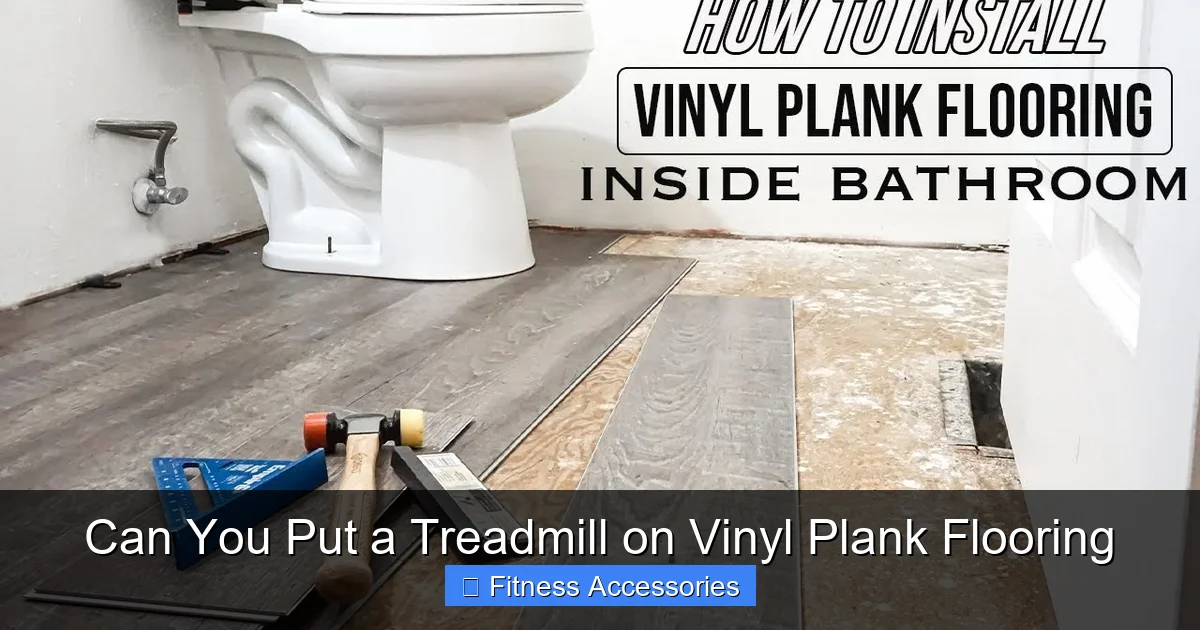
Visual guide about Can You Put a Treadmill on Vinyl Plank Flooring
Image source: i.ytimg.com
1. The Non-Negotiable Treadmill Mat
This is the cornerstone of your protection. Do not use a thin yoga mat, a rug, or a piece of cardboard. You need a mat specifically designed for heavy gym equipment.
- Material: Look for 100% solid rubber, either recycled or virgin. PVC foam mats are common but often too soft and can compress permanently under a treadmill’s weight. Rubber is dense, resilient, and excellent at absorbing vibration and distributing point loads.
- Thickness: Minimum 1/4 inch (6mm). For extra peace of mind, especially on a less-than-perfect subfloor, go with 3/8 inch or 1/2 inch. Thicker means better shock absorption and more weight dispersion.
- Size: The mat must extend at least 6-12 inches beyond the treadmill’s footprint on all sides. This creates a stable “footprint” that keeps the treadmill entirely on the mat, preventing any direct contact between the treadmill’s feet and the vinyl plank. Measure your treadmill’s length and width at its widest points (often the rear stabilizers or front foot) and buy accordingly.
- Quality: Invest in a reputable brand like SuperMats, Rogue, or Gym Flooring Inc. A cheap, low-density rubber mat will compress and lose its protective shape quickly.
2. The Plywood Substrate (For Extra Security)
If you have a particularly sensitive floor, a flexible subfloor, or just want maximum protection, add a layer of rigid protection between the mat and the floor.
- Cut a piece of 1/2-inch or 3/4-inch plywood (birch or oak are good choices) to the exact size of your rubber mat or slightly smaller.
- Place the plywood on the vinyl plank floor first, then the rubber mat on top of the plywood, then the treadmill on the mat.
- This creates a super-stable, immovable platform that completely eliminates any point-load pressure on the vinyl itself. The rubber mat on top still absorbs vibration. This is the gold standard for protecting any delicate flooring.
3. Furniture Sliders for Moving
Never drag a treadmill across any finished floor, vinyl included. Before you even position it, place heavy-duty furniture sliders (the hard plastic kind, not the felt pads) under each of the treadmill’s feet or the front/rear stabilizer bars. This allows you to gently push or pivot the heavy machine without a single scratch.
Installation and Setup: Doing It Right the First Time
Preparation is everything. A rushed setup can cause damage before you even start your first workout.
Location, Location, Location
Choose the spot carefully. Avoid placing the treadmill directly over a subfloor joint (like where two sheets of plywood meet) if possible, as this can be a flex point. If your room is over a basement or crawlspace, ensure the joists beneath are adequately supported. A load-bearing wall is often a good spot.
Level is Everything
Your vinyl plank floor must be level, and your treadmill must be level on that floor. Use a long, 4-foot spirit level. Place it front-to-back and side-to-side on the treadmill’s running deck. Most treadmills have adjustable leveling feet. Use them! An unlevel treadmill puts uneven stress on its components and can cause it to “walk” or shift during use, which creates lateral force on your protective mat and floor.
Secure the Planks (Optional but Wise)
If your vinyl plank floor is in a large, open room and you’re concerned about the treadmill’s vibration causing planks to unlock over time, you can take a precaution. In the area where the mat will sit, you can use a very small, discreet bead of clear silicone caulk in the plank locking seams. This allows for normal expansion but helps prevent lateral movement. Never glue the planks down or the mat down. Vinyl needs to expand and contract with humidity.
Alternative Flooring Solutions: When Vinyl Just Won’t Do
If you’ve read the risks and feel your specific vinyl floor (perhaps an older, thinner variety) or subfloor is too risky, consider these alternatives for your dedicated workout space.
- Rubber Gym Flooring Tiles: Interlocking 1/2-inch or 3/4-inch rubber tiles are the commercial gym standard. They provide unparalleled cushioning, sound deadening, and weight distribution. They can be laid directly over vinyl plank (with a vapor barrier underneath if on concrete) and removed later without a trace. This is often the best long-term solution for a home gym.
- Area Rugs with a Pad: A thick, dense shag or woven rug with a thick rubber pad underneath can work for lighter treadmills or occasional use. However, it’s less stable than a dedicated mat and can bunch or slip.
- Building a Raised Platform: For a permanent setup, you can build a simple 2×4 frame, cover it with plywood, and top it with rubber matting. This creates a completely isolated, stable surface that doesn’t touch your vinyl plank at all.
The Bottom Line: Protecting Your Investment in Both Fitness and Home
Your home is your sanctuary, and your health is your wealth. These two investments should complement each other, not conflict. Putting a treadmill on vinyl plank flooring is a practical reality for millions, and it can be done successfully. The formula is simple: Research + The Right Products + Careful Installation = Peace of Mind.
Start by knowing exactly what type of vinyl plank you have and the condition of your subfloor. Then, purchase a high-quality, thick rubber mat that fully encompasses the treadmill’s footprint. Consider a plywood substrate for maximum insurance. Move the equipment with sliders, and ensure everything is perfectly level. Finally, commit to a quarterly check-up—look for any signs of stress, movement, or damage around the perimeter of your setup.
By following this guide, you can enjoy the convenience of a home treadmill on your beautiful vinyl floors without the nagging fear of a costly repair. You’ve worked hard for your home and your health; this is how you protect both.
Frequently Asked Questions
Is a simple rug or yoga mat enough to protect my vinyl plank floor from a treadmill?
No. Rugs and yoga mats are too thin and lack the density to properly distribute a treadmill’s concentrated weight. They will compress permanently, allowing the treadmill’s feet to still press into the vinyl plank below, leading to dents. You need a dedicated, dense rubber mat designed for heavy equipment.
What is the minimum thickness for a treadmill mat on vinyl plank flooring?
The absolute minimum should be 1/4-inch (6mm) thick, made of solid rubber. For optimal protection, especially on a subfloor that isn’t perfectly rigid, we strongly recommend 3/8-inch (10mm) or 1/2-inch (12mm) thickness. This extra mass does a far better job of absorbing shock and spreading the load.
Will my treadmill’s vibration still travel through the mat and damage the floor?
A high-quality, dense rubber mat will absorb and dissipate the vast majority of vibrational energy. The goal is to prevent the sharp, concentrated impacts from the treadmill’s feet and rollers from transferring to the floor. Some minor, low-frequency vibration may be felt, but it should not be enough to cause the planks to unlock or crack over time, especially if your subfloor is stable.
My vinyl flooring has an attached foam underlayment. Does that help or hurt?
It can be a double-edged sword. The foam provides a tiny bit of initial cushioning, but it is very thin and soft. It does not meaningfully help with weight distribution from a heavy point load like a treadmill. In some cases, a very soft underlayment can allow the plank to flex slightly more under weight, which is not ideal. This makes using a proper external rubber mat even more critical.
Will placing a treadmill void my vinyl flooring warranty?
Very possibly. Most vinyl plank warranties cover defects in material and installation for a set period (e.g., 10-25 years). They almost always exclude damage from “abuse,” “misuse,” or “heavy concentrated loads not intended for the product.” A treadmill is a classic example of a heavy concentrated load. You must check your specific warranty documents. Using a protective mat is your best defense and may be cited as a compliant practice.
Can I install the treadmill myself, or should I hire a pro?
You can absolutely install it yourself if you follow the steps carefully: prepare the floor, use sliders, position it gently, and level it perfectly. The key is to avoid any dragging or dropping. Hiring pros is only necessary if you’re also building a complex raised platform or if you are uncomfortable moving a 300lb object safely. The installation itself is not complicated; the moving is the risky part.