Why Does My Shin Hurt When I Jump Rope

Jumping rope is a fantastic cardio move, but a sharp shin pain can ruin the fun. This guide explains why your shin might hurt, how to spot the real problem, and what you can do right now to stop the ache and get back to your routine.
Key Takeaways
- Identify the root cause: Most shin pain comes from shin splints, improper footwear, or technique flaws.
- Warm‑up matters: A 5‑10 minute dynamic warm‑up can cut injury risk dramatically.
- Choose the right rope and surface: Lightweight ropes and forgiving flooring protect your shins.
- Strengthen surrounding muscles: Calf, tibialis anterior, and hip work reduce strain on the shin.
- Rest and recovery are non‑negotiable: Ice, compression, and adequate sleep speed healing.
- Gradual progression wins: Increase jump time by no more than 10 % each week.
- Prevent future pain: Regular stretching, proper shoes, and technique checks keep shins happy.
📑 Table of Contents
- Introduction: The Joy—and the Jolt—of Jump Rope
- 1. What Is Actually Happening Inside Your Shin?
- 2. Why Does Jump Rope Trigger Shin Pain?
- 3. How to Diagnose the Exact Cause
- 4. Immediate Relief Strategies
- 5. Long‑Term Fixes: Preventing Future Shin Pain
- 6. Putting It All Together: A Sample 4‑Week Jump‑Rope Program
- Conclusion: Jump Rope Without the Ache
Introduction: The Joy—and the Jolt—of Jump Rope
Jump rope feels like childhood magic mixed with a high‑intensity workout. One minute you’re in the rhythm, heart racing, calories burning. The next, a sharp twinge shoots up the front of your lower leg. “Why does my shin hurt when I jump rope?” becomes the question on everyone’s mind.
Before you toss the rope aside, let’s break down what’s really happening. Understanding the anatomy, the common mistakes, and the simple fixes will let you keep jumping without the sting.
1. What Is Actually Happening Inside Your Shin?
1.1 The anatomy of a shin
The “shin” is the front part of your lower leg, mainly the tibia bone covered by muscles, tendons, and a thin layer of skin. Two key muscles run along this area:
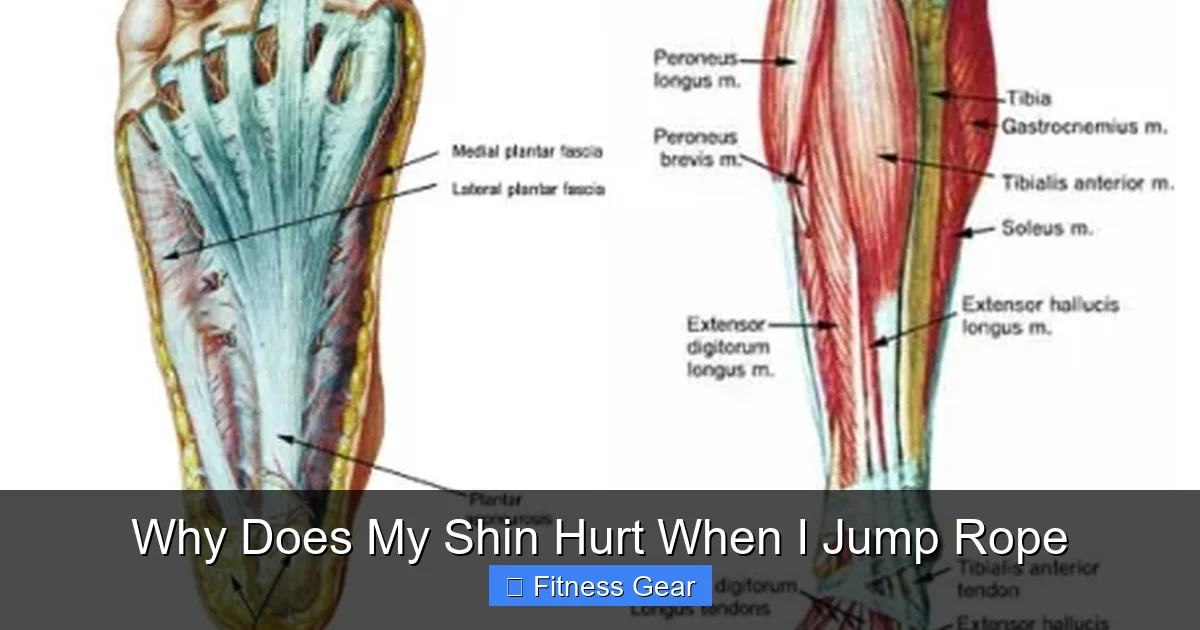
Visual guide about Why Does My Shin Hurt When I Jump Rope
Image source: i.stack.imgur.com
- Tibialis anterior: lifts the foot and controls landing.
- Extensor digitorum longus: helps spread the toes.
When you jump, these muscles contract repeatedly to keep your foot stable. Too much repetitive impact or poor alignment overloads the bone’s periosteum (the outer membrane), leading to pain.
1.2 Common conditions that cause shin pain
- Shin splints (medial tibial stress syndrome): inflammation of the periosteum from overuse.
- Stress fracture: tiny cracks in the tibia caused by repeated force.
- Compartment syndrome: pressure build‑up inside the muscle compartment.
- Achilles tendonitis: sometimes felt near the shin when the tendon pulls too hard.
Most jump‑rope enthusiasts experience shin splints first. Stress fractures are rarer but require a doctor’s eye.
2. Why Does Jump Rope Trigger Shin Pain?
2.1 Impact forces and landing mechanics
Every jump creates a ground‑reaction force that is 2–3 times your body weight. If you land on your heels or let the foot slap the ground, the force travels straight up the tibia. Over time, this micro‑trauma adds up.

Visual guide about Why Does My Shin Hurt When I Jump Rope
Image source: thefootpractice.com
2.2 Poor footwear or surface
Hard concrete, worn‑out shoes, or shoes lacking arch support amplify the shock. A shoe with a thin sole does not absorb enough impact, sending the jolt straight to the shin.
2.3 Rope weight and speed
Heavy ropes require more force to swing, and fast speeds force you to turn the rope with a higher cadence. Both increase the number of impacts per minute, raising the chance of shin irritation.
2.4 Technique slip‑ups
- Landing on the heels: pushes the tibia into compression.
- Excessive knee bend: makes the foot strike harder.
- Over‑pronation: foot rolls inward, stressing the inner shin.
2.5 Training volume and progression
Jumping for 30 minutes straight when you’re used to 5 minutes is a classic “too much, too fast” scenario. The tibia needs time to adapt to new loads.
3. How to Diagnose the Exact Cause
3.1 Self‑assessment checklist
- Is the pain sharp or dull?
- Does it appear during or after the workout?
- Is the spot tender to touch?
- Do you feel swelling or warmth?
- Can you walk normally afterward?
If the pain is sharp, localized, and worsens with activity, you may have a stress fracture and should see a medical professional.

Visual guide about Why Does My Shin Hurt When I Jump Rope
Image source: yifarope.com
3.2 When to see a doctor
Seek care if you notice any of the following:
- Persistent pain > 7 days despite rest.
- Visible swelling, bruising, or a “step‑off” sensation.
- Numbness or tingling down the leg.
- Inability to bear weight on the leg.
3.3 Simple at‑home tests
The “tap test”: Gently tap the front of the shin with your fingertip. If it’s sore, the periosteum is inflamed—typical of shin splints.
The “single‑leg hop”: Hop on the affected leg. Pain that spikes indicates insufficient muscle support and a need for strengthening.
4. Immediate Relief Strategies
4.1 R.I.C.E. – The classic first aid
- Rest: Stop jumping for 2–3 days.
- Ice: 15‑20 minutes, 3–4 times a day.
- Compression: Elastic bandage snug but not cutting.
- Elevation: Raise the leg above heart level when possible.
4.2 Over‑the‑counter options
Non‑steroidal anti‑inflammatory drugs (NSAIDs) like ibuprofen can reduce swelling. Use as directed and avoid long‑term reliance.
4.3 Gentle mobility work
While resting, perform ankle circles and toe‑raises to keep the lower leg moving without load.
5. Long‑Term Fixes: Preventing Future Shin Pain
5.1 Choose the right rope
- Lightweight PVC or beaded rope: Ideal for beginners and reduces impact.
- Adjustable length: Ensures proper clearance and prevents over‑extension.
5.2 Pick a forgiving surface
Jump on a wooden floor, rubber mat, or grass. Avoid concrete or asphalt whenever possible.
5.3 Invest in proper shoes
Look for shoes with:
- Good arch support.
- Cushioned midsole (EVA or PU).
- Stable heel counter to limit excess pronation.
If you’re a heavy‑weight jumper, consider a “cross‑training” shoe rather than a minimalist running shoe.
5.4 Warm‑up and dynamic stretching
Spend 5‑10 minutes on these moves before you start:
- Leg swings (front‑to‑back, side‑to‑side) – 10 each side.
- High knees – 30 seconds.
- Ankle pumps – 15 reps.
- Calf raises – 15 reps.
5.5 Strengthen the supporting muscles
Do these exercises 2‑3 times a week:
- Tibialis anterior raises: Sit, foot flat, lift the toes toward the shin, 3 × 15.
- Calf raises: Stand on a step, rise onto toes, 3 × 12.
- Hip abductors (clamshells): Keep hips stable, 3 × 15 each side.
- Core planks: Strong core improves overall jumping form.
5.6 Technique tweaks for pain‑free jumping
- Land softly on the balls of your feet: Keep knees slightly bent.
- Keep the rope low: A high rope forces exaggerated arm swings that throw off timing.
- Maintain an upright torso: Avoid leaning forward, which adds extra force on the shins.
- Short, quick hops: Instead of high jumps, keep the bounce low and fast.
5.7 Gradual progression plan
Use the 10 % rule: increase total jump time or number of sets by no more than 10 % each week. Example:
- Week 1: 5 minutes total (5 × 1‑minute sets).
- Week 2: 5 minutes + 30 seconds.
- Week 3: 6 minutes total, etc.
This steady climb lets bone and muscle adapt without overload.
6. Putting It All Together: A Sample 4‑Week Jump‑Rope Program
Week 1 – Foundation
- Warm‑up: 5 min dynamic stretch.
- Jump rope: 4 × 30‑second intervals, 30‑second rest.
- Cool‑down: 5 min gentle calf stretch.
- Strength: Tibialis anterior raises, calf raises (2 × 15 each).
Week 2 – Build Endurance
- Increase to 5 × 45‑second intervals.
- Add 2 minutes of core work (plank, side plank).
- Continue strength routine, add hip abductors.
Week 3 – Add Speed
- Introduce “double‑unders” for 15‑second bursts within each set.
- Maintain total time (≈ 6 minutes).
- Focus on landing softly; watch video of proper form.
Week 4 – Test Your Progress
- Try a continuous 8‑minute session, split into 2‑minute blocks.
- Assess shin comfort: no sharp pain means you’re on track.
- If soreness appears, back off a level and repeat week 3.
Conclusion: Jump Rope Without the Ache
“Why does my shin hurt when I jump rope?” isn’t a mystery you have to live with. By understanding the forces at play, choosing the right gear, warming up, strengthening key muscles, and progressing wisely, you can keep the rhythm going pain‑free. Remember, a little forethought now saves weeks of downtime later. So grab a light rope, step onto a forgiving floor, and let the good vibes—and healthy shins—carry you through every jump.
Frequently Asked Questions
Why does my shin hurt only after I finish jumping rope?
The muscles and bone absorb repeated impact during the workout, and inflammation often peaks a few minutes after you stop. This delayed soreness is typical of shin splints.
Can I keep jumping if I have mild shin pain?
For mild discomfort, reduce intensity, shorten sessions, and focus on proper landing. If pain persists after a few days of rest, it’s best to pause and treat the issue.
Is a foam roller helpful for shin pain?
Yes, gentle rolling of the calf and tibialis anterior can improve blood flow and reduce tension, but avoid direct pressure on the bone itself.
Do compression sleeves prevent shin splints?
Compression can help by supporting the muscle and reducing vibration, but they work best when combined with proper shoes and technique.
How long does it take for shin splints to heal?
Most mild cases improve within 2–3 weeks of rest, ice, and rehab exercises. Severe cases may need 4–6 weeks or more.
Should I switch to a different cardio activity while my shin heals?
Low‑impact options like swimming, cycling, or elliptical training keep fitness up without stressing the shin, allowing it to recover faster.