Is It Okay to Walk on a Treadmill Barefoot
Walking on a treadmill barefoot is generally not recommended due to significant risks. The primary concerns include exposure to bacteria and fungi from the belt, the high potential for painful blisters and burns from friction, and a lack of traction that can lead to slips and falls. While some advocate for a “natural” feel, the controlled, high-friction environment of a treadmill is fundamentally different from outdoor terrain. For safe, effective, and hygienic workouts, wearing proper athletic shoes or clean, grippy socks is the superior choice that protects your health and enhances performance.
Key Takeaways
- Hygiene is a Major Concern: Treadmill belts harbor bacteria, fungi, and viruses from countless users. Walking barefoot directly exposes your feet to these pathogens, increasing the risk of infections like athlete’s foot and plantar warts.
- High Risk of Friction Injuries: The constant, forceful rubbing of the belt against bare skin will almost inevitably cause blisters, chafing, and even superficial burns (sometimes called “treadmill burn”) on the soles and toes.
- Serious Slip and Fall Hazard: Sweat and the belt’s movement create a slick surface. Bare feet lack the grip and structure of a shoe, dramatically increasing the chance of your foot sliding out from under you, leading to sprains, fractures, or a dangerous fall.
- Shoes Provide Essential Cushion and Support: Proper footwear absorbs impact shock, protecting your joints (ankles, knees, hips, spine). It also offers arch support and stability, which bare feet cannot, preventing long-term strain injuries.
- “Barefoot” Alternatives Exist: If you desire minimal footwear, dedicated barefoot or minimalist shoes with a thin, flexible sole and zero drop are a safe compromise. Non-slip grip socks are a hygienic option for home use only.
- Gym Policies Typically Prohibit It: Most commercial gyms and fitness centers have strict rules against barefoot treadmill use for liability and hygiene reasons. Violating this can get you asked to leave.
- It Undermines Your Workout: Discomfort from blisters and fear of slipping forces you to shorten your session, reduce intensity, and adopt poor posture, making your exercise less effective and potentially harmful.
📑 Table of Contents
- The Allure and The Reality of Barefoot Treadmill Walking
- The Invisible Danger: Hygiene and Pathogen Exposure
- The Friction Factor: Blisters, Burns, and Raw Skin
- The Traction Trap: Why Slipping is a Real Threat
- The Support Void: Impact, Alignment, and Long-Term Damage
- The Practical Path: What to Wear Instead
- Best Practices for Safe and Hygienic Treadmill Use
- The Bottom Line: Protect Your Precious Feet
The Allure and The Reality of Barefoot Treadmill Walking
There’s a certain romantic idea about moving naturally, feeling the ground beneath you, and connecting with your body’s innate mechanics. This “barefoot” or “minimalist” philosophy has gained traction in running and fitness circles. So, when you stare at the moving belt of your treadmill at home or in the gym, a simple, tempting thought might pop up: “Can I just… walk on this barefoot?” It seems convenient—no shoes needed, easy to hop on for a quick session. But before you kick off your sneakers, it’s crucial to separate the appealing notion from the practical, and often harsh, reality. The short, unequivocal answer from podiatrists, fitness trainers, and hygiene experts is: No, it is not okay to walk on a treadmill barefoot as a regular practice. The risks far outweigh any perceived benefits. Let’s break down exactly why, and what you should do instead.
The Invisible Danger: Hygiene and Pathogen Exposure
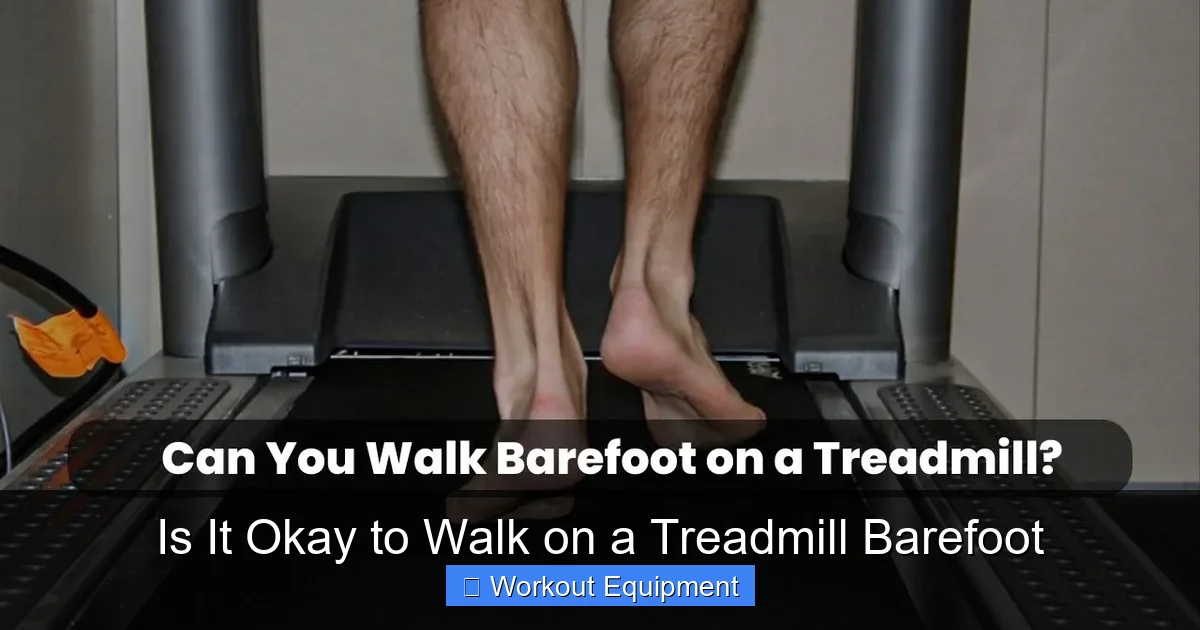
Think about your treadmill. How many people use it in a week at your gym? Even at home, how often do you clean it? The treadmill belt is a porous, fabric-based surface that is constantly in motion, collecting sweat, dead skin cells, and whatever else is on the soles of shoes—including bacteria, fungi, and viruses from locker rooms, bathrooms, and outdoor streets. It is, in essence, a communal footrest that rarely gets disinfected properly between users.
Visual guide about Is It Okay to Walk on a Treadmill Barefoot
Image source: treadmillvibe.com
What’s Living on Your Treadmill Belt?
Studies on gym equipment have found a staggering array of microbes. Common culprits include:
- Trichophyton: The fungus that causes athlete’s foot (tinea pedis). It thrives in warm, moist environments and loves to hitch a ride on fabric surfaces.
- Human Papillomavirus (HPV): This causes plantar warts, which are rough, grainy growths on the soles of the feet. They spread through direct contact with infected skin cells.
- Staphylococcus and Streptococcus: Bacteria that can cause skin infections, especially if you have a small cut or crack on your foot.
- E. coli and other coliforms: These can be tracked in from restrooms and indicate fecal contamination.
Walking barefoot places your bare skin in direct, prolonged contact with this microbial soup. Even if you shower right after, an infection can take hold. At a gym, you are essentially sharing a footpath with hundreds of other people’s foot debris. The hygiene risk alone is a deal-breaker for safe treadmill use.
The Friction Factor: Blisters, Burns, and Raw Skin
Even if you miraculously avoided pathogens, the physical act of your bare skin sliding against the treadmill belt is a recipe for pain. The belt is designed to provide friction to propel you forward. Against the sensitive, unprotected skin of your foot, that friction becomes a weapon.

Visual guide about Is It Okay to Walk on a Treadmill Barefoot
Image source: projectperfecthome.com
Understanding “Treadmill Burn”
Have you ever worn a new pair of shoes without socks and ended up with a painful blister on your heel? That’s friction injury. Now, imagine that happening on the ball of your foot and toes with every single step, for 20, 30, or 60 minutes. The belt’s texture, while not sandpaper, is abrasive against bare skin. Combine that with sweat (which your feet will produce) and the heat generated by the belt’s motor and friction, and you get a phenomenon often called “treadmill burn.” This isn’t a true thermal burn from heat, but a severe friction burn that removes the top layer of skin, leaving it raw, red, and incredibly tender. It can take days to heal and makes any subsequent walking, in shoes or otherwise, agony.
The Blister Cascade
Blisters form as the skin’s protective response to shear forces. The outer layer of skin separates from the inner layers, and the space fills with fluid. On a treadmill, the repetitive motion guarantees blister formation on pressure points: the metatarsal heads (balls of your feet), the pads below your toes, and the sides of your feet where they might rub against the deck edges. Once a blister forms, it’s almost impossible to continue your workout comfortably. If it pops, you create an open wound on a machine covered in bacteria—a direct ticket to infection.
The Traction Trap: Why Slipping is a Real Threat
This is the most immediately dangerous risk. A treadmill belt is a moving, often slightly textured, surface. It is engineered to move under your feet. Your bare foot, especially when slightly sweaty, has minimal grip on this surface.
Visual guide about Is It Okay to Walk on a Treadmill Barefoot
Image source: marathonhandbook.com
The Physics of a Slip
When you walk, your heel strikes, and you push off with your toes. On a static surface, your foot’s natural sweat and the ground’s texture provide enough friction. On a moving belt, the belt is actively trying to travel backward under your foot. A shod foot with a rubber sole “grabs” the belt momentarily, allowing you to push off. A bare foot is more likely to slide backward during the push-off phase. This can cause a sudden, jarring loss of balance. You might:
- Perform an awkward, split-like lunge to catch yourself, straining groins and hamstrings.
- Have your foot shoot out from under you, leading to a fall backward onto the hard deck or, worse, getting thrown into the machine’s frame or console.
- Twist an ankle as your foot slides and rolls.
These aren’t hypothetical scenarios; emergency rooms see injuries from treadmill falls, and barefoot use significantly increases the likelihood. The lack of lateral stability from a shoe’s sidewalls also makes it easier to roll an ankle on the narrow belt.
The Support Void: Impact, Alignment, and Long-Term Damage
Beyond the acute risks, walking barefoot on a treadmill neglects the fundamental purpose of footwear in a controlled cardio environment: shock absorption and alignment.
Your Joints Take the Hit
Every time your heel strikes the treadmill belt, a force of 1.5 to 3 times your body weight travels up your kinetic chain—ankle, knee, hip, and spine. Shoes are engineered with midsoles (EVA foam, air pockets, gel) to absorb and dissipate this impact. Bare feet have no such buffer. The repeated, concentrated impact on your heel bone (calcaneus) and the joints above can contribute to:
- Heel spurs (bone spurs on the bottom of the heel)
- Plantar fasciitis (inflammation of the foot’s arch ligament)
- Aggravation of knee osteoarthritis
- Lower back pain from poor shock absorption altering your gait and posture
Over time, this cumulative micro-trauma can lead to chronic, painful conditions that require months of physical therapy to correct.
Arch and Gait Collapse
Without the structured support of a shoe, your foot’s arch is left to its own devices. For people with flat feet or even normal arches, the repetitive loading can cause the arch to collapse excessively (overpronation). This misaligns the entire leg, putting abnormal stress on the tibia (shin splints), the knee’s medial collateral ligament, and the hip. A proper shoe guides your foot through a neutral gait cycle, promoting healthy alignment from the ground up.
The Practical Path: What to Wear Instead
So, what *should* you wear? The answer depends on your goals and setting, but the principles are universal: cleanliness, grip, cushioning, and support.
The Gold Standard: Dedicated Athletic Shoes
This is non-negotiable for gym use and highly recommended for home. Use a pair of shoes designated for indoor treadmill/walking use only. This keeps them clean and extends their life. Look for:
- Good Traction: A rubber outsole with a tread pattern designed for indoor surfaces.
- Adequate Cushioning: Especially in the heel and forefoot for shock absorption.
- Proper Fit: Your foot should not slide around inside. Secure lacing is key.
- Support: Based on your arch type (neutral, stability, or motion control shoes).
Old, worn-out running shoes with flat, smooth soles are worse than nothing, as they provide no grip or cushioning. Replace them every 300-500 miles.
The “Barefoot” Compromise: Minimalist or Barefoot Shoes
If you love the sensory feedback and toe-splay of being barefoot, these are your safe alternative. Brands like Vibram FiveFingers, Merrell Trail Glove, or Xero Shoes offer a thin, flexible sole (often just 3-6mm) that protects your skin from friction and pathogens while allowing your foot to move naturally. Crucially: They have a grippy rubber sole with excellent traction on the treadmill belt. They offer zero cushioning, so you must start slowly to allow your foot and calf muscles to adapt. They are an excellent tool for improving foot strength and gait, but they are still a *shoe*—they provide a vital barrier and grip.
The Sock-Only Option (Home-Only, with Caution)
In a private, *clean* home treadmill that you disinfect regularly, some people use special non-slip “yoga” or “grip” socks with rubberized pads on the sole and sometimes the sides. This is the riskiest “acceptable” option and comes with major caveats:
- The rubber pads can catch on the belt’s texture, potentially causing a weird, jerking motion that could strain your knee or ankle.
- They offer zero impact protection.
- They can bunch up or slide inside the sock.
- They are only for very low-speed walking, never running or high-incline work.
- You must wash them after every single use.
- Never use this in a commercial gym.
For most people, a simple, clean pair of athletic socks inside a dedicated treadmill shoe is a far safer and more comfortable bet.
Best Practices for Safe and Hygienic Treadmill Use
Whether you choose a max-cushion trainer or a minimalist shoe, following these protocols ensures your treadmill workouts remain beneficial and injury-free.
Hygiene is Non-Negotiable
Treat your treadmill like a shared bathroom. Before and after every use:
- Wipe Down: Use an EPA-registered disinfectant spray or wipe on the belt, deck, side rails, and console. Let it sit damp for the recommended time (usually 3-5 minutes) to kill germs, then dry with a clean cloth.
- Clean Your Shoes: If you use a dedicated pair, wipe the soles with a damp cloth occasionally to remove dirt and debris that could scratch the belt.
- Never Go Barefoot: This is the single biggest hygiene violation. You are depositing sweat and skin cells directly onto the belt.
Start Slow and Listen to Your Feet
If you’re new to treadmill walking or trying a new shoe type (like minimalist), begin with short sessions (10-15 minutes) at a low speed (2.0-2.5 mph). Pay attention to any hot spots, tingling, or pain. Stop immediately if you feel something developing. Your feet need time to adapt and build calluses in the right places—but calluses are a sign of friction, which means damage is occurring. The goal is to avoid that damage entirely with proper footwear.
Focus on Form
Good form reduces strain regardless of footwear:
- Posture: Stand tall, eyes forward, shoulders relaxed.
- Stride: Take natural, comfortable strides. Overstriding (landing with your foot too far in front of your hip) increases braking force and impact. Aim for your foot to land almost directly under your hip.
- Arm Swing: Let your arms swing naturally at your sides, not across your body.
Wearing shoes helps you maintain this form by providing a stable platform. Barefoot, you might subconsciously shorten your stride and hunch to avoid the belt’s sensation, creating poor mechanics.
The Bottom Line: Protect Your Precious Feet
Your feet are the foundation of your entire body’s movement. They contain a quarter of your body’s bones, dozens of joints, and a complex network of muscles, tendons, and ligaments. They are incredibly resilient but also vulnerable. The treadmill, for all its convenience, is an artificial environment that creates a perfect storm of risks for bare feet: relentless friction, pathogen exposure, and a slick, moving surface.
The idea of “natural” movement is appealing, but the natural human gait evolved for varied, forgiving outdoor terrain—earth, grass, sand—not for a continuously moving, abrasive belt in a climate-controlled room. The smart, safe, and hygienic choice is unequivocally to wear footwear. Choose a pair of clean, well-fitting athletic shoes for maximum support and protection. If you crave a closer feel, opt for a true minimalist shoe with a grippy sole. Reserve your barefoot time for safe, clean, natural surfaces like grass, sand, or a dedicated indoor barefoot studio. Your feet will thank you for the protection, your workouts will be more effective, and you’ll avoid a world of pain, infection, and potential injury. In the quest for fitness, never neglect the health of the very things that carry you there.
Frequently Asked Questions
Can I walk on my home treadmill barefoot if I clean it every day?
Even with daily disinfection, the belt’s fabric material can retain moisture and microbes deep within its fibers. Daily cleaning significantly reduces risk but does not eliminate it. Furthermore, the high risks of friction blisters, burns, and slipping remain completely unchanged. It is still not a safe practice.
What about wearing just socks? Is that safe?
Wearing only socks, even grippy ones, is not safe. Standard socks offer virtually no traction on a moving belt, creating an extreme slip hazard. Specialized grip socks can reduce slipping slightly but provide zero cushioning or impact protection, leaving your joints vulnerable. They also bunch easily and are not permitted in commercial gyms. They are a very high-risk option suitable only for very slow, cautious walking on a meticulously clean home machine.
Is barefoot running on a treadmill ever okay?
No. Running magnifies all the risks of walking barefoot exponentially. The impact forces are higher, the friction per stride is greater, and the speed reduces your reaction time to a slip. The likelihood of severe blisters, a catastrophic fall, and joint damage is extremely high. Barefoot running should only be done on natural, forgiving surfaces after a significant adaptation period, never on a treadmill.
I have a “barefoot” or minimalist shoe. Can I use that on the treadmill?
Yes, a true minimalist shoe (thin, flexible sole, wide toe box, grippy rubber tread) is the safest alternative to being fully barefoot. It provides the critical protective barrier against pathogens and friction, and the grippy sole prevents slipping. However, remember it offers no cushioning, so start with short, slow walks to allow your feet and calves to adapt to the direct impact.
Why do some people online say barefoot treadmill walking is great for posture?
This is a dangerous oversimplification. While barefoot movement on natural ground can improve proprioception (body awareness) and foot strength, the treadmill’s moving belt creates an unnatural, destabilizing environment. To avoid slipping, people often adopt tense, hunched, and short-stride postures that are terrible for alignment. Any potential postural benefit is completely negated by the high risk of injury and the instinctive, compensatory poor form the belt enforces.
What’s the single biggest reason to always wear shoes on a treadmill?
The single biggest reason is the unacceptably high risk of a slip-and-fall accident. The moving belt against a sweaty, bare foot is a recipe for a sudden loss of traction. A fall on or around a treadmill can cause severe injuries—sprains, fractures, head trauma—and can even pull you into the machinery. The combination of no grip and no ankle support makes this a frequent and serious hazard that proper footwear almost entirely prevents.