Can Walking on a Treadmill Help You Lose Weight
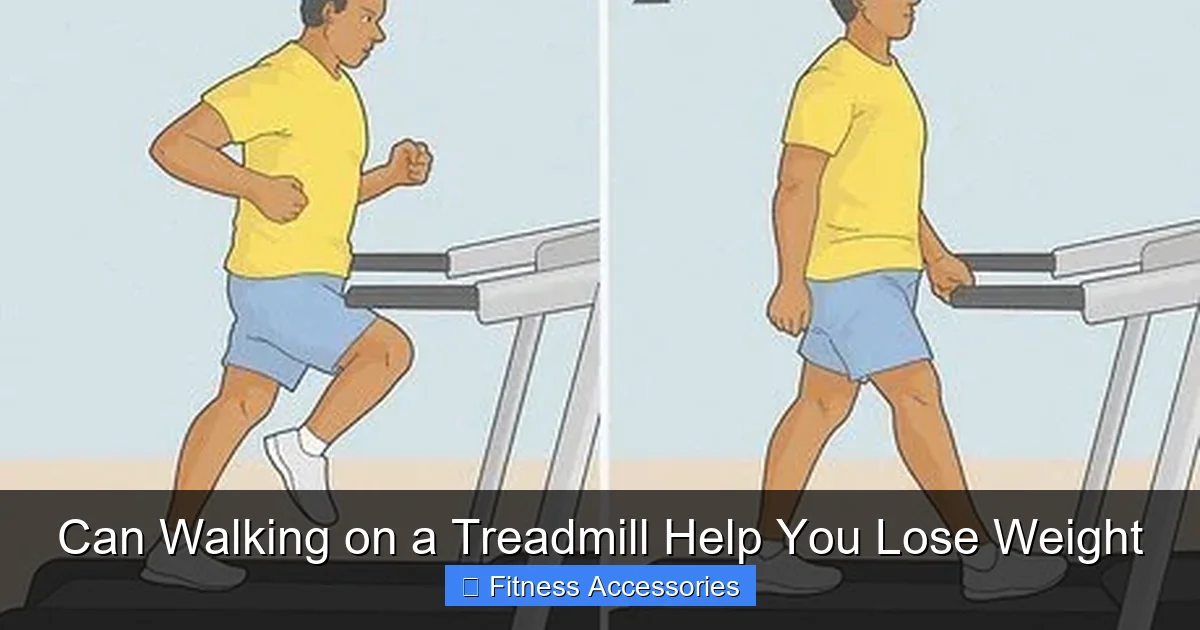
Walking on a treadmill is a highly effective, low-impact way to create a calorie deficit, essential for weight loss. Combined with a balanced diet and a consistent routine, it can lead to sustainable, long-term results. Its accessibility and joint-friendly nature make it an ideal exercise for people of all fitness levels.
Key Takeaways
- Calorie Deficit is Key: Treadmill walking helps create the calorie deficit needed for weight loss by burning calories during and after your session.
- Low-Impact and Sustainable: It’s gentle on joints, making it easier to stick with consistently compared to high-impact exercises, which is crucial for long-term success.
- Consistency Trumps Intensity: Regular, moderate-paced walks are more effective for weight loss than occasional, intense sessions you can’t maintain.
- Incline and Intervals Boost Results: Adding incline or short speed intervals significantly increases calorie burn and challenges your body in new ways.
- Synergy with Nutrition: Exercise alone isn’t enough; combining treadmill walking with mindful eating accelerates weight loss and improves overall health.
- Builds Healthy Habits: A daily treadmill routine fosters discipline, improves mood, and supports other positive lifestyle changes.
- Accessible and Controlled: You control speed, incline, and duration regardless of weather, making it a reliable tool for your weight loss journey.
📑 Table of Contents
- The Simple Truth About Treadmill Walking and Weight Loss
- The Science: How Walking Burns Fat and Changes Your Body
- Treadmill vs. Outdoor Walking: Why the Machine Has an Edge for Weight Loss
- Designing Your Treadmill Weight Loss Plan: From Steps to Strategy
- Maximizing Your Results: Beyond the Basic Walk
- The Non-Negotiable Partner: Nutrition for Weight Loss
- Overcoming Plateaus and Staying Motivated for the Long Haul
- Conclusion: Your Journey Starts with a Single Step
The Simple Truth About Treadmill Walking and Weight Loss
Let’s cut through the noise. When it comes to shedding pounds, the fitness world can feel overwhelming. Fancy machines, extreme diets, and intense workout trends dominate the conversation. But what if the most powerful tool for weight loss isn’t a complicated secret, but a simple, rhythmic motion you already know how to do? Walking on a treadmill is one of the most accessible, effective, and sustainable ways to lose weight and keep it off. It’s not a magic solution, but it is a reliable, science-backed method that works for countless people. The core principle of weight loss is a calorie deficit—burning more calories than you consume. A treadmill is a direct line to creating that deficit, on your terms, in the comfort of your home or gym.
Think about it: no traffic, no uneven pavement, no bad weather. Just you, your pace, and a clear path forward. This controlled environment allows you to focus purely on the work, making every minute count. Whether you’re a beginner taking your first steps toward fitness or a seasoned exerciser looking for a low-impact active recovery day, the treadmill meets you where you are. In this guide, we’ll walk through exactly how this humble machine becomes a weight-loss powerhouse, how to structure your walks for maximum impact, and how to pair it with other habits for lasting change.
The Science: How Walking Burns Fat and Changes Your Body
To understand why treadmill walking works, we need to look at what happens inside your body during a steady-state walk. It’s more than just moving your legs; it’s a full-system metabolic event.

Visual guide about Can Walking on a Treadmill Help You Lose Weight
Image source: treadmillreviewcenter.com
Calories In vs. Calories Out: The Fundamental Equation
Weight loss boils down to energy balance. Your body needs a certain number of calories each day to function (your Basal Metabolic Rate or BMR) plus whatever you burn through activity (your Total Daily Energy Expenditure or TDEE). When you eat fewer calories than your TDEE, your body taps into stored fat for energy, leading to weight loss. A 30-minute treadmill walk can burn anywhere from 150 to 300+ calories depending on your weight, speed, and incline. That’s a meaningful chunk toward your daily deficit. For example, a 155-pound person walking at a moderate 4 mph pace on a flat surface burns about 167 calories in 30 minutes. Add a 5% incline, and that jumps to roughly 248 calories.
The Fat-Burning Zone: Myth and Reality
You’ve likely heard of the “fat-burning zone”—the idea that you should exercise at a lower intensity (typically 60-70% of your max heart rate) to burn more fat. There’s a grain of truth here. At lower intensities, a higher *percentage* of the calories you burn comes from fat. However, at higher intensities, you burn *more total calories* overall, and the absolute amount of fat burned can be greater. For weight loss, total calorie expenditure is the ultimate goal. Treadmill walking lets you easily stay in that moderate, sustainable zone where you can talk but feel challenged, burning a solid mix of fat and carbs for fuel. The consistency it allows is what truly drives fat loss over time.
The Afterburn Effect and Metabolic Health
While steady-state walking has a modest “afterburn” (Excess Post-exercise Oxygen Consumption or EPOC) compared to high-intensity interval training (HIIT), it offers other profound metabolic benefits. Regular walking improves insulin sensitivity, meaning your body uses blood sugar more efficiently, reducing fat storage. It also helps preserve lean muscle mass while you lose weight, which is critical because muscle burns more calories at rest than fat does. Essentially, treadmill walking doesn’t just burn calories *during* the workout; it helps tune your body to be a more efficient calorie-burning machine all day long.
Treadmill vs. Outdoor Walking: Why the Machine Has an Edge for Weight Loss
“Why not just walk outside?” it’s a fair question. Both are excellent, but the treadmill offers unique advantages that can make your weight loss journey more effective and manageable.

Visual guide about Can Walking on a Treadmill Help You Lose Weight
Image source: i.ytimg.com
Control and Consistency: Your Personal Lab
Outside, your pace is dictated by terrain, traffic lights, and your own fluctuating energy. On a treadmill, you set the exact speed and incline and maintain it for your entire session. This precision is invaluable for tracking progress and ensuring you’re consistently working at your target intensity. You can replicate a challenging hill workout every single time, something that’s hard to guarantee on a varied outdoor route. This consistency is the secret sauce of progressive overload—gradually increasing the demand on your body to force adaptation and continued weight loss.
Joint-Friendly and Low-Impact
The cushioned belt of a treadmill absorbs significantly more impact than concrete or asphalt. For individuals with knee, hip, or ankle concerns, or for those carrying extra weight that stresses joints, this is a game-changer. The reduced impact lowers your risk of injury, allowing for more frequent, longer sessions. You can walk daily without the punishing soreness that might follow a hard outdoor hike. This ability to recover quickly means you can be more consistent, and consistency is the single biggest predictor of long-term weight loss success.
Climate Control and Convenience
Let’s be real: motivation plummets when it’s pouring rain, freezing cold, or oppressively hot. The treadmill eliminates weather as an excuse. You can walk in your pajamas at 5 AM or in the middle of a lunch break. This convenience removes countless barriers. Furthermore, you can multitask safely—listen to a podcast, watch a show, or read a book—making the time fly by. When exercise fits seamlessly into your life, you do it more often, and more often equals more calories burned.
Designing Your Treadmill Weight Loss Plan: From Steps to Strategy
Showing up is step one. Showing up *with a plan* is step two. A random walk is better than nothing, but a structured approach will accelerate your results and keep you motivated.

Visual guide about Can Walking on a Treadmill Help You Lose Weight
Image source: skinnyrunner.com
Finding Your Baseline: Start Where You Are
Don’t jump into an aggressive plan and burn out. Begin by assessing your current fitness. Can you walk continuously for 20 minutes at a comfortable pace? If not, start with 10-minute bouts and build up. Your initial goal is to establish the *habit*. Use the “talk test”—you should be able to hold a conversation, but not sing. This typically lands you in the 3-3.5 mph range for most beginners. Focus on time spent moving before you worry about speed or steep inclines. The first two weeks are about building your aerobic base and conditioning your joints.
The Power of the Incline: Your Secret Weapon
This is where the treadmill truly shines. Incline walking is a phenomenal calorie burner and muscle builder. Walking on a 1-2% incline simulates outdoor walking’s slight resistance. But crank it up to 4-6%, and you’re engaging your glutes, hamstrings, and calves in a whole new way, turning a simple walk into a serious strength and endurance session. Even a small incline can increase your calorie burn by 30-50%. Start by adding 1-2 minutes of incline (at a slower speed if needed) into your flat walk, gradually building up to entire sessions at a moderate grade.
Sample Weekly Plan for Steady Loss
Here’s a simple, progressive template for a beginner/intermediate walker aiming for weight loss (aim for 150-300+ minutes per week):
- Monday: 30-minute steady-state walk at a comfortable pace (3.0-3.5 mph) on a 1% incline.
- Tuesday: Rest or gentle stretching.
- Wednesday: 35-minute walk with 5×2-minute intervals. After a 5-minute warm-up, increase your speed to a brisk, challenging pace (where talking is difficult) for 2 minutes, then return to your normal pace for 2 minutes. Repeat.
- Thursday: 30-minute incline walk. Find a challenging but sustainable incline (4-5%) and maintain a slower, controlled pace.
- Friday: 40-minute steady-state walk, focusing on posture and arm swing.
- Saturday: Active recovery—a leisurely 20-minute walk or rest.
- Sunday: Longer, 45-minute steady-state walk at a moderate pace.
Remember to listen to your body. Adjust days as needed. The goal is consistency, not perfection.
Maximizing Your Results: Beyond the Basic Walk
To break through plateaus and maximize weight loss, you need to challenge your body in new ways. The treadmill is incredibly versatile.
Incorporate Interval Training (HIIT for Walkers)
High-Intensity Interval Training isn’t just for runners. Treadmill walking intervals are incredibly effective. The structure is simple: alternate periods of high-effort walking (a fast pace or steep incline) with periods of active recovery. This spikes your heart rate, burns a massive amount of calories in a shorter time, and creates a significant afterburn effect. Example: Warm up for 5 minutes. Then do 8 rounds of: 1 minute at a very fast walk or light jog (4.5-5.5 mph) followed by 90 seconds of slow recovery walking. Cool down for 5 minutes. Total time: ~25 minutes. Do this 1-2 times per week.
Embrace the Incline: Hill Repeats
Simulate hill repeats to build serious power and burn. After warming up, set the treadmill to a high incline (6-10% or more). Walk at a slow, controlled pace (2.5-3.0 mph) for 60-90 seconds, focusing on driving through your heels. Then, lower the incline to 0% and walk at a recovery pace for 2-3 minutes. Repeat 4-6 times. This builds leg strength and muscle, which boosts your resting metabolism.
Mind Your Form: Walk Smarter, Not Just Longer
Poor form leads to inefficiency and potential injury. Stand tall, looking forward, not down at your feet. Engage your core gently. Let your arms swing naturally, bent at about 90 degrees. Land on your mid-foot and roll through to your toe, avoiding heavy heel-striking. Good posture means you breathe better, engage more muscles, and can walk longer and faster. Occasionally check in on your form during your walk.
The Non-Negotiable Partner: Nutrition for Weight Loss
You cannot outwalk a bad diet. This is the most critical, often overlooked, component. Treadmill walking creates the *opportunity* for weight loss by increasing your calorie output, but diet controls the *input*.
The Calorie Deficit Demystified
If you burn 300 calories on the treadmill but then consume a 500-calorie “reward” smoothie, you’ve actually moved backward. The deficit must come from a combination of increased activity and mindful eating. Use a treadmill walk as a reason to nourish your body well, not as a license to overeat. Focus on whole foods: lean protein, vegetables, fruits, whole grains, and healthy fats. These foods keep you fuller longer and support recovery.
Protein, Hydration, and Recovery
When you’re in a calorie deficit, your body needs adequate protein to preserve muscle mass. Aim for 0.7-1 gram of protein per pound of target body weight. Hydration is also paramount for metabolism and workout performance. Dehydration can masquerade as hunger and sap your energy. Finally, prioritize sleep and stress management. Poor sleep and high cortisol (stress hormone) can sabotage weight loss efforts by increasing cravings and promoting fat storage, especially around the midsection. Your treadmill work is only part of the recovery equation.
Overcoming Plateaus and Staying Motivated for the Long Haul
Weight loss is rarely a straight line. You’ll hit periods where the scale doesn’t budge. This is normal and expected. The key is not to quit but to adjust.
When the Scale Stalls: What to Do
First, reassess your habits. Are you unconsciously eating more? Has your routine become too easy, so you’re burning fewer calories for the same effort? Your body adapts. To break a plateau, you must change the stimulus. Increase your incline, add more intervals, extend your walk time by 10-15 minutes, or incorporate a few short jogs. Also, check your non-exercise activity thermogenesis (NEAT)—are you moving less outside of your walks? Sometimes a simple increase in daily steps (parking farther away, taking calls while pacing) can kickstart things again.
Cultivating a Lifelong Habit, Not a Temporary Fix
The ultimate goal is to make treadmill walking a permanent part of your lifestyle, not a punishment you endure until you reach a number on the scale. Find your “why” beyond weight loss. Do you have more energy? Is your mood better? Are you sleeping well? Are you stronger? Celebrate non-scale victories. Make your walks enjoyable with audiobooks, podcasts, or playlists. Invest in comfortable shoes and workout clothes you feel good in. Track your miles or minutes and set performance goals (e.g., walk a 5k without stopping, conquer a 10% incline). When the focus shifts from punishment to empowerment, motivation becomes intrinsic and lasting.
Conclusion: Your Journey Starts with a Single Step
So, can walking on a treadmill help you lose weight? The answer is a resounding, evidence-backed yes. It is a profoundly effective tool because it is simple, sustainable, and controllable. It burns calories, builds endurance, protects your joints, and can be tailored to any fitness level. But its true power lies not in its complexity, but in its consistency. The treadmill is always there, ready for you, rain or shine.
Your weight loss success will be built on the foundation of showing up day after day. Pair your consistent treadmill routine with a focus on whole-food nutrition, adequate protein, hydration, and sleep. Embrace the process, challenge yourself with inclines and intervals, and be patient with your body. The scale will move, your clothes will fit better, and you’ll gain a powerful sense of accomplishment. Forget the search for a quick fix. Grab your water bottle, lace up your shoes, and step onto that belt. Your healthiest, strongest self is built one deliberate, powerful step at a time. The journey of a thousand miles—and a hundred pounds—begins with that very first step.
Frequently Asked Questions
Is walking on a treadmill every day good for weight loss?
Yes, daily treadmill walking is excellent for weight loss as it ensures consistent calorie burning and builds a solid habit. However, listen to your body; if you feel overly sore or fatigued, an active recovery day with gentle stretching is beneficial. The key is regular, moderate activity over time.
What speed should I walk on a treadmill to lose weight?
Aim for a “brisk walk” pace where you can talk in short sentences but not sing. For most people, this is between 3.0 and 4.0 mph. The most important factor is sustaining the activity for a longer duration (30-60 minutes) rather than a short, frantic pace you can’t maintain.
Should I use incline to lose weight faster?
Absolutely. Incline is your best friend for weight loss. It dramatically increases calorie burn and builds lower-body muscle, which boosts your metabolism. Start with a 1-2% incline and gradually work up to 4-6% for significant portions of your walk. Even a small incline makes a big difference.
How long should I walk on a treadmill to see weight loss results?
For noticeable results, aim for at least 150 minutes of moderate-intensity treadmill walking per week, combined with a healthy diet. This breaks down to about 30 minutes, 5 days a week. You may start feeling better and noticing clothes fitting better within 2-4 weeks, with more significant scale changes following.
Is treadmill walking as effective as walking outside for weight loss?
Treadmill walking can be *more* effective for controlled weight loss because you precisely control speed and incline, eliminating variables like wind or terrain. This allows for consistent, measurable workouts. However, outdoor walking offers varied scenery and vitamin D. Using both is a great strategy for long-term adherence.
Can I lose weight by only walking on a treadmill without changing my diet?
It’s possible but very difficult and often leads to a weight loss plateau. Exercise increases hunger and calorie needs. Without adjusting your diet to create a sustainable calorie deficit, you may eat back the calories you burned. For best and fastest results, combine your treadmill routine with mindful portion control and nutritious food choices.