Is It Safe to Use an Elliptical While Pregnant
Yes, for most pregnant individuals, using an elliptical is a safe and excellent low-impact cardio option, but with crucial precautions. It requires explicit approval from your healthcare provider, careful adjustments to intensity and form, and vigilant listening to your body’s signals throughout each trimester. The key is to prioritize stability, avoid overheating, and never push through pain or discomfort.
Key Takeaways
- Healthcare Provider Approval is Non-Negotiable: Always get clearance from your doctor or midwife before starting or continuing any exercise regimen during pregnancy, including elliptical use.
- Ellipticals Offer Superior Low-Impact Benefits: They provide cardiovascular conditioning with minimal stress on joints, ligaments, and the pelvic floor compared to running or high-impact aerobics.
- Trimester-Specific Modifications are Essential: Your needs and physical capabilities change each trimester, requiring adjustments to workout duration, resistance, and your focus on balance and core engagement.
- Form and Machine Settings Matter More Than Ever: Prioritize upright posture, use moving handlebars for total-body engagement, and set the machine for stability to prevent falls as your center of gravity shifts.
- Know the Absolute “Stop” Signs: Dizziness, vaginal bleeding, fluid leakage, persistent contractions, chest pain, or calf pain/swelling are immediate signals to cease exercise and contact your provider.
- Hydration and Temperature Regulation are Critical: Pregnancy increases dehydration and overheating risks. Drink water before, during, and after, and exercise in a cool environment.
- It’s About Maintenance, Not Peak Performance: The goal is to maintain fitness, manage weight, boost mood, and prepare for labor—not to train for personal records or significant weight loss.
📑 Table of Contents
- Navigating Pregnancy Fitness: The Elliptical Question
- Why the Elliptical is a Top-Tier Pregnancy Cardio Choice
- Safety First: Non-Negotiable Precautions and Guidelines
- Trimester-by-Trimester: Adapting Your Elliptical Workout
- Choosing and Setting Up Your Elliptical for a Safe Pregnancy
- Warning Signs: When to Stop Immediately and Call Your Provider
- Alternatives and Complementary Exercises for a Balanced Pregnancy Routine
- Conclusion: Embracing Safe, Empowered Movement
Navigating Pregnancy Fitness: The Elliptical Question
Pregnancy is a time of incredible change, joy, and often, a flood of questions about what’s safe for you and your baby. One of the most common concerns for active individuals is whether they can continue their favorite cardio routines. If you’ve ever laced up your sneakers, stepped onto an elliptical, and wondered, Is it safe to use an elliptical while pregnant? you’re not alone. The short answer is reassuring for most: with proper medical clearance and smart adjustments, the elliptical can be one of the best cardiovascular exercises you can do during this special time. Its smooth, gliding motion offers a powerful workout while cradling your joints—a major plus as your body produces relaxin, a hormone that loosens ligaments and increases instability. But “safe” comes with a detailed owner’s manual you must follow. This guide will walk you through every consideration, from the first positive test to delivery day, ensuring your elliptical sessions support a healthy pregnancy.
Why the Elliptical is a Top-Tier Pregnancy Cardio Choice
Before diving into the “how,” let’s establish the “why.” The elliptical machine isn’t just a acceptable option; for many, it’s a premier choice. Its design inherently addresses several key physical changes of pregnancy.

Visual guide about Is It Safe to Use an Elliptical While Pregnant
Image source: mikesgym.org
A True Low-Impact Champion
Running, jogging, or even brisk walking can place repetitive stress on weight-bearing joints like knees, ankles, and hips. During pregnancy, the hormone relaxin softens these joints to prepare for childbirth, but this also makes them more susceptible to strain and injury. The elliptical’s defining feature is the continuous, elliptical path of motion. Your feet never leave the pedals, eliminating the “jarring” impact of heel strike. This translates to a gentle yet effective workout that protects your knees and lower back—areas often plagued by pregnancy-related aches. It’s cardiovascular exercise without the concussion.
Total-Body Engagement for Balanced Strength
Unlike a stationary bike, which primarily works the lower body, a standard elliptical with moving handlebars engages your arms, chest, back, and core in addition to your legs. This full-body engagement is fantastic for maintaining overall muscle tone and combating the forward pull of your growing belly. Actively pushing and pulling the handles encourages better posture, helping to strengthen the back muscles that support your changing spine. It also promotes circulation in the arms, which can help reduce swelling.
Built-In Stability and Fall Prevention
As your belly grows, your center of gravity shifts forward. This can throw off your balance, making activities like walking on uneven surfaces or using a treadmill feel precarious. The elliptical provides a stable, fixed platform. Your feet are securely strapped in, and you’re holding onto sturdy handlebars. This significantly reduces the risk of falls—a critical benefit when your equilibrium is compromised. It allows you to focus on the movement and your breathing without the constant fear of losing your balance.
Mental Health and Energy Boost
Let’s not forget the mental benefits. Pregnancy can be an emotional rollercoaster, and fatigue is a constant companion for many. Regular, moderate exercise on an elliptical releases endorphins, those natural mood-lifters. It can improve sleep quality, boost energy levels (ironically), and provide a much-needed sense of normalcy and control. That 20-30 minute session can be a powerful tool for managing stress and anxiety, benefiting both you and your developing baby.
Safety First: Non-Negotiable Precautions and Guidelines
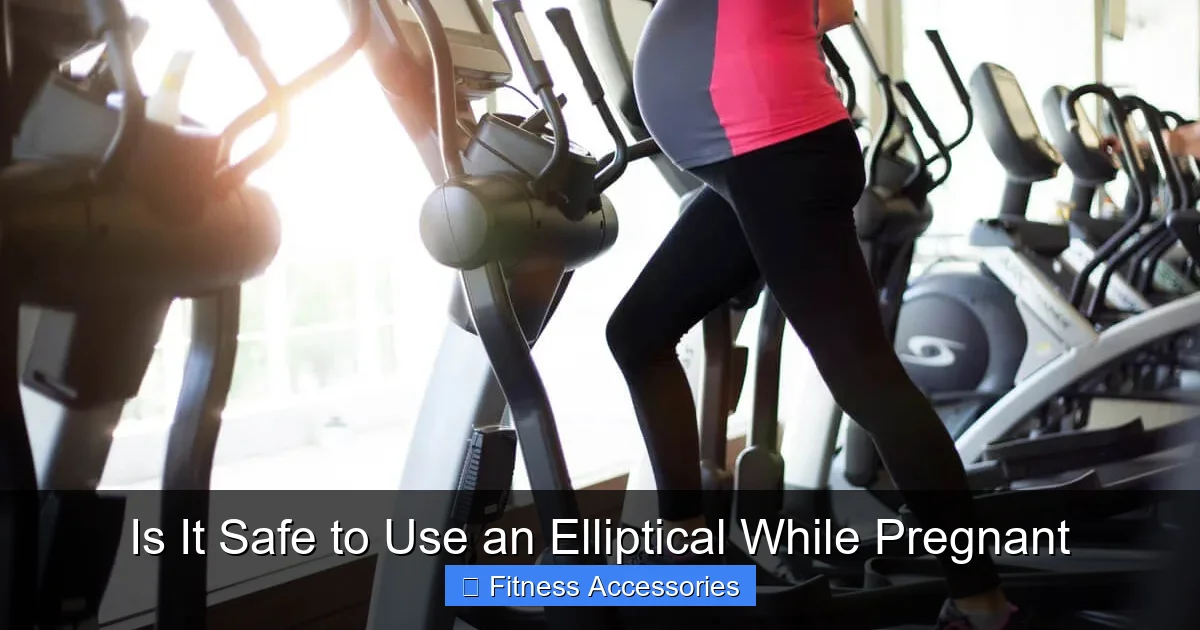
Understanding the benefits is just step one. The absolute cornerstone of exercising during pregnancy is safety, and that starts with a conversation. The phrase “check with your doctor” isn’t just a legal disclaimer; it’s a vital, personalized step. Your pregnancy is unique, and factors like pre-existing conditions (e.g., high blood pressure, gestational diabetes, placenta previa), your fitness history, and your provider’s protocols all play a role.
Visual guide about Is It Safe to Use an Elliptical While Pregnant
Image source: mikesgym.org
The Golden Rule: Secure Your Healthcare Provider’s Green Light
Before you even approach the elliptical, you must have written or verbal approval from your obstetrician, midwife, or perinatologist. They know the specifics of your pregnancy. If you were highly active pre-pregnancy and have a healthy, low-risk gestation, they will likely give you the go-ahead with parameters. If you were sedentary, they may still encourage gentle activity but will help you start very slowly. Never assume it’s safe based on general advice. Bring your specific question about elliptical use to your prenatal appointment.
Mastering Form and Machine Setup for Pregnancy
Your form will evolve as your body changes. The goal is always to maintain a neutral spine and avoid any compensatory straining.
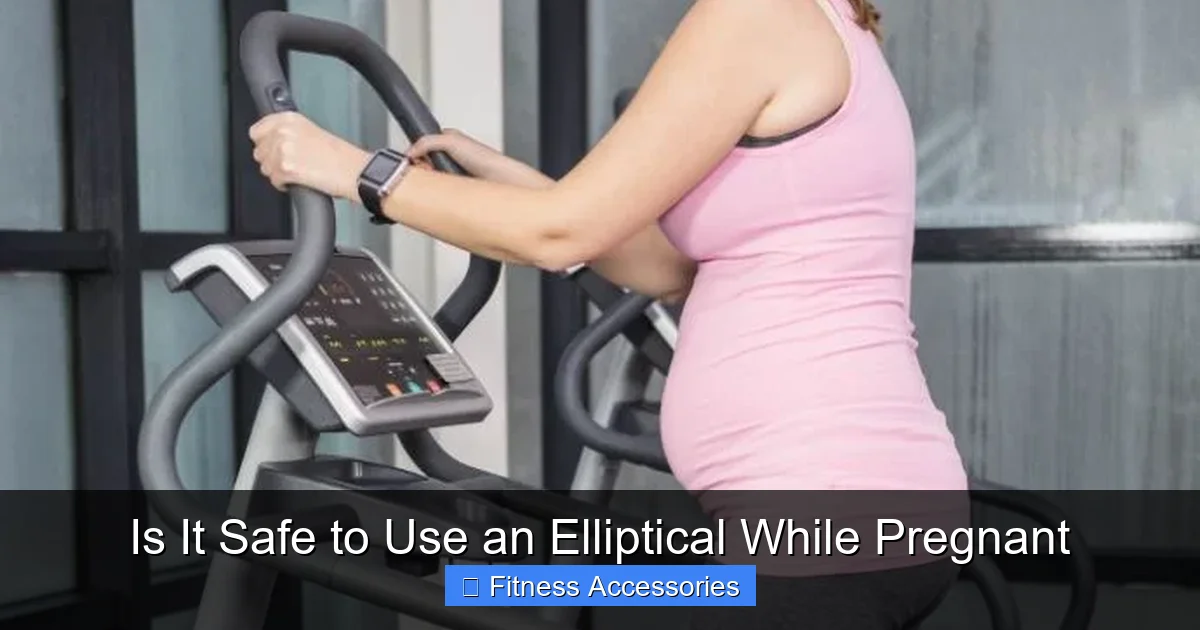
- Posture is Paramount: Stand tall, engage your core (imagine gently pulling your belly button towards your spine), relax your shoulders down and back, and look forward. Avoid leaning heavily on the handlebars or hunching over. The moving handlebars should be used to actively involve your upper body, not to support your weight.
- Stride Length and Resistance: Use a moderate, comfortable stride length. You should never fully extend your legs to a locked knee. Start with very low resistance—think 1-3 on a scale of 1-20—focusing on a smooth, controlled motion. The focus is on movement and circulation, not building muscle mass or burning massive calories.
- Stride Pattern: Some ellipticals offer a “forward” and “reverse” motion. Forward is standard. If you try reverse, do so only with very low resistance and for short intervals, as it can be awkward on the knees and hips.
- Hand Position: Experiment with hand positions—grips at the top for a more upper-body focused workout, or the lower, inner handles for a more leg-dominant motion. The position that feels most stable and allows you to maintain good posture is your winner.
Smart Programming: Intensity, Duration, and Frequency
The “talk test” is your best real-time monitor. You should be able to hold a conversation in full sentences without gasping for air. If you’re too breathless to speak, you’re working too hard.
- Intensity: Aim for a perceived exertion of “light” to “somewhat hard” on a 1-10 scale (around 4-6). Your heart rate should stay within limits your provider has likely set (often below 140-150 BPM, but confirm). Many ellipticals have heart rate monitors; use them.
- Duration: Start with 15-20 minutes if you’re new or in your first trimester. Build up gradually to 30 minutes if you feel good. There’s no prize for exceeding this. Consistency (e.g., 3-4 times per week) is far more valuable than occasional, lengthy, grueling sessions.
- Warm-Up and Cool-Down: These are not optional. Begin with 5 minutes of very slow pedaling with no resistance to increase blood flow. End with 5 minutes of slow pedaling followed by gentle static stretching (avoid deep stretches or overstretching the abdomen). Focus on calves, hamstrings, quads, chest, and back.
Trimester-by-Trimester: Adapting Your Elliptical Workout
Your body will transform dramatically over 40 weeks. What felt perfect in your first trimester may need significant tweaking by the third. Here’s how to adapt.
Visual guide about Is It Safe to Use an Elliptical While Pregnant
Image source: ellipticalmachinesc.com
First Trimester (Weeks 1-13): Focus on Routine and Nausea Management
This phase is often marked by fatigue and nausea (morning sickness). The elliptical can actually help combat both. A gentle session can boost energy and reduce queasiness for many women.
- Listen to Your Energy: Some days you may feel fine; others, just getting out of bed is a feat. Be flexible. A 10-minute session is better than none.
- Hydrate Diligently: Nausea can make drinking water challenging, but dehydration worsens it. Sip water consistently throughout the day, not just during your workout.
- Keep It Simple: Stick to the basics: good posture, low resistance, short duration. This is about establishing a sustainable habit, not pushing boundaries.
Second Trimester (Weeks 14-27): The “Sweet Spot” for Activity
For many, the second trimester brings a surge in energy and a decline in morning sickness. Your belly is growing but is still manageable. This is often the ideal window for maintaining and enjoying fitness.
- Proceed with Caution on Balance: As your belly grows, your balance will start to feel different. Be extra mindful when stepping on/off the machine. Use the handrails for support. Consider using a hand towel on the console to wipe sweat so your hands don’t slip.
- Core Awareness: Your abdominal muscles are stretching and separating (diastasis recti is common). Avoid any exercise that causes your belly to “cone” or dome outward. Maintain that gentle core engagement we discussed. If you feel any pulling or doming, reduce intensity or stop.
- Enjoy the Energy: You can likely extend your workouts to 30 minutes and maybe add a second weekly session if you feel up to it. This is the time to reap the mental and physical benefits most fully.
Third Trimester (Weeks 28-40): Prioritizing Stability and Comfort
This is the most physically challenging stage. Your center of gravity is significantly forward, you may have pelvic girdle pain, and fatigue returns with a vengeance.
- Shorten and Slow: Reduce your duration back to 15-20 minutes max. Slow your stride pace. The goal is movement and circulation, not cardio endurance.
- Support Your Pelvis: If you have pelvic pain (SPD or symphysis pubis dysfunction), the elliptical’s symmetrical motion may be soothing, but a wide stride can aggravate it. Keep your feet hip-width apart and avoid any outward rotation. If it hurts, stop.
- Focus on Upper Body: You might find you can no longer comfortably use the moving handlebars without straining your lower back. It’s perfectly fine to hold the stationary handlebars and focus solely on the leg motion. Stability over intensity.
- Listen to Your Body’s New Signals: Braxton Hicks contractions can be triggered by dehydration or overexertion. If you get frequent contractions during or after your workout, it’s a sign to scale back. Shortness of breath may also increase as your diaphragm has less room to move.
Choosing and Setting Up Your Elliptical for a Safe Pregnancy
Not all ellipticals are created equal, and the right setup can make all the difference in comfort and safety.
Machine Features to Look For (If Buying or Selecting at a Gym)
- Stable, Wide Base: A machine that doesn’t rock or feel wobbly is essential. Test it out. A commercial-grade machine at a gym is often more stable than a lightweight home model.
- Long, Moving Handlebars: You want a full range of motion for your arms. Handlebars that are too short can force you into a cramped, awkward posture.
- Easy-to-Reach, Clear Console: You shouldn’t have to lean or stretch to adjust settings. Buttons should be large and intuitive. A backlit display is helpful.
- Adjustable Stride Length (if possible): While not critical, a slightly shorter stride can feel more natural and stable as your legs get heavier and your mobility changes.
- Quiet, Smooth Operation: A jerky or noisy machine is distracting and can indicate poor mechanical stability.
Essential Setup Checklist Before You Start
Every single time you get on, do a quick mental checklist:
- Pedal Straps: Secure your feet firmly. Your heel should stay on the pedal. Loose straps are a fall risk.
- Clear Surroundings: Ensure the area around the elliptical is free of toys, cords, water bottles, or anything you could kick. Have your water bottle within easy reach on the console or holder.
- Clothing: Wear supportive, comfortable athletic wear. A good sports bra is a must as your breasts change. Avoid long, flowing pants that could catch on the pedals.
- Temperature: Ensure the room is well-ventilated and cool. Avoid exercising in direct sunlight or a hot, stuffy room.
- Emergency Stop: Know where the emergency stop button or clip is (usually on a lanyard you attach to your clothing). Test it.
Warning Signs: When to Stop Immediately and Call Your Provider
This is the most critical section. During pregnancy, your body sends signals. Some are normal (mild shortness of breath, increased heart rate), but others are red flags. If you experience any of the following, stop exercising immediately, sit down, hydrate, and contact your healthcare provider:
- Vaginal bleeding or spotting. Any amount of bleeding is a reason to stop and call.
- Fluid leakage. This could indicate your water is breaking.
- Dizziness, faintness, or lightheadedness. A sign of hypotension or not enough oxygen/blood flow to the baby.
- Chest pain, palpitations, or severe shortness of breath. Could indicate cardiac strain or a pulmonary issue.
- Persistent, painful contractions or uterine tightening. This could be preterm labor. Time them. If they are regular (every 5-10 minutes) and painful, seek care.
- Calf pain, swelling, or redness. A potential sign of deep vein thrombosis (DVT), a serious blood clot.
- Headache that doesn’t resolve with rest and hydration. Could be a sign of preeclampsia.
- Decreased fetal movement. While not directly caused by exercise, if you notice a significant, prolonged decrease in your baby’s usual kicking pattern after a workout, report it.
- Pain anywhere: Joint pain, pelvic pain, abdominal pain, or back pain that is sharp or new. “No pain, no gain” does NOT apply in pregnancy.
Alternatives and Complementary Exercises for a Balanced Pregnancy Routine
While the elliptical is a star player, a well-rounded fitness routine during pregnancy includes variety. This prevents boredom, overuse injuries, and works different muscle groups.
Perfect Pairings for the Elliptical
- Prenatal Yoga or Pilates: Unparalleled for flexibility, core strength (focusing on transverse abdominis and pelvic floor), breath control, and relaxation. These practices teach you to connect with your body in a mindful way, which can improve your elliptical form and labor preparation.
- Swimming and Water Aerobics: The ultimate zero-gravity workout. The water supports your weight, relieves pressure on your joints and spine, and provides gentle resistance. It’s fantastic for swelling and overheating.
- Walking: The simplest, most accessible cardio. Great for days you don’t feel like using the elliptical or for active recovery. Use supportive shoes.
- Strength Training (with modifications): Maintaining muscle strength is crucial for supporting your growing belly and for labor/recovery. Focus on bodyweight exercises, resistance bands, and very light free weights. Avoid exercises that require lying flat on your back after the first trimester or that compress the abdomen. A prenatal-certified trainer is ideal.
- Pelvic Floor Exercises (Kegels): These should be done daily, not just during workouts. A strong, coordinated pelvic floor supports your bladder, uterus, and bowels and is essential for labor and postpartum recovery. Learn to do them correctly (isolate the muscles without clenching your glutes or holding your breath).
Conclusion: Embracing Safe, Empowered Movement
So, is it safe to use an elliptical while pregnant? For the overwhelming majority of healthy pregnancies, the answer is a confident yes, provided it’s done with intelligence, intention, and medical guidance. The elliptical stands out as a beacon of safe, effective, low-impact cardio that respects your changing body. It allows you to maintain cardiovascular health, manage weight gain, boost mood, and feel strong—all while protecting your joints and minimizing fall risk.
The journey of pregnancy is not the time for pushing limits or chasing previous fitness benchmarks. It is a time for nurturing, listening, and adapting. Your elliptical workouts should feel energizing, not exhausting. They should leave you feeling accomplished and comfortable, not sore and depleted. By adhering to the trimester-specific adjustments, mastering proper form, staying impeccably hydrated, and knowing the absolute warning signs, you transform your elliptical from a piece of gym equipment into a trusted partner in your pregnancy wellness journey. Celebrate what your body can do. Move with purpose, rest with intention, and always, always prioritize the quiet, steady communication between you, your healthcare provider, and the amazing life growing within you.
Frequently Asked Questions
Is using an elliptical in the first trimester safe if I have morning sickness?
Yes, it can be safe and even beneficial if you have your provider’s approval. A gentle, short session (10-15 minutes) can sometimes alleviate nausea and boost energy for some women. However, if you feel extreme fatigue or dizziness, prioritize rest. Listen to your body’s signals each day.
How do I know if my heart rate is too high during an elliptical workout?
3>Your healthcare provider will give you a specific maximum heart rate, often around 140-150 beats per minute (BPM). Use the elliptical’s heart rate sensors or a wearable monitor. A simpler guide is the “talk test”—you should be able to speak in full sentences without gasping. If you’re breathless, slow down or reduce resistance.
Can using an elliptical cause harm to my pelvic floor or cause diastasis recti?
When done with proper form—maintaining a gentle core engagement without bearing down or letting your belly “cone”—the elliptical is generally pelvic floor friendly due to its low-impact nature. However, high resistance or poor posture can increase intra-abdominal pressure. Avoid pushing too hard, and if you feel any pelvic pressure, pain, or doming in your abdomen, stop immediately. Complement your routine with specific pelvic floor exercises.
What is the single most important safety tip for using an elliptical late in pregnancy?
Prioritize stability and balance. In the third trimester, your center of gravity is significantly shifted. Ensure your feet are securely strapped in, use the handlebars for support when getting on/off, and consider holding the stationary handles if the moving ones feel unstable. The risk of a fall, while low on a stable machine, increases as your balance changes, so focus on controlled, deliberate movements.
Are there any specific benefits of an elliptical over a treadmill for pregnant women?
Yes, two primary benefits. First, the elliptical is truly zero-impact, which is gentler on relaxin-softened joints. Second, it provides a stable, fixed platform with hands always on handlebars, greatly reducing fall risk compared to a treadmill’s moving belt, especially as balance becomes a challenge in later trimesters.
When should I permanently stop using the elliptical during pregnancy?
You should stop if your healthcare provider advises it, or if you experience any of the warning signs listed (bleeding, contractions, dizziness, etc.). Many women use it comfortably until the very end, but some find that in the final 4-6 weeks, pelvic discomfort, extreme shortness of breath, or Braxton Hicks contractions make any cardio uncomfortable. It’s perfectly okay to switch to gentle walking or rest at that point. The goal is always comfort and safety, not rigid adherence to a routine.