Can I Lose Weight by Walking on the Treadmill

Yes, you can absolutely lose weight by walking on a treadmill. It’s a highly effective, low-impact way to create the calorie deficit needed for fat loss. The key is consistency, strategic intensity (like using inclines), and pairing your walks with a balanced diet. By making treadmill walking a regular habit and progressively challenging yourself, you can achieve sustainable weight loss and improve overall fitness without the high injury risk of more intense activities.
Key Takeaways
- Weight loss is about a calorie deficit: Treadmill walking helps you burn calories, and when combined with mindful eating, it creates the deficit necessary for fat loss.
- Incline is your secret weapon: Walking on an incline significantly increases calorie burn and builds leg muscle, boosting your metabolism.
- Consistency trumps intensity: Regular, moderate-paced walks (e.g., 30-60 minutes most days) are more sustainable and effective for long-term weight loss than occasional extreme sessions.
- Diet is non-negotiable: You cannot out-walk a poor diet. Treadmill walking works best when paired with a nutrient-dense, portion-controlled diet.
- Track your progress: Use the treadmill’s console, a fitness watch, or an app to monitor distance, time, and estimated calories to stay motivated and progressive.
- Listen to your body: Start at a comfortable pace to avoid injury. Gradually increase duration, speed, or incline as your fitness improves.
- It’s a gateway habit: Successful treadmill walking often leads to other healthy habits like better hydration, more sleep, and strength training.
📑 Table of Contents
- The Simple, Powerful Truth About Treadmill Walking and Weight Loss
- The Science: How Walking Burns Fat and Creates a Calorie Deficit
- Maximizing Your Treadmill Walks: Beyond a Casual Stroll
- Crafting Your Weekly Treadmill Walking Plan for Weight Loss
- The Non-Negotiable Partner: Your Diet
- Common Mistakes That Sabotage Your Treadmill Weight Loss
- Making It Stick: The Psychology of a Lasting Habit
- Conclusion: Your Journey Starts with a Single Step
The Simple, Powerful Truth About Treadmill Walking and Weight Loss
Let’s be honest. When you picture someone “working out” to lose weight, you probably imagine someone running, sweating in a spin class, or lifting heavy weights. The humble treadmill, set to a gentle walk, can seem almost too simple to be powerful. But what if I told you that one of the most sustainable and effective tools for shedding pounds is right there in your basement, garage, or local gym? The question isn’t really can you lose weight by walking on the treadmill. The real question is, will you use it correctly and consistently?
The beauty of treadmill walking for weight loss lies in its accessibility and low barrier to entry. It doesn’t require special skills, expensive gear, or a huge time commitment to start seeing benefits. It’s gentle on your joints, making it perfect for beginners, those returning from injury, or anyone carrying extra weight. But “simple” does not mean “ineffective.” When you understand the physiology and apply a few strategic principles, treadmill walking becomes a fat-burning machine. This article will walk you through exactly how it works, how to do it right, and how to turn those daily steps into lasting weight loss.
The Science: How Walking Burns Fat and Creates a Calorie Deficit
At its core, weight loss is a simple equation: calories burned must exceed calories consumed. This is called a calorie deficit. Treadmill walking directly impacts the “calories burned” side of that equation. But there’s more to the story than just the calories you burn during your walk.
Visual guide about Can I Lose Weight by Walking on the Treadmill
Image source: gym-pact.com
The Immediate Burn: Calories During Your Walk
The most obvious benefit is the energy you expend while walking. A person weighing 175 pounds walking at a moderate pace of 3.5 mph on a flat treadmill will burn approximately 270-300 calories per hour. That number isn’t insignificant. If you do this 5 days a week, that’s over 1,350 calories burned weekly from the activity alone. The exact number depends on your weight, speed, and incline. Heavier individuals burn more for the same effort. The treadmill’s console gives you a good estimate, but remember it’s just that—an estimate. It’s a fantastic tool for tracking relative effort from one session to the next.
The Afterburn Effect: EPOC and Your Metabolism
Here’s where it gets interesting. Your metabolism doesn’t shut off the moment you stop walking. There’s a phenomenon called Excess Post-exercise Oxygen Consumption (EPOC), often nicknamed the “afterburn.” After exercise, your body works to restore oxygen levels, repair muscle tissue, and return to its resting state. This process requires additional energy, meaning you continue to burn calories at an elevated rate for hours after your walk. While the afterburn from a steady-state walk is modest compared to high-intensity interval training (HIIT), it still contributes to your daily calorie expenditure. More importantly, building muscle through incline walking (more on that soon) increases your resting metabolic rate, meaning you burn more calories 24/7.
Preserving Precious Muscle
When you lose weight, you ideally want it to come from fat, not muscle. Severe calorie restriction or excessive cardio without resistance can lead to muscle loss, which slows your metabolism and makes weight loss harder over time. Brisk walking, especially on an incline, is a “weight-bearing” exercise. It provides enough stimulus to help your body preserve lean muscle mass while in a calorie deficit. This is crucial. Maintaining muscle keeps your metabolism revved up and helps you achieve a toned, fit look as the fat comes off.
Maximizing Your Treadmill Walks: Beyond a Casual Stroll
If you just hop on and walk at the same, easy pace for 20 minutes, you’re missing out on the full weight-loss potential. The goal is to maximize calorie burn and muscle engagement without making the workout so punishing you dread it. Here’s how to level up your walking routine.
Visual guide about Can I Lose Weight by Walking on the Treadmill
Image source: i.ytimg.com
1. Master the Incline: The #1 Tip for Weight Loss
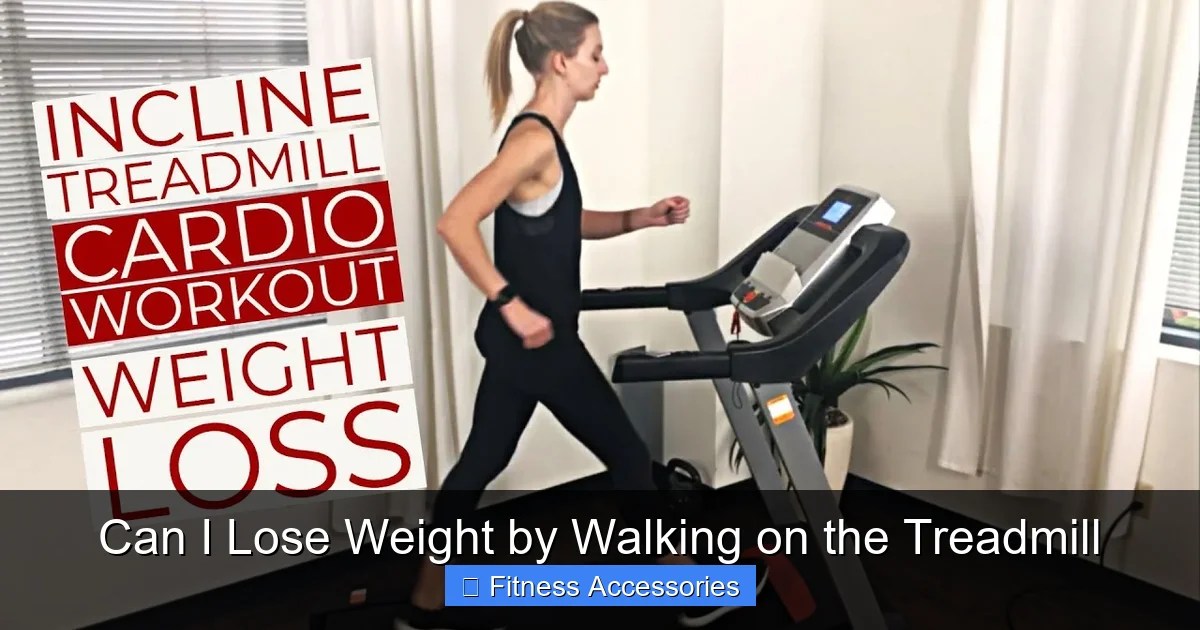
This is the single most important adjustment you can make. Incline walking transforms a simple stroll into a serious strength and cardio workout.
- Why it works: Increasing the gradient forces your glutes, hamstrings, and calves to work much harder. You’re essentially doing thousands of controlled leg presses. This builds and maintains muscle, which, as we said, boosts your resting metabolism. You also burn significantly more calories. Walking at 3.5 mph at a 5% incline can increase calorie burn by 50% or more compared to a flat surface.
- How to start: Begin with a 1-2% incline for the first 5 minutes as a warm-up. Then, try intervals: 3 minutes at a 3-4% incline, followed by 2 minutes at a 1% incline to recover. Repeat this cycle for the duration of your walk. As you get stronger, increase the max incline of your intervals.
- Pro tip: Hold onto the rails only for balance if absolutely necessary. Letting go engages your core more and uses your arms for momentum, increasing the intensity. Safety first, though! If you feel unstable, hold on.
2. Incorporate Speed Intervals (Without Running)
You don’t have to run to get your heart rate up. Speed walking intervals are incredibly effective.
- Why it works: Short bursts of faster walking push your cardiovascular system, increasing calorie burn during and after the session. It breaks the monotony and challenges your body in a new way.
- How to do it: After warming up, try a “Pyramid” interval. Walk at a brisk, challenging pace (where talking in full sentences is difficult) for 1 minute. Then, drop back to your comfortable “recovery” pace for 2 minutes. Repeat 4-6 times. You can also do “ladder” intervals: 1 min fast/2 min slow, 2 min fast/2 min slow, 3 min fast/2 min slow, then work your way back down.
3. Aim for Duration and Frequency
For weight loss, the general public health guideline is at least 150 minutes of moderate-intensity aerobic activity per week. That’s 30 minutes, 5 days a week. But for significant weight loss, research often points to more—closer to 250-300 minutes per week. This might sound like a lot, but it’s manageable. You can break it into 45-60 minute sessions, or even two 30-minute walks in one day. The key is moving most days. Consistency builds the habit and the cumulative calorie burn.
Crafting Your Weekly Treadmill Walking Plan for Weight Loss
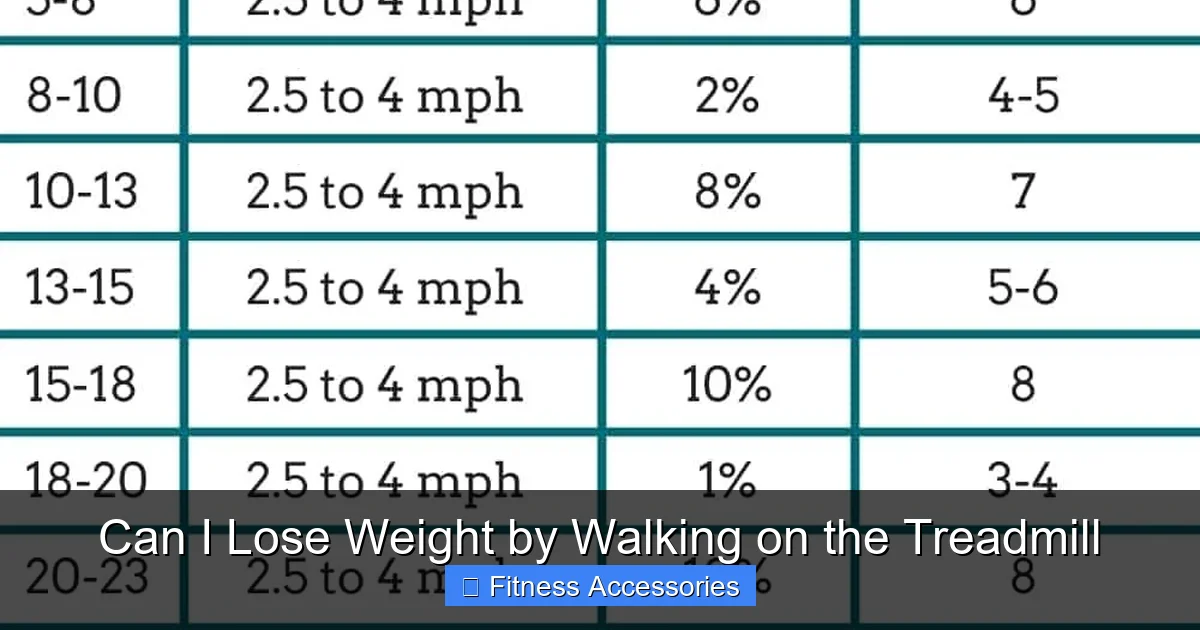
Variety is the spice of life and the key to preventing plateaus. Your body adapts to routine. Here are three sample workout structures to rotate throughout your week.
Visual guide about Can I Lose Weight by Walking on the Treadmill
Image source: i.pinimg.com
Workout A: The Incline Focus
Goal: Build leg muscle and maximize calorie burn per minute.
Structure: 5 min warm-up (0% incline, 3.0 mph). Then, set incline to 4-5%. Walk for 5 minutes at a pace that feels like a 7/10 effort. Lower incline to 1% for 3 minutes of active recovery. Repeat this 4-5% incline block 3-4 times. Finish with 5 min cool-down (0% incline, slow pace). Total time: ~35-45 minutes.
Workout B: The Speed Interval
Goal: Boost cardiovascular fitness and EPOC.
Structure: 5 min warm-up. Then, alternate: 2 minutes at a very brisk walk (4.0-4.5 mph, or your “fast” pace), followed by 3 minutes at your normal walking pace (3.0-3.5 mph). Repeat 6-8 times. 5 min cool-down. Total time: ~40-50 minutes.
Workout C: The Steady-State Endurance
Goal: Build aerobic base, burn fat, and stress-relief.
Structure: 5 min warm-up. Find a pace and a moderate incline (2-3%) that you can sustain for 30-45 minutes where you can talk in short phrases. Just walk. This is meditative and fantastic for overall health and consistent calorie burn. 5 min cool-down. Total time: 40-55 minutes.
The Non-Negotiable Partner: Your Diet
I cannot say this enough: you cannot out-exercise a bad diet. Treadmill walking creates the opportunity for weight loss by burning calories and building muscle, but the actual fat loss happens in the kitchen. Think of your treadmill work as creating a “calorie allowance.” If you walk and burn 300 calories but then eat a 500-calorie muffin, you’ve actually moved backward.
Practical Diet Synergy:
- Don’t “reward” your walk with food. This mindset sabotage is common. Your walk is the reward—better health, more energy, a stronger body.
- Focus on protein and fiber. These nutrients increase satiety, helping you eat fewer calories naturally. Think lean meats, eggs, Greek yogurt, legumes, and vegetables.
- Hydrate with water. Often, thirst is mistaken for hunger. Drink a large glass of water before your walk and keep sipping.
- Mind your portions. Use a smaller plate. Be aware of liquid calories (sodas, juices, fancy coffee drinks) which are diet-killers.
- Consider timing. Some people find walking fasted in the morning helps control appetite and tap into fat stores. Others prefer a walk after dinner to aid digestion and avoid late-night snacking. Experiment to see what fits your life and hunger cues.
Common Mistakes That Sabotage Your Treadmill Weight Loss
Even with the best intentions, small errors can stall your progress. Avoid these pitfalls:
1. Holding On for Dear Life
Gripping the handrails shifts your weight and reduces the work your legs and core have to do. It can also alter your gait unnaturally. Use them only for balance when starting or if you feel dizzy. Let your arms swing naturally at your sides. If you need to hold on to achieve a faster speed on an incline, your speed is too fast. Dial it back.
2. Ignoring Nutrition Tracking
Guessing on your food intake is a recipe for frustration. For at least the first few weeks, use a free app like MyFitnessPal or Cronometer to log everything you eat. You’ll be shocked by hidden calories and portion sizes. You don’t have to do this forever, but it provides invaluable awareness.
3. Doing the Same Workout Every Single Day
Your body is an adaptation machine. If you do 30 minutes at 3.5 mph, 0% incline, every day for a month, your body will become very efficient at it. You’ll burn fewer calories over time. Use the workout rotation plan above to constantly challenge yourself.
4. Neglecting Strength Training
While incline walking is a form of “loaded” movement, dedicated strength training 2-3 times a week is a game-changer for weight loss. More muscle mass means a higher resting metabolic rate. Start with simple bodyweight exercises (squats, lunges, push-ups) or resistance bands on your non-walking days. You’ll see better body composition changes—more tone, less flab.
5. Focusing Only on the Scale
The scale is a liar. It doesn’t account for muscle gain, water retention, or hormonal fluctuations. You could be losing fat and gaining muscle, causing the scale to stay the same or even go up slightly—a fantastic outcome! Use other metrics: take monthly photos, measure your waist with a tape measure, notice how your clothes fit, and track your strength and endurance improvements on the treadmill (e.g., “I held a 4% incline for 10 minutes today!”).
Making It Stick: The Psychology of a Lasting Habit
Weight loss isn’t just a physical challenge; it’s a mental one. The treadmill is a tool, but you are the operator. How do you ensure this becomes a non-negotiable part of your life?
- Schedule it like an appointment. Block the time on your calendar. “Tuesday 7am: Treadmill Walk.” You wouldn’t miss a doctor’s appointment. Treat your health with the same priority.
- Make it enjoyable. This is critical. Create a “walking entertainment package.” Download an audiobook, podcast, or playlist you only listen to while walking. Watch your favorite show on a tablet. The time will fly by.
- Start absurdly small. If 30 minutes sounds overwhelming, commit to 10 minutes. Anyone can do 10 minutes. The habit of putting on your shoes and stepping on the treadmill is more important than the duration initially. You’ll often find you want to go longer once you start.
- Track streaks, not perfection. Use a calendar. Put a big red X on every day you complete your walk. The visual chain of X’s is powerful motivation not to break the streak. If you miss a day, forgive yourself and get back on track the next day. Perfection is the enemy of progress.
- Find an accountability partner. Tell a friend your goal, get a walking buddy (even virtually), or join an online fitness community. Sharing your journey creates support and responsibility.
Conclusion: Your Journey Starts with a Single Step
So, can you lose weight by walking on the treadmill? The science, the testimonials, and the common sense all say a resounding yes. It is a profoundly effective, accessible, and sustainable method for creating the calorie deficit needed for fat loss. Its power is amplified when you move beyond a casual stroll to incorporate inclines, intervals, and consistent duration. But this tool is only as powerful as the hand that holds the remote. Its true magic is unlocked when you pair it with the other half of the weight loss equation: a thoughtful, nourishing diet.
Forget the complex, intimidating fitness trends. The treadmill walk is your back-to-basics, no-excuses solution. It meets you where you are. Whether you’re carrying 300 pounds or 150, recovering from an injury or just starting your fitness journey, the treadmill belt moves at the speed you set. The only requirement is that you step on and start moving. Your future, healthier, lighter, and more energetic self is built one consistent, intentional step at a time. Now, go take that first step.
Frequently Asked Questions
What speed should I walk on the treadmill to lose weight?
Aim for a “brisk walk” pace, typically between 3.0 and 4.0 mph. The right speed is one where your heart rate is elevated, you’re breathing heavily but can still speak in short sentences. Using the “talk test” is a great guide. You should feel challenged but able to sustain the pace for your target duration.
Should I walk on the treadmill every day?
Yes, you can walk daily if the sessions are moderate in intensity and duration. Daily movement is excellent for habit formation and overall health. However, if you’re doing very long or very intense incline/speed interval sessions, aim for 4-6 days a week with 1-2 days of complete rest or very light activity like stretching to allow for recovery.
Can treadmill walking reduce belly fat specifically?
You cannot “spot reduce” fat from just your belly. Weight loss occurs systemically. However, a consistent calorie deficit created by treadmill walking and diet will lead to fat loss from all over your body, including your abdominal area. Combining walking with strength training and a diet low in processed sugars and refined carbs is particularly effective for reducing visceral belly fat.
How long on the treadmill to see weight loss results?
You may start noticing changes in how you feel (more energy, better sleep) within 1-2 weeks. Visible weight loss on the scale typically becomes apparent after 2-4 weeks of consistent effort (3-5 days per week, 30-60 minutes per session) combined with a healthy diet. Remember, sustainable loss is 1-2 pounds per week.
Is treadmill walking safe for beginners or people with joint issues?
Yes, it is one of the safest forms of cardio. The smooth, predictable surface and cushioning of a treadmill are far easier on knees, hips, and ankles than concrete or uneven trails. Start with a very slow speed and 0% incline for short durations (10-15 minutes). Focus on proper posture—stand tall, look forward, and let your arms swing. If you have specific medical conditions, always consult a doctor first.
Will walking on a treadmill build muscle?
Walking, especially on an incline, will primarily build and strengthen the muscles in your lower body—your glutes, hamstrings, quadriceps, and calves. It promotes muscular endurance and tone. For significant muscle hypertrophy (bulking), you’d need dedicated heavy resistance training. However, the muscle you build from incline walking is crucial for boosting metabolism and shaping your legs and buttocks as you lose fat.