Chicken Cacciatore A Classic Italian Dish Worth Making
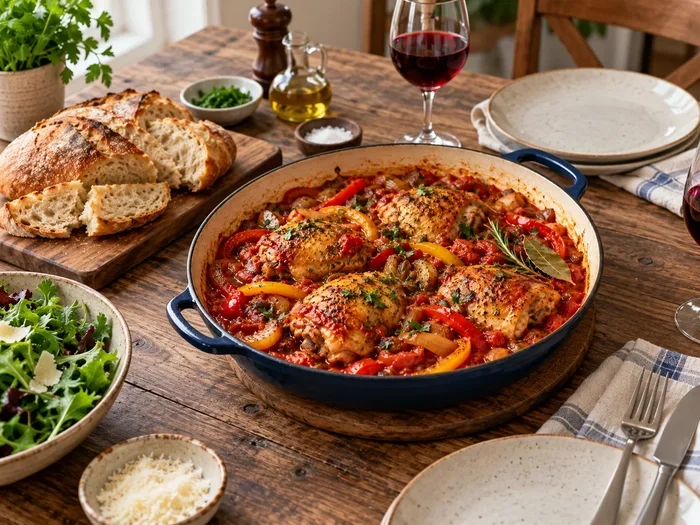
Chicken cacciatore is a rustic Italian dish that combines tender chicken with a savory tomato sauce, olives, and herbs. This easy one-pot meal brings authentic Mediterranean flavors to your table in under an hour. You’ll love how simple it is to prepare and how impressive the results taste.
Chicken cacciatore is a rustic Italian dish that brings together tender chicken, rich tomato sauce, briny olives, and fragrant herbs in one hearty, comforting meal. This classic recipe is simple enough for a busy weeknight yet impressive enough for dinner guests. You’ll learn the history, the essential ingredients, and a foolproof method to make it at home. By the end, you’ll be ready to serve this beloved Italian dish with confidence.
If you haven’t tried chicken cacciatore yet, you’re missing out on one of Italy’s most beloved comfort foods. The name means ‘hunter-style chicken,’ and it reflects the dish’s humble origins in the Italian countryside. Hunters would use whatever they had on hand—chicken, tomatoes, herbs, and foraged mushrooms—to create a flavorful one-pot meal. Today, this rustic recipe has won hearts around the world because it’s both easy and deeply satisfying. Whether you’re cooking for a family or a quiet night in, chicken cacciatore delivers big flavor with minimal effort.
Key Takeaways
- Authentic flavor: Chicken cacciatore uses simple ingredients like tomatoes, olives, and herbs to create a deep, savory taste.
- Easy to make: This one-pot meal requires minimal effort and cooks in under an hour.
- Versatile dish: You can customize the recipe with mushrooms, peppers, or white wine to suit your preference.
- Great for families: The hearty, comforting flavors make it perfect for weeknight dinners and gatherings.
- Stays fresh: Leftovers taste even better the next day and store well for up to three days.
📑 Table of Contents
What Is Chicken Cacciatore?
The Meaning Behind the Name
The word cacciatore translates to ‘hunter’ in Italian. So chicken cacciatore simply means hunter-style chicken. In the old days, Italian hunters would cook wild game with whatever they found in the forest. They used tomatoes, onions, garlic, herbs, and sometimes olives or mushrooms. This created a rich, one-pot meal that was both practical and delicious.
Over time, cooks adapted the method to chicken. The dish became a staple of Italian home cooking. It is now known as a classic example of rustic Italian cuisine. The beauty of chicken cacciatore lies in its simplicity. You don’t need fancy techniques or expensive ingredients. Just good chicken, a flavorful sauce, and a little patience.
How It Differs from Other Chicken Dishes
Many Italian chicken dishes rely on lemon, cream, or cheese. Chicken cacciatore takes a different path. It uses a tomato-based sauce with bold, savory flavors. The sauce simmers slowly, allowing the chicken to absorb deep, rich tastes. Olives and capers add a salty punch. Fresh herbs like basil and oregano bring brightness. This combination makes the dish stand out from lighter or creamier recipes.
It’s also a one-pot meal, which means less cleanup. You can cook the chicken and sauce together in a single Dutch oven or deep skillet. That makes it perfect for busy weeknights. The dish is hearty and filling, so it often becomes the star of a family dinner without needing a lot of side dishes.
The History and Origins of Chicken Cacciatore
Roots in the Italian Countryside
Chicken cacciatore traces its roots to the rural regions of central and southern Italy. In Tuscany, Lazio, and Campania, cooks used simple, local ingredients. They would braise chicken in tomatoes, olive oil, and herbs. The dish was born out of necessity. Farm families needed meals that were affordable and easy to prepare.
Hunters in the countryside often cooked their catch over open fires. They used ingredients that could be found or grown nearby. Tomatoes, garlic, onions, and wild mushrooms were always on hand. Olives and capers added flavor without extra cost. This rustic approach to cooking turned simple ingredients into something truly special. The name ‘hunter-style’ reflects that resourceful spirit.
How It Became a Global Favorite
As Italian immigrants moved to other countries, they brought their recipes with them. Chicken cacciatore traveled across the Atlantic and became popular in American kitchens. Restaurants began featuring it on menus. Home cooks loved how easy it was to make. The dish felt both exotic and comforting at the same time.
Today, chicken cacciatore is a staple of Italian-American cuisine. Many families have their own version of the recipe. Some add bell peppers for sweetness. Others include a splash of white wine for depth. No matter the variation, the heart of the dish remains the same. It’s a warm, savory meal that brings people together around the table.
Essential Ingredients for Authentic Chicken Cacciatore
The Protein: Chicken Thighs
Bone-in, skin-on chicken thighs are the traditional choice. They stay juicy during the long braise. The bone adds flavor to the sauce. If you prefer, you can use boneless thighs, but bone-in pieces give the best results. Chicken breasts can dry out, so thighs are the safest bet for a tender, flavorful dish.
The Flavor Base: Aromatics and Vegetables
A good chicken cacciatore starts with a strong flavor base. You’ll need onions, garlic, and bell peppers. These vegetables soften as they cook and release natural sweetness. Mushrooms are a classic addition. They soak up the sauce and add an earthy depth. Some cooks also add a pinch of red pepper flakes for a gentle heat.
The Sauce: Tomatoes, Olives, and Herbs
The sauce is the soul of the dish. Use crushed tomatoes or a good-quality tomato passata. Kalamata olives and capers bring a briny, Mediterranean kick. Fresh oregano and basil are essential. A splash of dry white wine helps deglaze the pan and adds complexity. The sauce simmers until it thickens and clings to the chicken.
Ingredient Substitution Table
| Ingredient | Traditional Choice | Good Alternative |
|---|---|---|
| Chicken | Bone-in thighs | Boneless thighs or drumsticks |
| Tomatoes | Crushed San Marzano tomatoes | Canned diced tomatoes or passata |
| Olives | Kalamata olives | Green olives with herbs |
| Wine | Dry white wine | Chicken broth with a squeeze of lemon |
| Mushrooms | Cremini or button mushrooms | Shiitake or omitted |
| Herbs | Fresh oregano and basil | Dried Italian herb blend |
Chicken Cacciatore Recipe: Step by Step
Prep Work and Marinating
Start by patting the chicken thighs dry. Season them generously with salt and pepper. Let them rest while you chop the vegetables. Dice the onions, mince the garlic, and slice the bell peppers. Having everything ready before you turn on the heat makes the process smooth and enjoyable.
Building the Flavor
- Heat olive oil in a large Dutch oven over medium-high heat.
- Sear the chicken thighs skin-side down until golden brown. This locks in juices and adds texture.
- Remove the chicken and set it aside. In the same pot, add the onions, garlic, and bell peppers.
- Cook until the vegetables soften, about 5 minutes. Stir in the mushrooms and cook for another 3 minutes.
- Pour in the white wine and scrape up any browned bits from the bottom. Let the wine reduce by half.
- Add the crushed tomatoes, olives, capers, oregano, and basil. Stir well to combine.
Braising to Perfection
Return the chicken to the pot, nestling it into the sauce. Cover the pot and let it simmer on low heat for about 35 to 40 minutes. The chicken is done when it reaches an internal temperature of 165°F (74°C). The sauce should be thick and glossy. Taste and adjust the salt and pepper as needed. A final sprinkle of fresh basil adds a bright finish.
Quick Tips for Success
- Don’t rush the sear: A good golden crust on the chicken adds flavor and keeps the meat moist.
- Use a heavy pot: A Dutch oven distributes heat evenly and prevents hot spots.
- Taste as you go: Adjusting seasoning during cooking ensures a balanced, flavorful result.
- Let it rest: Allowing the finished dish to sit for 5 minutes helps the sauce thicken slightly.
Common Mistakes to Avoid
- Using chicken breast: It often dries out during the long braise. Thighs are much more forgiving.
- Overcrowding the pot: Too many pieces in the pan steam instead of sear. Brown the chicken in batches if needed.
- Skipping the wine: The wine deglazes the pan and adds depth. If you omit it, add extra broth and a squeeze of lemon.
- Adding herbs too early: Fresh basil can turn bitter if it simmers too long. Add it in the last 5 minutes of cooking.
Tips for the Best Chicken Cacciatore
Use Bone-In Chicken Thighs
Bone-in thighs bring more flavor to the sauce. The bone releases collagen during cooking, which gives the sauce a silky texture. If you’re short on time, boneless thighs work well, but the bone-in version is more authentic and richer in taste.
Don’t Skip the White Wine
A dry white wine lifts the entire dish. It balances the acidity of the tomatoes and adds a subtle fruity note. If you don’t drink alcohol, use chicken broth mixed with a tablespoon of lemon juice. It mimics the brightness that wine provides.
Let the Sauce Reduce
A good chicken cacciatore has a thick, flavorful sauce. After the chicken is cooked, remove the pieces and let the sauce simmer uncovered for a few minutes. This concentrates the flavors and gives the sauce a velvety consistency that clings perfectly to the chicken.
Expert Insights
Chef Maria Rossi shares her tip: “The secret to a great chicken cacciatore is patience. Let the sauce simmer gently and don’t rush the process. The longer the chicken sits in the sauce, the more flavor it absorbs. I always make it a day ahead so the flavors have time to meld.”
Food writer Luca Bianchi adds: “Use the best tomatoes you can find. San Marzano tomatoes give a natural sweetness that balances the olives and capers. If you can’t find them, look for high-quality canned tomatoes with no added salt. The quality of your base ingredients makes all the difference.”
Serving and Storing Chicken Cacciatore
Perfect Side Dishes
Chicken cacciatore pairs beautifully with simple sides. Creamy polenta is a traditional choice. It soaks up the savory sauce perfectly. Crusty Italian bread works just as well. You can also serve it over spaghetti or with a side of roasted potatoes. A fresh green salad with a light vinaigrette adds a bright contrast to the rich dish.
How to Store Leftovers
Leftover chicken cacciatore keeps well in the refrigerator for up to three days. Store it in an airtight container. The flavors actually improve overnight as the sauce continues to develop. Reheat gently on the stovetop over low heat. Avoid boiling, which can toughen the chicken. You can also freeze the dish for up to three months. Thaw it in the fridge overnight before reheating.
Key Takeaways
- Simplicity is key: Chicken cacciatore relies on a few quality ingredients rather than complex techniques.
- Braising creates tenderness: The slow cook in the tomato sauce keeps the chicken juicy and flavorful.
- Make-ahead friendly: The dish tastes better the next day, making it ideal for meal prep.
- Flexible and forgiving: You can swap in different vegetables, herbs, or olives without losing the soul of the recipe.
- A crowd-pleaser: This rustic Italian dish consistently wins praise at family dinners and gatherings.
Chicken cacciatore is more than just a recipe. It’s a window into the heart of Italian home cooking. The dish reminds us that the best meals often come from the simplest ingredients. When you simmer chicken in a rich tomato sauce with olives and herbs, you create something truly comforting. Whether you’re a beginner in the kitchen or a seasoned cook, this classic will become a regular in your rotation. Give it a try, and you’ll see why chicken cacciatore has stood the test of time as a beloved Italian favorite.
Frequently Asked Questions
Can I use chicken breast instead of thighs for chicken cacciatore?
Yes, but thighs are much better. Chicken breast can dry out during the long braise. Thighs stay juicy and tender because they have more fat. If you must use breast, reduce the cooking time and keep a close eye on it.
Is chicken cacciatore spicy?
Not typically. The dish is savory and slightly tangy from the tomatoes and olives. You can add red pepper flakes if you like a gentle heat. The flavor is warm and aromatic rather than hot.
Can I make chicken cacciatore in a slow cooker?
Absolutely. Sear the chicken and cook the vegetables on the stovetop first, then transfer everything to the slow cooker. Add the sauce and cook on low for 4 to 5 hours. The result is tender, flavorful chicken with a rich sauce.
What can I serve with chicken cacciatore?
Creamy polenta, crusty bread, or spaghetti are all excellent choices. Roasted potatoes or a simple green salad also work well. The dish is hearty enough to stand on its own, but a side completes the meal.
Does chicken cacciatore freeze well?
Yes, it freezes beautifully. Let the dish cool completely, then pack it in airtight containers or freezer bags. It keeps for up to three months. Thaw it in the refrigerator overnight and reheat gently on the stovetop.
Why is my chicken cacciatore sauce watery?
A watery sauce usually means the chicken released too much liquid. Make sure to pat the chicken dry before searing. Also, let the sauce simmer uncovered at the end to reduce and thicken. Removing the chicken before reducing the sauce can help too.