32 Oz to Cups The Simple and Easy Conversion Guide
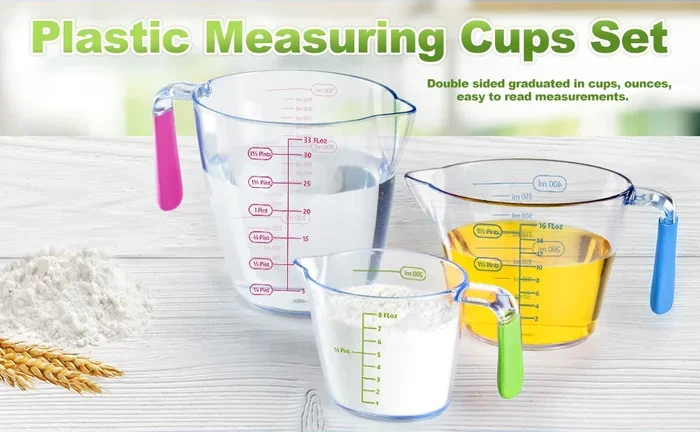
Converting 32 oz to cups is simple: 32 fluid ounces equals 4 cups. Whether you are cooking, baking, tracking nutrition, or measuring liquids for a fitness plan, knowing this conversion saves time and prevents mistakes. This guide breaks down the math, offers practical examples, and shares tips to make every measurement count.
Have you ever stared at a recipe or a nutrition label and wondered, “How many cups is 32 oz?” You are not alone. This is one of the most common conversion questions people ask when they are cooking, baking, or even tracking their daily water intake. The good news is that the answer is simple and easy to remember. 32 fluid ounces equals 4 cups, and once you know that, you can tackle a wide range of measurement tasks with confidence.
Whether you are a beginner in the kitchen or someone who just wants to double-check a recipe, this guide has you covered. We will walk through the math step by step, explain why this conversion matters, and share practical tips you can use right away. By the end, you will never second-guess how many cups are in 32 ounces again.
So grab your measuring cup and let us dive in. This is going to be quick, easy, and more useful than you might expect.
Key Takeaways
- 32 oz equals 4 cups: The basic conversion is straightforward and easy to remember.
- Fluid ounces and weight ounces differ: Always check whether your recipe uses volume or weight measurements.
- Use the right tools: Liquid measuring cups give the most accurate results for fluid ounces.
- Conversion applies beyond the kitchen: Fitness tracking, meal prep, and hydration all benefit from knowing this ratio.
- Common mistakes are easy to avoid: Confusing fluid and dry ounces is the most frequent error.
- Other ounce amounts follow the same rule: Divide fluid ounces by 8 to get cups every time.
📑 Table of Contents
What Does 32 Oz to Cups Mean?
Before we get into the numbers, it helps to understand what we are actually converting. The term “oz” stands for ounces, and it can refer to two different things: fluid ounces (a volume measurement) or weight ounces (a mass measurement). When we talk about 32 oz to cups, we are almost always talking about fluid ounces.
Understanding Fluid Ounces
A fluid ounce is a unit of volume used to measure liquids. In the United States, one fluid ounce is about 29.57 milliliters. When a recipe calls for 32 fluid ounces of water, milk, or oil, it is asking for a specific volume of liquid. This is different from a weight ounce, which measures how heavy something is.
Here is a quick way to think about it. Imagine filling a standard glass with water. One cup holds 8 fluid ounces. So if you pour 4 of those glasses into one container, you have 32 fluid ounces total. That is 4 cups.
What Is a Cup in Measurement Terms?
A cup is a common unit of volume used in cooking and baking. In the US standard system, one cup equals 8 fluid ounces, 16 tablespoons, or about 236.6 milliliters. You will see cups listed on almost every recipe card, cookbook, and food package. They are convenient because they are easy to visualize and use.
However, not all cups are the same. A “legal cup” used in nutrition labeling is slightly different from a “customary cup” used in recipes. For everyday cooking, the customary cup of 8 fluid ounces is what you need to remember. That is the number that makes the 32 oz to cups conversion so clean and simple.
The Simple Math: 32 Oz to Cups Conversion
The math behind this conversion is incredibly easy. You just need to remember one key number: 8. There are 8 fluid ounces in 1 cup. So to convert any amount of fluid ounces to cups, you divide by 8.
The Basic Formula
Here is the formula in its simplest form:
Cups = Fluid Ounces ÷ 8
So for 32 ounces, the math looks like this:
32 ÷ 8 = 4 cups
That is it. No complicated fractions, no decimal points. Just 4 cups. This is why the 32 oz to cups conversion is one of the easiest and most commonly used conversions in the kitchen.
Quick Conversion Chart for Common Amounts
Once you know the basic formula, you can convert any amount. Here is a handy chart for quick reference:
- 8 oz = 1 cup
- 16 oz = 2 cups
- 24 oz = 3 cups
- 32 oz = 4 cups
- 40 oz = 5 cups
- 64 oz = 8 cups
Keep this chart somewhere in your kitchen. It will save you time and make cooking and baking much smoother. You can even tape it to the inside of a cabinet door for easy access.
Why Knowing the 32 Oz to Cups Conversion Matters
You might be thinking, “Why do I need to know this?” The answer is that accurate measurements matter in so many areas of daily life. From cooking to fitness tracking, understanding how to convert ounces to cups gives you more control and better results.
In the Kitchen
Cooking and baking are the most obvious places where this conversion comes in handy. Many recipes list ingredients in cups, while others use ounces. If a recipe calls for 32 fluid ounces of chicken broth, you now know that is exactly 4 cups. No need to guess, no need to pull out your phone for a calculator.
This is especially helpful when you are scaling a recipe up or down. Say you want to double a soup recipe that calls for 16 ounces of broth. You know 16 oz is 2 cups, so doubling it means you need 4 cups, or 32 fluid ounces. The conversion flows naturally and keeps your cooking on track.
In Fitness and Nutrition
Tracking your daily water intake is another great reason to know this conversion. Health experts often recommend drinking a certain number of cups of water per day. If your goal is 32 ounces, you now know that is 4 cups. This makes it much easier to hit your hydration targets throughout the day.
Fitness and nutrition go hand in hand. If you are following a meal plan or counting calories, you may need to measure liquids precisely. For example, if you are tracking how much protein shake or meal replacement you drink, knowing that 32 ounces equals 4 cups helps you stay on target. Weight loss meal plans often require precise portion control, and understanding volume conversions supports that goal.
Similarly, if you are tracking your calorie burn from workouts, knowing how to measure and convert liquid volumes helps you stay consistent with your nutrition. Burning calories through exercise is only one piece of the puzzle. The other piece is what you eat and drink, and accurate measurements matter for both.
Common Mistakes When Converting 32 Oz to Cups
Even though the conversion is simple, people still make errors. Here are the most common mistakes and how to avoid them.
Confusing Fluid Ounces with Weight Ounces
This is the number one mistake. Fluid ounces measure volume, while weight ounces measure mass. If a recipe calls for 32 weight ounces of flour, you cannot simply divide by 8 to get cups. The density of the ingredient matters. A cup of flour weighs about 4.5 ounces, so 32 ounces of flour is closer to 7 cups, not 4.
Always check the label on your ingredient. If it says “fluid ounces” or “fl oz,” you can use the simple divide-by-8 rule. If it says just “ounces” for a dry ingredient, you need a kitchen scale or a density chart.
Using the Wrong Type of Measuring Cup
Liquid measuring cups and dry measuring cups are designed differently. Liquid cups have a pour spout and are meant to be filled to the top. Dry measuring cups are leveled off. Using the wrong type can throw off your measurements by a significant margin.
For the 32 oz to cups conversion, always use a liquid measuring cup when dealing with fluids. This ensures accuracy and makes the pouring process much smoother.
Ignoring Temperature and Altitude
While this does not change the basic conversion, temperature can affect how liquids behave. Hot liquids can expand, and cold liquids can contract slightly. For most home cooking, this difference is negligible. But if you are doing precise baking or working at high altitudes, small measurement errors can add up.
Practical Examples and Tips
Let us put this conversion to work with some real-world examples. These scenarios show how knowing that 32 ounces equals 4 cups can make your daily life easier.
Example 1: Meal Prep for the Week
You are meal prepping and need to portion out 32 ounces of grilled chicken broth into containers. Using the conversion, you know each container should hold exactly 1 cup. You can prepare four 1-cup portions with confidence. No more guessing or messy spillovers.
Example 2: Hydration Goals
Your fitness tracker suggests drinking 32 ounces of water during your morning workout. You grab a standard water bottle that holds 16 ounces. You know you need to drink two full bottles to hit your 32-ounce goal, which equals 4 cups. This makes it easy to track your progress throughout the workout.
Staying hydrated is crucial for performance. Many people find that setting a clear measurement goal, like 4 cups, helps them drink more consistently. Consistency in fitness includes both exercise and proper hydration.
Example 3: Baking a Large Batch
You are baking cookies for a school event and the recipe calls for 32 fluid ounces of milk. You only have a 1-cup measuring cup. No problem. You simply measure out 4 cups of milk and you are good to go. The conversion saved you time and kept the recipe accurate.
Converting Other Ounce Amounts
The divide-by-8 rule works for any fluid ounce amount. Here are a few more examples to build your confidence:
- 10 oz = 1.25 cups
- 12 oz = 1.5 cups
- 20 oz = 2.5 cups
- 28 oz = 3.5 cups
- 48 oz = 6 cups
Once this becomes second nature, you will never have to look up a conversion again. It is a small skill that pays off big time in the kitchen and beyond.
Using the Right Measuring Tools
Invest in a good set of measuring cups and spoons. A liquid measuring cup with clear markings and a pour spout is essential for fluid measurements. For dry ingredients, a set of dry measuring cups with flat rims works best.
Digital kitchen scales are another excellent tool. They take the guesswork out of converting between weight and volume. If you ever find yourself unsure about an ingredient’s density, a quick weigh-in can clear things up instantly.
Here is a quick tip: always place your measuring cup on a flat surface and bend down to read the measurement at eye level. This prevents parallax errors and gives you the most accurate reading every time.
32 Oz to Cups and Beyond: Building Measurement Confidence
Mastering the 32 oz to cups conversion is just the beginning. Once you understand the logic behind it, you can apply the same principle to other conversions. Want to know how many cups are in 16 ounces? Just divide by 8. You get 2 cups. What about 48 ounces? That is 6 cups.
This kind of measurement confidence extends to other areas too. You can convert cups to tablespoons, cups to milliliters, and even fluid ounces to liters. Each conversion builds on the same basic understanding of volume and ratios.
For those who are serious about cooking or baking, consider learning the metric equivalents as well. One US cup is approximately 237 milliliters. So 32 fluid ounces is roughly 946 milliliters, or just under 1 liter. This knowledge is especially useful when you are following international recipes that use the metric system.
Timing and precision matter in many areas of life, and the kitchen is no different. Taking a few extra seconds to measure correctly can be the difference between a great dish and a mediocre one.
Final Thoughts
The 32 oz to cups conversion is one of the simplest and most useful skills you can learn. Whether you are a home cook, a baker, a fitness enthusiast, or someone who just wants to drink more water, knowing that 32 fluid ounces equals 4 cups puts a powerful tool right at your fingertips.
Remember the divide-by-8 rule, keep a conversion chart in your kitchen, and always use the right measuring tools for the job. These small habits add up to big improvements in accuracy and confidence. You will waste less food, follow recipes more closely, and track your nutrition with greater precision.
So the next time you see “32 oz” on a recipe or a label, you will not hesitate. You will know exactly that it is 4 cups. And that is a win every single time.
Frequently Asked Questions
How many cups are in 32 fluid ounces?
32 fluid ounces equals exactly 4 cups. This is because one cup holds 8 fluid ounces, and 32 divided by 8 equals 4. This is the standard US conversion used in most recipes and nutrition labels.
Is 32 oz the same as 32 cups?
No, 32 ounces is not the same as 32 cups. 32 fluid ounces converts to 4 cups. The confusion often comes from mixing up fluid ounces with weight ounces or not knowing the 8-to-1 ratio between fluid ounces and cups.
Can I use this conversion for dry ingredients?
The 32 oz to 4 cups conversion works for liquids measured in fluid ounces. For dry ingredients measured in weight ounces, the conversion is different because each ingredient has a different density. Always check whether your measurement is fluid ounces or weight ounces before converting.
What size is a standard cup?
A standard US cup holds 8 fluid ounces, which is about 236.6 milliliters. This is the cup size used in most American recipes and cooking measurements. Keep in mind that other countries may use slightly different cup sizes.
How can I measure 32 ounces without a liquid measuring cup?
You can use any container that holds 8 fluid ounces and fill it 4 times. A standard drinking glass often holds about 8 ounces, so filling it four times gives you 32 ounces, or 4 cups. A kitchen scale can also help if you are measuring a liquid with a known weight per cup.
Does the 32 oz to cups conversion change for different countries?
The US customary conversion stays the same: 32 fluid ounces equals 4 cups. However, if you are using UK or metric measurements, the numbers can differ slightly. A UK imperial fluid ounce is a bit larger than a US one, so the conversion would be slightly different. For most home cooking in the US, the standard 8 fluid ounces per cup rule applies.
=== CONCLUSION ===
Converting 32 oz to cups is a simple skill that makes a big difference. You now know the answer is 4 cups, and you understand why. The divide-by-8 formula gives you the power to convert any fluid ounce amount to cups with ease. Use this knowledge in the kitchen, at the gym, or anywhere else precise measurements matter. Keep this guide bookmarked, share it with friends, and never second-guess your conversions again.